
A machinery form filled in for a cloth
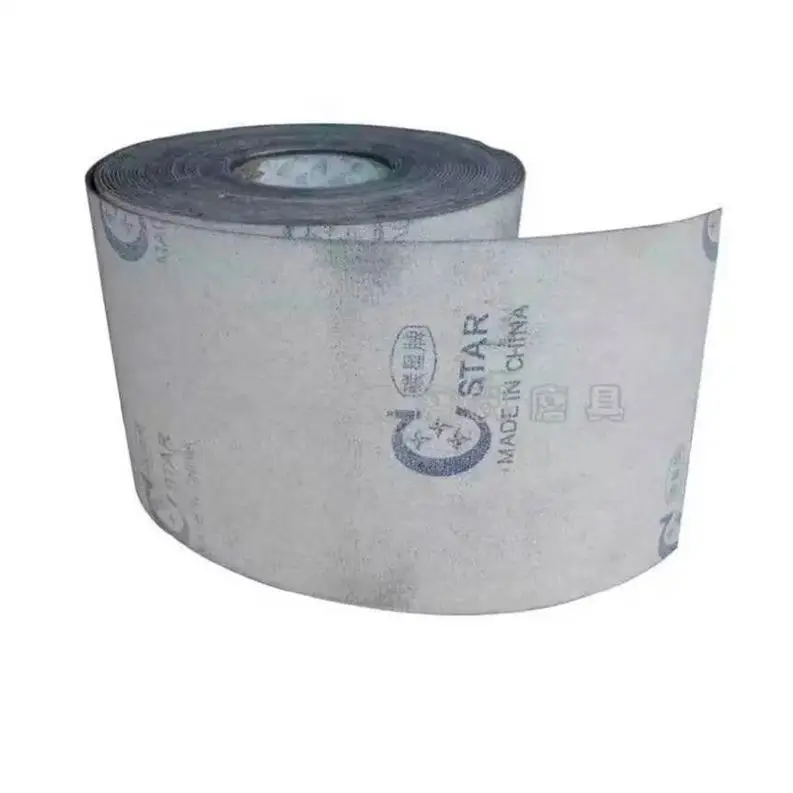
Product ID 1601254231602 is a roll good: a dark, thin sheet supplied in rolls, six widths from one hundred to three hundred millimetres, cut to whatever length is ordered. In a woodworking shop it is the liner that sits between a wide-belt sander's platen and the back of the sanding belt, and its job is to let the belt slide instead of dragging, which is why graphite is used for it. It is a consumable, bought by the metre, replaced when it wears.
The record presents it in the same form as the machines in this queue, and that is the first thing worth noticing, because the form does not fit the product. The parameter list opens with the row item equals value, which is the table's own header row stored as though it were a parameter. It then offers a parameter called Model Number whose value is the words graphite cloth, which is a generic noun rather than a model designation, so the product has no model number at all. It offers a parameter called Chemical Composition, and another called Material Science, and another whose label is the adjective wide. These are fields built for a machine or a component, where a model number, a composition and a material grade are the natural things to record. Applied to a coated textile consumable, they produce entries that read like specifications without specifying anything.
The description field repeats the same ten rows under a Specification heading and then lists Packing and Delivery, Company Profile and FAQ as headings with nothing underneath them, so the page offers no packing detail, no company detail and no answers. There is no specification table in any of the eight gallery images either, which distinguishes this record from several of its neighbours in this queue: the only specification anywhere is the ten rows at the top, and every dimension that matters for a platen liner is missing from them.
Three lines, two different materials
Read the three material lines in order and the problem is plain.
- Chemical Composition: carbon.
- Grinding and polishing: Graphite sliding pad graphite coated canvas.
- Material Science: 100% carbon fiber.
The second line describes a coated canvas, which is a woven textile carrying a graphite coating. The third line describes one hundred per cent carbon fibre, which is a textile woven from carbon filament tow and is a reinforcement material for composites. Those are not the same product, and the difference is not semantic. A coated canvas is a commodity consumable whose textile core carries the load and whose graphite surface provides the sliding; a carbon fibre fabric is a structural material sold for its stiffness and its strength-to-weight ratio, and it costs far more per square metre. The first line, by contrast, is true of the graphite and says nothing about the carrier, so on its own it neither confirms nor excludes either reading.
Two points of fairness belong here. First, in Chinese trade usage the compound commonly rendered as carbon fibre is often applied loosely to carbon and graphite products generally, so the third line may be a translation habit rather than a deliberate claim, and nothing in this guide asserts that the supplier intends to mislead. Second, the record is not the only evidence in the record: the rolls photographed in the first images are wrapped in a printed paper interleaf, and that interleaf carries a Chinese product name whose final three characters read as graphite cloth, alongside a star device and the words made in china. Graphite cloth is consistent with the second line and with the ordinary construction of the product, and it is not consistent with a fabric woven entirely from carbon fibre.
That still leaves the buyer holding a purchase order that does not state which material is being bought, and the commercial consequence runs in one direction only. If the buyer pays carbon fibre money for a coated canvas, the loss is the difference in price. If the buyer specifies carbon fibre expecting its properties and receives a coated canvas, the loss is the difference in behaviour on the machine. Neither is resolved by choosing a reading; it is resolved by writing the material down and testing the first delivery against it.
How to tell the two apart before the container ships
None of the following needs a laboratory, and the first three can be done on a sample strip in a workshop. They are set out because the difference between the two materials is large enough that a buyer should not rely on a description that contradicts itself.
- Look at a cut edge. A coated canvas shows a distinct coating layer on one or both faces over a woven textile core, and the textile core is visible at the cut as fibre and fuzz. Carbon fibre fabric is woven from carbon tow throughout and shows no separate coating layer; its cut edge shows the tow structure and no textile core between the faces.
- Look at both faces and measure resistance across each. A liner coated on its working face only will conduct along that face if the coating is graphite, while the reverse face, being bare textile, will not. A fabric woven from carbon fibre conducts in both directions. Take the reading along the surface, not through the thickness, and note that a graphite coating is itself conductive, so the test separates coated from uncoated rather than graphitic from non-graphitic.
- Apply a flame to a cut edge. A textile core burns with the smell and the behaviour of burning cloth and leaves ash. A carbon fibre fabric does not burn like cloth. Carry this out outdoors and treat it as indicative only, because coatings and finishes vary.
- Weigh a measured piece and ask for the areal weight. Cut a square metre, or a known fraction of one, and weigh it, then require the supplier to state the finished areal weight in grams per square metre. Two suppliers quoting a two hundred millimetre by one metre strip can be supplying very different masses of material, and the mass is what the price should track.
- Compare the quotation against the market for the material you believe you are buying. Carbon fibre fabric and a graphite coated canvas are not close in price per square metre, so a quotation that sits in the range of a coated textile consumable is a statement in itself.
Whatever the tests show, the specification that goes into the purchase order should name the construction rather than the material family: the carrier textile and its weave, the coating and which face carries it, the finished areal weight, the thickness and its tolerance. That wording describes the product regardless of how the two competing descriptions are resolved, and it can be checked on delivery.
The property the title names is the one with no figure
The title calls the product a heat resistant pad. No temperature appears anywhere in the record, in the parameter list or in any of the eight images. That matters because heat is not a minor property for this part: the liner sits between a moving abrasive belt and a steel platen, and the interface is where friction turns into heat. A liner is chosen for graphite precisely because the graphite tolerates that heat without melting onto the belt backing, and a liner fails when its carrier gives way underneath the coating.
So the figure to ask for is not a single number but a pair, and the second half is the useful half. Ask for the continuous working temperature and the peak temperature the finished laminate tolerates, and ask which component sets the limit: the coating or the carrier textile. If the carrier is a polyester woven fabric, its softening behaviour will usually arrive long before the graphite's limit, and a rating quoted for graphite alone would then be misleading in the direction that damages parts. Ask for the temperature at which the liner stops performing its function, not the temperature at which the graphite decomposes.
Three further properties are absent, and each one is what a platen liner is actually bought for.
- Thickness, and its tolerance. The liner sits between the platen and the belt, so its thickness becomes part of the platen's geometry. A liner that is thicker than the one it replaces changes the effective platen height, which changes the contact pressure and the belt's tracking, and a liner whose thickness varies across the roll causes the same variation along the workpiece. No thickness figure appears in the record, so a buyer replacing a worn liner cannot know what to order, and a buyer reordering from the same supplier cannot know whether the next batch will match. Thickness and thickness tolerance are the two numbers that make this part a repeatable purchase, and they should be written into the specification with a measurement method.
- The coefficient of friction. Sliding is the entire function. A liner that grips too much loads the motor, heats the belt and marks the work; a liner that cannot hold its surface finish gives up the function early. Ask for the coefficient of friction measured against the belt's backing, and ask how it changes once the liner has run in and once it is hot, because a figure taken cold and new is the most flattering one available.
- The backing, if any. Some liners are supplied with a pressure-sensitive adhesive, some are bonded with contact adhesive at the machine, and some are held by mechanical means. The record does not say which, and the difference changes the installation method, the storage conditions and the shelf life, and therefore the SKU a buyer should hold in stores. The first gallery images show plain rolls with a printed interleaf and no release paper visible, which suggests a plain, uncoated backing rather than a self-adhesive product, but the record does not state it and the inference should be confirmed rather than assumed.
One further question belongs with these and is easy to overlook. The liner's working face is in continuous contact with the back of an abrasive belt, which means it is being abraded, lightly but constantly, by a surface that is designed to remove material. Ask for the expected service life expressed in running hours under stated conditions, and for the price per metre, so that the two together give a cost per hour. For a consumable, cost per hour of belt-room time is the number to compare between suppliers, and it cannot be computed from a price per metre alone or from a life figure alone.
Six widths, an open-ended length, and no commercial data per width
The width parameter lists one hundred, one hundred and fifty, one hundred and eighty, two hundred, two hundred and fifty and three hundred millimetres. The length parameter lists one, two, three, four and five metres and then an ellipsis, which is the supplier's way of saying that any length can be cut. Between them, those two rows define six stock widths and unlimited lengths, and they are also printed across the front of the title, which means the product's public name is a list of sizes rather than a name.
The consequence for a buyer is that nothing in the record identifies a stocking item. There is no per-width price, no minimum order for each width, no standard roll length, no roll weight, no core diameter, and no statement of whether a length is cut to order with a tolerance or supplied as a factory roll. Ask for all of them, because for a consumable the commercial terms are the specification: a buyer planning to hold two widths in stores needs to know whether the minimum order for the two hundred and fifty millimetre width is one roll or twenty, and a buyer cutting liners to platen width needs to know the roll length in order to work out how many liners a roll yields.
Two practical points sit behind those questions. The first is that the liner has to match the platen, and if the roll is wider than the platen it will be cut down, which puts a cut edge on the working part; ask whether the material is slit squarely at the factory, what the width tolerance is, and whether the cut edge needs to be sealed or can be left. The second is arithmetic the buyer can do before ordering: a three hundred millimetre wide roll cut down to two hundred millimetre platens wastes a quarter of every metre purchased, so it is worth asking whether the intermediate widths are cut from a master roll priced per metre or priced per unit of area. If the price is per metre regardless of width, a narrow liner costs the same as a wide one and the cutting plan decides the real cost; if the price is per square metre, it does not.
One last detail in this parameter block is worth a line of its own because it will be copied into the order documents if nobody notices. The label of the length parameter carries a trailing colon while the label of the width parameter is the single word wide, and the first row is the table's own header. A buyer who copies the parameter block into a purchase order, which is the fastest way to prepare one, copies those artefacts with it. Rebuilding the specification from scratch is slower once and cleaner thereafter.
Whose brand is on the roll
The listing's brand field reads TEBAK. The material in the photographs is wrapped in a printed paper interleaf that carries its own mark: a circular device with stars inside it, the word star, a small Chinese brand label beside it, and the words made in china. One of the rolls, photographed from the face rather than the edge, shows a Chinese product name on that interleaf whose last three characters read as graphite cloth. The roll core is a plain cardboard tube.
This is ordinary in the consumables trade and it is not a criticism: a supplier sells a mill's roll good under its own brand or under the maker's, and both are normal. What matters to a buyer is that the answer be known before the order rather than at the machine, because it determines three practical things. Whether the roll arrives bearing another maker's mark, which matters to a buyer reselling or fitting these liners under their own name. Whether the material is made to a specification or bought from a mill's standard range, which determines how much of the specification can be negotiated at all. And where the technical answers come from, since a question about areal weight or temperature will be answered by whoever actually makes the cloth.
So the questions are short. Which brand will be on the delivered rolls. Can the material be supplied unbranded, or with the buyer's own label, and at what minimum quantity. Is the cloth made by the supplier or bought in, and if bought in, what is the mill's own designation for it, since that designation is what will be quoted in any technical data. None of these is answered in the record, and all three are cheap to settle in writing.
What the gallery does and does not show
Six of the eight images are of the material: rolls standing in a group, a close view of a roll's edge, the same rolls under different lighting, an unwound length lying flat on a terrazzo floor, and another group shot. The seventh is a photograph of a factory gate, and the eighth is a panel of frequently asked questions.
The gate photograph names a company that is neither the brand in the listing nor the company named in the corresponding photographs in the neighbouring records of this series. The sign reads, in Chinese, Hebei Lumeng Technology Company Limited, and the English line beneath it romanises the same name, so the two agree with each other and disagree with the listing's brand field. The image itself also carries faint diagonal watermark text and has the uniform sky and the spotless surfaces of a rendered or stock image rather than of a site photograph taken on a working day. Neither observation is evidence of wrongdoing, and neither is offered as such; together they mean that the factory photograph does not identify the supplier of this product, and a buyer who wants to know who makes the cloth should ask directly rather than read the gallery.
The questions panel is also not specific to this record. Its address is shared by ten of the five hundred and twelve records in this queue, and the same six questions in the same layout, from the twenty-four hour quotation promise through to the EXW, FOB and CIF delivery terms, were used in earlier records in this series under a different file. The two files are not byte-identical; the earlier one is smaller, so it is a separate export of the same template rather than the same file reused. That matters for anyone counting how much of a gallery is shared: counting by image address gives a floor of ten records for this panel, and the true spread is higher, because the same panel also travels under other addresses. The method used here was to compare the image addresses of this record against every record in the queue, so the counts stated are counts of identical addresses and are lower bounds, not totals.
The shipping panel's promises are marketing, not terms
The sixth image is a shipping panel. It offers international express at twenty-four to forty-eight hours from the warehouse to the United States by UPS, sea freight with customs declaration on a Friday and sailing the following Wednesday, train shipping described as European iron transport on DDU or DDP terms, and air freight from Guangzhou, Shanghai, Shenzhen, Hong Kong, Beijing or Xiamen, above a row of courier logos.
Read as terms rather than as marketing, each line needs translating before it can be used in an order. The twenty-four to forty-eight hour figure is a transit time on one express lane and excludes production, which the questions panel separately puts at about fifteen working days. The sea and rail lines describe particular services with their own cut-offs, and the rail line names DDU and DDP, which are delivery terms rather than service levels and which place different obligations on the seller and the buyer. The list of departure cities is a capability statement rather than a routing. For the buyer, the only figures that bind are the ones on the quotation: the delivery term, the port or airport pair, the production lead time, the transit time for the chosen service, and whether the quoted price includes the destination charges that the named term decides.
One packaging question belongs with these and is unanswered by the record. The goods are a coated textile in rolls; if they travel by sea they will spend weeks in a container, and a coated cloth that takes up moisture can arrive with a coating that has bloomed, or with a textile core that has taken a set. The record's packing heading is empty. Ask how the rolls are wrapped for sea freight, whether they are bagged, and whether a desiccant is used, then inspect the first delivery at that level of detail.
What the record does not state at all
- Whether the material is a graphite coated textile or a fabric woven from carbon fibre, which two of its own parameters answer differently.
- Thickness, and the tolerance on it.
- The coefficient of friction, which is the product's function.
- The continuous and peak temperature of the finished laminate, and which component sets the limit, although the title calls it heat resistant.
- Whether a backing adhesive is fitted, and if so its type and shelf life.
- The finished areal weight in grams per square metre.
- Whether the coating is applied to one face or both.
- The carrier textile, its weave and its mass.
- Expected service life in running hours under stated conditions.
- The standard roll length, roll weight, core diameter and roll diameter.
- Width tolerance, and whether the roll is slit at the factory or simply cut.
- Price per metre for each of the six widths, and the minimum order for each.
- Whether the price is per metre or per unit of area.
- Which brand will appear on the delivered rolls, and whether unbranded supply is available.
- Whether the cloth is made by the supplier or bought in, and the mill's own designation.
- Packing for sea freight: whether the rolls are bagged, whether a desiccant is used, and the moisture protection offered.
- Delivery term, production lead time, transit time and whether destination charges are included.
- Any certification or declaration for the material, including whether it contains any substance restricted in the destination market.
- Warranty, or any statement of what happens if a batch fails to meet the specification.
Incoming inspection when the first order arrives
- Photograph the roll's outer wrapping, interleaf and any label before opening, and record the brand and any article designation printed on them.
- Record the number of rolls, each roll's width, and the length if stated, then reconcile them against the packing list and the order.
- Measure the width of each roll with a steel rule at three points, and record the variation, since no width tolerance is published.
- Measure the thickness with a micrometer at five points across the width and at intervals along the roll, and record both the mean and the spread, because thickness variation across a roll becomes variation along the workpiece.
- Weigh a measured length, calculate the areal weight, and compare it with the areal weight stated on the order.
- Cut a sample strip and examine the cut edge for the presence of a coating layer over a textile core, and record what is seen.
- Measure resistance along the working face and along the reverse face, and record both readings.
- Apply a flame to a cut edge of a sample outdoors, and record whether the material behaves as a textile or not.
- Measure the squareness of the roll's end cut, and record whether it is square enough to fit a platen without trimming.
- Check whether any release paper or adhesive is present, and if it is, record the adhesive type and its date code.
- Fit one liner to a machine and run it for a recorded period, then photograph the working face and measure the wear so that a life figure in running hours can be established from the buyer's own conditions rather than from the supplier's.
- Record the temperature reached at the liner in normal running, since the record publishes no rating and the buyer's own measurement is the only baseline available for the next order.
- Store one roll as a reference sample, sealed and labelled with the date, so that the next delivery can be compared directly against it.
- Reconcile the material actually received against the two competing descriptions in the record, and if the order's specification was written in the construction-based wording recommended above, record compliance against that wording instead.
The specification to send before ordering
| Item | What to require in writing |
|---|---|
| Construction | The carrier textile and its weave, the coating material, and which face carries it. State the construction rather than the material family, so that the specification survives the record's own contradiction. |
| Dimensions | Width, width tolerance, thickness, thickness tolerance with the measurement method, and the standard roll length. |
| Mass | Finished areal weight in grams per square metre, and the roll weight and core diameter. |
| Function | The coefficient of friction against the belt backing, and how it changes once run in and once hot. |
| Heat | Continuous and peak working temperature for the finished laminate, and which component sets the limit. |
| Backing | Whether an adhesive backing is fitted, its type, its shelf life, and the storage conditions it requires. |
| Life and cost | Expected service life in running hours under stated conditions, and the price per metre, so that a cost per hour can be computed. |
| Commercial | Price per metre or per unit of area for each of the six widths, minimum order per width, standard packing, delivery term, production lead time and transit time. |
| Origin and brand | Whether the rolls carry the supplier's brand, the maker's brand or none, whether unbranded supply is available and at what quantity, and the mill's own designation for the cloth. |
| Documentation | Any statement the destination market requires for the material, and a sample retained against the batch for comparison on delivery. |
Frequently asked questions
Is this graphite cloth or carbon fibre?
The record says both, in two adjacent parameters, and its own images show a roll wrapped in paper printed with a Chinese name ending in the words for graphite cloth. A coated canvas is consistent with everything the record shows and with the ordinary construction of a sander platen liner; a fabric woven entirely from carbon fibre would be a different and much more costly product. Settle it in writing, and write the order in terms of construction rather than material family so that the specification stands either way.
Can I tell the difference from a sample?
Yes, in a workshop. A cut edge shows a coating layer over a textile core if it is a coated cloth, and shows carbon tow throughout if it is carbon fibre. Measuring resistance along the working face and along the back separates a one-sided coating from a fabric that conducts throughout. A flame applied to a cut edge outdoors shows whether the core behaves like cloth. None of these is a laboratory method, and all three together are decisive enough to justify holding a delivery.
The record calls it a heat resistant pad. What temperature will it take?
No figure is given anywhere, so the only answer is the one the supplier provides, and it should be given as a pair: the continuous working temperature and the peak. Ask which component sets the limit, because the carrier textile usually gives way before the graphite does, and a rating quoted for graphite alone would overstate what the finished liner can survive.
Why does thickness matter so much for a liner?
Because the liner sits between the platen and the belt, so its thickness becomes part of the platen's geometry. A different thickness changes the contact pressure and the tracking, and a thickness that varies across the roll produces the same variation along the workpiece. It is also the figure that makes reordering repeatable, which is why thickness and its tolerance belong in the specification with a stated measurement method.
Is it self adhesive?
The record does not say. The photographs show plain rolls with a printed paper interleaf and no release paper visible, which suggests a plain backing rather than a pressure-sensitive one, but that is an inference from a photograph and should be confirmed. The answer changes the installation method, the storage conditions and the shelf life, so it changes the item a buyer should hold in stores.
How do I compare two suppliers' prices for something sold by the metre?
By getting to mass and area. Ask both for the finished areal weight in grams per square metre and for the price per metre at the width you use, then compute the price per kilogram and the cost per hour of service life. Two quotations for the same nominal width can be supplying materially different masses of cloth, and a price per metre compared without the mass is not a comparison.
What should the purchase order say?
Construction rather than material family: carrier textile and weave, coating and which face, areal weight, thickness and its tolerance with the measurement method, coefficient of friction, temperature rating with the limiting component named, backing, width and width tolerance, roll length, brand, packing for sea freight, delivery term and lead time. Then keep one sealed roll from each delivery as a reference, so the next batch can be compared against a physical standard as well as against a document.
Why is the factory photograph a different company's name?
Because the gallery is assembled from more than one source, as galleries in this queue often are. The building shown is not offered as evidence here of anything about the cloth, and it should not be read as identifying the maker. If knowing who makes the material matters to the buyer, and for a consumable it usually does, the question has to be asked directly and answered in writing.
Source, scope and what this guide does not claim
Everything here comes from the record for Product ID 1601254231602 as it stands: ten published parameters, a description field that repeats them under headings with no content, and eight gallery images. No specification table exists in any of those images, so the parameter list and the wording of the title are the record's entire published specification. The Chinese name on the roll's paper interleaf, the star device, the words made in china, the cardboard cores, the factory sign naming Hebei Lumeng Technology Company Limited and the questions panel are described from those images.
Two measurements are this guide's own and are marked as such. The share of records using the same questions-panel address, ten out of five hundred and twelve, was obtained by comparing this record's image addresses against every record in the queue, so it is a count of identical addresses and is a lower bound on how widely that template travels. The byte sizes that show the questions panel here and the similar panel in earlier records to be different files rather than the same file were obtained by downloading both and taking their digests; no image in this guide was altered, and no machine has been tested. The workshop tests proposed for telling a coated canvas from carbon fibre are standard bench checks, not laboratory methods, and they are offered as indicative.
Nothing here asserts that the supplier has misrepresented the product. The two conflicting material descriptions may well be a translation habit, since the compound commonly rendered as carbon fibre is used loosely for carbon and graphite products in Chinese trade usage, and that possibility is stated in the body of this guide rather than left out. The same applies to the watermarked and rendered-looking factory image and to the brand on the roller's interleaf: both are normal in the consumables trade, and both are recorded here as questions a buyer should settle in writing rather than as findings against anyone. No claim is made about the quality of the material, which has not been examined, and no statement in this guide should be read as a substitute for a physical sample.
Key specifications
- item
- value <- the table's own header row, stored as a parameter
- Place of Origin
- HEBEI, China
- Brand Name
- TEBAK
- Model Number
- Graphite cloth <- a generic noun, not a model number
- Application
- Woodworking machinery
- Chemical Composition
- carbon
- Grinding and polishing
- Graphite sliding pad graphite coated canvas
- Material Science
- 100% carbon fiber <- contradicts the line above
- wide
- 100mm/150mm/180mm/200mm/250mm/300mm
- Length:
- 1m/2m/3m/4m/5m... ... <- open ended, no standard roll length
- Thickness
- not stated anywhere in the record
- Thickness tolerance
- not stated
- Coefficient of friction
- not stated, although sliding is the product's function
- Temperature rating
- not stated, although the title calls it a heat resistant pad
- Backing or adhesive
- not stated, so it is unknown whether the liner is self adhesive
- Areal weight in g/m2
- not stated, so quotations per metre cannot be compared by mass
- Width tolerance
- not stated
- Expected service life
- not stated
- Roll length, core diameter, roll weight
- not stated
- Per-width price and minimum order
- not stated