
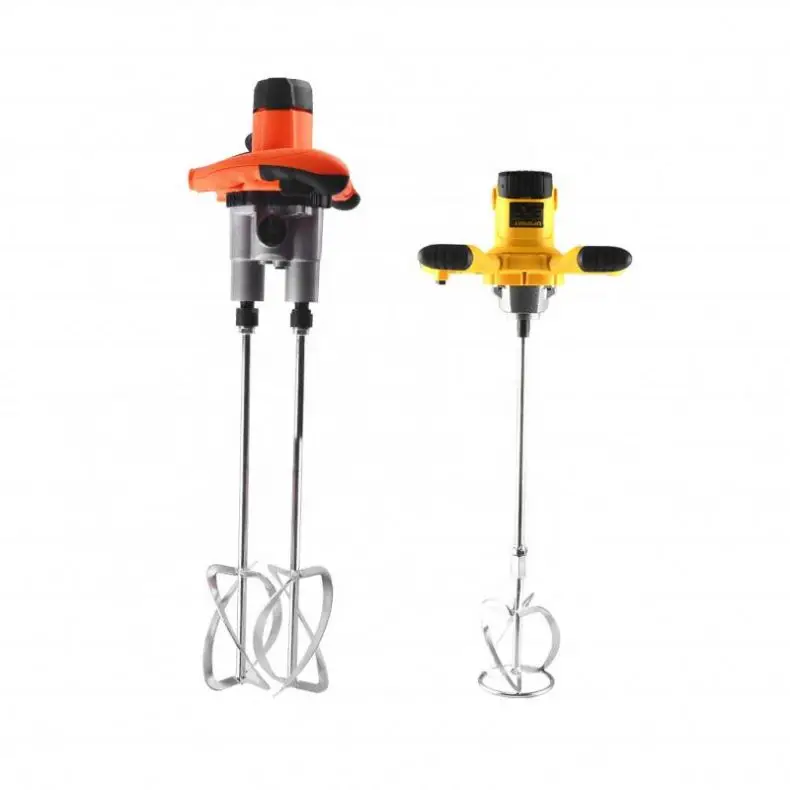
Source-controlled product identity
The Hoting queue identifies Product ID 1601252151175 as a TEBAK handheld electric mixer, listed under the title "110V/220V 6 Speed Double Mountain Rod/screw Rod Electric Steering Mixer Stirring Handheld Paint Cement Mortar Food Mixing Machine".
This record carries no structured parameter set at all. The parameter block is empty, so there is no power rating, no speed figure, no paddle dimension, no shaft or thread size, no working capacity, no weight and no electrical detail to quote. Everything in this guide is therefore either taken directly from the words of the title and the description text, or explicitly marked as a question that the supplier must answer before an order is placed. Nothing in this guide should be read as a confirmed specification, because the record simply does not contain one.
Where a number does appear, it appears only as a phrase in the product name and is reproduced exactly as written, including the original spacing and casing, so that the reader can match the phrase back to the source listing.
What the record actually says, and what it does not
| Attribute | What the record states | Status |
|---|---|---|
| Source Product ID | 1601252151175 | Recorded value |
| Supply voltage | "110V/220V" in the title | Title phrase only |
| Speed settings | "6 Speed" in the title | Title phrase only |
| Rod or paddle type | "Double Mountain Rod/screw Rod" in the title | Title phrase only |
| Handle type | "Electric Steering Mixer" in the title | Title phrase only |
| Form factor | "Handheld" in the title | Title phrase only |
| Stated applications | Paint, cement, mortar, food | Title phrase only |
| Motor power | not stated anywhere | Missing |
| No-load and load speed | not stated anywhere | Missing |
| Paddle diameter, shaft length, connection thread | not stated anywhere | Missing |
| Mixing capacity and viscosity limit | not stated anywhere | Missing |
| Net weight, cable length, duty cycle | not stated anywhere | Missing |
| Frequency and phase | not stated anywhere | Missing |
| Certification and standards | not stated anywhere | Missing |
The description text repeats the title and adds "Power Tools" as a category phrase, together with a company profile block. It adds no technical data of any kind. The company profile describes the supplier as a trading company dealing in product machines, CNC carbide inserts and turning and milling tools under the TEBAK brand, which is useful background for a buyer, but it is not a statement about this mixer.
Food contact against construction use: the conflict that must not be merged
The title lists paint, cement, mortar and food as applications for the same machine. Those categories are not interchangeable, and a single machine cannot usually serve both ends of that list well.
A mixer used with cement, mortar and paint is built for abrasive and alkaline material. Its paddle, shaft and gearbox are sized for high torque at low speed against heavy resistance, and the housing is built to tolerate dust, splashes and rough handling. None of that implies anything about hygiene. A mixer used in contact with food has to satisfy a different set of requirements: paddle and shaft material suitable for food contact and resistant to corrosion and cleaning chemicals, smooth surfaces without crevices where residue collects, cleanability, and in most destination markets a declaration of food-contact compliance for the materials that touch the product.
The consequence for a buyer is direct. If the intended use is food, the purchase must be justified by food-contact documentation for the parts that touch the food, not by the word "food" appearing in a product title. If the intended use is construction or paint, the food wording in the title is irrelevant marketing and should be disregarded. Ask the supplier plainly which of the two uses the machine was designed for, and request the material declaration for the food-contact parts if food is claimed. Until that is provided, the machine should be treated as a general-purpose construction and paint mixer.
110V/220V and 6 Speed: two phrases that need translation into data
110V/220V. This phrase is written as though one machine accepts either supply, but on handheld power tools that is unusual. The far more common arrangement is that the product exists in two separate build variants, one for 110V markets and one for 220V markets, and the title covers both listings. Confirm which arrangement applies, and if variants exist, which one is being quoted. In either case the frequency and phase are not stated at all, so ask for them explicitly, together with the current draw, the plug and cable standard, the insulation class and the earthing arrangement. For a 110V supply, confirm whether any step-down or site transformer arrangement is required. Request the nameplate photograph for the exact variant being ordered.
6 Speed. A count of speed settings is not a performance figure. What matters for choosing between mixers is the speed range, meaning the no-load and the under-load speed at the lowest and highest settings, and where in that range the machine develops usable torque. A six-position switch on a cheap mixer may simply reduce voltage to the motor across six steps, losing torque as speed falls, while a geared machine holds torque across the range. Ask for the mechanism: a mechanical gearbox, an electronic speed controller, or a resistive or tapped-winding selector. Ask for the rated speed at each setting, or at least at the lowest and highest settings, and ask what torque, if any, the machine can sustain at the low end where thick mortar is actually mixed.
Ask also whether the speed can be held under load or falls away as the material thickens, and whether the machine has a soft-start, an overload cut-out or a thermal protection device, because under-mixing a stiff mix is exactly the condition that overheats a small handheld unit. None of this is recorded.
Double mountain rod against screw rod
The title presents "Double Mountain Rod/screw Rod" as though these are two names for one thing. They are not the same tool, and the difference changes what the machine can mix.
A helical or screw-type paddle draws material upward and folds it back down, which suits free-flowing and moderately viscous materials and is the usual choice for paint, thin slurry and mixing liquids into powders. A double-arm or wing-type paddle, the type often called a mountain or double mountain rod in this trade, sweeps and folds thicker material and is generally chosen for mortar, plaster and stiff mixes where the material must be moved rather than pumped.
The slash in the title means the listing may cover a family of variants rather than one article. Ask the supplier, in writing: how many paddle variants are offered under this product ID, what each one looks like, which material each is made from, what diameter and length each one is, and which one is included in the quoted price. Ask whether the second paddle is included or sold separately, and ask for the connection size so that the buyer knows whether existing paddles will fit.
Ask for the paddle and shaft connection standard, since a common arrangement on this class of tool is a threaded shank in the M12 to M14 range with a hex or collar drive. If the thread is not stated, the buyer cannot reuse existing paddles or buy replacements from another source, which turns a small consumable into a supply dependency. Confirm the actual thread or connection, and ask whether the shaft is replaceable on its own or only as part of a larger assembly.
Electric steering handle: what to check
The title uses the phrase "Electric Steering Mixer" and the description says "Electric Steering Wheel Mixer". Read together, these point to a handle assembly that turns rather than a fixed grip, which on this class of tool normally means a rotating or swivelling handle arrangement that allows the operator to steer the mixing head through the material, often with the handle mounted on a ring or collar around the body.
Confirm what the mechanism actually is, how many positions it has or whether it turns continuously, and whether it can be locked. Ask whether the handle is detachable, because a detachable handle changes how the tool is packed and stored. Confirm the grip material and whether it is insulated, and whether a secondary support handle is provided, since a handheld mixer of this type under a stiff mortar load puts a considerable twisting force on the operator's wrist and a second grip is often the difference between a usable tool and a tiring one.
Capacity, viscosity and realistic duty
No mixing capacity figure appears anywhere in the record. Without a stated capacity, the buyer has no basis for choosing between this machine and a larger one, and no basis for comparing quotations.
Ask the supplier for the maximum recommended batch size for each material family, separately for paint, for mortar and plaster, and for any food material if food use is claimed, because the limiting batch size differs sharply with viscosity. Ask for the maximum viscosity the machine is rated for, and ask whether the figures given are continuous or intermittent ratings.
Ask for the duty cycle: how many minutes of continuous mixing the machine can sustain before a cooling break, and what the recommended rest period is. On small handheld mixers this figure is usually the real constraint on site, because the motor overheats long before the paddle reaches its mechanical limit. Ask whether the machine has a thermal cut-out and whether it resets automatically. Ask also for the recommended material temperature range, which matters for both food work and for mixing in cold conditions.
Electrical, mechanical and site requirements
Beyond the voltage phrase, the record states nothing about the electrical or physical installation of the tool. Confirm the following before ordering: frequency and phase, the rated power in watts, the current draw, the plug and cable standard, the cable length, the insulation class and the ingress protection rating. For a tool used with water-based materials and in dusty environments, the ingress protection rating is a practical durability question and not a formality.
Confirm the net weight of the tool and the packed weight, and the overall length with the paddle fitted, since a long shaft with a large paddle becomes unwieldy in a bucket and the buyer should check that the tool fits the containers actually in use. Ask for the body dimensions, the collar or ring diameter if the handle mounts on one, and the maximum paddle diameter the machine can drive.
Confirm what is included in the quoted price: the machine, which paddle or paddles, any wrench or tool for changing the paddle, the manual, and the carrying case if one is offered. Ask what is priced separately, because on listings of this type the paddle is frequently the item that turns a low headline price into a higher landed cost.
RFQ checklist
- Exact model and product ID 1601252151175, with a nameplate photograph for the variant quoted.
- Written confirmation of the intended use: construction and paint mixing, food mixing, or both, and the food-contact declaration if food is claimed.
- Whether 110V/220V means one dual-voltage machine or two separate build variants, and which is quoted.
- Frequency, phase, rated power in watts, current draw, plug and cable standard, cable length, insulation class and ingress protection rating.
- The mechanism behind "6 Speed", the rated speed at each setting or at least at the extremes, and the torque available at the lowest setting.
- Soft-start, overload cut-out and thermal protection details, with the reset behaviour.
- Which rod or paddle variants exist under this product ID, their dimensions, materials and which one is included.
- The paddle and shaft connection size or thread, and whether the shaft is replaceable separately.
- Maximum paddle diameter the machine can drive.
- Maximum recommended batch size for each material family, and the maximum rated viscosity.
- Continuous duty cycle in minutes, the recommended rest period, and whether the rating is continuous or intermittent.
- Recommended material temperature range.
- Handle mechanism: turning range or number of positions, whether it locks, whether it detaches, grip material and insulation, and whether a second grip is supplied.
- Net weight, packed weight, packed dimensions, overall length with paddle fitted, and container compatibility.
- Included accessories, spare parts, consumables, and everything priced separately.
- Manual language and the recommended maintenance schedule, including brush or bearing service if applicable.
- Certification and conformity documents applicable to the destination market.
- MOQ, sample or trial terms, unit price at the target quantity, lead time, packing and shipping terms.
- Warranty period, service response time and the price of the most likely wearing parts.
Acceptance and incoming inspection
Because the record contains no parameter set, the delivered machine can only be verified against a specification the buyer writes itself. Draft that specification from the supplier's written answers and make it part of the purchase order, then check the following on arrival.
Verify the nameplate against the ordered voltage variant, frequency, phase and power, and confirm the plug and cable match the destination market. Check the machine against the supplier's written statement on speed settings, paddle type and thread size, comparing the delivered paddle with the description and the photographs.
Run the machine unloaded through every speed setting, listening for abnormal noise and checking that speed changes are smooth and that the selected setting holds. Then run a loaded test with the material actually intended, at the batch size the supplier rated as maximum, and record the time taken, the operator's assessment of effort and whether the machine or the material rose in temperature. Confirm that the thermal protection, if fitted, behaves as described and resets.
Weigh the machine and compare against the stated net weight. Measure the shaft and paddle and compare against the stated dimensions. Check for damage in transit, particularly at the collar or ring where the handle mounts, and check the cable entry for strain relief. Record the serial number so that the delivered unit can be traced to the tested sample. If a food-contact declaration was provided, it must match the actual materials of the delivered parts.
Packaging, shipping and after-sales
The record contains no packing data. Request the packed dimensions and packed weight, the packing method, and how the paddle and any accessories are protected against transit damage, since a long paddle shaft and a cast paddle are the parts most likely to arrive bent or cracked.
Confirm the documentation supplied with the shipment, including the manual and any wiring or parts diagram, and the language of those documents. Confirm the warranty period, what is covered and excluded, the response time for technical questions, whether remote support is available, and the lead time and price for the most likely replacement parts, which on a tool of this class are typically the motor brushes, the switch, the speed selector, the cable and the paddle itself.
Confirm the shipping terms and who bears the cost if the machine arrives with damage or with a voltage variant that does not match the order. That last risk is specific to this listing because the title itself, by covering 110V and 220V at once, does not guarantee that the correct variant will be picked.
Buyer decision framework
The source confirms a TEBAK handheld electric mixing tool, described as 110V/220V with six speed settings, a double mountain rod or screw rod paddle, an electric steering handle, and applications covering paint, cement, mortar and food. The record contains no parameter set at all, so none of that is a verified specification.
The purchase decision rests on four written answers. Which voltage variant is being supplied and what its complete electrical specification is. What the six speed settings actually deliver in speed and in torque at the low end. Which paddle or paddles are included, what their dimensions and connection size are, and whether they can be replaced from an independent source. And whether the food application is genuinely supported by a food-contact declaration or should be disregarded in favour of construction and paint use.
A supplier who answers all four in writing, states a batch size and duty cycle for the specific materials the buyer uses, and supplies the paddle dimensions and thread size, is offering a workable basis for a purchase. Where those answers cannot be obtained, the buyer should treat this as an unquantified general-purpose mixing tool and buy on the basis of a trial sample rather than on capacity assumptions taken from the product title.
Frequently asked questions
Can one machine really mix both cement and food?
The title lists both, but the two uses impose conflicting requirements. Construction use needs torque and durability; food use needs food-contact materials and cleanability. Ask the supplier which use the machine was designed for, and require a food-contact declaration for the parts that touch food before treating food use as supported.
Does 110V/220V mean the same machine works on both supplies?
Not necessarily. On handheld power tools this phrase usually indicates two separate build variants rather than one dual-voltage unit. Confirm which variant is quoted and request the nameplate photograph for the exact one being ordered.
What does 6 Speed mean in practice?
It is a count of settings, not a performance figure. Ask for the no-load and under-load speed at the lowest and highest settings, the selection mechanism, and how much torque is available at the low end where thick mortar is mixed.
Which paddle comes with the machine?
The title names a double mountain rod or screw rod without saying which is supplied. Ask how many variants exist under this product ID, what each is made of, its dimensions, which is included in the price, and what the connection thread is.
How large a batch can it mix?
No capacity is recorded. Ask for the maximum recommended batch size for each material family separately, the maximum rated viscosity, and whether those figures are continuous or intermittent ratings.
Can I use existing paddles from another brand?
Only if the connection size matches. The thread or shank size is not recorded, so ask for it explicitly before assuming compatibility.
How long can it run continuously?
No duty cycle is stated. Ask for the continuous running time, the recommended rest period and whether a thermal cut-out is fitted, since on small handheld mixers the motor, not the paddle, is usually the limiting factor.
Is a screw rod and a mountain rod the same thing?
No. A helical screw-type paddle lifts and folds free-flowing and moderately viscous material, while a wing or arm-type paddle sweeps stiffer material such as mortar and plaster. Treat the slash in the title as an indication that more than one variant is being sold.
Source and contact
This guide is based on the Hoting queue record for Product ID 1601252151175. The record carries no structured parameters, so this guide quotes only the phrases present in the source title and description and marks every technical value as a question to be answered by the supplier. It does not convert any title phrase into a confirmed specification, and it does not merge the food application with the construction and paint applications.
Request the voltage variant identification, the complete electrical specification, the speed and torque data, the paddle and thread details, the batch size and duty cycle, the food-contact declaration if applicable, and the accessory list through the TEBAK sales inquiry channel before placing an order.
Key specifications
- Source Product ID
- 1601252151175