
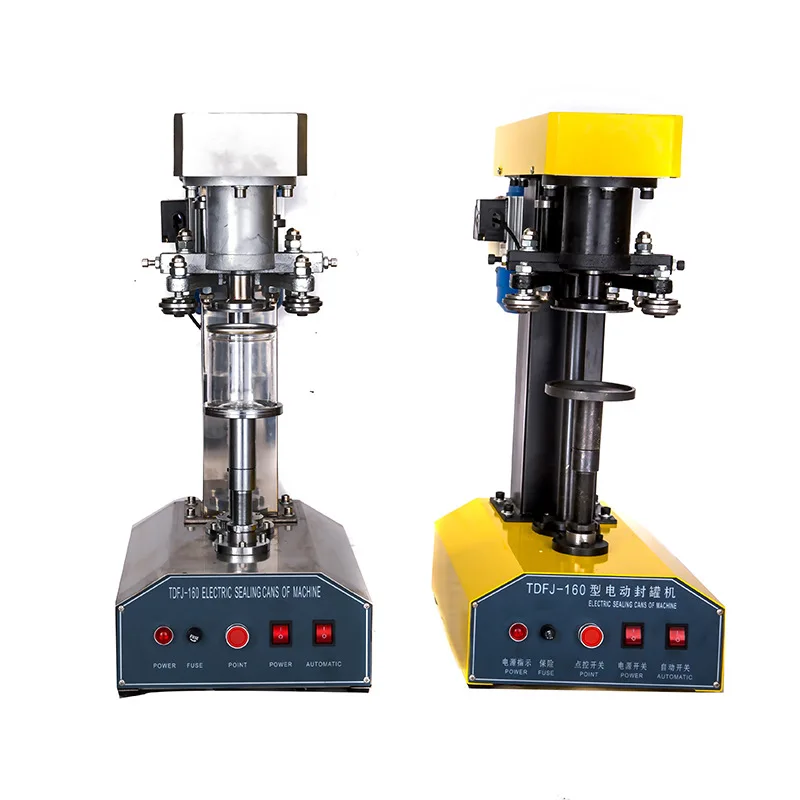
Source-controlled product identity
The Hoting queue identifies Product ID 1601247456306 as an automatic aluminium tin beverage, drink, wine and beer tin can sealing and capping machine under the TEBAK brand.
The source record provides no structured technical parameters. It does not specify can diameter, can height, can material thickness, lid type, sealing method, closure profile, speed, filling compatibility, electrical rating, air pressure, dimensions, weight, change parts, food-contact materials, cleaning method, safety system or certification.
This B2B procurement guide therefore treats the product title as a product identity and application description, not as proof of a particular sealing format or production capability. It is intended for beverage packers, contract fillers, wineries, breweries, private-label operators, food-service suppliers, distributors and importers evaluating an automatic can-sealing machine.
Before purchase, the supplier must match the machine to the buyer's exact can body, lid, beverage process, closure specification and target throughput. A visually similar can seamer can be mechanically incompatible with a different diameter, flange, lid curl or filled-product condition.
Recorded information and open specification fields
| Field | Recorded source information | Procurement treatment |
|---|---|---|
| Product ID | 1601247456306 | Use this identifier on RFQ, quotation, sample order, inspection report and shipping documents. |
| Brand | TEBAK | Confirm the nameplate, exact model, revision and delivered branding. |
| Product identity | Automatic aluminium tin beverage drink wine beer tin can sealing capping machine | Confirm the exact machine architecture, seaming operation and included configuration. |
| Application wording | Aluminium tin, beverage, drink, wine and beer can use appears in the title | Validate every intended container and liquid with production samples. |
| Can diameter and height | Not supplied | Request minimum, maximum, nominal and change-part dimensions with drawings. |
| Lid and closure | Not supplied | Request lid diameter, curl, countersink, tab, seam profile and material compatibility. |
| Sealing method | Not supplied | Confirm number of seaming operations, tooling, rollers, chuck, vacuum or gas functions. |
| Speed and capacity | Not supplied | Define tested cans/minute at the buyer's exact can, liquid, fill level and seam criteria. |
| Electrical and pneumatic | Not supplied | Request voltage, frequency, phase, power, current, air pressure, air consumption and utilities. |
| Materials and hygiene | Not supplied | Request food-contact material list, surface finish, washdown limits, drainage and cleaning SOP. |
| Safety and compliance | Not supplied | Request guarding, interlocks, emergency stop, safety labels, manual and destination-market files. |
Define the container before selecting a seamer
Send the supplier a complete can drawing rather than only the beverage name. Include body diameter, flange diameter, body height, lid diameter, countersink, curl, wall thickness, base profile, material, coating and allowable dimensional tolerance.
Identify whether the container is aluminium, tinplate, another metal or a laminated construction. The title includes aluminium tin wording, but it does not establish the actual material or thickness.
Provide the exact lid and end specification: diameter, end style, tab type, curl, compound, coating, venting and any special opening. The lid must match the chuck and seaming tooling.
Confirm whether cans arrive empty, filled, purged, carbonated, hot-filled, cold-filled, pressurized or at ambient pressure. Seaming behavior can change with internal pressure, liquid level, foam and product temperature.
Define the can orientation, infeed, lid placement, seam inspection and discharge. Request a layout showing how cans move through the machine and how an operator handles rejects.
Submit representative cans and lids from the intended production lot. A machine trial using a similar but dimensionally different can is not sufficient for acceptance.
Clarify the sealing and capping architecture
The source calls the equipment a sealing and capping machine, but does not describe the mechanism. Ask whether it uses a rotary seamer, inline seamer, single-head system, multi-head system, spin seamer, vacuum seamer or another design.
Request a process diagram showing can positioning, lid placement, chucking, first operation, second operation, seam release and discharge.
Confirm the number and type of seaming rollers, roller profiles, chuck, lifter, guide rails and change parts. Request the supplier's seam-setting procedure.
Ask whether the machine controls can height, lid position, chuck pressure, seam pressure, roller timing, rotation speed and lift force. Identify which parameters are manual, pneumatic, servo-controlled or fixed.
Define whether the machine can handle empty-can sealing, filled-can closure or both. Request restrictions on foam, liquid splash, carbonation, vacuum, temperature and viscosity.
Clarify whether “capping” means lid placement, lid pressing, can-end closing or a separate cap operation. Do not treat the word as a verified second process.
Request a sample seam cross-section and measurement report produced on the buyer's container. A visual top view alone cannot establish hermetic or commercially acceptable seam quality.
Can format, change parts and tooling
Request a change-parts list for every can size in the buyer's range: chuck, rollers, guides, star wheels, pockets, conveyors, lid feeders, sensors and adjustment fixtures.
Confirm changeover time, tools required, adjustment points, stored recipes, setup gauges and first-piece approval process.
Ask for drawings with tolerances for the chuck, rollers, guide rails and lid-feed components. Check the drawing against the buyer's can and end dimensions.
Identify wear parts and replacement intervals. Ask for roller bearing, chuck, seals, belts, chains, sensors, springs, lifter components and fastener specifications.
Confirm whether a can body or end with small dimensional variation can pass without damaging the seam or causing jams. Define the acceptable incoming can tolerance.
Test the smallest, largest and most difficult can in the buyer's approved range. Record changeover time, setup rejects and steady-state seam results for each.
Keep a dedicated tooling record. A quotation that lists the machine but not the supplied change parts is incomplete for a multi-format packaging line.
Throughput and line integration
No speed or capacity is supplied. Request tested cans per minute under defined conditions, not a headline maximum detached from the can, liquid and seam specification.
Define required output by hour, shift, product, can size and planned efficiency. Include lid loading, infeed gaps, inspection, reject handling, cleaning and changeover.
Confirm the infeed and discharge interface: conveyor height, direction, spacing, can accumulation, star-wheel pitch, speed control and line communication.
Request the machine footprint, service clearances, operator side, maintenance access, lifting points and utility connection locations.
Ask how the machine behaves during a missing can, missing lid, double lid, tipped can, jam, low air pressure, sensor fault or downstream stop.
Test start-stop cycling, short runs, long runs and restart after a controlled jam. Record rejects, seam variation, can dents and unplanned intervention.
For a contract-packing line, define batch traceability and recipe control. Confirm how operators identify the active can format and prevent an old changeover setting from being reused.
Seam quality and acceptance criteria
Define the finished seam using the buyer's packaging specification. Request seam height, seam thickness, countersink, overlap, tightness, cover hook, body hook, wrinkles and acceptable limits.
Ask the supplier which seam inspection tools are included: seam micrometer, teardown tools, vision inspection, leak tester, pressure test or another method.
Do not approve a machine based only on a clean-looking seam. Perform teardown measurements at multiple clock positions and compare them with the buyer's limits.
Test seams at startup, steady state, after changeover, after a short stop and near the end of a run. Record the can number, tool setting and measurement results.
Check for loose seams, cutovers, false seams, droops, sharp edges, dents, lid deformation and coating damage. Link each defect to the machine setting or incoming can condition.
For carbonated or pressure-containing beverages, request the buyer's leak and pressure test procedure. Do not promise shelf life or hermetic performance without product-specific validation.
Retain sample cans from the factory test, shipping inspection and first production batch. Use them for comparison when the machine is installed.
Liquid, foam and product compatibility
The title refers to beverages, drinks, wine and beer but provides no fill conditions. Ask the buyer and supplier to define product temperature, viscosity, carbonation, dissolved gas, foam, solids and fill level.
Test the actual beverage with the planned filling process. A low-foam water test cannot validate a foaming beer or carbonated product line.
Record headspace, liquid splash, foam collapse, lid contamination, seam compound condition and cleaning burden.
Confirm whether the machine can handle dry cans, wet cans, chilled containers, warm-filled products or products requiring gas purge. Each function must be stated in the quotation and manual.
Ask whether the sealing head, guides, rollers and frame are protected from beverage contact. Identify drain paths and areas where sugar, alcohol, acid or cleaning solution may accumulate.
Define cross-contamination controls for wine, beer, soft drinks and flavored beverages. Request product-change cleaning time and verification method.
Do not infer food-contact compliance from a stainless-looking exterior. Request the complete material and surface documentation for all product-area parts.
Electrical, pneumatic and control requirements
No utility specification is provided. Request voltage, frequency, phase, rated power, current, plug, grounding, air pressure, air quality, air consumption and exhaust requirements.
Ask whether the machine needs chilled water, vacuum, carbon dioxide, nitrogen, compressed air or another utility. A product title does not establish any of these functions.
Request a utility layout with connection points, hose sizes, drain requirements, cable routing and service clearance.
Confirm controls: start/stop, speed, recipe, format selection, alarms, sensor status, jam recovery, emergency stop and guarded access.
Test power interruption, air-pressure loss, sensor failure, missing lid, missing can, jam, guard opening and emergency stop. Verify safe shutdown and controlled restart.
Ask for PLC, HMI, parameter backup, language, password roles, data logging and remote-service boundaries. Do not accept undocumented parameter changes.
Request wiring diagrams, component list, spare controller or sensor information and electrical test records for the delivered revision.
Hygiene, cleaning and materials
Request a complete material list for can-contact, lid-contact, beverage-adjacent and washdown-exposed parts. Include steel grades, coatings, plastics, elastomers, lubricants and sealants.
Inspect surfaces for crevices, exposed threads, unsealed hollow sections, sharp edges and areas where liquid or lid compound can collect.
Define dry clean, wet clean, foam clean, rinse and sanitation steps. Confirm which components may be removed and which must remain protected from water.
Request approved cleaning chemicals, concentration, temperature, contact time, rinse and drying requirements. Test the process with the buyer's actual detergent.
Check whether lubricants can migrate into product areas and whether food-grade lubricant is required. Record lubrication points and service intervals.
Measure cleaning time after beer, wine, sugary drinks and foaming products. Include changeover sanitation in the line-capacity model.
Verify that the manual's cleaning instructions match the delivered machine, guards, sensors, conveyors and seaming head.
Safety, packaging and site acceptance
Request guards, interlocks, emergency stops, safe access, jam-clearing procedure, sharp-edge protection, lockout guidance and hot or moving-part warnings.
Identify hazards from rotating seaming heads, pinch points, conveyors, lid feeders, falling cans, sharp metal edges, compressed air and unexpected restart.
Confirm whether the line requires a fenced cell, access doors, light curtains or a restricted operator area. These requirements depend on the final layout and local rules.
Request dimensions, weight, package count, crate or carton specification, lifting points, moisture protection, shock indicators and installation instructions.
Inspect nameplate, serial number, model revision, change parts, manuals, tools, electrical cabinet, guards and spare parts at incoming inspection.
Run a dry mechanical test, an empty-can test and a filled-product test. Record rejects, seam measurements, leak results, line speed and operator actions.
Approve the machine only after the supplier closes every deviation against the quotation and the buyer signs the sample seam report.
Commercial and service questions
Request a quotation that separates base machine, seaming head, lid feeder, conveyor, sensors, inspection, change parts, tooling, spare parts, installation, training and packaging.
Confirm minimum order quantity, sample availability, lead time, shipping terms, package dimensions, gross weight, spare-part lead time and service response.
Ask for warranty coverage of seaming rollers, chuck, lifter, guides, sensors, motors, PLC, HMI, pneumatic parts and structural components.
Define performance warranty by can format, speed, seam criteria, product, fill level, utilities and operator training. A general output guarantee is not sufficient.
Request remote support limits, escalation procedure, replacement-part identification and whether a supplier technician is required for changeover or commissioning.
Compare total ownership cost: machine, tooling, change parts, utilities, cleaning, inspection, rejected cans, seam consumables, maintenance and downtime.
Keep the exact can drawing, lid drawing, quotation, acceptance sample, seam report and final machine configuration together in the project file.
Factory acceptance test
- Verify Product ID 1601247456306, TEBAK brand, exact model, revision and nameplate.
- Verify the machine architecture and define what “sealing and capping” includes.
- Run the buyer's exact aluminium or tin can and lid, including the intended diameter, height, curl and end.
- Confirm all supplied chucks, rollers, guides, feeders, star wheels and change parts against the quotation.
- Measure setup and changeover time between every buyer-approved can format.
- Run dry cans, filled still product and the intended wine, beer or beverage under approved conditions.
- Measure cans per minute, startup rejects, steady-state rejects, stop/restart behavior and line accumulation.
- Perform seam teardown measurements for height, thickness, overlap, hooks, tightness and wrinkles.
- Run leak or pressure tests required by the buyer's packaging specification.
- Test missing can, missing lid, tipped can, double lid, jam, sensor failure and downstream stop.
- Test guard interlocks, emergency stop, air or utility loss, power interruption and controlled restart.
- Verify material, food-contact, washdown, drain, lubrication and cleaning documentation.
- Verify dimensions, weight, utility connections, service access, lifting points and package contents.
- Verify manuals, wiring, PLC/HMI documentation, spare parts, warranty and service response.
- Sign the sample seam report only when the buyer's exact container and product meet agreed limits.
RFQ checklist
- Product ID 1601247456306, TEBAK brand, model, revision and nameplate photograph.
- Exact can body material, diameter, height, wall thickness, flange, curl, base and tolerance.
- Exact lid/end drawing, diameter, countersink, curl, tab, compound, coating and tolerance.
- Seaming architecture, number of heads, rollers, chuck, lifter, guide rails and lid placement.
- Definition of “sealing” and “capping,” including any vacuum, gas purge or separate cap function.
- Compatible can formats, change parts, tooling drawings, changeover time and spare tooling.
- Tested speed in cans/minute using the buyer's exact can, lid, beverage and seam criteria.
- Product conditions: still, carbonated, foaming, wine, beer, temperature, viscosity and fill level.
- Voltage, frequency, phase, power, current, plug, grounding, compressed air and other utilities.
- Guards, interlocks, emergency stop, jam recovery, restart behavior and lockout procedure.
- Food-contact materials, surface finish, lubricant, washdown limits, cleaning chemicals and SOP.
- Seam measurement tools, inspection method, leak test, pressure test and quality records.
- Footprint, line height, conveyors, service clearance, package size, gross weight and lifting.
- MOQ, sample, lead time, freight, installation, training, warranty, spare parts and service.
- Factory acceptance sample plan with cans, lids, product, limits, deviations and sign-off process.
Buyer decision framework
This source confirms only a TEBAK automatic aluminium tin beverage, drink, wine and beer tin can sealing/capping machine identity. It provides no numeric specifications or verified production claims.
Approve a supplier only after a complete can-and-lid trial using the intended product and measured seam criteria. The critical buying evidence is not the title; it is a matching container drawing, compatible tooling, repeatable seam measurements, safe line behavior, documented utilities and serviceable change parts.
Compare offers by validated package integrity, changeover, hygiene, utilities, reject handling, inspection and total ownership cost. Do not compare machines on headline “automatic” wording alone.
Frequently asked questions
What product is listed?
The source lists an automatic aluminium tin beverage, drink, wine and beer tin can sealing and capping machine under the TEBAK brand.
What can sizes does it support?
No can diameter or height is provided. Send the supplier a complete can and lid drawing and request compatible tooling and tested limits.
What is the production speed?
No speed is provided. Require a measured cans-per-minute result using the buyer's exact can, lid, beverage, fill level and seam criteria.
Can it seal beer or carbonated beverages?
Beer appears in the source title, but the record provides no carbonation, foam, pressure or seam validation. Confirm this with a product-specific trial.
What power or air supply is required?
The source provides no utility specification. Request voltage, frequency, phase, rated power, current, air pressure, air consumption and any gas, vacuum or water requirement.
Does it include change parts?
The source does not list accessories or tooling. Require every chuck, roller, guide, feeder, star wheel and format part to be itemized in the quotation.
What certifications are included?
No machine-specific certification or compliance document is provided. Request the applicable electrical, machinery, food-contact and destination-market documentation.
Source and contact
This guide is based on the Hoting queue record for Product ID 1601247456306. The record confirms the TEBAK product identity and intended container applications but does not provide technical parameters. Before purchase, request a complete can-and-lid compatibility study, sample seam trial, utility specification, hygiene and safety documents, tooling list, spare-parts terms and warranty through the TEBAK sales inquiry channel.
Key specifications
- Product Identity
- Automatic Aluminium Tin Beverage Drink Wine Beer Tin Can Sealing Capping Machine
- Brand
- TEBAK
- Source Product ID
- 1601247456306