
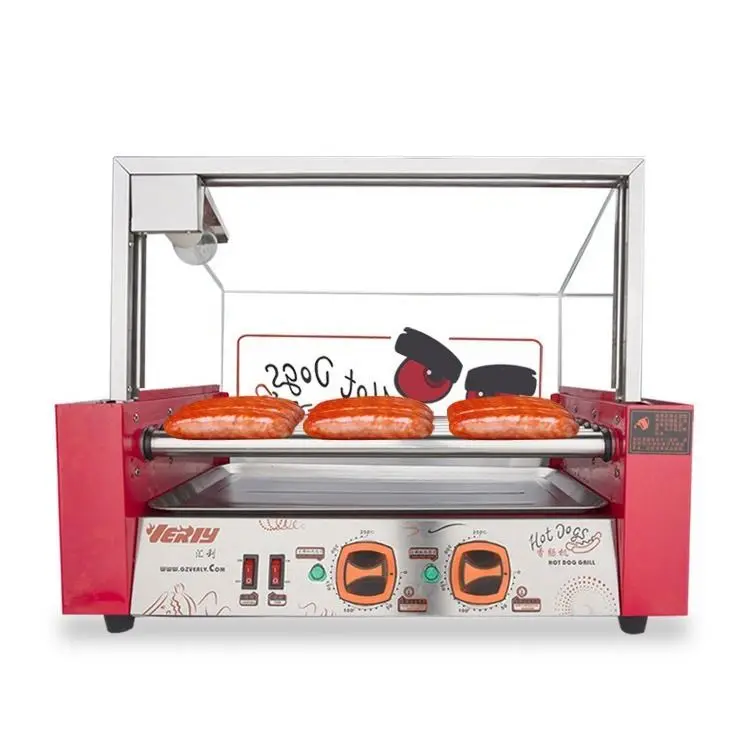
Source-controlled product identity
The Hoting queue record describes a TEBAK automatic electric hot dog grill roller for commercial snack and food-industry use. The structured record provides three fields: Heating method: Electric Tube, Usage: Food Industry Equipment and Application: Snack. The title adds the descriptive claims automatic, commercial, hot dog, stainless steel roller and hot dog stand. Those title terms define the sourcing topic, but they do not form a complete verified specification.
Product ID 1601391281800 must appear on the quotation, nameplate photograph, drawing, test record, packing list and spare-parts list. The source record does not provide voltage, frequency, phase, rated power, thermostat range, number of rollers, roller diameter, roller length, working capacity, temperature uniformity, warm-up time, dimensions, weight, stainless-steel grade, food-contact declaration, plug, protection rating, cleaning method, certification, MOQ, warranty or lead time. Treat each missing value as a supplier confirmation item.
What the listing says and what the buyer must verify
| Source statement | Procurement interpretation | Required confirmation |
|---|---|---|
| Electric Tube heating method | The record identifies an electric tube as the heating method. | Heater construction, rated voltage, rated power, control method, replacement part, heat-up time and thermal protection. |
| Automatic | The title presents an automatic operation claim. | Define what is automatic: temperature control, roller drive, timer, shutoff, speed control or another function. |
| Commercial hot dog grill roller | The product is positioned for snack-service operation. | Duty profile, service hours, throughput, cleaning interval, operator workflow and warranty conditions. |
| Stainless steel roller | The title refers to stainless-steel rollers. | Steel grade, food-contact suitability, surface finish, welds, corrosion resistance and cleaning compatibility. |
| Food Industry Equipment / Snack | The structured usage and application identify the intended sector. | Food-contact documents, hygiene design, operating instructions, temperature limits and destination-market compliance. |
Define what “automatic” means
Do not approve an automatic hot dog roller from the title alone. Ask the supplier to provide an operating sequence showing which functions run without continuous operator input. Possible functions include electric-tube temperature regulation, roller rotation, a timer, automatic standby, over-temperature cut-off or a display. The quotation must name each included function and clearly identify manual functions.
Request a control-panel drawing and a wiring diagram for the exact model. Confirm the thermostat type, setpoint range, sensor location, display accuracy, hysteresis, alarm behavior and reset method. If a timer or standby mode exists, define its resolution and whether it changes heating, rotation or both.
Test the full operating sequence with empty rollers and with the buyer’s representative food load. Record start-up, heat-up, temperature stabilization, roller rotation, restart after power interruption, over-temperature protection and shutdown. Do not describe a mechanical switch or a simple thermostat as a complete automation system unless the supplier documents it.
Ask whether automatic operation changes when the lid, guard or tray is removed. Confirm whether the rollers continue rotating when heating is off, whether heating restarts after a power return and how the operator can safely isolate the unit for cleaning.
Electrical configuration and electric-tube heating
The source record confirms an electric-tube heating method but provides no electrical values. Request the rated voltage, allowable voltage range, frequency, phase, rated power, maximum current, plug, cable, earthing method and protective-device requirement. The buyer should approve the configuration for the destination country before a purchase order is issued.
Ask for the heater layout, tube material, insulation, terminal protection, temperature sensor and replacement procedure. Confirm whether the electric tubes are exposed, shielded, embedded or located below a removable tray. The design should prevent food debris and cleaning liquid from reaching energized components.
Perform a no-load electrical test and a loaded heat-up test. Record supply voltage, input current, power draw, warm-up time, surface temperature, controller behavior and thermal cut-off. Keep instrument details and ambient conditions with the factory acceptance record.
Confirm start-up current and behavior after a power interruption. The unit should not restart unexpectedly in a way that creates a burn or rotating-equipment hazard. Request the safe isolation procedure and verify that the plug, switch and protective earth are suitable for the intended installation.
Temperature control and food holding
No temperature range, uniformity, accuracy or holding condition is supplied. Ask for the adjustable range, control sensor, display resolution, measured accuracy, calibration method and temperature limit. Clarify whether the displayed value represents air temperature, roller surface temperature, a sensor near the heater or another point.
Map temperatures across the working rollers using a calibrated instrument. Test during warm-up, empty operation and representative food loading. Record the temperature at each roller position, time to stabilize, recovery after loading and the effect of the lid or ambient airflow.
Define the buyer’s food-holding process separately from the machine’s heat setting. A roller grill can warm food, but the buyer must establish safe food handling, holding time, product rotation and local temperature requirements with the responsible food-safety person. Do not turn an unverified temperature claim into a food-safety guarantee.
Request guidance for different product diameters, casing materials, moisture levels and loads. Confirm whether the rollers can be used for the buyer’s products without slipping, splitting, excessive drying or uneven heating. Record the approved load range and any minimum spacing between products.
Roller count, dimensions and rotation
The source record does not provide roller count, diameter, length, spacing, rotation speed or working area. Ask for a dimensioned drawing and a complete roller schedule. The drawing should identify usable cooking length, end clearances, tray dimensions, guard positions and access for cleaning.
Clarify whether all rollers rotate, whether rotation is powered by one motor or multiple drives, and whether the speed is fixed or adjustable. Request motor power, transmission type, gear material, lubrication requirements and replacement parts. If the title says roller grill but rotation is manual, the quotation must state that difference.
Test rotation with an empty surface and with representative products at the maximum intended load. Record speed stability, slipping, noise, vibration, end-play, drive temperature and behavior after a product jams. The motor should stop or protect itself safely if the roller mechanism is obstructed.
Inspect the transfer between rollers, end caps, drive couplings and retaining hardware. Food particles and cleaning liquid should not accumulate in inaccessible gaps. Confirm that a damaged roller can be removed without replacing the complete machine.
Stainless-steel and food-contact assessment
The title calls the product stainless steel roller, but no steel grade or food-contact documentation is supplied. Ask the supplier to identify every food-contact surface, including rollers, trays, end caps, guards and handles. Request the material grade, finish, weld treatment and corrosion-resistance evidence for each part.
Do not assume that stainless-steel appearance proves a particular grade. Inspect the material identification supplied by the manufacturer and compare it with the approved sample. If a food-contact declaration or local compliance document is required, confirm the legal entity, scope, test method and applicable product configuration.
Inspect seams, welds, corners, fasteners and transitions for sharp edges, pits, crevices and unsealed cavities. Check that the roller surface is smooth enough for the intended cleaning process and that no coating can flake into food. Record the approved cleaning chemicals and maximum contact temperature.
Keep electrical and food-contact zones separate. Confirm whether the roller assembly, tray, guard and crumb collector can be removed without exposing energized heater terminals. Ask for a cleaning diagram that identifies parts safe for immersion and parts that must only be wiped.
Cleaning, hygiene and daily operation
Request a written cleaning procedure covering isolation, cool-down, removable parts, roller surfaces, crumb collection, end caps, drive area and electrical enclosure. The procedure should state which detergents, sanitizers, brushes and cloths are permitted.
Run a cleaning trial using the buyer’s actual workflow. Record the time to isolate and cool the unit, tool requirements, access to each roller, water restrictions, drying steps and inspection points before the next service period. A machine that is quick to operate but difficult to clean can create avoidable hygiene risk.
Confirm how grease and food residue are managed. Ask whether a drip tray or crumb tray is included, how often it must be emptied, and whether the tray can be removed while hot. Test the tray lock, handle temperature and spill containment.
Define a pre-opening and closing checklist. Include cable and plug inspection, guard condition, roller rotation, thermostat function, tray cleanliness, heater protection, surface damage and emergency isolation. Require operator training materials in the buyer’s language when needed.
Capacity, throughput and service profile
No capacity, throughput or service-hours data is present in the source record. Do not publish a number of hot dogs per hour or a maximum load without a controlled test. Ask the supplier to define the working area, product diameter, spacing, recommended load and rotation time.
Use a representative service simulation: preheat, load, rotate or hold products, remove products, replenish, clean the working area and repeat. Record recovery time, temperature deviation, operator actions, power draw and surface quality. Separate the machine’s physical capacity from the buyer’s food-safety holding limit.
Confirm the expected duty profile: occasional snack service, continuous counter operation, mobile catering or fixed commercial installation. Request a rated operating cycle, maximum continuous run time, rest period, motor thermal limit and heater duty cycle.
Check the queue record’s application term “Snack” against the buyer’s menu. If other foods will be heated, obtain written compatibility and hygiene guidance instead of assuming that a hot dog roller is suitable for every snack product.
Counter installation and safety
Ask for overall dimensions, net weight, packed weight, clearance around the machine, rear cable exit, ventilation openings and counter-load requirements. Confirm whether feet, brackets, a stand, splash guard or sneeze guard are included.
Inspect stability on the buyer’s counter. Test the unit during roller rotation, product loading and tray removal. It should not slide, tip or expose hot surfaces during normal operation. Request the minimum distance from walls, combustible materials and customer-access areas.
Review hot-surface warnings, operator access, guard design, finger clearance, roller pinch points, sharp edges, electrical protection and emergency isolation. The unit’s compact format does not remove burn, entanglement, electrical or food-contamination hazards.
Ask for noise and surface-temperature information where the machine will be installed near customers or staff. Mark hot areas and keep customer contact away from rollers, end caps and trays. Confirm whether a physical barrier is required for the intended counter layout.
Packaging, transport and commissioning
Request the packed dimensions, carton construction, protective inserts, moisture barrier, shock protection and transport orientation. Rollers, guards, trays and switches should be protected from impact and deformation during international shipment.
Confirm the commissioning sequence: unpacking, roller installation, electrical inspection, cleaning before first use, warm-up, temperature check, rotation check and operator training. Require a checklist signed by the buyer or inspection agency.
Ask whether the machine is shipped assembled or requires installation. If rollers, guards, trays or a stand are removed for packing, request the assembly drawing and fastener list. Confirm that the final assembly does not alter food-contact or safety performance.
Keep spare parts available for electric tubes, thermostat or sensor, drive motor, gears, couplings, rollers, switches, trays, feet and power cable. Request part numbers, prices, lead time and service instructions for each replaceable component.
Compliance and documentation
The source description mentions company quality-control practices and an ISO9001-related statement, but it does not provide a verified product certificate. Keep management-system claims separate from machine-level electrical, food-contact and safety evidence.
Request the operating manual, wiring diagram, electrical test record, protective-earth result, insulation or leakage test where applicable, EMC information, product labels and destination-market documents. Verify the legal entity, certificate scope, validity and applicability to the exact model and voltage configuration.
For food-contact surfaces, request the relevant material declarations or test documents required by the buyer’s market. Confirm that the document covers the rollers, trays and any coating or sealant that may contact food. Do not infer compliance from stainless-steel appearance or from a supplier’s general company statement.
Record the document revision, model number, nameplate, inspection date and manufacturer. A document with a different voltage, product family or legal entity should be treated as a document gap until resolved.
Factory acceptance test proposal
- Verify product ID 1601391281800, exact model, nameplate, voltage version, drawing revision and accessory list.
- Confirm the electric-tube heating method, heater layout, rated power, control system, sensor and thermal protection.
- Map roller temperatures during warm-up, empty operation and representative loading.
- Verify roller count, diameter, length, spacing, rotation direction, speed, load behavior and drive protection.
- Inspect stainless-steel rollers and all food-contact parts for grade evidence, finish, welds and cleanability.
- Test tray removal, crumb collection, guard access, cleaning procedure and isolation before service.
- Run a representative snack-service simulation and record recovery, temperature deviation, rotation, power draw and operator actions.
- Test voltage, frequency, current, plug, earthing, start-up, power interruption, leakage or insulation checks where applicable.
- Inspect hot surfaces, pinch points, sharp edges, stability, cable routing, ventilation and customer-access protection.
- Review manual, wiring diagram, food-contact documents, electrical tests, compliance evidence, packing, spare parts and warranty.
RFQ checklist
- Exact model and product ID 1601391281800 on quotation, nameplate, drawing, test record and packing list.
- Meaning of “automatic,” including temperature control, roller drive, timer, standby, shutoff and alarm functions.
- Electric-tube heater type, material, rated voltage, frequency, phase, power, current, sensor and replacement price.
- Thermostat range, display resolution, accuracy, calibration method, hysteresis, alarm, cutoff and recovery.
- Roller count, diameter, length, spacing, working area, rotation speed, drive motor, transmission and load limit.
- Stainless-steel grade and finish for rollers, trays, guards and other food-contact parts; request declarations.
- Overall dimensions, net and packed weight, counter clearance, feet, stand, tray and customer-side protection.
- Plug, cable, earthing, circuit breaker, leakage or insulation test, EMC information and destination-market documents.
- Snack types, product diameter, recommended load, spacing, service cycle, recovery and cleaning limits.
- Crumb tray, grease management, cleaning chemicals, removable parts, immersion restrictions and hygiene procedure.
- Surface temperatures, hot-surface warnings, pinch points, guard design, restart behavior and emergency isolation.
- MOQ, sample policy, customization options, packaging, inspection, lead time, warranty and spare-parts terms.
Buyer decision framework
This listing is a starting point for sourcing an electric hot dog grill roller for snack-service use. The source-backed scope covers the electric-tube heating method, food-industry equipment usage, snack application and the title’s automatic, commercial and stainless-steel roller descriptions. It does not verify temperature performance, roller capacity, food-contact material grade, electrical configuration, cleaning design, service duty or compliance status. Approve the purchase only after the supplier maps each claim to a model-specific drawing and nameplate, demonstrates representative heating and rotation, passes the electrical and hygiene checks, and supplies documentation for the destination market.
Frequently asked questions
Is the grill confirmed to have automatic temperature control?
The title says automatic, but the source record does not define the automatic function. Ask the supplier to list the control sequence and provide a control-panel drawing, wiring diagram and test record.
Does “Electric Tube” confirm the rated power?
No. It identifies the heating method only. Voltage, frequency, phase, rated power, current, heater layout and thermal protection must be confirmed for the exact model.
Are the rollers verified as food-grade stainless steel?
The title describes stainless-steel rollers, but no grade or food-contact document is supplied. Request the material grade, finish, weld treatment and applicable declaration or test evidence.
How many hot dogs can it hold?
No roller count, working length, product diameter or capacity is provided. Request a dimensioned drawing and run a representative service test using the buyer’s products.
Can the unit be washed with water?
Do not assume that a food-service machine is washable. Request the cleaning procedure, removable-part list, electrical isolation method and restrictions on immersion or spray cleaning.
Source and contact
This guide is based on the Hoting queue record for product ID 1601391281800. Before purchase, request the current quotation, model drawing, nameplate photograph, electrical and heater data, temperature map, roller schedule, food-contact documents, cleaning procedure, safety tests, packaging record, spare-parts offer and final machine photographs. For sourcing questions, contact the TEBAK sales team through the site’s current inquiry channel.
Key specifications
- Heating method
- Electric Tube
- Usage
- Food Industry Equipment
- Application
- Snack