
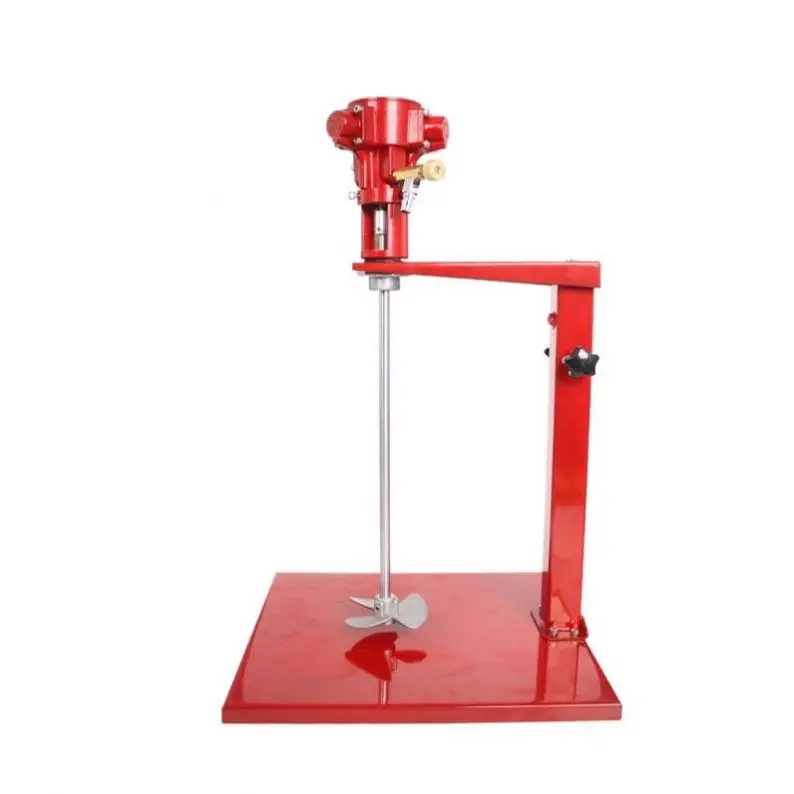
Source-controlled product identity
This TEBAK Hoting queue record describes a cosmetics, paint, liquid soap, perfume and cream agitator mixing machine, also described as a liquid blender, stirring machine and industrial paste mixer. The same record includes the wording “20 L pneumatic mixer portable mixer soap detergent shampoo making machine,” the advantage “easy to operate,” and the product name “5 gallon mixer.” These are source-recorded identity and application statements, not a complete engineering data sheet.
Product ID 1601252562097 must remain on the quotation, drawing, sample record and inspection report. The record contains a potential capacity-label difference: “20 L” appears in the description while “5 gallon mixer” appears as the product name. Do not silently convert or reconcile the two values. Ask the supplier to confirm the rated working volume, gross vessel volume, usable fill volume and the exact model associated with each label.
| Source field or description | Recorded value | Procurement treatment |
|---|---|---|
| Product family | Cosmetics paint liquid soap perfume cream agitator mixing liquid blender stirring machine industrial paste mixer | Confirm the exact process, material viscosity range and model configuration. |
| Description wording | 20 L pneumatic mixer; portable mixer; soap, detergent and shampoo making machine | Confirm whether 20 L is gross volume, working volume, batch size or only a listing descriptor. |
| Advantage | easy to operate | Validate with a documented operating sequence, cleaning task and operator trial. |
| Product name | 5 gallon mixer | Keep as the supplied product name; reconcile it with the separate 20 L wording in writing. |
| Application wording | Cosmetics, paint, liquid soap, perfume, cream, paste, detergent and shampoo | Run compatibility and cleaning trials with the buyer's actual formulation. |
The source does not provide motor power, air pressure, air consumption, motor or air-motor type, speed range, speed control, torque, shaft diameter, impeller type, impeller diameter, mixing time, batch volume definition, viscosity range, density range, temperature range, vessel dimensions, vessel material, contact-surface finish, seal type, portability details, overall dimensions, weight, control system, noise, packaging, certification, price, MOQ, lead time or warranty. Every missing item is an RFQ confirmation point.
Do not infer a numerical specification from the words “20 L,” “5 gallon,” “pneumatic,” “portable,” “industrial,” “cosmetics” or “easy to operate.”
1. Resolve the capacity and process scope first
Start the RFQ with product ID 1601252562097 and ask the supplier to identify the exact model, vessel, agitator and included accessories. Request a model drawing and a signed parameter sheet rather than relying on the listing title.
Ask whether the mixer is intended for liquid blending, powder wetting, paste mixing, suspension, emulsion preparation, homogenization or a combination. The source uses several application terms but does not define the process result.
Separate gross vessel capacity, maximum working capacity, minimum working capacity and recommended fill ratio. Ask the supplier to explain the relationship between the “20 L” description and the “5 gallon mixer” product name. The buyer should not accept a capacity table that simply repeats both labels without defining them.
Provide the formulation's batch mass, volume, density, viscosity at process temperature, solids content, shear sensitivity, foaming tendency and particle size. Capacity is not meaningful without these conditions.
Clarify whether one unit is expected to process cosmetics, paint, liquid soap, perfume, cream, detergent and shampoo, or whether separate configurations are required. Different products can require different seals, impellers, cleaning methods and material compatibility.
Request a process flow from loading through mixing, sampling, discharge, cleaning and changeover. Identify which steps are manual and which are pneumatic or controlled by the machine.
2. Pneumatic drive and site requirements
The source calls the mixer pneumatic but provides no air pressure, air consumption, motor rating, speed range or air-quality requirement. Ask for the minimum and maximum operating pressure, air consumption at each speed, inlet connection, hose size, regulator, filter, lubricator requirement and exhaust arrangement.
Confirm whether the drive is an air motor, air-powered stirrer, pneumatic lift or another arrangement. These functions should be listed separately in the quotation.
Request a pneumatic schematic showing regulator, shutoff, pressure gauge, control valve, exhaust muffler, emergency isolation and any lift or clamp circuit. Ask whether the drive can restart automatically after pressure recovery; the acceptance test should require a defined safe restart behavior.
Verify the buyer's compressor capacity, receiver volume, pressure stability, air dryness, filtration and oil carryover. For cosmetics, perfume, soap and shampoo production, the supplier must state the required air quality and whether lubricated or oil-free service is allowed.
Ask for the sound-pressure test condition and operating noise at the buyer's planned working distance. Do not claim a quiet or low-noise machine without a test method and measured result.
Confirm whether the unit needs electricity for controls, sensors, an air regulator or other accessories. No electrical requirement is stated in the source, so request voltage, frequency, current, plug and grounding data if any electrical component is included.
Do not select a compressor or finalize a plant connection until the supplier provides the model-specific air demand and connection diagram.
3. Mixer geometry and agitation performance
Request the agitator type, impeller geometry, diameter, shaft length, shaft material, number of blades, blade angle, baffle requirement and mounting position. The listing does not state whether the device uses a propeller, paddle, turbine, anchor, disperser or another tool.
Match the impeller to the formulation. Low-viscosity soap or shampoo may require a different flow pattern from a cream or industrial paste. Paint and pigment systems may require suspension or dispersion performance that cannot be promised from the generic word “agitator.”
Ask for the rated speed range and speed-control method, but only use values signed for the exact configuration. Confirm whether speed changes are manual, pneumatic, mechanical or electronic.
Define the required mixing result: uniform color, dissolved solids, suspended particles, emulsion stability, viscosity consistency, fragrance distribution, absence of unmixed pockets or another measurable endpoint.
Request sample data at startup, steady state and near the minimum and maximum fill levels. Record speed, air pressure, batch size, temperature, mixing time, sampling locations and test method.
Ask whether a vortex, foam, air entrainment or heat rise is expected. Perfume, shampoo and detergent formulas may respond differently to shear and air incorporation. The supplier should recommend the operating window rather than the buyer guessing from a catalog photograph.
Do not use a generic RPM or mixing-time claim in a production plan unless it is tied to the buyer's formulation and a documented sample result.
4. Vessel, food or cosmetic contact materials
The source provides no vessel material, agitator material, seal material, gasket material or surface finish. Request a complete material list for every product-contact and splash-zone component.
Confirm whether the vessel is stainless steel, coated steel, plastic-lined or another construction, and obtain the exact grade or material designation. Do not infer stainless steel or cosmetic suitability from the product image.
Ask for internal surface finish, weld treatment, corners, drain design, dead-leg control, manway, cover, sight glass and sampling port details. If the machine is used for perfume or cream, verify that seals and elastomers resist the formulation and cleaning agents.
Request a material compatibility statement for the buyer's ingredients, solvents, fragrance oils, preservatives, acids, alkalis, surfactants, pigments and cleaning chemicals.
For paint, paste and high-viscosity materials, inspect scraper clearance, residue zones, discharge geometry and the ability to remove material without damaging the vessel or shaft seal.
Ask which parts are removable without special tools and how they are cleaned, dried and reinstalled. Record the cleaning time, tools, detergent concentration, rinse requirement and inspection method.
Do not state “food grade,” “cosmetic grade,” “sanitary,” “corrosion resistant” or “easy to clean” without model-specific material and validation evidence.
5. Formulation and compatibility trials
Prepare a formulation brief before sampling. Include ingredients, solids, viscosity curve, density, temperature, batch size, shear limit, target homogeneity, foaming sensitivity and acceptable residue.
Run a water or low-risk preliminary test only to verify operation. It cannot prove performance with cream, paste, paint, detergent, shampoo or perfume.
For the buyer's actual formulation, test minimum, nominal and maximum proposed fill conditions. Record loading sequence, air pressure, speed, mixing time, temperature change, sample location and result.
Check for unmixed material at the vessel wall, bottom and surface. For pigments, inspect color uniformity and settling. For creams and pastes, inspect lumps, smearing, heat rise and discharge. For perfumes and surfactant products, inspect foam and air entrainment.
Define a measurable acceptance method such as viscosity at a specified temperature, color difference, solids distribution, density, particle dispersion, pH or other buyer-approved metric. The source provides no quality metric, so the buyer must define it before comparing suppliers.
Request a retained sample from each trial and label it with product ID, formulation revision, batch size, speed, air pressure and mixing time.
Do not call the machine suitable for every listed application merely because the description mentions multiple industries.
6. Capacity, fill level and mixing time validation
Ask the supplier to define the working volume behind both capacity statements. A nominal 20 L description and a 5 gallon product name are not interchangeable procurement specifications without a written definition.
Request vessel drawing, internal diameter, straight-side height, bottom geometry, usable fill height, recommended minimum fill and maximum safe fill. Confirm whether the stated value includes headspace.
Measure the batch from actual formulation density and volume. Do not plan a five-gallon batch just because “5 gallon mixer” appears in the product-name field.
Validate mixing time with a signed test protocol. Include starting temperature, formulation, fill level, air pressure, speed, sampling locations and homogeneity endpoint.
Separate the time for loading, mixing, sampling, discharge, cleaning and changeover. A supplier's mixing time may exclude the steps that govern production capacity.
Ask for recommended daily duty, continuous run limit, rest interval and maintenance interval. The word “industrial” is not a stated duty rating.
Record acceptable and saleable batches, not only theoretical vessel volume. Reject rate, cleaning delay and material recovery can materially change useful capacity.
7. Portable configuration, lifting and operator access
The description uses the word portable but does not define wheels, frame, handles, lift, counterweight, locking devices or transport mass. Request overall dimensions, net weight, center of gravity, lifting points and the meaning of portable for the exact model.
Confirm whether the mixer is moved with product inside or only when empty. Define floor strength, doorway width, turning radius, wheel lock, brake and stability requirements.
Inspect the vessel, drive, hose, regulator, cover and controls for safe movement. A flexible air hose should not become a trip hazard or be used as a lifting point.
Ask for working height, access to the vessel, loading height, sampling height and discharge height. Confirm whether an operator can safely add ingredients without reaching over a moving shaft.
Request a layout drawing with service clearance, air connection, drain or discharge path and cleaning access. No installation dimensions are supplied in the source.
Do not describe the mixer as tabletop, floor-standing, wheeled or skid-mounted unless the supplier confirms the configuration in writing.
8. Controls, safety and emergency behavior
Request the control type, start/stop valve, speed adjustment, pressure display, interlock, guard, lid switch, emergency isolation and restart behavior.
Test normal start, normal stop, air-loss stop, emergency isolation, lid opening, jam, blocked discharge and restoration of air pressure. Record whether the shaft can move unexpectedly after an interruption.
Confirm pinch-point protection around the shaft, coupling, lid, clamp and portable frame. Check hot surfaces if the buyer's process uses heated material or heated cleaning.
Ask for pressure relief, overspeed protection, grounding or bonding where applicable, static-control guidance, splash protection and chemical-exposure warnings.
If the mixer is used with flammable perfume or solvent-containing materials, request the supplier's hazardous-area guidance, ignition-control information and destination-market safety documents. Do not make a hazardous-area or explosion-proof claim without evidence.
Request current product-specific compliance documents. Do not claim CE, UKCA, UL, CSA, ATEX, GMP, FDA or another approval based on a general company profile.
Keep the safety assessment tied to the actual drive, vessel, controls and destination. A generic mixer certificate may not cover a modified configuration.
9. Cleaning, changeover and allergen or fragrance control
List every formula that will be processed and rank cleaning sensitivity. Perfume, cream, shampoo, detergent, paint and paste can require different cleaning agents and verification steps.
Request a documented dismantling sequence for shaft, impeller, lid, seal, vessel, hoses, regulator and discharge parts. Identify parts that cannot be removed and how residue is inspected there.
Test changeover from a strong color or fragrance to a light product. Record rinse volume, detergent, contact time, drying time, first-batch disposition and any retained odor or color.
Confirm compatibility of seals and hoses with solvents, fragrance oils, surfactants, pigments and alkaline cleaners. Request replacement intervals and part numbers.
Define the buyer's visual, odor, conductivity, swab, viscosity or other cleaning-release test. The source provides no sanitation or cleaning standard.
Do not label the unit sanitary or validated for cosmetics without a documented cleaning and material review.
10. Documentation, spare parts and service
Request a model-specific manual, pneumatic diagram, vessel drawing, material list, spare-parts list, exploded view, assembly instructions and maintenance schedule.
Ask for part numbers and lead times for air motor or drive, regulator, gauge, valves, hoses, seals, gaskets, shaft, impeller, clamps, wheels and control components.
Confirm remote commissioning, operator training, sample testing, troubleshooting support and response time. “Excellent service” in a general company description is not a service-level commitment.
Request packing list and accessory list. Confirm whether the quotation includes vessel cover, agitator, regulator, pressure gauge, hose, wheels, tools, spare seals and manuals.
Record warranty period, exclusions, consumables, misuse definitions and the evidence required for a claim. No warranty terms are supplied in the source.
Ask for package dimensions, gross weight, lifting points and protection for the vessel, shaft, impeller, air fittings and surfaces during transport.
11. Buyer sample acceptance test
Use product ID 1601252562097 and the supplier's exact model on the acceptance-test header. Attach the signed quotation and drawing so that “20 L” and “5 gallon” are not left ambiguous.
Verify vessel dimensions, working volume, fill marks, materials, shaft, impeller, seal, air connection, regulator, controls, frame, wheels and included accessories.
Run the buyer's formulation at the agreed minimum, nominal and maximum batch conditions. Record air pressure, air consumption, speed, time, temperature, samples, viscosity or other quality results.
Test startup, stop, emergency isolation, air loss, restart prevention, lid or guard behavior, discharge, cleaning and changeover.
Inspect residue at the bottom, wall, shaft seal, impeller, drain, hose and fittings. Record the cleaning method and release result.
Compare the results with the signed specification. List deviations before shipment and require written disposition for every open item.
Do not approve production use until process performance, material compatibility, cleanability, safety, documentation and service support are accepted.
12. RFQ checklist
- Confirm product ID 1601252562097, exact model and configuration.
- Explain the relationship between “20 L pneumatic mixer” and “5 gallon mixer.”
- Define gross volume, working volume, minimum fill and maximum safe fill.
- Provide pneumatic motor or drive type, pressure range, air consumption, connection and air-quality requirement.
- Provide speed range, torque, control method, impeller type, dimensions and shaft details.
- Provide vessel, shaft, impeller, seal, gasket, hose and food or cosmetic contact materials.
- Provide viscosity, density, temperature, solids and formulation limits.
- Provide mixing-time and homogeneity results using the buyer's formulation.
- Provide portable-frame, wheel, lifting, stability, footprint and service-clearance data.
- Provide controls, guards, emergency isolation, restart behavior and safety documents.
- Provide cleaning, changeover, residue inspection and material-compatibility instructions.
- Provide dimensions, net/gross weight, packaging, accessories, spare parts and warranty.
- Run and document a buyer-sample acceptance test before shipment.
13. Questions for the supplier
What exact model and configuration correspond to product ID 1601252562097?
Does the stated 20 L refer to gross vessel volume, working volume or a recommended batch size?
How does the “5 gallon mixer” product name relate to the 20 L description?
What pneumatic drive is used, and what pressure, air consumption and air quality are required?
What are the speed range, torque, impeller type, shaft size and mixing pattern?
Which vessel, shaft, impeller, seal, gasket and hose materials contact the product?
What formulation viscosity, density, temperature, solids and foaming limits are supported?
Can you provide a buyer-formulation sample report with mixing time and homogeneity results?
What are the vessel dimensions, usable fill range, portable-frame details, weight and service clearances?
Which guards, emergency stops, interlocks, pressure protections and destination-market documents are included?
How are the mixer and product-contact parts cleaned, inspected, dried and changed over?
Which accessories, spare parts, manuals, training, warranty and service response are included?
14. What not to assume
Do not treat 20 L and 5 gallons as an approved single capacity without a supplier definition.
Do not assume that pneumatic means the buyer's existing compressor is suitable.
Do not assume portable means wheeled, light, stable or safe to move while filled.
Do not assume a mixer handles paint, perfume, cream, soap, detergent, shampoo and paste with one universal impeller and seal package.
Do not assume easy to operate means validated cleaning, automatic control or minimal training.
Do not assume industrial wording proves continuous duty, output, materials, certification or warranty.
Do not infer stainless steel, cosmetic grade, sanitary design, explosion protection, power, speed, torque or air consumption from the title or photograph.
15. Final procurement decision
The source-confirmed baseline is a TEBAK listing for an agitator or mixing machine used in the stated cosmetics, paint, liquid soap, perfume, cream, detergent, shampoo and paste application context. It records “20 L pneumatic mixer,” “portable mixer,” “easy to operate” and “5 gallon mixer,” but it does not supply a complete model-specific engineering specification.
Proceed only after the supplier reconciles the capacity labels and provides the pneumatic, agitation, vessel, material, formulation, cleaning, safety, layout, service and commercial information required by the RFQ checklist. Approve the unit only after a buyer-formulation sample test and signed acceptance record.
Editor's note: This guide uses the supplied Hoting queue title, product ID, structured fields and source image. It does not convert source wording into unverified specifications, performance numbers, certifications or commercial terms.
Key specifications
- Advantage
- easy to operate
- Product name
- 5 gallon mixer
Frequently asked questions
- What product is listed?
- The source identifies an agitator or liquid mixer for cosmetics, paint, liquid soap, perfume, cream, detergent, shampoo and paste applications, with 20 L pneumatic mixer wording.
- Does the 20 L value equal five gallons?
- The source separately records 20 L and 5 gallon mixer wording. Confirm gross volume, working volume and the exact model before treating them as equivalent.
- What air supply does the mixer require?
- Pressure, air consumption, connection and air-quality data are not supplied. Request the model-specific pneumatic specification and schematic.
- Can it mix every listed material?
- The listing names several applications but does not prove universal compatibility. Validate the buyer's formulation, viscosity, temperature, seal and impeller requirements.
- What should be verified before shipment?
- Verify capacity definitions, pneumatic drive, agitator, materials, formulation test, cleaning, safety, dimensions, accessories, spare parts, documents and warranty.