
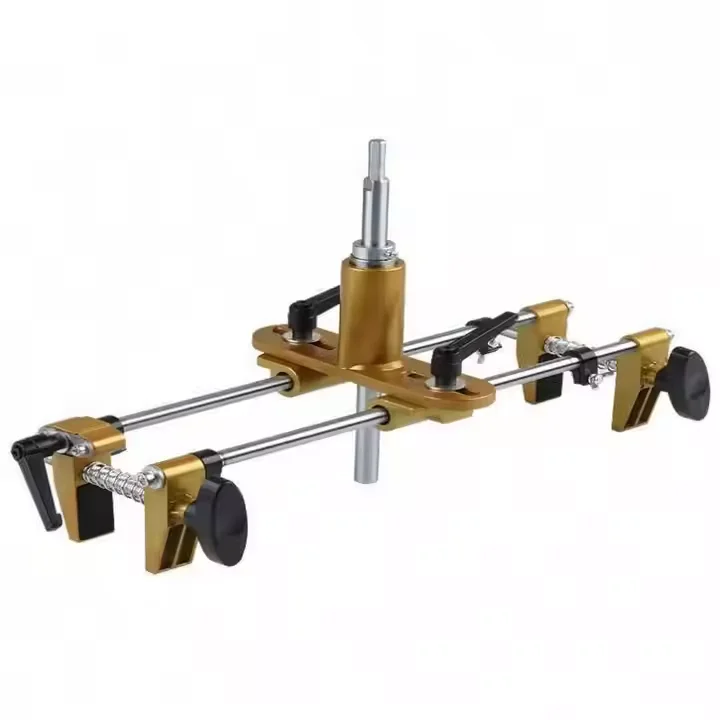
Source-controlled identity before quotation
This TEBAK listing describes a customizable DIY door lock hole opener kit with a mortising machine and three drill bits for wooden-door installation work. The structured record identifies the brand as tebak and the model number as MT-DLIK-G001. It also lists China as the place of origin, DIY as the grade, OEM as customized support and a three-month warranty.
Product ID 1601561088372 is the queue identifier for this buying guide. The source contains an item / value placeholder row; that row is not a specification and is excluded from the technical baseline. The title confirms a kit concept and three drill bits, but it does not provide hole diameters, bit lengths, mortise dimensions, door thickness range, template range, material compatibility, operating force, output or safety details.
| Source field | Source-recorded value | Procurement treatment |
|---|---|---|
| Place of origin | China | Source-recorded origin; confirm commercial origin and shipping documents. |
| Grade | DIY | Catalog classification; do not assume professional continuous-duty capability. |
| Warranty | 3 Months | Confirm covered parts, start date, exclusions, remedy and freight responsibility. |
| Customized support | OEM | Confirm the actual customization scope, tooling drawings, MOQ, samples and approval process. |
| Brand name | tebak | Source-recorded brand field; confirm branding on tool, package and manual. |
| Model number | MT-DLIK-G001 | Use on quotation, nameplate, packing list, inspection report and warranty record. |
| Kit description | Door lock hole opener kit with mortising machine and 3 drill bits | Title-level description; verify every included part and actual drill-bit count. |
The source does not provide drill-bit diameters, cutter or bit material, bit shank, mortise width, mortise depth, backset, faceplate size, door thickness, door material, template dimensions, clamp range, guide system, power source, motor data, speed, stroke, dust control, guarding, calibration, accuracy, packed dimensions, weight, compliance documents or spare parts. These are RFQ confirmation items. Do not infer them from product images or the DIY label.
1. Define the door-lock installation use case
Before comparing prices, define the lock family and door geometry. Ask the buyer to provide lock body drawings, faceplate dimensions, backset, spindle-hole position, cylinder-hole position, strike position and the required mortise depth.
Confirm whether the kit is intended for interior doors, entrance doors, solid wood doors, engineered wood doors, composite doors or another material. A tool that works on soft solid wood may not be appropriate for laminated or reinforced doors.
Ask whether the tool creates a mortise for the lock body, holes for the spindle and cylinder, a faceplate recess, or all of these operations. The title does not establish the exact workflow.
Request a step-by-step operating diagram. It should show door clamping, template alignment, reference edges, drilling sequence, mortising sequence and final fit check.
Clarify whether the mortising machine is hand-operated, lever-operated, pedal-operated, motorized or a guide for a separate drill. The source does not specify the operating mechanism.
Ask whether the three drill bits are intended for pilot holes, spindle holes, cylinder holes or different door-lock patterns. Require a part list with diameters and functions.
Use the exact model number MT-DLIK-G001 in every RFQ. Do not let the supplier replace the kit with a similar-looking jig without written approval.
Put the lock drawing and door sample in the acceptance plan. The best fit is not proven by a generic product photograph.
2. Verify the template and clamp system
A door-lock opener depends on stable reference surfaces. Request a dimensioned template drawing showing reference edges, openings, guide slots, stops and adjustment ranges.
Confirm whether the template is fixed to the door edge, door face, both faces or another datum. Ask how the template prevents vertical and lateral movement during drilling.
Request the clamp jaw opening range, clamp pad material, clamping force, adjustment method and protective interface. A DIY grade does not establish adequate clamping force for every door.
Test the kit on the buyer's door thickness range. Record whether the clamp remains square and whether it leaves marks on painted, veneered or laminated surfaces.
Ask whether the template is reversible for left-hand and right-hand doors. Confirm how the door edge and handing are identified.
Confirm whether the template can be customized under the OEM support field. Request CAD drawings, sample approval, minimum order quantity and tooling charges before agreeing to customization.
Measure template repeatability after removing and reinstalling it. Record the shift at the lock faceplate, spindle hole and cylinder hole.
Check that the template does not interfere with door hinges, weather seals, panels, glass, reinforcement plates or decorative edges.
3. Drill-bit and cutter specification
The title says the kit includes three drill bits, but the source does not identify their diameters, lengths, materials, flutes or shanks. Ask for a tool schedule.
Require the supplier to list each bit number, overall length, cutting length, shank diameter, tip geometry, material, coating and intended operation.
Confirm whether the bits are drill bits, router bits, mortising cutters, hole saws or another type. Do not use the generic word “drill bits” as a substitute for tool compatibility.
Ask which chuck, collet or spindle accepts the bits. Confirm clamping range, runout and tightening method.
Request the recommended speed, feed, plunge rate, cut depth and lubrication or dust-removal method for each bit.
Test every supplied bit for straightness, runout, sharpness, edge damage and secure clamping before production use.
Confirm whether replacement bits are available separately and whether custom diameters can be supplied under OEM support.
Do not claim that three bits cover all lock patterns. Their actual coverage must be demonstrated with drawings and buyer samples.
4. Door-material compatibility
Confirm the material range in writing. The title references wooden doors, but it does not identify solid wood species, engineered panels, veneered doors, plywood, MDF, laminated panels or reinforced constructions.
Ask for material limits, recommended thickness, moisture condition and prohibited materials. Do not extend a wooden-door listing to metal, fire-rated, composite or steel-reinforced doors without evidence.
Run a sample test on the buyer's actual door material. Record breakout, chipping, burning, tear-out, splintering, delamination and surface marks.
Check whether the faceplate recess remains square when grain direction changes. Test both edge-grain and cross-grain conditions where relevant.
Ask whether the tool requires a backing board or sacrificial support to prevent breakout on the exit side.
Confirm the cleaning and dust procedure for MDF, coated panels and treated wood. Dust characteristics can affect the guide, clamp and cutting tool.
Request a clear list of material exclusions. If the supplier has no written compatibility table, treat performance as unverified.
Define acceptance by finished lock fit, faceplate seating, spindle alignment, cylinder alignment and acceptable surface damage, not only by whether a hole was produced.
5. Mortise geometry and alignment
Request the maximum and minimum mortise width, length and depth supported by the kit. These values are not present in the source record.
Confirm faceplate recess dimensions, corner radius, lock-body clearance and the adjustment method for different lock sizes.
Ask how the machine controls depth. It may use a stop, scale, guide, plunge limit or another method; the source does not specify one.
Measure the depth stop on a sample and compare the result with the lock-body drawing. Record variation across multiple doors.
Confirm spindle-hole and cylinder-hole center distances, edge backset and vertical datum. A small alignment error can prevent the lock from fitting even when the mortise looks acceptable.
Request a reference diagram showing door edge, top datum, lock-body centerline, faceplate line and template orientation.
Test left and right handing, different door heights and different edge profiles if the buyer expects multiple installation conditions.
Do not assume that a “door lock hole opener” automatically supports every mortise standard or lock brand.
6. DIY grade and operating duty
The source lists Grade as DIY. Treat this as a catalog classification, not a guarantee of professional continuous-duty performance or a safety certification.
Ask the supplier to define recommended daily cycles, rest periods, maintenance intervals and maximum continuous operating time.
Confirm whether the tool is intended for occasional installation, small workshop use, retail kits or a professional installation team.
Run a repeated-cycle test using the buyer's lock pattern and door material. Record setup time, drilling time, mortising time, adjustment time and rework rate.
Check for clamp loosening, guide wear, bit heating, loss of squareness and template movement during repeated use.
Ask how the tool is calibrated after transport or after replacement of a guide, clamp pad or cutting tool.
Define a stop condition for damaged wood, excessive force, tool binding, loose clamp, inaccurate alignment or visible cracking.
Do not convert the DIY grade into a professional production claim. If the buyer needs installation-line throughput, require a duty-cycle test and written supplier recommendation.
7. OEM customization workflow
The source lists customized support as OEM. Ask what can actually be customized: logo, color, package, manual, template, bit sizes, clamps, lock-pattern geometry or complete tool design.
Request the OEM MOQ, sample fee, tooling fee, prototype lead time, approval milestones and production lead time.
Confirm whether the customized item keeps model MT-DLIK-G001 or receives a new model number. The nameplate and warranty must match the approved version.
Provide the supplier with a controlled drawing revision, lock-pattern table, door-thickness range and acceptance criteria. Do not send an informal image as the only engineering input.
Require a pre-production sample and a signed sample-approval record. Record all dimensions, bit specifications, clamp range and packaging components.
Ask whether customized drill bits are made specifically for the approved lock pattern. Confirm replacement availability and tool-life expectations.
Verify that OEM branding appears consistently on tool, carton, manual, warranty card and inspection documentation.
Keep the original source record and the customized approval record separate so future reorders do not silently inherit an obsolete template.
8. Safety and operator controls
Identify drilling, cutting, pinch, sharp-edge, dust, noise and door-stability hazards. The source does not specify guards, handles, switches, dust collection or emergency controls.
Ask whether the tool has a guard around the bit, a depth stop, a secure clamp, a handle, an anti-rotation feature or a trigger lock.
Confirm whether the machine contains a motor or is a manual jig used with an external drill. The source title says mortising machine but provides no motor or electrical data.
Request the operating manual and safety labels for the exact model and bit set.
Define PPE and work controls for eye protection, hearing protection, dust protection, sharp tools and unstable doors.
Require the door to be secured against movement before drilling. Do not hold a loose door by hand during a cutting operation.
Disconnect power or remove the external drill before changing bits, adjusting the template, clearing chips or servicing the guide.
Inspect clamps, fasteners, stops and cutting tools before every installation. Replace worn or damaged parts instead of compensating with excessive force.
9. Quality and repeatability testing
Define the acceptance sample with actual doors, lock bodies, faceplates, cylinders and spindle assemblies used by the buyer.
Measure faceplate position, mortise length, width and depth, spindle-hole center, cylinder-hole center and backset.
Run multiple installations after removing and reinstalling the template. Record dimensional spread and setup adjustments.
Test both sides of the door edge and any left/right-hand configurations expected in the order.
Inspect the completed mortise for tear-out, chipping, burning, loose fibers, overcutting and faceplate gaps.
Measure finished lock fit rather than relying only on the template scale. A template can be dimensionally correct while the supplied bit produces an oversized or undersized cut.
Check bit runout, guide play and clamp movement before blaming the operator or door material.
Attach photographs and measurements to the inspection report. Note the bit number, material, door thickness, lock pattern and operating sequence.
10. Warranty and after-sales
The source lists a three-month warranty. Treat this as a source-recorded commercial field, not a complete warranty agreement.
Ask which parts are covered: mortising machine, template, clamp, guide, drill bits, handles, stops, fasteners and custom components.
Confirm the warranty start date, evidence required, response time, replacement method, freight responsibility and exclusions for wear or misuse.
Ask whether drill bits are consumable and how tool damage, coating loss, chipping or dulling is treated.
Confirm replacement bit prices, guide and clamp parts, template inserts, fasteners, scales and packaging.
Request the supplier's service contact and escalation route. Keep the model number MT-DLIK-G001 on every support request.
Ask whether OEM customization changes the warranty period or support scope. Put the answer in the quotation.
Do not assume three months covers the full customized kit unless the contract names each included component.
11. Packing, delivery and installation
Request packed dimensions, gross weight, carton materials, number of cartons and shipping marks. None of these fields is present in the source.
Protect drill bits, guide faces, clamps, stops and template edges from impact and corrosion during transit.
Ask whether the kit is supplied assembled or requires calibration after unpacking. Include an inspection procedure for alignment and clamping.
Confirm the packing list: mortising machine or jig, template, clamps, three drill bits, bit accessories, wrenches, stops, manual, warranty document and any OEM parts.
Match carton labels to product ID 1601561088372, model MT-DLIK-G001 and the approved OEM revision.
Photograph the carton before opening and every component after unpacking. Record missing, damaged or substituted parts.
Do not begin door cutting until the template is checked against the approved drawing and the bits are identified by part number.
Confirm commercial terms, MOQ, lead time, shipping term, insurance, duties, destination delivery and spare-part supply in writing.
12. Acceptance test before shipment
Use product ID 1601561088372 and model MT-DLIK-G001 as the identity block. Confirm brand tebak and the approved OEM revision.
Count the three drill bits and record each bit's diameter, length, shank, material and intended operation.
Measure template dimensions, clamp range, guide openings, stops and lock-pattern references against the approved drawing.
Test the kit on the buyer's door material and thickness range. Record mortise width, length, depth, faceplate position, spindle alignment and cylinder alignment.
Repeat the test after removing and reinstalling the template. Record repeatability and adjustment time.
Inspect cut quality for breakout, chipping, overcutting, burning and surface damage.
Verify every safety instruction, clamp lock, depth stop, guard and tool-change procedure supplied with the model.
Check the three-month warranty document, inspection record, manual, packing list and replacement-part information.
Do not approve shipment until the model, tool set, geometry, safety and documentation match the purchase order.
13. RFQ checklist
- Confirm product ID 1601561088372, brand tebak and model MT-DLIK-G001.
- Confirm the kit contents and identify all three drill bits by part number.
- Provide bit diameter, length, shank, material, cutting geometry and replacement price.
- Provide mortise width, length, depth, faceplate, backset and lock-pattern range.
- Provide door thickness, material and surface-finish compatibility.
- Provide template dimensions, clamp range, reference edges, stops and adjustment method.
- Confirm whether the tool is manual, motorized or designed for an external drill.
- Provide motor, voltage, frequency, power, speed, current and plug data if powered.
- Provide depth control, guide, guard, dust and emergency-control specifications.
- Define DIY duty cycle, recommended daily cycles, maintenance and calibration.
- Define OEM MOQ, drawings, samples, tooling, packaging, lead time and model-number treatment.
- Provide three-month warranty scope, exclusions, service route and spare parts.
- Run a buyer-sample acceptance test with actual door and lock components.
14. Questions for the supplier
What exactly is included in the MT-DLIK-G001 kit, and are there exactly three drill bits?
What are the diameter, length, shank and material of each supplied bit?
Which lock-body, faceplate, spindle and cylinder patterns does the template support?
What is the supported door thickness and which wood or engineered-door materials are permitted?
What are the template dimensions, clamp range, reference edges and depth-stop method?
Is the mortising machine manual, motorized or intended for an external drill? If powered, what are voltage, frequency, power and speed?
What are the recommended operating cycles, rest periods and maintenance intervals for the DIY grade?
What safety guard, dust-control, anti-rotation and emergency-control features are included?
What can be customized under OEM support, and what are MOQ, sample, tooling and approval requirements?
What parts are covered by the three-month warranty, and how are bits treated as wear items?
Can you run a buyer-sample test and provide measurements for mortise geometry, alignment and repeatability?
15. What not to assume
Do not assume the placeholder row item/value is a specification.
Do not assume DIY grade means professional continuous-duty capability.
Do not assume the title's three drill bits have standard diameters or fit every drill.
Do not assume the kit supports every lock brand, backset, faceplate or door thickness.
Do not assume a wooden-door title includes MDF, laminate, composite, fire-rated or reinforced doors.
Do not assume OEM support includes custom tooling without MOQ, drawings, samples and fees.
Do not assume three-month warranty covers all bits, clamps, templates and customized parts.
Do not assume product photographs prove safety guards, calibration, accuracy or included accessories.
Do not assume China origin alone provides a compliance certificate or destination-market approval.
Do not approve the order without a model-specific tool schedule and buyer-sample installation test.
16. Final procurement decision
The source-confirmed baseline is a TEBAK customizable DIY door-lock hole opener kit with mortising machine and three drill bits, model MT-DLIK-G001, China origin, DIY grade, OEM support and a three-month warranty.
Proceed to purchase only after the supplier confirms the complete tool set, lock-pattern coverage, door-material range, template and clamp geometry, powered/manual configuration, safety controls, OEM scope, warranty and sample-test results. The title provides the application concept, but it does not replace an engineering drawing or acceptance test.
Editor's note: This guide uses the supplied Hoting queue fields and product image, excludes the placeholder item/value row from the specification baseline, and marks all unreturned technical, safety, performance and commercial information as supplier-confirmation items.
Key specifications
- place of origin
- China
- grade
- DIY
- warranty
- 3 Months
- customized support
- OEM
- brand name
- tebak
- model number
- MT-DLIK-G001
Frequently asked questions
- What model number is listed?
- The source lists MT-DLIK-G001. Use it on the quotation, nameplate, packing list, inspection report and warranty record.
- How many drill bits does the title mention?
- The title mentions 3 drill bits. Require the supplier to identify each bit by diameter, length, shank, material and intended operation.
- What door materials are confirmed?
- The title references wooden doors, but the source does not define a complete material or thickness range. Test the buyer's actual door material.
- What warranty is listed?
- The source lists 3 Months. Confirm covered parts, exclusions, start date, remedy, freight and treatment of worn drill bits.
- What should be verified before shipment?
- Verify kit contents, lock-pattern coverage, template geometry, clamp range, door compatibility, operating mode, safety, OEM scope and buyer-sample results.