
Source-controlled product identity
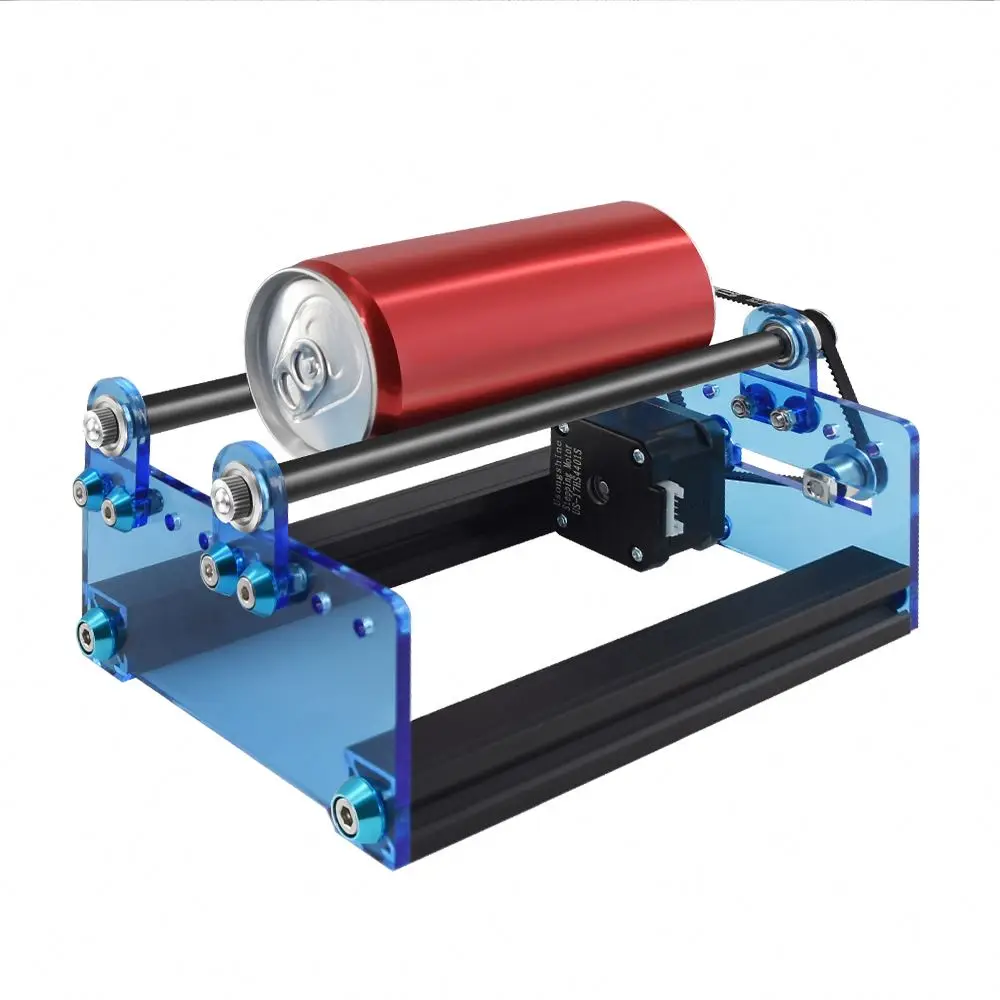
The Hoting queue identifies Product ID 1601247311801 as an accessory for engraving cylindrical objects, listed under the title "Engraving Cylindrical Objects Cans 3d Printer Laser Engraving Machine Y-axis Rotary Roller Engraving Module".
This record carries no structured parameter set. The parameter block is empty. Outside the title, the only text in the record is a company profile block about the supplier. There is no diameter range, no length capacity, no weight limit, no motor specification, no connector type, no mounting dimension and no compatibility list. Everything below is therefore either taken from the words of the title itself or stated as a question the supplier must answer before an order is placed. Nothing here is a confirmed specification, because the record does not contain one.
What the record contains and what it does not
| Attribute | What the record states | Status |
|---|---|---|
| Source Product ID | 1601247311801 | Recorded value |
| Function | engraving cylindrical objects such as cans | Title phrase only |
| Axis | Y-axis rotary roller | Title phrase only |
| Product type | stated as both a "Laser Engraving Machine" and an "Engraving Module" | Contradictory |
| 3D printer reference | "3d Printer" appears in the title | Unclear |
| Object diameter range | not stated anywhere | Missing |
| Object length and weight limits | not stated anywhere | Missing |
| Roller dimensions, material and spacing | not stated anywhere | Missing |
| Stepper motor type, step angle and torque | not stated anywhere | Missing |
| Control interface, connector and cable | not stated anywhere | Missing |
| Mounting method and machine compatibility | not stated anywhere | Missing |
| Power, voltage and current draw | not stated anywhere | Missing |
| Net weight and packed dimensions | not stated anywhere | Missing |
| Certification and test reports | not stated anywhere | Missing |
The company profile block states that the supplier describes itself as a professional supplier of product machines, CNC carbide inserts and turning and milling tools under the TEBAK brand, that it operates with design and sales functions, and that its quality control standards are based on ISO9001 certifications. That paragraph is drawn from the record itself, but it is a supplier self-description, not a verified fact about this accessory.
Machine or module: the title's central ambiguity
The title calls this item a "Laser Engraving Machine" and, four words earlier, an "Engraving Module". Those two readings describe products at completely different levels of scope, and the difference is not cosmetic.
A complete laser engraving machine includes the laser source, the frame, the gantry, the controller, the software and the enclosure. A rotary module, by contrast, is an accessory: it is the roller attachment that rotates a cylindrical object under a laser that the buyer already owns. It typically consists of rollers, a stepper motor, a bracket and a cable, and it depends entirely on another machine to be usable.
The commercial consequences are immediate. Price differs by an order of magnitude between the two readings. Spare parts, warranty scope and shipping weight all differ. And a buyer who orders expecting a machine and receives a module has no usable product at all, because a module without a host machine cannot engrave anything.
Ask the supplier to state plainly what is in the box. If it is a module, ask which machines it is designed to work with, what the mounting interface is, and whether the buyer's existing machine is supported. If it is a complete machine, ask for the laser source specification, the work area, the controller and the included software. Do not accept an answer that leaves this open, because every other question in this guide depends on which of the two it is.
The "3d Printer" reference in the title
The phrase "3d Printer" appears in the middle of the title between "Cans" and "Laser Engraving Machine". Three readings are possible and the record does not distinguish between them.
The first is that the roller is intended to be mounted on a 3D printer as well as on a laser engraver, which is a real arrangement in some hobby setups where a rotary axis is driven from an existing printer control board. The second is that the roller is compatible with printer-style motion control, meaning it uses the same stepper and connector conventions as common 3D printer electronics. The third is that the phrase is simply a keyword added to the listing to attract a second audience, and that the product has nothing to do with 3D printing.
Each reading changes what the buyer must verify. If the first applies, ask for the printer models tested and the firmware and control changes required. If the second applies, ask for the motor connector type, the coil wiring, the rated voltage and the current, because a driver and a control board must match those. If the third applies, the phrase should be disregarded and the answers to the questions above will be unavailable.
A practical test: ask the supplier for photographs of the module mounted on an actual machine, with the model visible. A supplier who has genuinely tested a rotary module on a specific machine can normally produce that photograph; a keyword-only listing usually cannot.
Cylindrical work envelope: the numbers that decide usability
For a rotary attachment, three numbers decide whether the accessory is usable at all, and the record states none of them.
Object diameter range. Ask for the minimum and maximum diameter the roller can carry, and confirm that the maximum is measured with the object resting on the rollers rather than against any frame part. Confirm also the gap adjustment: whether the roller spacing is fixed, stepped or continuously adjustable, and how the object is kept from drifting sideways along the rollers. For cylindrical work, a can, a tumbler, a bottle and a tube have very different diameters, and an attachment that handles one may not handle another.
Object length. Ask for the maximum length that can be supported and whether an extension or a tail support is available for long items. Confirm the usable engraving length along the cylinder, which may be shorter than the object length because the laser head or the frame interferes at the ends.
Object weight. Ask for the maximum load the rollers and bearings will carry, and whether that rating is for a centred cylindrical load or for off-centre loads. Weight capacity is often the real limit on glass bottles, thick ceramic mugs and metal canisters.
Ask also whether the design tolerates non-cylindrical or tapered items such as conical cups or bottles with a shoulder, and what the result looks like when the surface is not perfectly round, since the engraving depth follows the surface distance from the laser.
Roller against chuck: two different rotary mechanisms
Rotary attachments for cylindrical engraving come in two families, and the title names only the roller type.
A roller type, which is what the title describes, supports the object on two or more parallel rollers driven by a motor. The object rests on the rollers by its own weight and is rotated by friction. This handles straight cylinders well, allows long objects to be supported at both ends, does not grip the object, and cannot mark or dent the surface. It is less suitable for very heavy objects, for objects with a non-cylindrical body, and for anything that may slip rather than turn.
A chuck type grips the object by one end and holds it on an axis, the way a lathe does. It handles heavier and irregular objects and can rotate a workpiece that must be driven positively rather than by friction, but it requires an end that can be clamped and it can mark the clamped area.
Ask the supplier which mechanism this product uses, how many rollers it has, at what spacing, and whether the rollers can be adjusted. Ask for the roller material and surface, whether it is plain, knurled or coated, and whether the coating risks transferring marks to the workpiece, which matters for finished cans, coated tumblers and polished metal. Ask what happens under slip: whether the object simply stops rotating, causing a doubled or misaligned engraving, or whether the drive detects the condition.
Motor, drive and control
The record provides no motor information at all. This is the second most important gap after the work envelope.
Ask for the stepper motor frame size, the holding torque, the rated current per phase and the coil wiring, because the buyer's driver must match these. Ask for the step angle or steps per revolution, and for any gear or belt reduction, since the effective steps per revolution of the object determines how finely the rotation can be positioned and how smoothly it moves. Ask whether the module includes its own driver or whether the buyer must supply one, and whether a control cable is included and how long it is.
Ask what controls the rotation. On most systems of this type the rotary axis is driven by the laser engraver's controller and configured in the laser software, which means the buyer needs a software configuration or post-processing profile for the module. Ask the supplier to provide that configuration, and ask which laser software it has been tested with. An accessory without a documented configuration is a support burden rather than a product.
Ask whether the rotation speed is fixed to the Y-axis speed of the host machine, whether it can be scaled independently, and whether the direction can be reversed in software. Ask whether the motor can be disengaged so the object can be positioned by hand. Where the intended use includes light-coloured or coated cylindrical stock, confirm whether the supplier can provide starting parameters such as rotation speed and power ranges for common materials, and treat those as starting points to be verified on the buyer's own machine rather than as guaranteed settings.
Compatibility, mounting and the laser side of the interface
A rotary module only works if it fits both the machine mechanically and the laser optically. The record addresses neither.
On the mechanical side, ask for the mounting method, the bolt pattern or slot dimensions, the overall footprint and the height of the roller axis above the mounting surface. The last figure matters most: it determines whether the top of the workpiece sits within the laser's focal range at all. If the roller axis is too high or too low, the buyer may not be able to focus on the cylinder without raising or lowering the whole machine.
Ask for the base dimensions and whether the module requires a baseplate, a riser or a cut-out in the machine bed. Ask whether it can coexist with the machine's existing Y-axis platform or must replace it, and how much work area is lost when the module is installed.
On the optical side, ask what laser source the module is intended for and at what power. A diode laser module and a CO2 laser have very different focal distances and beam geometries, and a rotary accessory sized for one may not position the workpiece correctly for the other. Ask for the recommended focal distance range and whether the roller height can be adjusted to suit it. Ask what the supplier considers the maximum engraving length in one rotation, which is limited by the machine's Y travel rather than by the roller.
Ask finally whether the module needs its own power supply and, if so, its voltage and current, and whether it is powered from the machine or from a separate adapter. None of this is recorded.
The ISO9001 statement in the company profile
The record's company profile says the supplier's quality control standards are based on ISO9001 certifications. That sentence is worth reading precisely, because "based on" is not the same as "certified to", and the record attaches no certificate number, no issuing body and no scope statement.
If certification matters for the purchase, ask for the certificate document itself, check the certificate number and issuing body, check that the scope covers the product being bought rather than an unrelated product line, and check the validity date and the certified site. Ask whether the accessory is covered by that certification or only the wider company operation. Where the answer is that certification exists only at company level, treat the statement as background rather than as a product guarantee, and rely on the incoming inspection instead.
RFQ checklist
- Exact product ID 1601247311801, with a statement of whether the item is a complete machine or a rotary module.
- If a module: the machines it is designed to work with, and whether the buyer's machine is supported.
- If a machine: laser source type and power, wavelength, work area, controller and supplied software.
- What the "3d Printer" reference in the title means, with photographs of the module mounted on a real machine.
- Minimum and maximum object diameter, and how roller spacing is adjusted.
- Maximum object length, maximum engraving length in one rotation, and availability of a tail support.
- Maximum load, and whether the rating is for centred or off-centre loads.
- Behaviour with tapered or non-cylindrical items such as conical cups and shouldered bottles.
- Number of rollers, spacing, material, surface finish and coating, and whether the surface can mark the workpiece.
- How slip is detected or avoided, and what the failure looks like if the object stops rotating.
- Stepper motor frame size, holding torque, rated current per phase, coil wiring and step angle.
- Any gear or belt reduction, and the resulting steps or resolution per revolution of the object.
- Whether a driver, cable and control board are included, and the cable length and connector type.
- Which laser software the module has been tested with, and the configuration or profile provided.
- Whether rotation speed is tied to the Y-axis or scaled independently, and whether direction can be reversed.
- Whether the motor can be disengaged for manual positioning.
- Mounting method, bolt pattern, footprint, and height of the roller axis above the mounting surface.
- Whether a baseplate or riser is required, and how much work area is lost when installed.
- Recommended focal distance range, and whether the roller height is adjustable.
- Power supply requirement, voltage and current, and whether it is powered by the machine or a separate adapter.
- Net weight, packed weight, packed dimensions and carton count.
- Included accessories and everything priced separately.
- Certificate document, number, issuing body, scope and validity date if ISO9001 is claimed.
- MOQ, sample or trial terms, unit price at the target quantity, lead time, packing and shipping terms.
- Warranty period, service response time and the price of the most likely wearing parts.
Acceptance and incoming inspection
Because the record contains no parameters, the delivered item can only be verified against a specification the buyer writes itself from the supplier's written answers. Settle first whether the item is a machine or a module, then set the agreed values into the purchase order and check the following on arrival.
Confirm the contents against the written list: rollers, motor, bracket, cable, driver if stated, and any mounting hardware. Photograph the packing before opening where transit damage is suspected. Check the rollers and the motor shaft for bending, check the bearings for smooth rotation, and check the bracket for distortion.
Rotate the axis by hand first and confirm that the mechanism is free and does not bind. Then drive it under power and confirm the direction, the speed range and the step resolution behave as described. Measure the actual diameter and length capacity with physical objects rather than trusting the stated figures, using cylinders at both the minimum and maximum ends of the claimed range.
Mount the module on the buyer's own machine and confirm the fit, the bolt pattern and the roller axis height. Focus the laser on a test cylinder and engrave a test pattern that includes a full circle, so that any slip, backlash or step loss becomes visible as a misaligned or doubled seam. Record the settings used, the material, and the result. Where the supplier provided starting parameters, verify them and record the values that actually worked on the buyer's machine.
Load the axis with an object close to the claimed maximum weight and repeat the test to confirm that the rollers still drive the object without slipping. Check the connectors and cable for strain relief and confirm that the supplied cable length matches what was quoted. Record the serial number so the delivered unit can be traced to any tested sample.
Packaging, shipping and after-sales
The record contains no packing data. Request the packed dimensions and weight, the carton count and the packing method, and confirm how the rollers and the motor shaft are protected, since those are the parts most likely to arrive bent.
Confirm the documentation supplied with the shipment: the manual, the wiring diagram, the software configuration or profile, and the mounting instructions, together with the language of those documents. On a rotary accessory, the configuration file is the single most important document in the box, because without it the buyer must reverse-engineer the settings.
Confirm the warranty period, what is covered and excluded, the response time for technical questions, whether remote support is available, and the lead time and price for the most likely replacement parts, which on a unit of this type are typically the rollers, the bearings, the belt or gear set, the stepper motor and the cable. Confirm the shipping terms and who bears the cost if the delivered item turns out to be a module when a machine was ordered, since the record's own title leaves that open.
Buyer decision framework
The source confirms an accessory for engraving cylindrical objects and cans, described in the title as a Y-axis rotary roller engraving module, with the words "Laser Engraving Machine" also used, and with a reference to 3D printers. The record contains no parameter set, and its only other content is a supplier company profile.
The purchase decision rests on four written answers. First, whether the item is a complete laser engraving machine or a rotary module, because everything else depends on that. Second, what the cylindrical work envelope is, meaning the diameter range, the length limit and the load limit, since an accessory outside those limits is unusable. Third, what the motor, driver, cable, connector and software configuration are, and whether they are included. Fourth, whether the module fits the buyer's existing machine both mechanically and optically, with a stated roller axis height and focal distance range.
A supplier who answers those four in writing, states the work envelope with numbers, supplies a software configuration and provides a photograph of the module mounted on a named machine is offering a workable basis for an order. Where those answers cannot be obtained, the buyer should treat this as an unbounded accessory of unknown capacity and buy a single sample for verification rather than committing to volume.
Frequently asked questions
Is this a laser engraving machine or a rotary attachment?
The title uses both descriptions. A machine and a module are products at completely different scope and price, and a module cannot engrave anything without a host machine. Ask the supplier to state what is in the box before ordering.
Does it work with 3D printers?
The title contains the words "3d Printer" without explanation. Ask what the reference means: mounting on a printer, printer-style motion control compatibility, or simply a keyword. Request photographs of the module mounted on a real machine, with the model visible.
What diameter of object can it hold?
No diameter range is recorded. Ask for the minimum and maximum diameter, how the roller spacing is adjusted, and the maximum length and weight, because those three numbers decide whether the accessory suits the buyer's objects at all.
Will it mark or scratch my product?
A roller type drives the object by friction, which normally avoids clamping marks, but the roller surface material and coating still matter. Ask what the rollers are made of and whether the surface can transfer marks to coated or polished items.
Does the roller height fit my laser's focus?
Not stated. Ask for the height of the roller axis above the mounting surface and the recommended focal distance range, then check whether your machine can focus on the top of the cylinder without modification.
Is a driver and cable included?
The record does not say. Ask whether the stepper driver, the control cable and any power adapter are included, and for the connector type and cable length, since these determine whether the module can be connected on arrival.
Do I get a software configuration for the rotary axis?
Ask for it explicitly, together with the list of laser software the module has been tested with. Without a configuration or post-processing profile the buyer has to derive the settings independently.
Is the product ISO9001 certified?
The record's company profile says quality control standards are based on ISO9001 certifications, without a certificate number, issuing body or scope. Ask for the certificate document and check whether the accessory itself is covered.
Source and contact
This guide is based on the Hoting queue record for Product ID 1601247311801. The record carries no structured parameters, so this guide quotes only the phrases present in the source title and the supplier's company profile, and marks every technical value as a question to be answered by the supplier. It keeps the machine reading and the module reading of the title separate rather than merging them, and it does not treat the 3D printer reference or the ISO9001 statement as confirmed facts.
Request the scope clarification, the cylindrical work envelope in numbers, the motor and drive specification, the software configuration, the mounting dimensions and roller axis height, the focal distance range, and the packed weight and dimensions through the TEBAK sales inquiry channel before placing an order.
Key specifications
- Source Product ID
- 1601247311801