
Source-controlled product identity
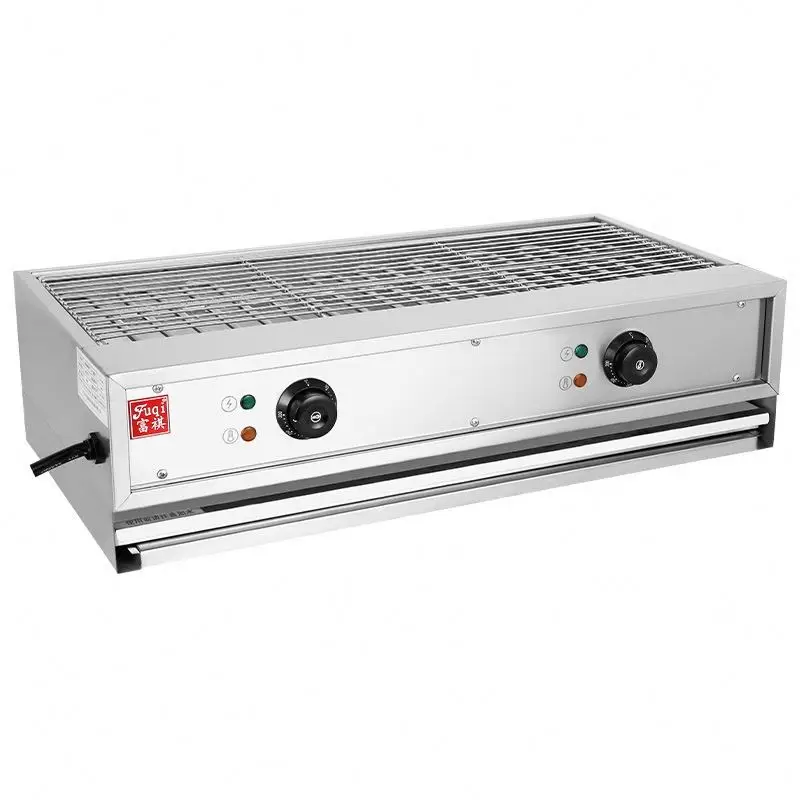
The Hoting queue identifies Product ID 1601391259966 as an electric barbecue grill. The source record provides two structured fields only: Product Name, “Electric Barbecue Grill,” and Brand, “TEBAK.”
The source title also uses wording for small stainless-steel snack equipment, kebab roasting, camping, smokeless electric barbecue and grill ovens. These are application or marketing descriptions, not verified technical specifications. The source does not provide electrical rating, heating method, temperature range, grill area, capacity, dimensions, weight, stainless-steel grade, control type, smoke-management design, food-contact documentation or certification.
This B2B purchasing guide therefore separates recorded facts from questions that must be answered by the supplier. It is intended for importers, food-service distributors, snack shops, kiosks, catering teams and commercial buyers comparing a compact electric barbecue grill for controlled sample evaluation.
Recorded information and procurement status
| Field | Recorded source information | Procurement status |
|---|---|---|
| Product ID | 1601391259966 | Keep this identifier on the RFQ, quotation, sample order, inspection report and shipping documents. |
| Brand | TEBAK | Confirm the nameplate, model revision and delivered branding. |
| Product Name | Electric Barbecue Grill | Confirm the exact product configuration and included accessories. |
| Application wording | Small snack equipment, kebab roasting, camping, smokeless electric BBQ and grill oven wording | Validate each application with representative food samples and the intended site conditions. |
| Construction | Stainless-steel wording appears in the product title | Request stainless-steel grade, thickness, food-contact surfaces and non-steel component materials. |
| Electrical rating | Not supplied | Request voltage, frequency, phase, rated power, current, plug, cord and protection. |
| Heating system | Not supplied | Confirm heating element type, zones, control method, warm-up and recovery behavior. |
| Cooking area and capacity | Not supplied | Request usable grill area, kebab length, batch size, spacing and recommended loading. |
| Temperature and smoke control | Not supplied | Confirm temperature range, accuracy, smoke reduction method, drip management and extraction needs. |
| Compliance | Not supplied in the source record | Request electrical, EMC, food-contact, thermal-safety and destination-market documents as applicable. |
Define the food-service job before selecting a grill
Start with the menu, not the product title. Record whether the buyer needs skewered kebab, sliced meat, vegetables, seafood, sandwiches, snack portions, camping meals or mixed products.
For each product, record piece size, thickness, moisture, fat content, marinade, skewer material, target doneness, expected batch size and serving speed. A grill that works for thin vegetables may not provide the heat recovery or clearance needed for a dense kebab batch.
Define the service environment: restaurant counter, food truck, kiosk, buffet, catering table, outdoor camping area or test kitchen. Confirm indoor or outdoor use only after the supplier provides an applicable operating statement and safety instructions.
List daily operating hours, peak demand, cleaning windows, number of operators and available electrical service. The source provides no capacity or duty-cycle information, so these are required RFQ fields.
Provide sample food and a cooking test plan. Ask the supplier to record preheat time, surface temperature, batch time, recovery after loading and finished-product consistency.
Clarify the electric barbecue configuration
The structured product name says Electric Barbecue Grill, but the source does not state whether the unit uses a flat plate, wire grate, grooved plate, skewer rack, radiant element, contact plate or another arrangement.
Request a dimensioned drawing showing the cooking surface, heating zones, handles, controls, grease path, drip tray, legs and service access.
Confirm whether the grill is contact-heated, radiant, convective or a combination. Ask where the heating elements are placed and how heat is transferred to the food.
Clarify whether the cooking surface is removable, reversible, coated, stainless steel, cast metal or another material. Request surface thickness, finish, replacement part number and cleaning limits.
Ask whether temperature is controlled continuously, by steps, by thermostat, by digital controller or by a timed program. Do not infer temperature control from a product image.
Confirm whether the unit has one heating zone or multiple independent zones. Test partial loading, simultaneous foods and temperature difference across the surface.
Stainless-steel and food-contact checks
The title includes stainless-steel wording, but no grade or component breakdown is supplied. Request the grade and thickness for the cooking surface, frame, drip tray, handles and fasteners.
Identify every food-contact material, including coatings, non-stick layers, silicone, plastics, seals and cable-entry parts near heat. Request relevant food-contact declarations for the target market where required.
Inspect welds, corners, seams, folded edges and fasteners for dirt traps. Food-service equipment should be cleanable without inaccessible residue pockets.
Confirm whether the grill surface can withstand the listed operating temperature, repeated heating, thermal cycling and approved cleaning chemicals.
Test scratching, staining, grease adhesion and discoloration using the buyer's actual cleaning process. Record whether the finish changes after repeated cycles.
Ask whether any surface is disposable, replaceable or consumable. Include replacement surface, tray and seal costs in the total-cost comparison.
Electrical specification and site planning
No voltage, frequency, phase or power value is included in the source record. Request a complete electrical specification before placing an order.
Confirm rated power, maximum current, plug type, cord length, grounding, breaker requirement, leakage protection, insulation, over-temperature protection and restart behavior after power interruption.
Ask for the electrical nameplate and test it against the destination site's supply. A compact appliance can still be unsuitable if its plug, voltage or current does not match the installation.
Measure startup current, steady-state power, cycling behavior and current after loading the grill with representative food. Record the conditions and instrument used.
Confirm whether extension cables, adapters or outdoor power sources are permitted. Do not approve an installation that relies on an unknown adapter or an unprotected temporary connection.
Test the power switch, thermostat, controller, indicator, emergency isolation and thermal cut-out. Confirm whether a fault leaves the heating elements energized.
Temperature, cooking area and capacity validation
The source does not provide a temperature range, cooking area or throughput. Request a measurement method and a supplier demonstration using buyer-specified food.
Measure surface temperature at multiple points after warm-up. Record setpoint, actual reading, ambient conditions, probe type, contact method and stabilization time.
Check temperature uniformity across the grill. A high center temperature and cooler edges may change cooking results and usable batch capacity.
Define warm-up time from a cold start and recovery time after food is loaded. Repeat the test with one, two and maximum planned batches.
Measure usable cooking dimensions rather than the outside frame. Record effective length, width, height clearance, skewer spacing and safe loading limits.
For kebab or skewered products, confirm skewer diameter, length, support points, rotation method and clearance from heating elements. The title does not establish a motorized rotisserie function.
For mixed snacks, test cross-contact, grease transfer, odor carryover and cleaning between products. Capacity should be based on acceptable food quality, not only the physical surface area.
Smoke, grease and drip management
The source title includes “smokeless,” but provides no smoke-reduction specification. Treat smokeless as a claim requiring a controlled test, not as a guaranteed operating result.
Ask how smoke is reduced: water tray, grease separation, temperature control, shielding, extraction, filtration or another method. Request operating limits and cleaning procedures.
Test fatty meat, marinated food and dry food separately. Record visible smoke, odor, grease flare, splashing, drip-tray fill level and residue.
Confirm whether a drip tray is included, removable, dishwasher-safe, heat-resistant and protected from overflow. Ask for tray volume and replacement availability.
Define the ventilation requirement for indoor use. A “smokeless” label does not remove the need to comply with local kitchen ventilation and fire-safety rules.
Inspect the path from the cooking surface to the tray. Check whether grease can reach heating elements, wiring, insulation, switches or inaccessible cavities.
Cleaning, hygiene and operator workflow
Map the cleaning sequence from cool-down to reassembly. Record which parts can be removed without tools and which parts must remain dry.
Ask for the maximum cleaning temperature, approved detergents, prohibited chemicals, soak limits and drying method. Confirm whether the control panel and electrical enclosure are splash-resistant.
Test residue removal after oil, marinade, sugar-containing sauce, starch and carbonized food. Record cleaning time and any surface damage.
Check handles, edges, hinges, trays and fasteners for burn or pinch hazards during cleaning. Provide a clear cool-down and lockout procedure.
Define the operator's loading, cooking, unloading and cleaning movements. Measure whether the grill can be serviced without reaching across a hot surface.
Request a cleaning checklist, spare tray or surface procedure and replacement-part diagram. Include the checklist in staff training and acceptance documents.
Site safety and documentation
Request guards, heat shields, insulated handles, non-slip feet, stability information, over-temperature protection and emergency isolation.
Confirm safe clearances from walls, combustible materials, packaging, gas equipment and customer contact areas. Outdoor or camping use should be approved only if the manual expressly covers it.
Test tip resistance, handle temperature, tray removal, power interruption, thermostat failure, blocked ventilation, grease overflow and accidental switch operation.
Ask for noise, heat emission and operator-exposure information where the unit will be installed at a service counter or buffet.
Request the user manual, wiring diagram, spare-parts list, cleaning guide, safety labels, packaging instructions and destination-market compliance documents.
Verify that the manual matches the delivered model and does not describe a different heating system, voltage or accessory package.
Commercial specification and warranty questions
Ask the supplier to quote the complete delivered configuration: grill body, cooking surface, tray, handles, feet, controls, cord, plug, tools, manual, spare parts and packaging.
Confirm minimum order quantity, sample availability, lead time, shipping dimensions, gross weight, palletization and replacement-part availability. These commercial fields are absent from the source record and must not be assumed.
Request warranty coverage for heating elements, thermostats, controllers, switches, trays, surfaces, handles and structural parts. Clarify exclusions for grease, cleaning chemicals and unauthorized repairs.
Ask for service response, remote troubleshooting, replacement-part lead time and whether a complete electrical module can be replaced without replacing the appliance.
Compare total ownership cost: purchase, freight, electrical installation, extraction, cleaning labor, consumables, replacement surfaces, trays, heating elements and downtime.
Keep the model, voltage, power, accessories and safety documents tied to the quotation. A visually similar grill with a different electrical configuration is not an approved substitute.
Factory acceptance test
- Verify Product ID 1601391259966, TEBAK brand, exact model and nameplate.
- Verify that the delivered product is the quoted Electric Barbecue Grill configuration.
- Confirm the actual heating method, cooking surface, zones, controls and included accessories.
- Verify voltage, frequency, phase, rated power, current, plug, cord, grounding and protection.
- Measure warm-up time, surface temperature, temperature uniformity and recovery after loading.
- Measure usable cooking area, skewer clearance, tray volume and maximum safe loading.
- Run buyer-provided meat, kebab, vegetables, seafood or snack samples under agreed conditions.
- Record cooking time, doneness, surface marks, moisture loss, flare, smoke, odor and batch repeatability.
- Test the “smokeless” claim using a defined food, fat level, ambient condition and observation method.
- Inspect stainless-steel grade documentation, food-contact surfaces, coatings, welds and cleanability.
- Test drip collection, overflow protection, tray removal, grease path and heating-element protection.
- Test switch, thermostat, controller, indicator, thermal cut-out, power interruption and restart.
- Test handles, feet, stability, heat exposure, guard clearances and operator access.
- Perform a complete clean-down using the specified chemicals and record time and surface condition.
- Verify manual, safety labels, spare parts, warranty, packaging, shipping data and compliance files.
RFQ checklist
- Product ID 1601391259966, TEBAK brand, model number and nameplate photograph.
- Exact cooking surface type, dimensions, material, grade, finish, coating and replacement cost.
- Heating method, element layout, heating zones, controller, thermostat and temperature range.
- Voltage, frequency, phase, rated power, maximum current, plug, cord and grounding.
- Warm-up time, temperature accuracy, uniformity, recovery and duty-cycle conditions.
- Usable cooking area, skewer length, diameter, spacing, clearance and batch capacity.
- Drip tray, grease path, tray volume, overflow protection, smoke reduction and extraction requirement.
- Definition and test evidence for “smokeless” operation with fatty and marinated food.
- Stainless-steel grade, thickness, food-contact declaration, seals, plastics and coatings.
- Cleaning method, approved chemicals, splash limits, dishwasher suitability and drying procedure.
- Safety guards, handles, feet, heat shields, thermal cut-out, emergency isolation and restart.
- Dimensions, weight, packaging, palletization, service clearance and site installation.
- MOQ, sample, lead time, freight data, spare parts, warranty and service response.
- User manual, wiring information, safety labels, electrical tests and destination-market documents.
- Buyer-specific sample plan, cooking acceptance criteria, inspection records and deviation process.
Buyer decision framework
This source confirms only that the product is a TEBAK Electric Barbecue Grill. The title provides additional application wording for small stainless-steel snack equipment, kebab roasting, camping, smokeless electric barbecue and grill ovens, but no numeric performance or compliance values.
Approve the product only after a supplier trial using the buyer's actual food, electrical supply, cleaning method and service environment. The trial should demonstrate safe heating, repeatable cooking, manageable smoke and grease, cleanable food-contact surfaces, stable electrical operation and documented replacement parts.
Compare offers by measured cooking results, temperature behavior, usable area, smoke and grease control, hygiene, safety, electrical compatibility, documentation and total ownership cost rather than by “small,” “smokeless” or “camping” wording alone.
Frequently asked questions
What is the product name?
The structured source field lists “Electric Barbecue Grill.” The exact model and supplied configuration still need confirmation.
What brand is listed?
The source lists TEBAK. Confirm the nameplate, model revision and delivered branding before shipment.
Is the grill truly smokeless?
“Smokeless” appears in the product title, but no test data or smoke-control specification is supplied. Request a defined sample test with fatty and marinated foods.
What is the power or voltage?
The source provides no electrical rating. Request voltage, frequency, phase, rated power, current, plug, grounding and protection.
Can it roast kebabs?
The title mentions kebab roasting, but the source does not specify skewer support, rotation, clearance or capacity. Validate the exact kebab format with a sample test.
Is stainless steel used throughout?
Stainless-steel wording appears in the title, but no grade, thickness or component list is supplied. Request food-contact and construction details.
What certifications are included?
No machine-specific certifications are provided in the source record. Request electrical, thermal-safety, food-contact and destination-market documents as applicable.
Source and contact
This guide is based on the Hoting queue record for Product ID 1601391259966. The source confirms the TEBAK brand and Electric Barbecue Grill product name, with additional title wording about snack equipment, kebab roasting, camping, stainless steel and smokeless operation. Before purchase, request a complete electrical specification, cooking trial, smoke and grease test, cleaning procedure, safety documents, spare-parts terms and warranty through the TEBAK sales inquiry channel.
Key specifications
- Product Name
- Electric Barbecue Grill
- Brand
- TEBAK