
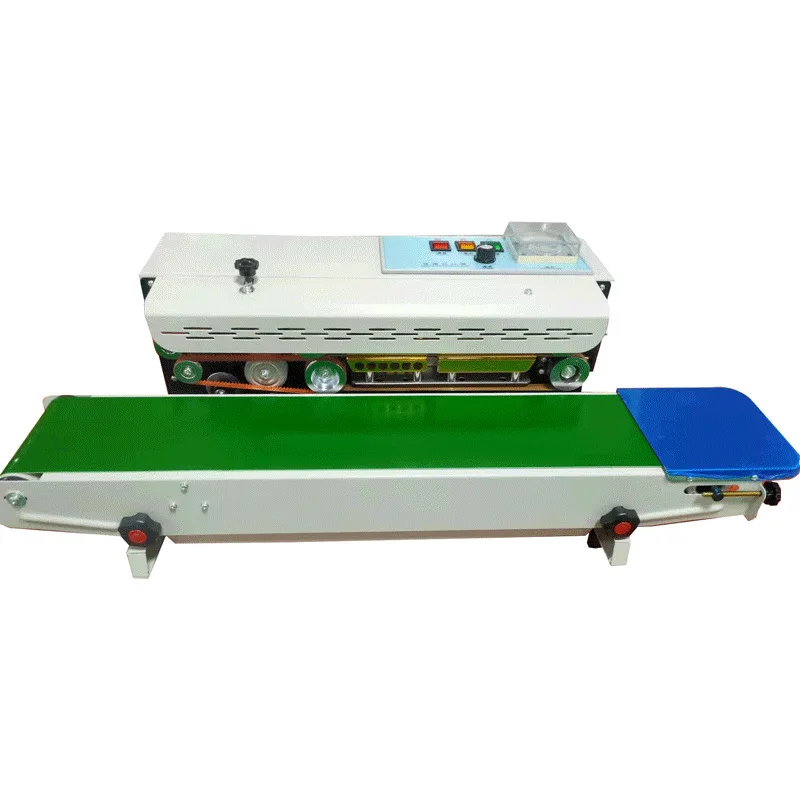
Source-controlled product identity
The Hoting queue identifies Product ID 1601251600642 as the TEBAK FR-900 intelligent temperature-control plastic heat bag sealer, also described as an automatic continuous film bag sealing machine and band sealing machine.
The source confirms four fields: continuous sealing machine model FR-900, packing material Film plastic, applicable industries Food, gifts, crafts, toys, and temperature control range 0-300 degrees Celsius. These are the recorded listing values used in this guide.
The source does not provide sealing width, bag thickness, conveyor load, sealing speed, heater power, supply voltage, phase, machine dimensions, net weight, sealing temperature accuracy, cooling method, date coding options or certifications. Those items are not inferred and must be confirmed before purchase.
This guide is for B2B buyers evaluating continuous band sealers for plastic film bags, food packaging, gift packaging, craft products and toy packaging. It focuses on specification control, film compatibility, seal validation, line integration, hygiene and acceptance testing.
Recorded specification table
| Field | Recorded value | Procurement interpretation |
|---|---|---|
| Product ID | 1601251600642 | Keep this ID on the quotation, technical sheet, inspection report and shipping documents. |
| Continuous sealing machine | FR-900 | Confirm the exact model suffix, machine orientation, configuration and optional modules. |
| Packing material | Film plastic | Request an approved film list with resin, laminate structure, thickness and sealant layer. |
| Applicable industries | Food, gifts, crafts, toys | Confirm the buyer's product, packaging environment and hygiene or traceability requirements. |
| Temperature control range | 0-300 degrees Celsius | Verify whether this is a setpoint range, measured jaw/belt temperature or display range. |
| Sealing width | Not supplied | Request nominal seal width, tolerance, seal pattern and acceptable defect limits. |
| Sealing speed | Not supplied | Request speed range and guaranteed output using the buyer's film and product weight. |
| Electrical specification | Not supplied | Confirm voltage, frequency, phase, current, heater power and protection requirements. |
| Certification | Not supplied | Request model-specific machinery, electrical, food-contact and destination-market documents. |
Resolve the film specification before ordering
“Film plastic” is a broad packaging description, not a complete material specification. Ask the supplier to identify the film resin, laminate layers, sealant layer, thickness, width, coefficient of friction, print treatment and recommended sealing conditions.
List every film that will run on the FR-900. Examples may include single-layer or laminated structures, but the supplier must approve the actual material rather than relying on a generic film name. Record film supplier, product code, thickness tolerance, roll width and storage conditions.
Confirm whether the machine seals bags made from the same film family as the buyer's current packaging. A machine that seals one polyethylene structure may require different temperature, pressure or speed for a multilayer laminate.
Request a film compatibility matrix linking material, thickness, setpoint, belt speed, seal width, pressure and test result. The matrix should distinguish a visually closed seal from a seal that passes the buyer's leak, peel and handling tests.
Ask whether printed areas, dust, oil, moisture, product residue or folds affect seal quality. Define the maximum contamination condition allowed at the seal zone and the cleaning method required before sealing.
Temperature range versus sealing process
The recorded temperature-control range is 0-300 degrees Celsius. This range alone does not establish the correct process temperature, control accuracy, heater power, thermal recovery or safe operating limit for the film.
Request the temperature measured at the sealing interface, not only the controller display. Confirm sensor location, calibration method, display resolution, control tolerance, overshoot, warm-up time and recovery after a cold bag enters the sealing zone.
For every film, establish a validated process window. Record the lowest temperature that produces a continuous seal, the highest temperature that avoids film distortion or burn-through, the speed range and the permitted pressure or belt contact.
Do not select a 300°C setpoint simply because the controller range reaches 300°C. The suitable setting depends on film structure, sealant layer, bag thickness, speed, contact time and product contamination.
Ask how the machine behaves at a 0°C setpoint. Determine whether the heater is disabled, whether the displayed range includes ambient operation and whether the machine has a minimum effective sealing temperature. Confirm that the control system prevents unintended heating.
Seal quality and acceptance criteria
Define the seal outcome before comparing suppliers. The buyer should specify seal width, continuity, appearance, peel behavior, burst resistance, leak performance and acceptable wrinkles or channels.
Use the actual bag material and product. A flat empty film strip is useful for setup, but it does not demonstrate performance when a filled bag has folds, dust, oil, moisture or product pressure near the seal.
Test seal strength across the beginning, middle and end of a production run. Record setpoint, measured interface temperature, belt speed, bag thickness, product mass, seal width and observed defects for every sample.
Use a defined leak or integrity method suitable for the package. The source does not specify a test standard, so the buyer and supplier must agree on the method, sample size, acceptance limit and corrective action.
For food packaging, confirm whether the seal preserves the intended barrier and shelf-life function. Do not claim improved shelf life or airtight performance unless the buyer's validation test supports it.
Conveyor, bag and product envelope
The source does not provide conveyor height, belt width, allowable bag dimensions, maximum bag weight, clearance or product temperature. Request a dimensional drawing showing the complete feed and discharge path.
Define bag width, bag length, gusset depth, filled height, top clearance, seal location and required orientation. Confirm whether the bag can enter horizontally or vertically and whether the operator must align the top edge.
Ask for minimum and maximum bag weight and the allowable load on the conveyor. Test light empty bags, flexible bags, heavy filled bags and products with an uneven center of gravity if all are planned.
Confirm how the machine handles a bag that stops, skews, folds or enters with product in the sealing path. Request jam prevention, belt tracking, access guards and a safe recovery process.
For food, gift, craft and toy products, record the cleanliness and presentation requirements. A seal may be mechanically closed but commercially unacceptable if it damages printed film, wrinkles the package or contaminates the product.
Automation wording and operator responsibilities
The title uses “automatic continuous film bag sealing machine.” Ask the supplier to define exactly which steps are automatic: bag transport, temperature regulation, speed control, cooling, counting, printing, coding, alarms or product detection.
Prepare an operator task list covering startup, warm-up, bag placement, film alignment, parameter selection, adjustment, product changeover, cleaning, jam clearance and shutdown. Mark which actions require a trained operator.
Confirm whether the machine continues running when no bag is present, whether it detects an empty seal zone and whether an emergency stop removes heat as well as conveyor motion.
Request alarm codes, fault descriptions, reset conditions and restart behavior. The machine should not restart unexpectedly after power recovery, guard opening or fault acknowledgement.
Clarify whether the FR-900 requires an operator to feed every bag or can be integrated with an upstream bagger, weigh filler or conveyor. Do not use the word automatic to calculate labor savings without a process diagram.
Food, gift, craft and toy applications
The source lists food, gifts, crafts and toys as applicable industries. These applications may have different requirements for cleanliness, packaging appearance, product size, traceability and seal validation.
For food packaging, request food-contact declarations for every material that may contact the package or product zone. Confirm cleaning procedure, prohibited chemicals, drainage, corrosion resistance and contamination controls.
For gifts and crafts, test printed film, decorative laminates, paper-plastic structures and products with sharp edges or irregular shapes. Confirm that the seal does not damage artwork or create unacceptable wrinkles.
For toys, define product size, corners, protrusions and packaging safety expectations. Check whether the package requires tamper evidence, a tear feature or a particular seal position.
Do not transfer one application's validated settings to another without testing. Record a separate approved parameter card for each material and product family.
Electrical, heater and maintenance questions
The source provides no power or supply details. Request rated voltage, frequency, phase, current, heater power, motor power, recommended breaker, grounding, plug and cable specification for the destination country.
Ask whether the heater is cartridge, band, ceramic or another design. Confirm heater replacement, sensor replacement, wiring protection, insulation, over-temperature protection and cool-down behavior.
Request belt material, belt width, belt tension, belt life, tracking adjustment and replacement interval. Confirm whether the belt is suitable for the recorded 0-300°C control range or whether the temperature applies only to a heater zone.
Test warm-up, steady operation, speed changes and recovery after a cold package enters. Record temperature stability, electrical current, surface temperature of accessible parts and noise.
Request a preventive-maintenance schedule covering belts, rollers, bearings, heaters, sensors, guards, controls and cleaning. Confirm spare-part availability, lead time and warranty coverage.
Factory acceptance test
- Verify Product ID 1601251600642, FR-900 model, exact suffix and quoted configuration.
- Verify the dimensional drawing, conveyor height, belt width, bag clearance, product envelope and service access.
- Verify rated voltage, frequency, phase, current, heater power, motor power and protection devices.
- Verify the 0-300°C control range, sensor location, display accuracy, control tolerance, warm-up and recovery.
- Run every intended film structure and record film resin, laminate, thickness, sealant layer and roll width.
- Run actual filled bags for food, gifts, crafts or toys as applicable; record bag dimensions and product mass.
- Measure seal width, continuity, appearance, peel behavior, leak performance and burst or handling result.
- Test the minimum and maximum approved belt speeds and record output under defined conditions.
- Test film alignment, wrinkles, contamination, moisture, dust, folds and product near the seal zone.
- Test empty-feed behavior, bag skew, jam recovery, belt tracking and safe clearing procedure.
- Test emergency stop, guard opening, over-temperature protection, power interruption and restart prevention.
- Inspect accessible hot surfaces, insulation, guards, wiring, grounding and control-panel protection.
- Verify manuals, cleaning procedure, food-contact documents, electrical documents and destination-market certificates.
- Confirm spare belts, heaters, sensors, rollers, tools, warranty and service response.
- Attach parameter cards, sample seals, measured results, photos, serial number and deviations to the purchase record.
RFQ checklist
- Product ID 1601251600642, FR-900 model suffix and machine orientation.
- Film resin, laminate structure, sealant layer, thickness, width, coefficient of friction and print treatment.
- Minimum and maximum bag width, length, gusset, filled height, seal position and product weight.
- Sealing width, sealing speed, conveyor height, belt width, load limit and output conditions.
- Temperature setpoint range, interface temperature, control accuracy, sensor location and calibration.
- Rated voltage, frequency, phase, current, heater power, motor power, breaker and plug.
- Belt material, belt width, tension, tracking, temperature limit, service life and replacement cost.
- Automatic functions, operator tasks, alarms, fault codes, jam recovery and restart behavior.
- Seal strength, leak test, peel test, burst test, sample size and acceptance criteria.
- Food-contact, hygiene, cleaning, washdown, corrosion and contamination requirements.
- Machine footprint, net weight, packed size, lifting points and installation access.
- Printing or coding module, date-batch marking, counter and integration interface, if required.
- Spare parts, maintenance schedule, training, warranty and service response.
- Machinery, electrical, food-contact and destination-market compliance documents.
- Factory acceptance test procedure using the buyer's film, bags and products.
Installation and process validation
Provide the supplier with the actual package drawings and film samples before shipment. Confirm that the quoted machine can be installed at the required height and that operators have safe access to both sides of the sealing path.
Commission the machine using approved film and product. Record the initial temperature, speed, pressure or belt-contact setting, seal result and adjustment history. Convert the final values into a controlled parameter card.
Validate the lowest, nominal and highest approved operating speeds. Include startup, steady state, changeover and shutdown samples. If the process uses different products, approve each product-film combination separately.
Define changeover cleaning and line-clearance steps. Prevent film scraps, labels, product pieces and dust from entering the heater or belt mechanism.
Keep a lot record containing film code, bag code, product, operator, machine serial number, parameter card, test result and deviations. This record is especially important for food and traceable packaging operations.
Buyer decision framework
The FR-900 has a clear model identifier, named plastic-film application, listed industries and a recorded 0-300°C control range. It should progress to a quotation only after the supplier supplies the missing mechanical, electrical, process and compliance data.
Approve the order after a witnessed trial demonstrates acceptable seals on the buyer's actual film and filled bags, across the intended speed and temperature window. The trial should also confirm safe guarding, cleaning access, operator workflow and repeatability.
Compare suppliers using validated seal quality, practical output, film waste, energy use, changeover time, belt and heater life, maintenance access and service support. Do not compare only by the maximum temperature shown on a controller.
Frequently asked questions
What model is this continuous sealer?
The source identifies it as FR-900. Confirm the exact model suffix, orientation and optional modules on the quotation.
What packaging material can it seal?
The source records “Film plastic.” Ask for an approved film compatibility matrix covering resin, laminate, thickness, sealant layer and bag format.
What industries are listed?
The source lists food, gifts, crafts and toys. Each application still requires its own film, product, hygiene and seal-validation review.
Is the temperature range really 0-300°C?
That is the recorded source value. Confirm whether it describes the controller setpoint, the measured sealing interface or another display range, and validate the actual film process window.
What is the sealing speed and width?
Neither value is provided in the source record. Request both with guaranteed output conditions and test results.
Source and contact
This guide is based on the Hoting queue record for Product ID 1601251600642. The recorded fields are FR-900, Film plastic, Food/gifts/crafts/toys and 0-300 degrees Celsius temperature control range. Before purchase, request the exact film matrix, seal width, speed, electrical data, machine drawing, safety and food-contact documents, acceptance test and warranty through the TEBAK sales inquiry channel.
Key specifications
- Continuous sealing machine:
- FR-900
- Packing material:
- Film plastic
- Applicable industries:
- Food, gifts, crafts, toys
- Temperature control range:
- 0-300 degrees Celsius