
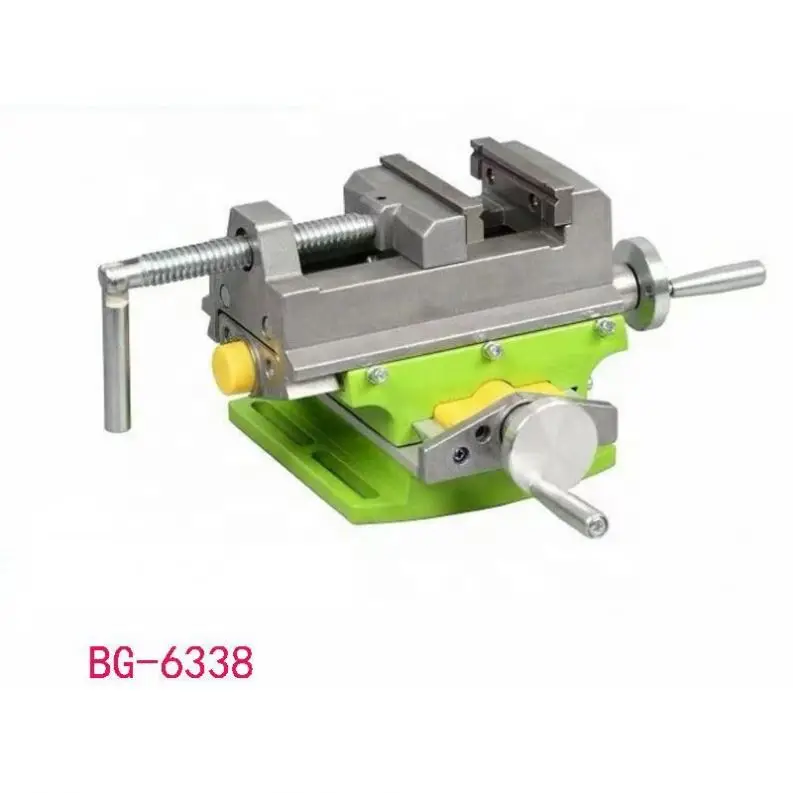
Source-controlled product identity
The Hoting queue identifies Product ID 1601255999433 as a machine worktable listed under the title "Heavy Duty Precision Cross-nose Pliers Bench Drilling Machine Cross Slide Vise Vice Table Compound Worktable Bracket for Milling".
The recorded parameter block contains four entries: the product name, the material, five model codes, and the application. There are no dimensions, no travel figures, no slot data and no weight. The recorded description repeats those four entries, states that complete product specifications exist, and then directs the reader to request other specifications by telephone rather than publishing them. That telephone number is not reproduced here.
This article therefore reproduces the four recorded values exactly, treats the five model codes as codes only, and lists the questions a buyer must have answered before choosing between them. Nothing below should be read as a dimension or a capacity for any model, because the record contains none.
The recorded parameter block, in full
| Field | Value as recorded |
|---|---|
| Product Name | Worktable Milling Machine |
| Material | Aluminium Alloy |
| Model | BG6300 BG6330 BG6368 BG6369 BG6350 |
| Application | Drilling Machine |
The model field lists five codes with no separating punctuation and no accompanying data: BG6300, BG6330, BG6368, BG6369 and BG6350. The record gives no indication of how the five differ, and no table size, travel or weight is attached to any of them. A buyer cannot select between these codes from the record at all.
The description field adds one further statement, that the product has complete specifications and that other specifications can be requested. That statement is worth recording as it stands: the record asserts that a full specification exists while not containing it, which means the specification exists somewhere in the supplier's own documents and can be obtained by asking.
What this product is, in machine-shop terms
A cross slide worktable, also called a compound table, an X-Y table or a milling table, is an accessory that mounts on the table of a drilling machine or a small milling machine. It carries a second table on two perpendicular slides driven by handwheels, so that a workpiece clamped to the moving table can be positioned in two axes without moving the work or unclamping it.
On a bench drilling machine the accessory converts a machine with one axis of motion, the quill, into a machine with three, because the work can now be moved in two horizontal axes under the spindle. That is the reason these tables are commonly fitted to drill presses for light milling, slotting and accurate hole positioning.
The recorded product name is Worktable Milling Machine and the recorded application is Drilling Machine. Those two statements are consistent with the accessory described above, but they matter for the purchase because the requirements of the two uses differ. A table used only to position work under a drill spindle sees clamping and drilling loads, while a table used to mill slots under a drill press also has to resist side loads and vibration that a drill press spindle is not designed to carry. The record does not state which duty the table is built for, only that the application is a drilling machine.
Material: aluminium alloy on a table that will be clamped and loaded
The recorded material is aluminium alloy. That is a genuine specification and it should drive part of the buyer's questioning, because aluminium alloy is not the material most machine tables are made from.
Machine worktables are commonly made of cast iron, for reasons that relate to stiffness, damping and wear. Cast iron is dense and stiff, which limits deflection under cutting loads, and its internal structure damps vibration better than aluminium does, which matters on milling and slotting work. The sliding surfaces of such tables, whether dovetail ways or rectangular ways, are usually hardened and ground to resist wear and to hold adjustment over years of use.
Aluminium alloy tables are made for lighter duty. Their advantages are lower weight, which makes a bench drill installation easier to move and can reduce the load on a small drill table, and lower cost where the table is a casting or a machined billet. Their disadvantages are relevant here: aluminium is less stiff than cast iron at the same section, so a table of a given size deflects more under load; aluminium ways wear faster than hardened ground ways and can be damaged by chips embedded in an unhardened surface; and aluminium threads and T-slots are easier to strip if a clamp is over-tightened.
The record does not distinguish between an aluminium table with hardened steel ways and an all-aluminium table, and that is the most important question to resolve. Ask whether the sliding surfaces are steel, whether they are hardened and ground, and whether the table has any steel inserts at the clamping slots. A table with hardened steel ways on an aluminium body behaves very differently from one where aluminium slides on aluminium.
Ask also for the alloy designation rather than the words aluminium alloy, and whether the body is a casting, an extrusion, or machined from plate. Those three origins have different stiffness and different costs, and a specification that names an alloy such as 6061 or 7075 tells the buyer much more than the words aluminium alloy. Ask finally whether the table is sold as suitable for milling or only for positioning and drilling, since that single sentence tells the buyer what load the manufacturer believes the table can take.
The five model codes, and the data needed to choose between them
Five model codes are recorded: BG6300, BG6330, BG6368, BG6369 and BG6350. The record attaches no dimensions to any of them, so no selection between the codes is possible from the record, and no comparison with a buyer's existing machine is possible either.
The figures that would allow a selection are, in order of importance:
- The dimensions of the moving table top, and the dimensions of the base.
- The travel of each axis, meaning how far the table moves in X and in Y from end to end.
- The height of the assembled table, since it determines how much of the machine's spindle travel and clearance is consumed.
- The size, number and spacing of the clamping slots on the moving table, and the bolt pattern of the base, which determines whether the table will bolt onto the buyer's drill or mill table.
- The weight of the table, which determines whether the buyer's machine table and lifting arrangements can carry it.
- The handwheel graduation, the screw pitch, and whether both axes have graduated collars.
- Whether each axis has a lock, and whether backlash is adjustable.
- The flatness and parallelism tolerances of the table top and of the travel, since those tolerances set the accuracy the accessory can deliver.
A buyer replacing or adding a table should also measure the existing machine before ordering: the width and depth of the machine table, the positions of the mounting slots, the maximum height available under the spindle, and the weight the table can take. Without the travel and the base bolt pattern from the supplier, and without those measurements from the machine, a purchase is a guess.
One more thing in the title that a buyer should notice
The title of this record includes the phrase cross-nose pliers, in a listing that otherwise describes a machine table. Pliers have no functional relationship to a worktable, and the phrase is best understood as a title keyword unrelated to the product rather than as a description of what is sold.
There is a practical reason to note this rather than ignore it. When the visible part of the title is assembled from unrelated keywords, it becomes harder for a buyer to judge whether the underlying listing is accurate, and it also means that search results for this product and for unrelated hand tools will overlap. A buyer evaluating this supplier should therefore rely on the recorded parameter block, on the specification document the supplier supplies in writing, and on photographs, rather than on the title. The same caution applies to the phrase heavy duty in the title, which is an adjective rather than a specification and is not supported by any load or stiffness figure in the record.
What a machine-shop buyer should request in writing
- The difference between the five model codes BG6300, BG6330, BG6368, BG6369 and BG6350, stated model by model.
- The complete specification document that the record states exists, including a dimensioned drawing.
- Moving table top dimensions, base dimensions, and overall height for each model.
- Travel of the X and the Y axis for each model, measured end to end.
- Clamping slot width, spacing, number and the extent of each slot, with the T-slot or bolt size.
- Base mounting bolt pattern and slot positions, against a drawing of the buyer's machine table.
- Weight of the table, and the maximum workpiece weight the table is rated to carry.
- The alloy designation of the material, and whether the body is a casting, an extrusion or machined from plate.
- Whether the sliding ways are steel, whether they are hardened and ground, and how they are lubricated.
- Whether the table is offered as suitable for milling, and if so what cutting load it is rated for.
- Flatness tolerance of the table top and parallelism tolerance of each axis travel.
- Screw pitch, handwheel graduation, graduated collar on each axis, and whether either axis has a lock.
- Whether backlash is adjustable, and how adjustment is made.
- Whether the table swivels, and whether a swivel base is available.
- Whether stops, a locking lever, a protective cover for the ways or a chip guard are supplied.
- Finish and corrosion protection applied to the table surfaces.
- Whether a mounting kit, bolts, T-nuts or clamps are included with the table.
- Assembly and adjustment instructions, and the language of the document.
- Packing: carton or crate size, gross weight per unit, and how the ways are protected in transit.
- Warranty period and coverage, and the price and lead time of any replaceable parts such as the handwheels, screws or nuts.
- MOQ, unit price per model at the target quantity, lead time and shipping terms.
Practical checks before buying, and on arrival
Because the record carries no dimensions, the purchase order should be written from the supplier's written answers and from a dimensioned drawing, and the buyer's own machine should be measured first so that the two sets of figures can be compared before the order is placed.
Before ordering, confirm that the base bolt pattern matches the buyer's machine table, that the assembled height leaves the spindle travel the buyer needs, and that the table weight is within what the machine table can carry. Those three checks rule out most wrong purchases and they can all be done from a drawing.
On arrival, unwrap the table and inspect the sliding surfaces first, since those are the parts that suffer in transit: look for scoring, for chips embedded in the ways, and for rust where the protective coating has worn through. Turn both handwheels through their full travel and feel for tight spots, which indicate a bent screw or a misaligned way, and check that the graduated collars rotate with the screws rather than slipping.
Measure rather than assess by eye. Check the flatness of the table top with a straight edge and a feeler gauge or with a dial indicator on a stand, check the table top for parallelism to the base, and check the end to end travel of each axis against the stated figure. Check the backlash in each axis by approaching a position from one direction and then from the other, and confirm whether any supplied adjustment changes it.
Finally, mount the table on the buyer's own machine before relying on it, clamp a test workpiece and take a cut if the intended work is milling, since that is the case where an aluminium table with unhardened ways will show its limits soonest. Record the deflection or the surface finish obtained, because that result on the buyer's own machine and material is a better basis for the next purchase than any figure in a listing.
Buyer decision framework
The source for this guide is a four-entry parameter block giving a product name, a material, five model codes and an application, plus a description that states complete specifications exist and directs the reader elsewhere for them. There is no dimension, no travel, no slot data and no weight for any model in the record.
The first decision is therefore not which model to buy but whether the supplier can supply a drawing. A cross slide table is a precision accessory whose usefulness depends entirely on its travel, its slot pattern and its tolerances; a supplier who cannot provide those in writing cannot be compared with any other supplier, and the five model codes carry no meaning for a buyer in the record as it stands.
The second decision concerns the material and the duty. The recorded material is aluminium alloy, the recorded application is a drilling machine, and the recorded product name refers to milling. A buyer who intends to position work under a drill spindle is asking less of the table than a buyer who intends to mill, and a buyer who intends to mill should establish whether the ways are hardened steel and what cutting load the supplier rates the table for before ordering. Where the answer is that the table is intended for positioning and light drilling, that is a perfectly reasonable product, but it is a different product from a milling table, and the price should be assessed against the lighter duty.
Where the supplier provides a dimensioned drawing, the travel figures, the slot data, the alloy designation, the way material and the flatness and parallelism tolerances, the buyer can compare this table against alternatives on equal terms, and a single unit for trial is a reasonable next step. Where the supplier answers only with the words aluminium alloy and a model list, the buyer has no basis for comparison and should request the drawing again before ordering.
Frequently asked questions
What is the difference between the five models?
The record lists BG6300, BG6330, BG6368, BG6369 and BG6350 without attaching any dimension or weight to any of them, so the difference is not stated. Ask the supplier to state, model by model, the table size, the travel, the slot pattern and the weight.
Is an aluminium alloy table strong enough for milling?
That depends on the design, the way material and the load, none of which the record states. Aluminium is less stiff than cast iron at the same section and its ways wear faster unless hardened steel ways are used, so ask whether the sliding surfaces are hardened and ground steel, ask for the alloy designation, and ask the supplier directly whether the table is rated for milling and at what cutting load.
Will it fit my bench drill?
Not determinable from the record, which gives no dimensions. Ask for the base dimensions and the mounting bolt pattern, then compare them with the width, depth and slot positions of the buyer's own machine table, and check the assembled height against the clearance available under the spindle.
Why does the title mention cross-nose pliers?
There is no functional relationship between pliers and a machine worktable, and the phrase appears to be a title keyword rather than a description of the product. Base a purchase decision on the parameter block, the written specification and photographs rather than on the title.
Is the product a table for a drilling machine or for a milling machine?
The record states the product name as Worktable Milling Machine, the application as Drilling Machine, and the title refers to milling. A cross slide table can serve both roles when fitted to a drill press, but the load requirements differ, so ask the supplier which duty the table is built and rated for.
What should be measured when the table arrives?
The flatness of the table top, the parallelism of the top to the base, the end to end travel of each axis against the stated figure, and the backlash in each axis when approached from either direction. Inspect the ways for scoring, embedded chips and corrosion before mounting the table on a machine.
Are clamps or mounting bolts included?
Not stated. Ask whether a mounting kit, bolts, T-nuts or clamps are supplied with the table, and whether a swivel base, stops or way covers are available as options.
What is the weight of the table?
Not recorded for any model. Ask for the table weight and the rated workpiece weight, and confirm that the buyer's machine table can carry the accessory plus the work.
Source and contact
This guide is based on the Hoting queue record for Product ID 1601255999433. The record carries four parameter entries, reproduced above in full and without alteration: the product name Worktable Milling Machine, the material Aluminium Alloy, the five model codes, and the application Drilling Machine. The record contains no dimension, travel, slot or weight figure for any model, and this article treats the five codes as codes rather than as specifications. The telephone contact given in the record for further specifications is not reproduced here; buyers should request the dimensioned specification document through the supplier's sales inquiry channel.
The material and the application are presented as recorded, together with the considerations a buyer should raise about stiffness, way wear and duty, and no capacity, load rating, tolerance or compliance claim is made for this product in this article.
Key specifications
- Product Name
- Worktable Milling Machine
- Material
- Aluminium Alloy
- Model
- BG6300 BG6330 BG6368 BG6369 BG6350
- Application
- Drilling Machine