
Source-controlled product identity
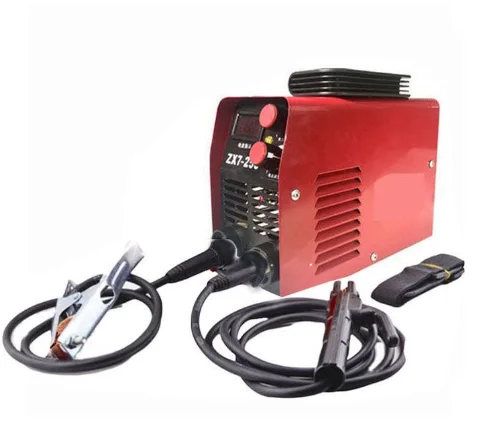
This TEBAK Hoting queue record describes a high-power mini handheld inverter welding machine for portable stick arc welding. The title also contains the claims 110V/220V, 200/250A, ESAB AC/DC, copper wire, electric and portable. These are listing-level statements, not a complete verified specification sheet. This buying guide preserves them as claims to confirm and does not convert them into guaranteed output, duty cycle or compatibility.
Product ID 1601250817885 should appear on the quotation, nameplate photograph, technical sheet, packing list, factory test record and spare-parts list. The queue record provides no structured parameters for input range, output range, open-circuit voltage, duty cycle, electrode diameter, process modes, wire or cable construction, enclosure rating, thermal protection, weight, dimensions, efficiency, generator compatibility, plug, certification, MOQ, warranty or lead time. Every missing value must be confirmed for the exact quoted configuration.
What the listing says and what the buyer must verify
| Listing statement | What it suggests | Required confirmation |
|---|---|---|
| High power | The product is marketed as a higher-output portable inverter welder. | Rated output, maximum output, duty cycle, test standard, ambient condition, cooling method and input current. |
| 110V/220V | The title presents two input-voltage values. | Whether the unit is dual-voltage, selectable, auto-sensing or supplied in separate versions; phase, frequency, plug and protection. |
| 200/250A | The title presents two current values. | Whether each value belongs to a different model or setting; rated versus maximum current; duty cycle at each output. |
| Mini handheld / portable | The product is positioned for compact transport and field use. | Exact dimensions, net weight, carrying method, cable length, ventilation clearance, drop protection and safe placement. |
| Inverter stick arc welding machine | The stated process is portable manual arc welding using an inverter power source. | Supported electrode types and diameters, polarity, arc-start function, controls, protection and operating limits. |
| ESAB AC/DC | The title references ESAB and AC/DC terminology. | Whether ESAB is a supported electrode or a brand reference, and whether the machine actually provides AC, DC or both output modes. |
Confirm the exact electrical configuration
Do not connect a welding machine based only on the 110V/220V wording. Ask the supplier to state whether the product is one dual-voltage unit, a manually selected unit, an auto-ranging unit or two separate variants. Request clear photographs of the nameplate, selector, input cable, plug and wiring diagram for the exact quotation.
Confirm input frequency, phase, rated input current, maximum input current, recommended circuit breaker, earthing method, extension-cable limits and generator requirements. A machine that can be connected to two nominal voltages may still have different output or duty-cycle limits at each input. Record the permitted voltage range rather than accepting only a nominal value.
Run an input-voltage test at the buyer's actual site conditions if possible. Record input voltage under no load and during welding, cable length, circuit protection, generator rating if used, output setting and arc behavior. Ask the supplier to identify undervoltage, overvoltage, surge and phase-loss protection if those functions exist.
Confirm whether the quotation includes a plug for the destination country or ships with bare leads. Request cable gauge, insulation temperature rating, strain relief, ground connection and connector type. Do not assume that a portable unit is ready for the buyer's outlet or generator.
Understand the 200/250A claim
The title contains 200/250A but the queue record has no structured current field. Ask whether 200A and 250A identify two model variants, two maximum settings, a nominal and peak value, or an approximate marketing range. The quotation must show the exact model, rated output, maximum output and the condition under which each value applies.
Request output-current curves or a test report showing current, voltage, duty cycle and ambient temperature. A maximum current at a short test duration is not equivalent to continuous production output. Record the measurement instrument, test method, input voltage, cable set, electrode and cooling condition.
Test several current settings with the electrode sizes and materials used in production. Document arc initiation, arc stability, spatter, penetration, bead appearance, restart behavior and thermal protection. A current display may show a setting rather than the actual delivered current, so agree on the acceptance measurement method before testing.
Do not publish or purchase against a guaranteed 200A or 250A performance statement until the supplier connects the claim to a specific model and documented test condition. Keep the title wording visible as a sourcing claim, but keep the acceptance criterion numeric and model-specific.
Electrode and welding-process compatibility
The source calls the product a stick arc welding machine but does not state electrode types or sizes. Ask for the supported electrode diameter range, coating types, electrode length, recommended current range and polarity for each approved consumable. Confirm whether the supplier's ESAB reference means a compatible electrode brand or a machine feature.
Request a polarity diagram for electrode-positive, electrode-negative and any AC mode. If the machine provides DC only, the title's AC/DC wording requires correction in the quotation. If an AC mode exists, ask for its current range, arc behavior, current adjustment and limitations compared with DC operation.
Prepare a welding matrix covering the buyer's base metals, thicknesses, joint types, positions and electrode classifications. Test flat, horizontal, vertical and overhead positions only when the operator, safety plan and process qualification allow them. Record the exact electrode lot, storage condition, diameter, current, polarity and travel speed.
For repair, maintenance and field work, include rusty, painted or contaminated surfaces only as separate controlled tests. Do not treat a portable inverter as a substitute for surface preparation, qualified procedure control or appropriate ventilation.
Portable format and cable package
“Mini handheld” and “portable” are descriptive terms. Request overall dimensions, net weight, packed weight, carrying handle, center of gravity, lifting points and allowable transport orientation. Confirm the clearance required around the ventilation openings and whether the unit may be placed on a dusty floor, scaffold or vehicle deck.
Ask for the complete included cable set: electrode holder, work clamp, work lead, input cable, connectors, cable lengths, cross-sections and insulation ratings. The title mentions copper wire, but it does not establish the cable material, conductor size, strand construction or included quantity. Require the supplier to list each cable and identify which parts are optional.
Inspect cable flexibility, heat resistance, abrasion protection, connector locking, strain relief and work-clamp contact. Run a voltage-drop check under the buyer's maximum planned current and cable length. A compact power source cannot compensate for undersized, damaged or excessively long leads.
Confirm storage and transport protection. Request the case, carton, foam, moisture protection and drop or vibration guidance if included. Verify that the package protects switches, terminals, cables and the front panel during international shipment.
Duty cycle, cooling and thermal protection
No duty cycle, cooling method or ambient-temperature limit is supplied. Ask for the rated duty cycle at each quoted current, the test standard, ambient temperature, time base, cooling fan behavior, thermal cutoff and recovery time. State whether the duty-cycle value is based on a ten-minute interval or another documented method.
Run a thermal test using the buyer's actual current, electrode and cable set. Record start temperature, input voltage, output setting, welding time, idle time, fan operation, enclosure temperature, thermal alarm and recovery. Repeat at the highest planned current and at a lower current that reflects normal work.
Check ventilation during dust, humidity and field conditions relevant to the buyer. Ask whether filters are fitted, how they are cleaned and whether obstructed airflow causes a controlled shutdown. Do not operate an inverter welder in a confined space or wet environment unless the supplier's documents and the site safety plan permit it.
Define what happens after thermal protection. The machine should not restart unexpectedly or leave an operator believing that a fault is an electrode problem. Request the alarm indication, reset condition, safe cool-down period and service procedure.
Controls, displays and protection functions
The queue record does not identify a display, current knob, digital control, hot-start, arc-force, anti-stick, VRD, remote control or memory function. Ask the supplier to list every control and protection feature on the exact model. If a function is not present, the quotation should say so rather than leave the buyer to infer it.
Test current adjustment repeatability by setting the same value after power cycles and after changing input voltage. Compare the displayed setting with an agreed external measurement. Check whether the display remains readable in the work environment and whether controls can be adjusted while wearing welding gloves.
Request behavior for short circuit, electrode sticking, overcurrent, overtemperature, undervoltage, overvoltage and fan failure. Confirm whether alarms are visual, audible or both, and whether the machine records fault information. Test emergency isolation and ensure that the welding circuit is de-energized according to the safety procedure.
Ask for the service manual or at least a fault-code table, spare control board availability and authorized repair path. A low purchase price is not a complete procurement result if the buyer cannot obtain a fan, switch, cable, connector or inverter module.
Welding quality and acceptance tests
Define quality before measuring output current. Approve test coupons, base-metal grade, thickness, joint preparation, electrode, polarity, position, current, voltage, travel speed and acceptance criteria. Record bead appearance, penetration, fusion, porosity, cracking, undercut, spatter and arc interruptions.
Use the buyer's actual electrodes and representative materials. Inspect the weld visually and use additional non-destructive or destructive testing when required by the application. The source listing does not establish weld quality, so the buyer must define the evidence needed for the intended work.
Run cold-start, restart, long-lead, low-input-voltage and repeated-cycle tests where relevant. Record failed starts, electrode sticking, nuisance trips, thermal shutdowns and operator adjustments. Keep separate results for machine behavior, electrode condition, preparation and operator technique.
If the machine will be used for structural, pressure, lifting, vehicle or safety-critical work, require the buyer's qualified welding engineer or responsible person to approve the procedure. A product listing cannot replace procedure qualification, operator qualification, inspection or local safety requirements.
Safety, site conditions and compliance
No safety certification or destination-market compliance document is included in the source record. Request the operating manual, electrical safety information, protective-earth test, insulation or leakage test where applicable, EMC information and the documents required by the destination market.
Confirm the supplier's guidance for welding fumes, ventilation, fire prevention, hot work permits, screens, eye protection, gloves, clothing, gas cylinders if used nearby and protection from electric shock. The compact size does not make arc welding a low-risk activity.
Ask for ingress or environmental limits only if documented. Do not describe the machine as waterproof, dustproof, generator-safe or suitable for outdoor use without a stated rating and operating boundary. Record storage temperature, humidity, altitude and transport limits when the buyer's site requires them.
Keep management-system claims separate from product compliance. The source description mentions company quality-control practices but does not provide a product certificate. Verify the legal entity, certificate scope and model applicability separately, then collect product-level electrical and safety documents for the exact configuration.
Factory acceptance test proposal
- Verify product ID 1601250817885, exact model, nameplate, input version, output version, cable set and drawing revision.
- Confirm whether the title's 110V/220V claim describes one selectable unit, an auto-ranging unit or separate variants.
- Confirm whether 200/250A describes model variants, maximum settings, rated values or another defined condition.
- Record input voltage range, frequency, phase, input current, plug, protection, earthing and generator limits.
- Test output current, arc voltage, duty cycle and thermal behavior at the buyer's planned settings.
- Test the approved electrode types, diameters, polarity, base metals, positions and joint preparations.
- Inspect arc start, stability, restart, anti-stick or other stated functions without assuming unlisted features.
- Run long-lead, low-voltage, repeated-cycle and thermal recovery tests where relevant to the installation.
- Inspect cables, connectors, work clamp, electrode holder, ventilation, alarms, controls and safety isolation.
- Review manuals, test records, destination-market documents, spare parts, packaging and warranty before shipment.
RFQ checklist
- Exact model and product ID 1601250817885 on quotation, nameplate, drawing, test record and packing list.
- Meaning of 110V/220V: input range, selector, auto-ranging or separate versions, with frequency and phase.
- Meaning of 200/250A: rated output, maximum output, model variant, duty cycle and test condition.
- Open-circuit voltage, arc-voltage range, current-adjustment range, display accuracy and measurement method.
- Supported electrode types, diameters, coating classifications, polarity, AC/DC mode and recommended currents.
- Duty cycle at each output, ambient-temperature test, time base, cooling method, thermal cutoff and recovery.
- Input current, circuit breaker, plug, cable, earthing, extension-cable limits, generator compatibility and surge protection.
- Hot-start, arc-force, anti-stick, VRD, remote control, memory, fault codes and all included controls.
- Net and packed weight, dimensions, handle, ventilation clearance, enclosure and transport orientation.
- Electrode holder, work clamp, work lead, input cable, connectors, lengths, conductor material and replacement prices.
- Weld-quality test method, coupons, materials, thicknesses, positions, acceptance limits and inspection records.
- Operating manual, electrical safety documents, EMC information, product markings and destination-market compliance.
- MOQ, lead time, packaging, inspection, sample approval, warranty, after-sales response and spare-parts terms.
Buyer decision framework
This listing is a starting point for sourcing a compact electric inverter stick welder. Its source-backed scope covers the stated portable, handheld, inverter, stick-arc and electric application terms, while the title claims 110V/220V and 200/250A. The queue record does not establish the exact model configuration, rated output, duty cycle, electrode range, cable package, safety documents or site compatibility. Approve the purchase only after those claims are tied to a specific nameplate and test report, the buyer's welding procedure is demonstrated, and the electrical and safety documentation is accepted.
Frequently asked questions
Is this one welder for both 110V and 220V?
The title contains both values, but the queue record does not explain the configuration. Confirm whether the unit is selectable, auto-ranging or sold in separate voltage versions, and request the exact nameplate.
Does 200/250A mean the machine continuously welds at that current?
No such conclusion is supported by the source record. Ask for rated and maximum output, duty cycle, test standard, ambient condition and measured current for the exact model.
Is ESAB AC/DC a confirmed machine function?
The title contains ESAB and AC/DC wording, but no structured process specification is supplied. Confirm whether it refers to compatible electrodes, brand terminology or actual AC/DC output modes.
What electrodes can the machine use?
The queue record does not provide an electrode range. Request supported diameters, coating types, polarity, current range and sample-weld evidence for the buyer's materials.
Is the mini handheld welder suitable for outdoor work?
Portability does not establish outdoor, waterproof, dustproof or generator-safe operation. Obtain environmental ratings and site limits, then follow the buyer's hot-work and electrical safety plan.
Source and contact
This guide is based on the Hoting queue record for product ID 1601250817885. Before purchase, request the current quotation, nameplate photograph, input and output test report, electrode compatibility matrix, cable specification, duty-cycle test, welding samples, safety documents, compliance evidence, packing list, spare-parts offer and final machine photographs. For sourcing questions, contact the TEBAK sales team through the site's current inquiry channel.