
Source-controlled identity before quotation
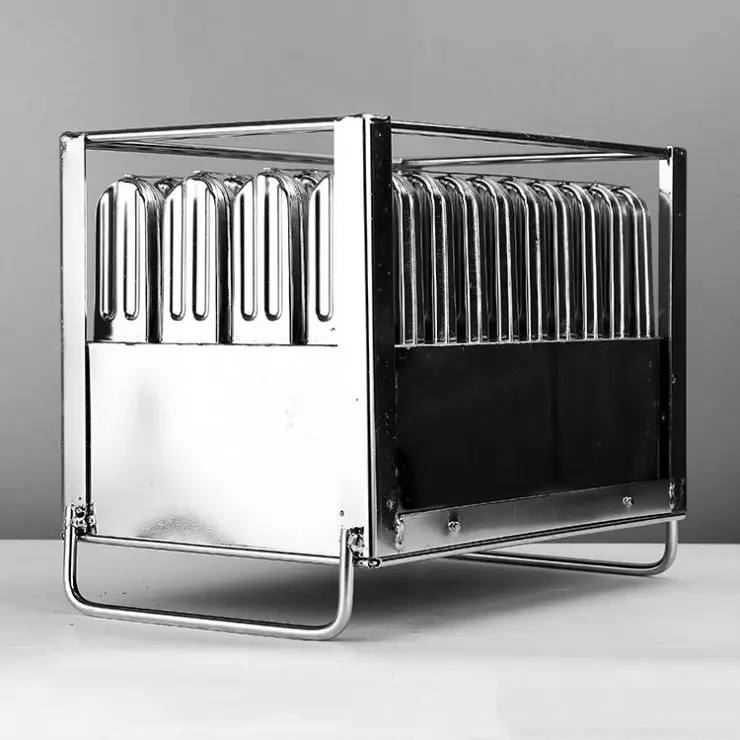
This TEBAK listing describes an Ice Pop Mold with Stick Holder for a popsicle or ice-pop production setup. The source records Food-grade 304 stainless steel, an approximate set weight of 7kg/set, 40 cavities, a variety of shapes and sizes with customized drawings for processing, and an application for a DIY ice cream maker with easy ice removal.
Product ID 1601277324414 is the queue identifier for this buying guide. The title mentions a stainless-steel popsicle mold, popsicle-machine use, various styles and a stick-holder function. These descriptions define the procurement topic, but they do not provide each cavity's volume, dimensions, pitch, stick size, cooling conditions, cycle time, release mechanism, sanitation documents or actual output.
| Source field or description | Recorded value | Procurement treatment |
|---|---|---|
| Product name | Ice Pop Mold with Stick Holder | Use as the source identity; confirm the exact assembly and included holder. |
| Material | Food-grade 304 stainless steel | Request material evidence, food-contact documentation, weld finish and surface inspection. |
| Weight | About 7kg/set | Approximate catalog value; confirm net/gross weight and whether sticks or accessories are included. |
| Mold quantity | 40 cavities | Source-recorded cavity count; verify actual usable cavities and layout. |
| Shape and size | A variety of shapes and sizes; customize drawings for processing | Confirm cavity drawings, volume, dimensions, pitch, wall thickness and customization terms. |
| Application | DIY ice cream maker and easy remove the ice cube | Application wording; test compatibility with the buyer's freezer or machine. |
| Title scope | Stainless-steel popsicle mold for a popsicle machine with various styles of stick holder molds | Title-level scope; verify machine interface, stick system and actual styles. |
The source does not provide cavity length, width, depth, volume, mold pitch, overall dimensions, plate thickness, stick diameter, stick length, stick-holder tolerance, freezing temperature, brine or refrigerant compatibility, freezing time, release method, cleaning validation, surface roughness, weld process, packaging dimensions, certification or warranty. These are RFQ confirmation items. Do not infer them from the words “food-grade,” “easy remove” or “40 cavities.”
1. Define the ice-pop product before selecting the mold
Start with the finished product. Record target ice-pop shape, finished length, width, depth, volume, weight, stick location, stick exposure and acceptable cosmetic tolerance.
The source allows a variety of shapes and sizes, but it does not identify a standard cavity geometry. Request a dimensioned cavity drawing for every proposed style.
Confirm whether the buyer needs one shape per set, multiple shapes in one set, or interchangeable cavity inserts. Do not assume the phrase “various styles” means mixed cavities are supplied.
Define recipe, solids, inclusions, fruit pieces, coating and viscosity. These factors affect filling, freezing, release and cleaning.
Confirm whether the mold is used for water ice, dairy ice cream, fruit pops, sorbet or another product. The application wording is broad and does not establish food-process compatibility.
Request a sample mold filled with the buyer's formula. Record fill level, stick alignment, freezing behavior, release force and finished appearance.
Use product ID 1601277324414 in the RFQ subject and inspection record. Keep cavity revisions linked to the approved drawing.
Do not approve a mold by product photograph alone. Small changes in cavity radius, draft, welds and stick-holder alignment can affect release and product quality.
2. Verify 40-cavity layout and usable output
The source records 40 cavities. Request a top, side and bottom layout showing cavity numbering, rows, columns, pitch, outer margins and stick-holder positions.
Confirm whether all 40 cavities are usable simultaneously or whether some are reserved for a frame, drain, inlet, test cavity or handling clearance.
Measure cavity-to-cavity spacing and confirm compatibility with the buyer's freezer plate, cart, rack or popsicle machine.
Ask for overall mold dimensions and the required clearance for loading, sticks, freezing airflow, lifting and washing.
Confirm whether the set contains one plate, paired plates, a frame, a cover, removable inserts or an integrated stick holder.
Run a full 40-cavity fill test. Record underfilled cavities, overflow, stick movement, leakage and any cavity that is difficult to remove.
Check the mold when fully loaded. Measure lifting points, deflection, handles, balance and risk of product contact with the floor or freezer wall.
Do not turn 40 cavities into a production rate. Output also depends on freezing cycle, filling, handling and release time.
3. Food-grade 304 stainless-steel verification
The source lists Food-grade 304 stainless steel. Request the material grade for every product-contact surface, not only the main plate.
Ask for material certificates or supplier declarations identifying grade, thickness, heat number where available and traceability to the supplied set.
Confirm whether the stick holder, frame, handles, fasteners, weld filler, spacers and inserts are also stainless steel or another material.
Request surface-finish information for cavities and food-contact areas. The source does not provide Ra values, polish grade or passivation details.
Inspect cavity surfaces for pits, scratches, crevices, weld spatter, sharp edges, trapped product zones and areas that are difficult to clean.
Ask whether the mold is passivated, electropolished or treated by another process. Do not assume a 304 grade automatically proves a finished sanitary surface.
Confirm resistance to the buyer's ingredients, salt, acids, sugars, detergents and sanitizers.
Keep material documentation with the purchase order and inspection report. Match certificates to the mold revision and product-contact components.
4. Cavity dimensions, volume and product weight
Request each cavity's internal length, width, depth, radius, draft angle and nominal volume. “A variety of shapes and sizes” is not a usable engineering specification.
Confirm nominal fill volume, allowed fill tolerance and finished product weight under the buyer's recipe.
Measure sample cavities with a drawing or calibrated method. Compare cavity volume across the 40 positions.
Test fill level and headspace. Record overflow, air pockets, shrinkage, deformation and product contact with the stick holder.
Confirm whether the mold is intended to be filled by hand, nozzle, pump or a machine. Request the filling opening and clearance.
Check cavity wall thickness and heat transfer implications. Do not infer freezing performance from stainless-steel grade alone.
Ask whether custom cavity shapes require a new drawing, tooling charge, MOQ or sample approval.
Use a controlled drawing revision for every custom style. Do not approve a shape from a marketing image.
5. Stick holder and stick compatibility
The source product name includes Stick Holder, and the title mentions popsicle stick holder molds. Ask for the supported stick material, width, thickness, length and tolerance.
Confirm stick entry direction, stick depth, exposed length, centerline and retention method.
Check whether the holder is integrated, removable, adjustable or shared across multiple cavity styles.
Test stick alignment across all 40 cavities. Record leaning, twisting, floating, sinking, lateral movement and inconsistent exposure.
Verify that sticks remain centered during freezing and are easy to remove with the product.
Ask for replacement holder parts, cleaning method and inspection criteria for bent or worn slots.
Confirm whether the same holder supports custom cavity drawings or requires a new holder for each style.
Do not assume a generic popsicle stick fits the supplied holder. Send a physical stick sample or a controlled drawing.
6. Freezing system and machine interface
The source says the mold is for a DIY ice cream maker, while the title references a popsicle machine. These are application descriptions, not a confirmed machine interface.
Ask for the freezer, brine tank, refrigerant, rack, plate or machine model with which the mold was tested.
Request mold insertion dimensions, plate spacing, support points, lifting clearance and allowable temperature range.
Confirm whether the mold is immersed, air-frozen, contact-frozen or used in another system.
Record freezing temperature, cycle time, product formula, load condition and release procedure in the acceptance test.
Check thermal contact across the mold and whether the frame creates cold spots or warm spots.
Ask how the mold is removed from the freezer without bending the frame or disturbing the sticks.
Do not claim a freezing capacity or cycle time without a machine-specific test.
7. Release and demolding performance
The application description says easy remove the ice cube. Treat this as a source claim requiring a controlled test.
Ask whether release uses warm water, spray, mechanical lift, flexible insert, plate separation or another method.
Define permitted water temperature, contact time and sanitation controls for release.
Measure release force and time across all 40 cavities. Record broken sticks, damaged products, stuck cavities and product surface defects.
Test the first and last production cycle of the day. Surface temperature and product formulation may affect release.
Inspect cavity draft, radii, welds and scratches if one cavity consistently sticks.
Confirm whether the mold can be released without touching the food-contact surface or bending the holder.
Do not convert “easy remove” into a guaranteed zero-damage release rate.
8. Cleaning, sanitation and food-contact controls
Request a cleaning and sanitation procedure for the supplied 304 stainless-steel set, stick holder, frame and accessories.
Confirm whether the mold tolerates the buyer's detergent, sanitizer, temperature, pressure and drying method.
Inspect drainability and trapped-product areas. A 40-cavity assembly should be easy to rinse, inspect and dry without hidden residue zones.
Ask whether the mold can be disassembled for cleaning and what tools are required.
Verify that the detachable or removable parts can be reassembled correctly without changing cavity alignment or stick position.
Request food-contact declarations, material certificates, surface-finish information and any destination-market documentation.
Define visual inspection criteria for corrosion, pitting, scratches, discoloration and weld damage.
Do not treat “food-grade” in a listing as a complete compliance package.
9. Custom shape and drawing process
The source says shapes and sizes can be customized and drawings can be provided for processing. Ask for the full customization workflow.
Confirm whether the supplier needs a 2D drawing, 3D model, physical sample, product photograph or reference ice-pop.
Define design inputs: cavity volume, overall shape, draft angle, fillets, stick position, wall thickness, pitch, frame and machine interface.
Ask for design-feasibility review, prototype, sample approval, tooling charge, MOQ, lead time and change-control process.
Request a pre-production drawing with revision number and sign-off block.
Confirm whether custom shapes are manufactured by machining, forming, welding, casting, laser processing or another method.
Inspect the sample against the drawing and record all deviations before mass production.
Keep custom drawing files, approvals and cavity-number maps with the purchase order. Never approve a custom mold from an unmarked screenshot.
10. Weight, handling and packaging
The source lists About 7kg/set. Confirm whether this is net weight of the mold only or includes holder, frame, sticks, packaging or accessories.
Request overall dimensions, center of gravity, handles, lifting points and safe manual handling guidance.
Check whether a fully loaded set can be moved safely by one operator or needs a cart, rack or lifting aid.
The description says the machine packing uses plastic films and an outside fumigation wooden case. Confirm that this packing statement applies to the mold set and the destination's import requirements.
Request carton dimensions, gross weight, case material, moisture protection, corrosion protection and shock protection.
Inspect cavities, holder slots and welded joints after transport simulation or sample shipment.
Match package labels to product ID 1601277324414, product name and approved shape revision.
Do not use approximate 7kg/set for freight calculation until net and gross weights are confirmed.
11. Capacity, cycle and quality testing
Separate cavity count from output. Forty cavities describe mold positions, not a daily production rate.
Define the complete cycle: cleaning, filling, stick placement, freezing, removal, inspection and reset.
Record cycle time and labor for a full 40-cavity set under a stated machine and recipe condition.
Measure fill consistency, stick alignment, product weight, shape, surface finish, release damage and cleaning time.
Repeat the test over multiple cycles to identify wear, bending, corrosion, holder loosening or changing release behavior.
Use statistical sampling for all cavity positions, not only the easiest or most visible cavities.
Ask for supplier production samples and compare them with buyer-produced samples using the same recipe and freezing system.
Do not publish or promise pieces per hour, freezing time or yield without a documented test.
12. Quality inspection before shipment
Use product ID 1601277324414 and product name Ice Pop Mold with Stick Holder as the identity block.
Count all 40 cavities and map their positions. Confirm the set contains the agreed frame, holder, accessories and any custom inserts.
Verify material evidence for the food-contact surfaces and inspect the 304 stainless-steel finish.
Measure cavity dimensions, pitch, wall thickness, holder position and overall dimensions against the approved drawing.
Test stick fit, alignment and retention with the buyer's approved sticks.
Run a fill, freeze and release test on the buyer's recipe or an agreed substitute. Record defects by cavity number.
Inspect cleaning access, drainability, weld finish, sharp edges, corrosion and protective packaging.
Do not approve shipment until the mold drawing, material documents, cavity count, stick system and machine interface agree with the purchase order.
13. RFQ checklist
- Confirm product ID 1601277324414 and product name Ice Pop Mold with Stick Holder.
- Confirm whether all contact surfaces are Food-grade 304 stainless steel and provide documentation.
- Provide cavity drawing, volume, dimensions, pitch, wall thickness and draft angle.
- Confirm 40 usable cavities, numbering, layout and overall mold dimensions.
- Provide stick material, size, tolerance, holder position and retention method.
- Confirm machine/freezer interface, temperature range, support points and clearance.
- Define filling method, freezing condition, cycle time and release method.
- Provide cleaning, sanitation, drying and inspection procedures.
- Confirm custom-shape drawing process, tooling, MOQ, sample and lead time.
- Confirm net/gross weight and packaging dimensions; do not rely only on About 7kg/set.
- Run a full 40-cavity buyer-sample test and record release defects by cavity.
- Provide corrosion, surface-finish, food-contact and destination-market documents.
14. Questions for the supplier
What are the internal dimensions and nominal volume of every cavity?
Are all 40 cavities usable at the same time, and what is the cavity layout and pitch?
What stick dimensions and materials fit the holder, and how is stick alignment controlled?
Which popsicle machine, freezer, rack or plate was used for the application test?
What are the freezing temperature, cycle time, filling method and release procedure?
What does easy removal mean in measured release time, force, damage rate and yield?
Are all product-contact parts 304 stainless steel? Please provide material and food-contact documents.
What are the surface finish, weld, passivation and cleaning specifications?
How are custom drawings reviewed, sampled, approved and priced?
Does About 7kg/set mean net mold weight, and what are the gross weight and packed dimensions?
Can you provide a full 40-cavity sample report using the buyer's recipe, sticks and machine?
15. What not to assume
Do not assume 304 stainless steel alone proves food-contact compliance in the destination market.
Do not assume 40 cavities equals 40 sellable products every cycle.
Do not assume various shapes and sizes means mixed styles are included in the quoted set.
Do not assume custom drawings are free, low-MOQ or interchangeable without a new holder.
Do not assume About 7kg/set is the gross shipping weight.
Do not assume the mold fits every DIY ice cream maker or popsicle machine.
Do not assume easy removal means no warm-water step, no stuck cavities or no product damage.
Do not assume stick holders accept every popsicle stick.
Do not assume a product photograph proves cavity volume, pitch, surface finish or weld quality.
Do not approve the order without a drawing, material evidence and a full cavity acceptance test.
16. Final procurement decision
The source-confirmed baseline is a TEBAK Ice Pop Mold with Stick Holder made from listed Food-grade 304 stainless steel, about 7kg/set, with 40 cavities and a variety of customizable shapes and sizes for a DIY ice cream maker application.
Proceed only after the supplier confirms cavity geometry, 40-cavity usability, stick compatibility, freezer or machine interface, freezing and release conditions, sanitation documents, custom-drawing process, net/gross weight and buyer-sample results.
Editor's note: This guide uses the supplied Hoting queue fields and product image, preserves approximate wording such as “About 7kg/set,” and marks all unreturned engineering, food-contact, sanitation, performance and commercial information as supplier-confirmation items.
Key specifications
- Product name
- Ice Pop Mold with Stick Holder
- Material
- Food-grade 304 stainless steel
- Weight
- About 7kg/set
- Mold Qty
- 40 cavities
- Shape and Size
- A variety of shapes and sizes to provide selection, Customize drawings for processing
- Application
- DIY ice cream maker and easy remove the ice cube
Frequently asked questions
- What material is listed?
- The source lists Food-grade 304 stainless steel. Request material and food-contact documents for every product-contact component.
- How many cavities are listed?
- The source lists 40 cavities. Verify the layout, usable count, pitch and full-load machine compatibility.
- What is the listed weight?
- The source says About 7kg/set. Confirm whether this is net mold weight or includes holders and accessories.
- Can shapes and sizes be customized?
- The source says a variety of shapes and sizes are available and drawings can be customized. Confirm drawing, tooling, MOQ, sample and lead-time terms.
- What should be verified before shipment?
- Verify cavity drawings, sticks, machine interface, freezing/release conditions, sanitation documents, material evidence and a full 40-cavity sample test.