
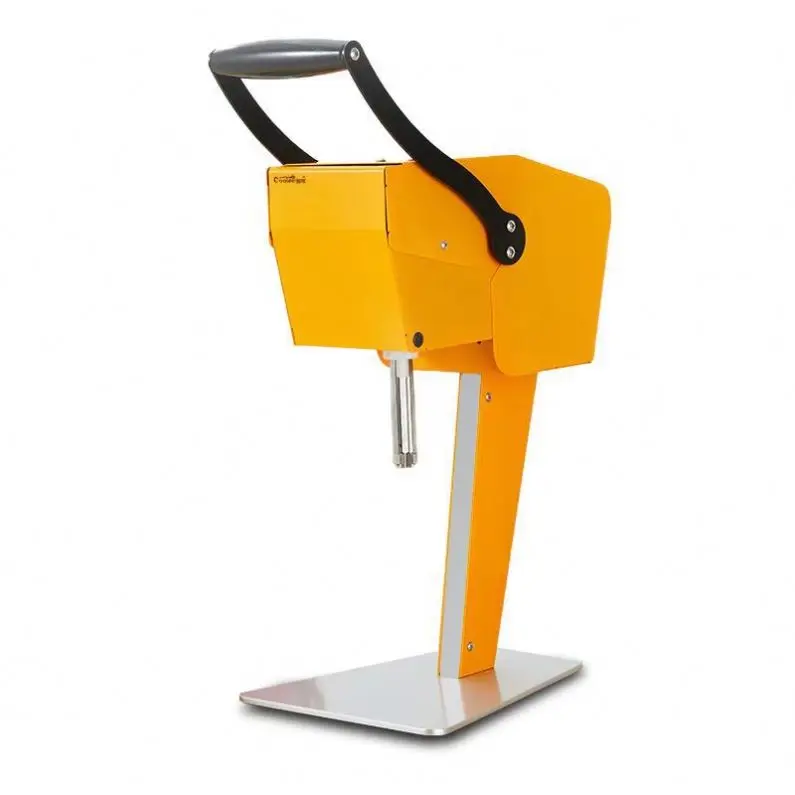
Source-controlled product identity
The Hoting queue identifies Product ID 1601275993927 as a high-speed electric fresh juice maker for fruit such as watermelon, pineapple and orange. The source record supplies electrical, material, blender-length, dimension and weight information for preliminary B2B procurement.
The listing does not provide a tested juice yield, rotation speed, fruit preparation method, continuous duty cycle, pulp separation system, food-contact declarations or certification. Those items are kept as supplier-confirmation and acceptance-test requirements rather than being inferred from the product title.
Recorded specification
| Field | Source value | Procurement meaning |
|---|---|---|
| Product ID | 1601275993927 | Keep this ID on the quotation, sample request, inspection report and shipping documents. |
| Voltage | 110V/220V | Confirm the exact configuration, frequency, phase, plug and destination-market wiring. |
| Power | 48W | Confirm whether this is rated input power and request operating current and duty limits. |
| Material | Stainless steel | Request material grade and identify every food-contact and splash-contact component. |
| Short blender length | 21cm | Confirm the measured reference, usable immersion length and container clearance. |
| Long blender length | 23cm | Confirm the measured reference, shaft, guard and usable working depth. |
| Machine dimension | 210*320*515mm | Use for preliminary layout; confirm included parts and actual measured envelope. |
| Packing size | 320*400*600mm | Use for logistics planning; confirm final packed dimensions and protection. |
| Net / gross weight | 10KG/12KG | Confirm weighing method, accessories and final shipping documentation. |
The source does not specify fruit throughput, juice yield, rotation speed, extraction method, blade or auger geometry, pulp handling, container capacity, noise, operating temperature, continuous running time, cleaning method or certificates. Treat these as RFQ and acceptance-test items.
Define the juice workflow before ordering
A fresh-juice machine should be evaluated as part of a real service workflow, not only by a product title. Document the fruits to be processed, daily volume, peak-hour demand, serving size, pulp preference, container size, operator count and cleaning intervals.
Watermelon, pineapple and orange can require different preparation steps. Confirm whether the machine expects peeled fruit, cut pieces, seed removal, rind removal or a specific feed size. Do not assume that “fruit juice maker” means whole-fruit processing.
Describe the intended output: clear juice, pulpy juice, blended drink, strained juice or another beverage. Ask which components separate pulp, seeds, peel, fiber and foam, and whether the product is a juicer, blender, mixer or a combination.
Request a process diagram showing fruit entry, crushing or blending, juice collection, pulp discharge, overflow control and cleaning access. The source record does not define this flow.
Measure the service counter and collection vessels. The listed machine dimension is 210*320*515mm, but the working area may require additional clearance for the 21cm and 23cm blender lengths, containers, cables and operator movement.
Voltage, power and electrical configuration
The source records 110V/220V and 48W. Confirm whether the machine is supplied as a selectable dual-voltage unit or as separate 110V and 220V configurations. Request the frequency, phase, input current, plug, cable length, grounding and protection.
Ask whether 48W is rated input power, motor output, heater power or a nominal listing value. Request measured current during startup, idle operation, loaded operation and stall or overload conditions.
Test the chosen voltage configuration with the intended supply. A dual-voltage label alone does not confirm safe operation without the correct selector, wiring, fuse and plug.
Confirm the duty cycle for commercial use. The source does not state continuous operation, maximum batch duration, rest intervals or overload protection.
Request motor protection, thermal protection, switch rating and restart behavior after power interruption. Test whether the machine restarts unexpectedly when power returns.
Material and food-contact review
The source lists stainless steel but does not state a grade or identify all wetted parts. Request a component material schedule for the blender shaft, blade or mixing head, guard, container contact parts, fasteners, seals and any coated or plastic components.
Obtain food-contact documentation for every component touching juice or splash. Confirm seal material, temperature limits, chemical compatibility and any restrictions for acidic orange juice, pineapple juice and high-sugar blends.
Inspect crevices around the shaft, guard, coupling, switch, housing and container contact points. Juice residue can remain in areas that are difficult to see or reach.
Request a cleaning procedure that covers disassembly, power isolation, rinsing, detergent, sanitation, drying and reassembly. Confirm which parts may be immersed and which parts must remain dry.
Do not describe stainless steel as proof of food-safety compliance. The grade, finish, weld quality, seal design and documentation still require confirmation.
Blender length and container fit
The listing records a short blender length of 21cm and a long blender length of 23cm. Ask how each length is measured: total shaft, exposed shaft, working section, guard or product-contact length.
Provide the container inner diameter, depth, fill level, base shape and material. Confirm that the blender length reaches the working zone without striking the bottom or side wall.
Test low-fill and high-fill conditions. A shaft that performs well in a deep container may splash or entrain air in a shallow container, while insufficient immersion may reduce mixing.
Confirm the guard or blade clearance and the minimum safe liquid level. Request guidance for preventing contact between the mixing head and the container.
Ask whether the short and long configurations use different guards, shafts, couplings or operating limits. Verify included accessories rather than assuming both lengths are included.
Fruit preparation and product quality
Build a preparation matrix for each planned fruit. Record peel, rind, seeds, fiber, cut size, temperature, ripeness and storage condition. Run watermelon, pineapple and orange separately before combining recipes.
Measure yield as finished juice mass or volume divided by prepared fruit input. Record pulp, peel, seeds, foam, waste and rework. Do not use the word “high speed” as a substitute for a measured yield or cycle time.
Record beverage appearance, pulp distribution, foam, temperature rise, oxidation, flavor transfer and consistency. Repeat the test after cleaning and after a realistic service period.
For pineapple, check fiber and stringy material around the mixing head. For orange, check seeds, peel fragments, acidity and contact-material response. For watermelon, check liquid level, foam and splash behavior.
Define the acceptable result for the buyer's recipe. A machine can be mechanically functional while producing a beverage that fails the texture, pulp or presentation requirement.
Capacity, speed and commercial throughput
No throughput or rotation speed is supplied. Request the supplier's tested capacity using the buyer's fruit, batch size, container and recipe. Specify whether the result is per batch, per minute, per hour or per operator.
Measure the complete cycle: loading, blending, emptying, rinsing, ingredient change and cleaning. Report accepted servings per hour rather than only motor running time.
Test first-cycle performance and steady-state performance. Small countertop equipment can lose output when operators wait for containers, remove pulp, clean the head or change fruit.
Measure noise and vibration during empty, partial-load and full-load operation. Record whether the machine moves on the counter or requires a fixture.
Request a maximum batch volume, minimum load, maximum operating time and rest interval. Do not infer these limits from the 48W listing.
Cleaning, sanitation and changeover
Define cleaning between different fruit recipes and at the end of the shift. Citrus acids, pineapple enzymes, sugar and pulp can create different residue and odor risks.
Ask how long it takes to remove the blender head or working parts, clean the guard and shaft, inspect seals and return the machine to service. Record tool requirements and the risk of losing small parts.
Test color and flavor carryover between orange, pineapple and watermelon. A clean-looking shaft may still retain aroma or pulp in joints and seals.
Confirm whether the motor housing, switch and cable can tolerate the expected splash environment. Do not infer washdown suitability from stainless exterior surfaces.
Request replacement intervals for seals, guards, blades or mixing components if applicable. Include cleaning chemicals and spare parts in the operating cost review.
Safety and operator controls
Ask for guards, interlocks, switch location, emergency stop behavior, overload protection and restart prevention. The source record does not list these features.
Test operation with a container removed, a jammed or overloaded mixing head, a misplaced shaft and an interrupted power supply. Verify that the operator can stop the machine quickly.
Confirm safe handling of the 21cm and 23cm blender configurations. Define how operators insert, remove, clean and store each length without contacting moving parts.
Request accessible-surface temperature, noise limits, vibration guidance and electrical enclosure information. Confirm safe clearances around the container and shaft.
Include operator training for fruit preparation, filling, cleaning, jam clearing and fault reporting. Record serial number and conditions for every service issue.
Factory acceptance test
- Verify Product ID 1601275993927, exact configuration and included short and long blender parts.
- Verify 110V/220V configuration, frequency, phase, current, plug, grounding and protection.
- Measure input power and operating current; compare loaded operation with the listed 48W value.
- Measure the 21cm short and 23cm long blender sections using the supplier's stated reference points.
- Measure machine size 210*320*515mm and confirm included parts and measurement envelope.
- Measure package size 320*400*600mm and net/gross weight 10KG/12KG with accessories.
- Test watermelon, pineapple and orange using buyer samples and the intended preparation method.
- Record yield, cycle time, pulp, seeds, peel, foam, waste, appearance and flavor carryover.
- Test container depth, diameter, fill level, shaft clearance, splash and low-load performance.
- Measure speed, noise, vibration, current and motor temperature under realistic loads.
- Run startup, steady-state, overload, jam, container removal and power-interruption tests.
- Verify guards, switch, overload protection, thermal protection and restart behavior.
- Inspect wetted materials, seals, couplings, finish, crevices and cleaning access.
- Run cleaning, sanitation, drying, reassembly and recipe-change tests.
- Verify manuals, wiring information, spare-parts list, food-contact documents and certificates.
RFQ checklist
- Product ID 1601275993927 and exact machine configuration.
- 110V/220V wiring, frequency, phase, current, plug, grounding and electrical protection.
- Meaning of the 48W rating, startup current, loaded current, duty cycle and overload limit.
- Short blender length 21cm and long blender length 23cm measurement reference and included parts.
- Machine size 210*320*515mm and packing size 320*400*600mm confirmation.
- Net/gross weight 10KG/12KG confirmation with accessories and packaging method.
- Fruit preparation requirements for watermelon, pineapple, orange and other intended fruits.
- Yield, speed, batch volume, cycle time, continuous operating time and rest interval.
- Pulp, seed, peel, fiber, foam, splash, oxidation and flavor-transfer performance.
- Blade, shaft, guard, coupling, seal and wetted-component material grades.
- Food-contact declarations and chemical compatibility for acidic and sugary juice.
- Container diameter, depth, fill level, minimum immersion and maximum working volume.
- Cleaning, sanitation, immersion, splash, washdown and residue-removal limits.
- Guards, switch, emergency stop, overload, thermal protection and restart prevention.
- Warranty, spare parts, service response, training and factory acceptance testing.
Buyer decision framework
This listing provides a concrete starting specification: 110V/220V, 48W, stainless steel, 21cm and 23cm blender lengths, a 210*320*515mm machine envelope, 320*400*600mm package size and 10KG/12KG net/gross weight.
Approval should wait for a real fruit trial. The key commercial question is whether the selected configuration produces the required juice quality and accepted servings per hour without unsafe splash, difficult cleaning or excessive flavor carryover.
Compare suppliers using measured yield, texture, pulp control, changeover time, cleaning access, electrical safety, material documentation, spare parts and support rather than the “high-speed” title alone.
Frequently asked questions
What voltage and power are listed?
The source records 110V/220V and 48W. Confirm the exact voltage configuration, frequency, current and plug before ordering.
What material is listed?
The source lists stainless steel, but it does not provide a grade or a complete wetted-component material schedule.
What are the blender lengths?
The source records a short blender length of 21cm and a long blender length of 23cm. Confirm how these measurements are defined and which parts are included.
What are the machine and package dimensions?
Machine dimension is 210*320*515mm. Packing size is 320*400*600mm. Confirm the measurement method and final shipping data.
What is the net and gross weight?
The source records 10KG/12KG for net/gross weight. Confirm whether accessories and packaging are included.
Is the juice output or speed specified?
No measured juice yield, rotation speed or commercial throughput is supplied. These should be tested with the buyer's fruit and recipe.
Source and contact
This guide is based on the Hoting queue record for Product ID 1601275993927. The recorded voltage, power, stainless-steel description, blender lengths, dimensions and weights are preserved from that source. Before purchase, request fruit trials, yield and quality data, electrical documents, food-contact information, safety details, acceptance testing and warranty terms through the TEBAK sales inquiry channel.
Key specifications
- Volts
- 110V/220V
- Power
- 48W
- Material
- stainless steel
- Short Blender Length
- 21cm
- Long Blender Length
- 23cm
- Dimension
- 210*320*515mm
- Packing Size
- 320*400*600mm
- N.W/G.W
- 10KG/12KG