
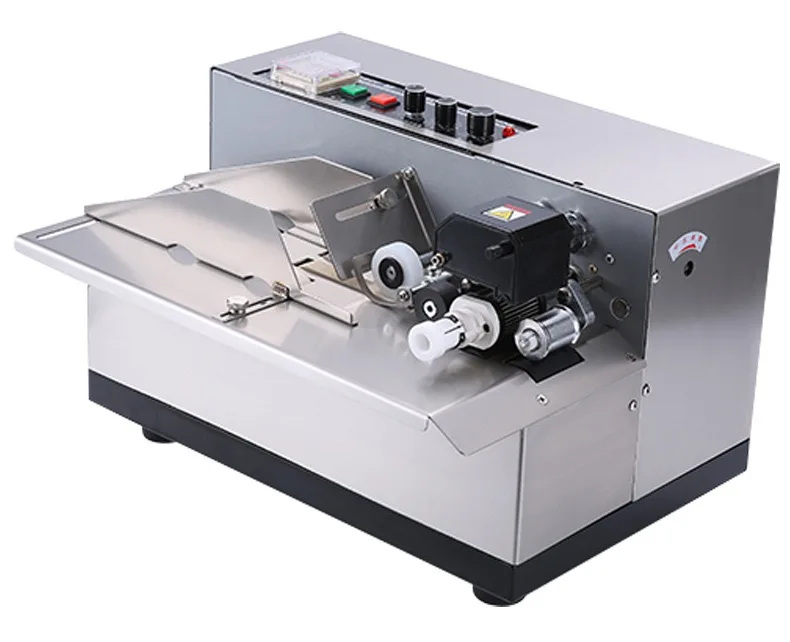
1. What this machine is designed to solve
Paper processing departments often handle documents, forms, tickets, vouchers, book blocks, labels, and other sheets that must be counted, separated, or identified in sequence. Manual counting is slow to audit and can create avoidable discrepancies when a job contains many small batches. A compact automatic paper numbering and sheet counting machine is intended to bring a repeatable mechanical step into that workflow.
The supplied product record identifies this TEBAK unit as a Coding Machine and describes it as an automatic paper numbering machine and paper sheet counting machine. The practical procurement question is not whether one machine can replace every finishing process. It is whether the machine's operating envelope, electrical configuration, footprint, and operator workflow match the buyer's paper stock and job volume.
This guide is written for B2B buyers comparing a compact paper-processing machine. It uses the supplied facts only: the listed dimensions are 440*345*300 mm, the listed weight is 23 kg, the listed power is 180 W, and the record lists AC220/50V with a 110/60Hz option as well as a note that 110 V customization is available. Sheet thickness range, counting speed, numbering format, hopper capacity, accuracy tolerance, and included numbering accessories are not stated in the queue record and must be confirmed in the quotation.
2. Specification snapshot for the purchasing file
A specification snapshot helps a purchasing team separate confirmed data from questions that remain open. The listed 440*345*300 mm dimensions are important for bench placement, packing, aisle clearance, and installation planning. The listed 23 kg weight makes the unit easier to position than a large production line, but the buyer should still verify the packed weight, lifting points, and whether a dedicated stand is supplied.
The 180 W power listing provides a starting point for electrical planning. It is not a substitute for checking the nameplate, plug type, frequency, protective-earth requirements, and local electrical code. The queue record contains two voltage-related entries: AC220/50V 110/60Hz and a separate note stating 220V/50HZ with 110 V customization. Because the wording is inconsistent, the final commercial offer should state the exact voltage, frequency, phase, plug, and approved customization before payment.
The product is described as easy to operate, which is useful for short training cycles and mixed operators, but a buyer should ask for a user manual, setup video, sample output, cleaning procedure, and troubleshooting list. Ease of operation should be verified through a demonstration using the buyer's own paper stock rather than treated as a performance guarantee.
| Confirmed item | Supplied value | Procurement action |
|---|---|---|
| Product type | Coding Machine | Confirm numbering, counting and coding functions included |
| Machine size | 440*345*300 mm | Check bench, clearance, packing and installation space |
| Machine weight | 23 kg | Confirm net/gross weight and safe handling method |
| Power | 180 W | Confirm nameplate and destination electrical configuration |
| Operating claim | Easy to operate | Request a live demonstration and operator instructions |
3. Define the paper job before requesting a quotation
Paper equipment is sensitive to the material and format being processed. Before comparing offers, prepare a short job specification covering paper length and width, sheet thickness or grammage, coated or uncoated surface, humidity conditions, curl, static, pre-printed marks, and whether sheets arrive as individual pieces or collated sets. These details allow the supplier to judge feeding and separation requirements.
For numbering work, also define the desired numbering sequence, number of digits, repeat pattern, position on the sheet, print or mark color, and whether the sequence must reset between batches. The queue data does not state the numbering range, numbering head, ink or consumable system, or changeover procedure. Those are not safe to infer from the product title; request them as explicit line items in the technical offer.
For counting work, define the batch size and the acceptable reconciliation method. Ask how the machine signals a completed count, how an operator corrects a misfeed, whether the count can be reset without losing the batch record, and how the machine handles double sheets. A supplier sample using the buyer's actual stock is more useful than a generic speed claim.
4. Footprint, handling, and work-cell layout
The listed machine envelope is 440*345*300 mm. Measure the available bench depth and width, then leave room for the operator to load paper, remove counted batches, inspect numbered sheets, and access the power switch. Do not place the unit so close to a wall or another machine that cleaning and service access become difficult.
At 23 kg listed weight, the unit may fit a compact finishing station, but the table must be stable and level. Vibration, paper-stack movement, and operator contact can affect feeding. Ask whether the quoted machine requires a dedicated stand, adjustable feet, grounding strap, or a specific bench height. If the machine is moved between departments, include a handling procedure that protects the feed path and numbering components.
A good work cell separates incoming unprocessed paper from completed batches. Use labeled trays or bins for status control, and record the job number, sequence range, operator, and time. This simple layout reduces the risk of mixing two customer jobs and makes the counting step easier to audit.
5. Electrical configuration: resolve the voltage wording before order
Electrical compatibility deserves special attention because the product record contains more than one voltage note. One field lists AC220/50V 110/60Hz, another lists 220V/50HZ with 110 V customization, and the power field lists 180w. The record should therefore be treated as a starting reference rather than a final nameplate specification.
In the RFQ, state the destination country and required supply exactly. Ask the supplier to return the chosen configuration in writing, including rated voltage, frequency, phase, plug or terminal arrangement, fuse or breaker recommendation, and whether the 110 V version changes any control or motor component. Request a photograph of the nameplate for the production configuration before shipment.
Do not connect a machine based only on a product-page title or a mixed voltage description. Installation should follow the supplied manual and local electrical requirements. The receiving checklist should include insulation and earth checks performed by a qualified person, correct rotation or operation check where applicable, and confirmation that the supplied voltage matches the purchase order.
6. Operator workflow and quality controls
A compact paper numbering and counting station should be managed as a controlled process. First, identify the job and verify the paper stock. Second, set up the numbering or counting function according to the supplier's instructions. Third, run a small sample and compare the result with the job sheet. Only then should the operator process the full batch.
For numbering, retain a first-off sample that shows the starting number, position, legibility, and sequence. For counting, reconcile the machine count with a manual sample or a downstream batch record during initial commissioning. If a double-feed, skew, or unreadable mark appears, isolate the affected batch and record the correction rather than silently continuing.
The listed key selling point is easy operation, but quality still depends on paper preparation and routine cleaning. Create a one-page standard operating procedure covering loading direction, stack height limits confirmed by the supplier, sensor and feed-path cleaning, jam clearing, consumable replacement, and end-of-shift shutdown. Leave any unconfirmed limit blank until it is supported by the manual or a technical reply.
- Verify job number, paper stock and required sequence before setup.
- Run and approve a first-off sample before the full batch.
- Record starting and ending numbers or the counted batch total.
- Quarantine sheets affected by skew, double-feed or unclear numbering.
- Clean the feed path and sensors according to the supplier manual.
- Log operator, date, machine configuration and any adjustment made.
7. RFQ checklist: information that must be confirmed
The best way to compare compact paper machines is to send one structured RFQ to each supplier. Include the product ID 1601252963557, the requested function, destination country, required voltage and frequency, paper samples or photos, sheet dimensions, material description, numbering requirements, counting batch size, target working hours, and the planned installation location.
Ask the supplier to confirm the 440*345*300 mm dimensions as machine dimensions or packed dimensions, and to identify the 23 kg value as net or gross weight. Request the exact 180 W electrical rating, the final voltage configuration, plug type, and any 110 V customization details. Ask for the standard accessory list, consumables, spare parts, warranty terms, lead time, packing method, and after-sales support.
The following technical points are not supplied in the queue record and should remain open until answered: maximum and minimum paper size, paper thickness or grammage range, counting speed, numbering speed, counting tolerance, numbering character format, hopper or tray capacity, sensor type, noise level, air requirements if any, and recommended maintenance interval. Keeping these questions visible prevents a catalogue comparison from becoming an assumption-based purchase.
| RFQ section | Ask the supplier to state | Why it matters |
|---|---|---|
| Electrical | Voltage, frequency, phase, plug and 110 V option | Prevents mismatch at installation |
| Paper compatibility | Size, thickness/grammage, surface and curl limits | Determines feeding reliability |
| Numbering | Sequence, digits, position, repeat and consumables | Defines output and changeover |
| Counting | Speed, batch control, double-feed handling and tolerance | Supports reconciliation |
| Delivery | Net/gross weight, packing, lead time and spare parts | Plans receiving and service |
8. Conclusion: buy the complete process, not only the machine
The TEBAK automatic paper numbering and sheet counting machine is a compact candidate for buyers who need a coding-machine format with a listed 440*345*300 mm footprint, 23 kg weight, 180 W power and stated 220 V / 110 V configuration options. Its listed easy-operation positioning may suit mixed-operator environments, provided the paper job and electrical configuration are properly matched.
The next step is a specification-led quotation and sample test. Confirm the paper envelope, numbering system, counting behavior, exact voltage and frequency, accessories, consumables, service terms and delivery data. The supplied record does not establish capacity, accuracy, certifications or a fixed lead time, so those items should be requested rather than invented. For a quotation based on your paper sample and destination, contact the TEBAK team at info@cntebak.cn.
Key specifications
- Product type
- Coding Machine
- Voltage option
- AC220/50V; 110/60Hz option listed
- Dimensions (L*W*H)
- 440*345*300 mm
- Weight
- 23 kg
- Key selling point
- Easy to operate
- Power supply note
- 220V/50Hz; 110 V customization listed
- Power
- 180 W
Frequently asked questions
- What are the listed machine dimensions?
- The supplied product record lists 440*345*300 mm. Confirm whether the quotation refers to machine dimensions or packed dimensions.
- What is the listed machine weight?
- The supplied record lists 23 kg. Confirm whether this is net weight and request the packed gross weight for shipping.
- What power is listed?
- The supplied record lists 180 W. Confirm the production nameplate, voltage, frequency and plug before installation.
- What paper sizes and counting speeds are supported?
- Those values are not stated in the supplied queue record. Request a written range and test it with the buyer's paper sample.