
1. Start with the cutting job, not the machine title
A vertical resaw band saw is normally purchased to solve a specific cutting problem: preparing solid-wood sections, resawing boards, producing furniture components, or making repeatable straight and curved cuts in a woodworking line. The same product title can describe very different production requirements, so a B2B buyer should define the workpiece and acceptance result before comparing quotations.
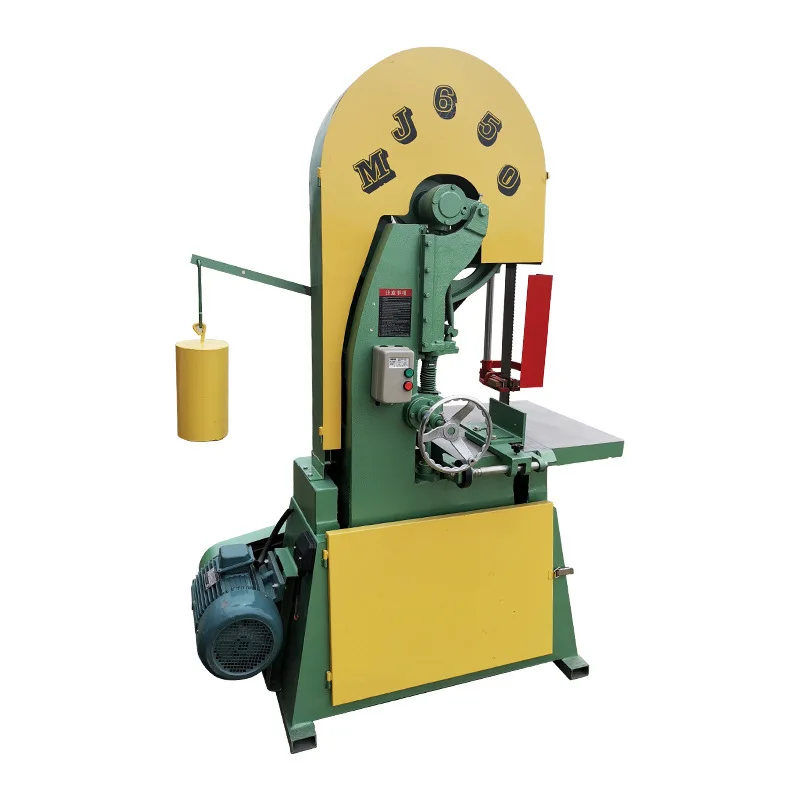
The supplied TEBAK product record identifies product ID 1601351730718 as a band saw machine, model MJ650, for woodworking solid-wood cutting and vertical resaw band-saw use. Those are the confirmed anchors for this guide. They are enough to identify the quotation target, but they are not a complete cutting specification. A responsible purchase should therefore combine the confirmed model with a supplier test using the buyer's own material.
This guide does not invent a maximum cutting height, throat depth, wheel diameter, blade length, blade speed, feed rate, table size, motor rating, dust-port diameter, weight, packing size, or output claim. None of those values is present in the supplied queue record. They should remain explicit RFQ questions until the supplier provides a signed specification sheet or a sample-test result.
2. Confirmed MJ650 information for the RFQ
The model number MJ650 should appear on the purchase order, quotation, pro forma invoice, nameplate confirmation, spare-parts list, operating manual, and inspection checklist. This simple document-control step prevents a buyer from receiving a visually similar machine with a different wheel, table, guard, or electrical configuration.
The product type is listed as band saw machine. The application record refers to woodworking solid-wood cutting and vertical resaw band-saw use. That wording is useful for the first supplier conversation, but it does not establish the largest safe workpiece or a guaranteed production capacity. The buyer should connect the machine to a cut list and ask the supplier to confirm each dimension against that list.
Use the following small specification table as the confirmed part of the purchasing file. The final quotation should add the missing technical fields rather than silently treating unknown fields as standard.
| Confirmed field | Supplied value | What to verify next |
|---|---|---|
| Product ID | 1601351730718 | Confirm the product record and quotation reference |
| Model | MJ650 | Confirm nameplate, configuration and spare-parts reference |
| Product type | Band saw machine | Confirm complete machine scope and included accessories |
| Application | Solid-wood cutting; vertical resaw band-saw use | Run the buyer's wood and target cut as a sample test |
3. Define the material and cut list before asking for price
Prepare a cut list with wood species, moisture condition, rough and finished dimensions, grain direction, required kerf, straightness tolerance, surface quality, smallest contour, and quantity per shift. Include the thickest solid-wood section and the longest piece that the machine must support. A supplier can give a useful recommendation only when the workpiece is described in measurable terms.
For resawing, record the starting board thickness and the target board thickness after cutting. Ask the supplier to show the kerf, drift, surface condition, and repeatability on the same material. For furniture components, add the contour drawing, acceptable tear-out, minimum radius, bevel requirement, and whether a fence or a freehand guide is used. The word woodworking alone does not define these conditions.
Separate the first-piece requirement from the batch requirement. A machine may produce an acceptable sample after careful setup, while the buyer's real concern is whether an operator can maintain the result through a full batch. Request a short demonstration that includes setup time, blade and guide adjustment, first-piece approval, repeated cuts, and the cleaning routine.
4. Blade, wheel, guide and tracking questions
On a vertical band saw, the blade system determines much of the practical cutting result. Ask for the compatible blade length, width and thickness range, tooth pitch options, blade material, joint method, recommended tension procedure, and the expected replacement interval under the buyer's material conditions. These details are not stated in the MJ650 queue record and must be supplied by the seller.
Request a clear explanation of wheel alignment and blade tracking. The buyer should know how the operator checks tracking after a blade change, how tension is released during shutdown, and which adjustments are available when a blade drifts. A written maintenance procedure is more useful than an unsupported statement that the machine is high precision.
The upper and lower guides should be included in the inspection. Confirm their adjustment range, contact or bearing type, replacement parts, and suitability for both straight resawing and the buyer's furniture components. During a test cut, check blade drift, burn marks, vibration, tear-out, kerf consistency, and the amount of manual correction required from the operator.
5. Table, fence and operator workflow
The table is the reference surface for resawing and component cutting. Ask for the usable table dimensions, flatness reference, fence arrangement, fence adjustment range, table support, and locking method. If the buyer needs angled work, request the adjustment range and angle scale. If angled work is not required, a stable square reference and repeatable fence may be more important than a wide angle range.
A production workflow should cover material inspection, blade and guide check, table and fence setup, first-piece approval, batch cutting, in-process inspection, blade cleaning, and shutdown. Ask the supplier to demonstrate the steps with the buyer's material. Do not convert a general easy-operation claim into a labor-saving percentage without a controlled comparison.
Operator access also matters. Confirm how the workpiece is supported before and after the blade, where the emergency stop is located, how guards are opened, and how the operator reaches adjustment points without entering the blade path. Request the operating manual and training video before the machine is shipped so the receiving team can prepare a safe work instruction.
6. Safety and dust control are part of the machine purchase
A woodworking band saw combines a moving blade, rotating wheels, stored tension, and wood dust. Before ordering, request the guard arrangement, blade-access procedure, emergency-stop behavior, restart behavior after power loss, tension-release procedure, wheel cover, table opening protection, and recommended personal protective equipment. The delivered machine should be checked against the documentation during receiving inspection.
The supplied record does not state a dust-port diameter, airflow requirement, or extraction configuration. Ask the supplier to provide those values and match them to the buyer's central extraction system or local collector. Check that dust routing does not interfere with blade movement, wheel access, guide adjustment, or routine cleaning.
A safe acceptance test should include an unloaded run, guard inspection, emergency-stop test, restart test, blade tracking check, table and fence check, controlled sample cut, and dust-leakage observation. Record abnormal vibration, noise, heat, smoke, blade movement, or dust accumulation. Do not accept the machine only because its title matches the intended application.
- Verify product ID 1601351730718 and model MJ650 on the order and nameplate.
- Confirm the supplied machine scope, accessories, manual and spare-parts list.
- Test blade tracking, tension release, guides, guards and emergency stop.
- Run the buyer's own solid-wood resaw sample and record kerf and surface result.
- Confirm dust-extraction connection and cleaning requirements.
- Record packing, installation, training, warranty and after-sales contact details.
7. Commercial RFQ checklist for an MJ650 purchase
A useful quotation request should include the destination country, required electrical standard, material species, maximum workpiece section, target finished dimensions, cut type, daily quantity, acceptable surface quality, and whether the line requires straight resawing, furniture components, or both. Attach drawings or photographs of the hardest part instead of describing the job only as solid-wood cutting.
Ask the supplier to confirm all technical and commercial items in one document: motor and electrical configuration, blade system, maximum cutting envelope, table and fence, guide system, wheel and tracking arrangement, safety guards, dust extraction, machine dimensions, net and gross weight, packing, standard accessories, spare blades, warranty, lead time, installation guidance, and acceptance criteria.
For supplier comparison, separate machine price from the complete landed-workflow cost. Include blades, spare guides, extraction adaptation, electrical installation, operator training, replacement parts, inspection, packing, freight and commissioning. A lower initial quote can become more expensive if the buyer later discovers that key consumables or safety components were not included.
| RFQ area | Supplier confirmation required | Why it matters |
|---|---|---|
| Capacity | Maximum height, throat, table size and workpiece support | Checks the actual work envelope |
| Blade system | Length, width, speed, tooth options, guides and tension | Determines cut quality and consumables |
| Tracking | Wheel alignment and operator adjustment procedure | Reduces drift after blade changes |
| Safety | Guards, emergency stop, restart and tension release | Defines safe operation and acceptance |
| Dust control | Port size, airflow requirement and collector arrangement | Defines the complete work cell |
| Delivery | Dimensions, weight, packing, accessories and lead time | Supports logistics and commissioning |
8. Sample acceptance plan for furniture and resaw work
Before final approval, agree on a sample plan with the supplier. Use the buyer's own wood or an agreed equivalent, identify the blade configuration, record the table and fence setup, and define the measurement method. The test should not rely on a photograph of a cut piece alone; record the dimensions, kerf, visible tear-out, straightness, surface condition, and repeatability across multiple pieces.
For resawing, inspect thickness variation from one end to the other and from the first piece to later pieces. For furniture components, inspect the contour, internal radius, edge quality and consistency. If angled cuts are part of the job, include the selected angle in the sample record and verify the workpiece with an independent measurement method.
Keep the sample report with the order documents. It becomes a practical reference when the machine arrives, when the operator is trained, and when a warranty question occurs. If the supplier cannot provide a requested capability or value, mark it as unconfirmed rather than turning a sales description into an acceptance promise.
9. Conclusion: buy the complete MJ650 configuration
The TEBAK MJ650 is a defined quotation target for a buyer seeking a vertical band saw machine for woodworking solid-wood cutting and vertical resaw work. The supplied record confirms the model MJ650 and the band saw machine category. That is a sound starting point for a structured RFQ, but the final purchase should depend on the complete cutting envelope, blade system, safety arrangement, dust connection, electrical configuration and sample result.
The most reliable next step is to send the supplier a cut list, material sample or drawing, destination and electrical requirement, then request a written configuration sheet and a controlled test. For pricing, MOQ, lead time and configuration confirmation, contact the TEBAK team at info@cntebak.cn.
Key specifications
- Model
- MJ650
- Product type
- Band saw machine
- Application record
- Woodworking solid-wood cutting and vertical resaw band-saw use
Frequently asked questions
- What model is listed in the product record?
- The supplied product record lists model MJ650.
- What type of machine is it?
- The supplied record identifies it as a band saw machine for woodworking solid-wood cutting and vertical resaw band-saw use.
- What is the maximum cutting height or blade size?
- Those values are not stated in the supplied queue record. Request them in the quotation and verify them with a sample test.
- How should a buyer compare quotations?
- Compare the complete configuration: cutting envelope, blade system, guides, tracking, table, safety, dust extraction, electrical details, accessories, delivery and acceptance criteria.