
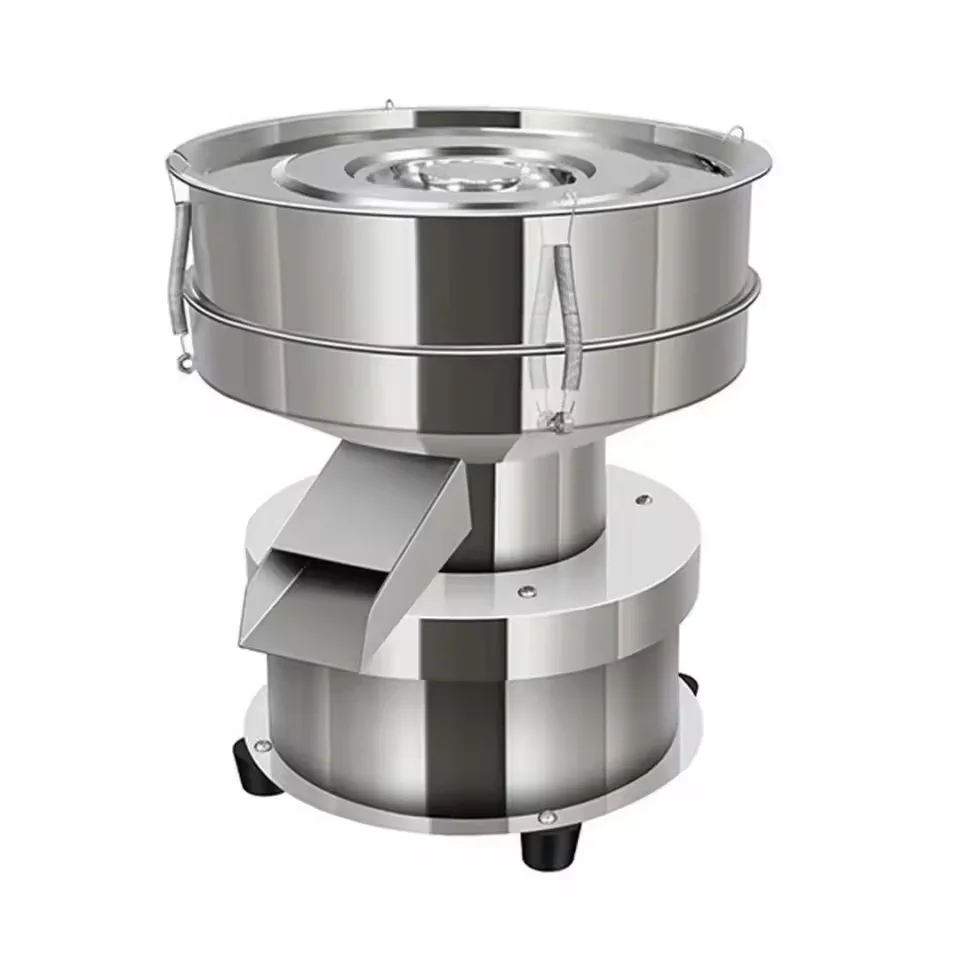
1. What the TEBAK 2800 Mesh circular vibration screen is for
The TEBAK 2800 Mesh stainless steel circular vibration screening machine is a compact separation unit for dry powders, granules and selected liquid or wastewater applications. The supplied product record lists chemical, food, powder, mining and other industrial use cases. In procurement, the important question is not whether a machine is described as multi-purpose; it is whether the material, moisture, particle size and hygiene requirement match the screening surface and discharge arrangement.
This guide is written for B2B buyers comparing a compact circular vibration screen for powder handling, ingredient preparation, laboratory-to-small-batch production, or a distributed processing line. It uses the supplied specifications as the reference point and separates verified facts from items that must be confirmed in a sample test or quotation.
2. Verified specifications and what they mean for purchasing
The product record lists 50 W power and a 220 V, 50 Hz electrical option. It lists 304 stainless steel for both the sieve bucket and the base, an external dimension of 300 × 320 × 390 mm, a vibrating frequency of 1350 N/min, a screen size of 300 mm diameter, a 70 × 30 mm outlet, and a 140 mm off-ground discharge outlet size that is described as customizable.
These values provide a useful first RFQ specification, but they do not replace an application test. The record does not state screen mesh count despite the product title containing 2800 Mesh, and it does not state capacity, number of decks, particle-size range, or motor protection rating. These must remain open questions rather than assumed performance claims.
3. Why 304 stainless steel matters in a screening line
The sieve bucket and base are both listed as 304 stainless steel. For buyers handling food powders, chemicals or wet-cleaning routines, the material specification is useful because it gives a defined starting point for corrosion and hygiene discussions. The buyer should still request the surface finish, weld treatment, gasket material, fastener material and cleaning procedure.
Material alone does not prove food-grade suitability or chemical compatibility. Ask the supplier to identify every product-contact surface and to confirm whether the offered finish is appropriate for the target powder. For food applications, request the relevant documentation and cleaning validation information before treating the machine as a production-ready hygienic unit.
4. Compact footprint, outlet height and line integration
The listed external dimension is 300 × 320 × 390 mm. This is compact enough for a bench or a small processing cell, but the installation plan must include clearance for feeding, screen removal, inspection, cleaning and discharge connections. The product record lists the discharge outlet as 140 mm off the ground and customizable, which is a useful integration point for a receiving bin, bagging position or transfer container.
Before ordering, prepare a simple line drawing showing the upstream feed point and downstream collection point. Confirm whether the 140 mm dimension is measured from the floor to the outlet centerline or another reference surface. Also confirm whether the 70 × 30 mm outlet is a fixed rectangular opening, an interchangeable outlet, or a nominal product dimension.
5. Electrical and vibration requirements
The listed power is 50 W at 220 V, 50 Hz. Confirm whether the quotation includes the correct plug, switch, cable, overload protection and earthing arrangement for the destination country. If the machine will operate in a dusty powder environment, ask about enclosure rating and the recommended cleaning method around the motor and electrical parts.
The product record lists a vibrating frequency of 1350 N/min. Because frequency units and vibration-force descriptions can vary between suppliers, request the actual motor label or technical drawing and ask the supplier to explain how the value is measured. Do not compare two quotations solely by a frequency number unless the suppliers define the same measurement basis.
6. Material applications and sample testing
The supplied description mentions sugar powder, starch, salt, rice flour, milk powder, soybean milk powder, egg powder, soy sauce, fruit juice, chemical powders, ore, alloy powder, electrode powder, kaolin, quartz sand, ash and other materials. These examples show the intended application range, but they are not a guarantee that one screen and one mesh will handle every material.
A useful sample test should use the buyer's own material and record moisture, bulk density, feed condition, target fraction, screen configuration, feed rate, recovery rate, residue and cleaning time. For sticky or wet materials, ask whether a different screen surface, spray system or anti-blinding arrangement is required. For abrasive minerals, ask about screen-life expectations and replaceable wear parts.
7. Mesh, deck and capacity questions for the RFQ
The product title references 2800 Mesh, while the parameter block separately lists a 300 mm screen size. The record does not clarify whether 2800 Mesh is a model name, a marketing designation, a mesh option, or a translation artifact. Ask the supplier to state the exact mesh aperture in millimeters or micrometers, the screen wire diameter, the effective screening area, and the supplied screen material.
Also request the number of screening decks, usable capacity, feed rate, discharge rate, oversize handling, and whether the machine is continuous or batch-fed. These figures are essential for sizing the equipment. A compact 300 mm screen can be valuable for a small line, but the process design should be based on tested throughput rather than the title alone.
8. Cleaning, maintenance and spare parts
For food and chemical applications, the cleaning workflow is part of the purchase decision. Ask how the screen is removed, whether the bucket can be lifted without special tools, how the outlet is cleaned, and whether the 304 stainless surfaces have exposed crevices. Confirm which seals, clamps, screens and vibration components are standard spare parts.
For distributors, request a spare-parts list and an exploded diagram that matches the quoted configuration. Keep the 50 W electrical specification, 300 mm screen diameter, outlet dimensions and 304 stainless construction in the product record so replacement orders do not silently change the machine configuration.
9. Landed-cost and supplier-comparison checklist
The supplied product record does not provide price, MOQ, lead time, warranty, certification, gross weight or packing dimensions. Ask for a complete quotation that separates the base machine, screen options, custom 140 mm outlet arrangement, spare screens, electrical configuration, packaging and shipping terms.
Compare suppliers using the same test material and the same requested mesh aperture. Record whether each quotation confirms 220 V, 50 Hz; 50 W power; 304 stainless sieve bucket and base; 300 × 320 × 390 mm external size; 300 mm screen diameter; 70 × 30 mm outlet; and customizable 140 mm outlet height. This prevents a low price from hiding a different configuration.
10. Final buying decision
The TEBAK 2800 Mesh circular vibration screening machine is a compact stainless-steel screening option with a listed 50 W, 220 V 50 Hz electrical configuration, 304 stainless sieve bucket and base, 300 mm screen diameter, and customizable 140 mm discharge height. It may fit small powder, ingredient or laboratory-scale processing cells when the material and target separation are compatible.
Before issuing a purchase order, confirm mesh aperture, number of decks, actual capacity, material compatibility, sample-test results, cleaning method, motor protection, packing data and commercial terms. A specification-based RFQ is the safest way to turn the product record into a repeatable procurement decision.