
1. Product scope and record interpretation
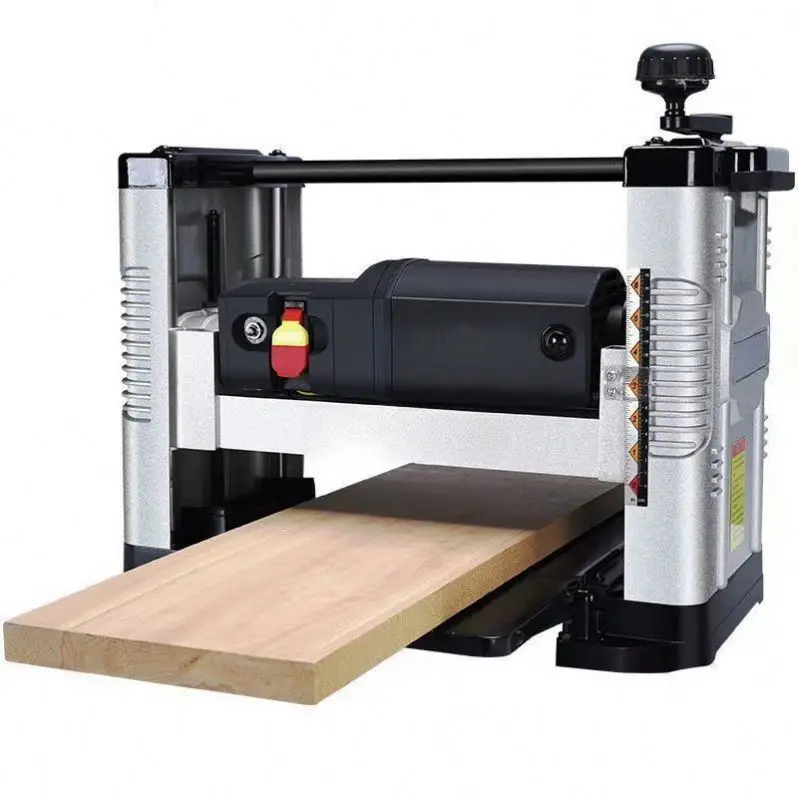
The Hoting queue identifies this product as a small woodworking automatic single-side planer for furniture and woodworking applications. The source record gives the model as JH-003, a 2000 W total-power figure, two blades, a 220V / 50Hz electrical entry, and a compact overall size of 650 × 380 × 470 mm.
Several source fields contain paired values: working width 317/127 mm and working thickness 0.8/2.4 mm. The record does not label which value is a minimum, maximum, usable opening, cutting range or product variant. This guide preserves both values and turns the ambiguity into a quotation checkpoint rather than silently selecting one number.
2. Verified specification table
The table below reorganizes the supplied composite parameter lines into buyer-facing fields. Values are transcribed from the source record; paired values remain paired until the supplier confirms their technical meaning in a drawing or final specification sheet.
3. Model, power and electrical confirmation
The listed model is JH-003 and the total power is 2000 W. The electrical entry is 220V / 50Hz. The source does not state phase, rated current, plug type, motor arrangement, startup current, duty rating or protective-device requirements.
A buyer should request a nameplate photograph or electrical datasheet showing voltage, frequency, phase, current and motor power before ordering. Confirm whether 2000 W is the combined input power of all motors or the rating of a single cutter motor. Keep the quotation language aligned with the source value and do not infer a continuous production capacity from total power alone.
4. Two-blade cutting system
The product record states number of blades: 2. It does not specify blade length, blade material, cutter-head diameter, knife angle, disposable inserts, sharpening method, replacement interval or the included spare-blade package.
Add these fields to the RFQ. Ask whether the two blades are installed on a helical, straight or other cutter head, and request the blade-setting procedure. During a sample test, record the wood species, feed method, pass setting, surface finish, tear-out and vibration. Two blades is a verified count, not proof of a particular finish quality or cutting speed.
5. Working width: 317 mm and 127 mm
The source gives working width as 317/127 mm. The record does not define whether 317 mm is the maximum planing width and 127 mm is a secondary opening, a minimum width, a table section or a variant value. A buyer should not publish a single guaranteed width until the supplier explains the pair.
Request a dimensioned planing path drawing that labels the effective cutting width, table width, fence or guide width and any separate feeding or support opening. The purchase order should state the confirmed effective width and the test-board width. This prevents a nominal machine dimension from being mistaken for the usable width available under the cutter.
6. Working thickness: 0.8 mm and 2.4 mm
The working thickness field is listed as 0.8/2.4 mm. These values are unusually compact for a woodworking thickness field, so they require direct supplier clarification. They may represent a range, a pass setting, a component dimension or a formatting error; the source record alone does not identify the relationship.
Ask the supplier to define minimum and maximum workpiece thickness, maximum removal per pass, finished-thickness adjustment range, scale graduation and the material condition used for the test. Do not turn 0.8/2.4 mm into a marketing claim about finished-board thickness until a technical sheet and sample measurement confirm it.
7. Table size, working length and material support
The listed table size is 316 × 238 mm and working length is 152 mm. The source does not explain whether the table size is the full support surface, the infeed area, the outfeed area or a combined measurement. It also does not state the minimum and maximum board length, fence arrangement or support-extension options.
Ask for a top-view and side-view drawing with table, cutter, guide and feeding reference points. Confirm how the 152 mm working length is measured and whether it is a minimum, a maximum, a cutting length or a separate component dimension. A buyer should test representative board sizes and check support before treating the compact footprint as suitable for a specific furniture workflow.
8. Overall size and workshop installation
The overall size is listed as 650 × 380 × 470 mm. These dimensions are useful for preliminary layout planning, but the source does not provide clearance requirements, access for blade changes, dust-extraction space, cable routing, bench height or vibration-isolation guidance.
Request the packed and operating footprint separately. Include safe infeed and outfeed space, access to guards and adjustment controls, and a stable bench or base. The machine's compact dimensions do not remove the need for a safe feed path, guarding and workpiece support. Confirm whether the 650 × 380 × 470 mm figure excludes handles, guards, ducting or detachable parts.
9. Gross and net weight for logistics
The source lists gross/net weight as 36/33 kg. Use 33 kg as the listed net weight and 36 kg as the listed gross weight, but ask for the packing-list dimensions and verified shipping weight before booking freight. The difference between net and gross weight should cover packaging and accessories, but the record does not itemize them.
The description says the machine is packed inside plastic film and outside in a fumigated wooden case, with preservative film intended to reduce salt-seawater exposure. These are source-description claims about packing practice; confirm the actual packing method, case dimensions, moisture protection, lifting points and included accessories on the commercial packing list.
10. Low-noise and automatic claims
The product title includes low-noise and automatic single-side planer wording. The detailed parameters do not provide a measured noise value, automatic-feed speed, feed-drive specification, control method, emergency stop details or duty-cycle data. Treat those as claims requiring evidence rather than verified performance numbers.
Add a sample-test section to the RFQ: automatic-feed behavior, feed speed under load, noise measurement method and distance, surface quality, stop response and repeated-cycle stability. If low noise is a requirement, specify the measurement environment and acceptance limit; do not accept the phrase low noise as a substitute for a measured result.
11. RFQ and acceptance checklist
The RFQ should identify model JH-003 and product ID 1601364288037, then confirm 220V/50Hz, 2000 W, two blades, 316 × 238 mm table, 152 mm working length, 650 × 380 × 470 mm overall size and 36/33 kg gross/net weight. It should separately resolve the meaning of working width 317/127 mm and working thickness 0.8/2.4 mm.
Request the motor nameplate, effective cutting width, thickness range, maximum pass removal, blade drawing, feed system, automatic-cycle details, noise test, dust port, safety guard, emergency stop, spare blades, warranty, packing list and installation instructions. Approve the machine only after a sample test uses the buyer's representative wood, width and thickness requirements.