
1. Scope of this procurement guide
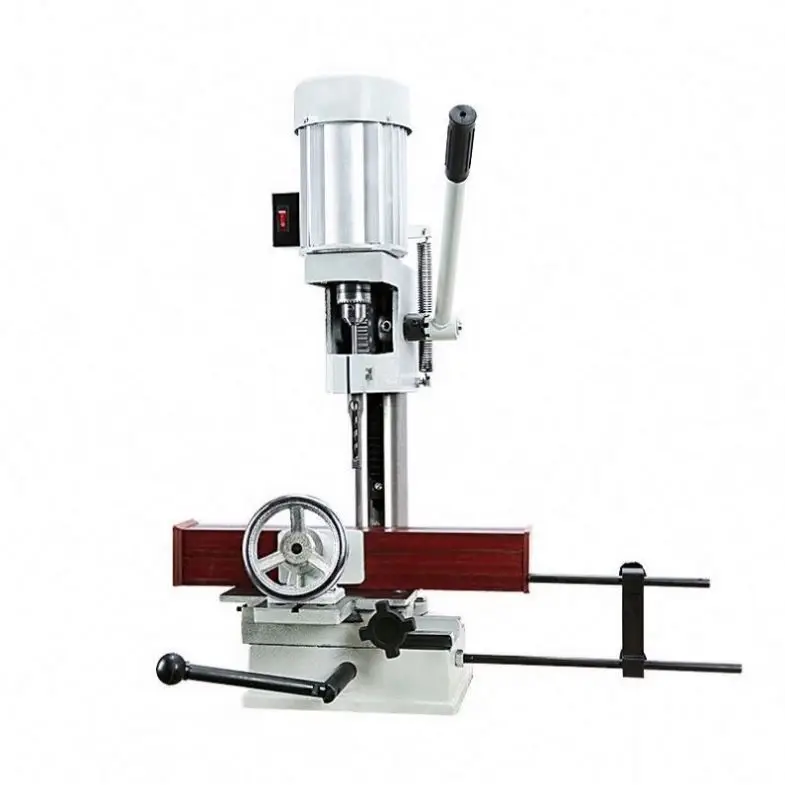
The Hoting product record identifies the TEBAK MK361A as a mortiser, mortising machine, woodworking tenoning machine and square-hole drilling machine. The title also lists two power options, 750 W and 1200 W. The source record contains no populated parameter table, so this guide separates verifiable identification from the technical values that must be confirmed before quotation, sample approval or purchase order.
A mortiser is usually selected for repeatable square or rectangular mortises in wood components, but the exact cutting envelope depends on the chisel-and-bit system, spindle arrangement, table travel and workholding method. None of those dimensions are supplied in the queue record. They must not be inferred from the model name or product category.
2. Verified product information
The following fields are directly traceable to the queue title and description. The 750 W / 1200 W wording is retained as a dual-option statement rather than treated as one confirmed rating. Ask the supplier which rating applies to the requested voltage, configuration and production revision.
3. Resolve the 750 W and 1200 W power options
The product title contains 750W/1200W, while the detailed params array is empty. The buyer should request a model-configuration sheet that maps each power option to motor type, rated voltage, frequency, phase, spindle speed, duty cycle and machine dimensions. A quotation that only says MK361A is incomplete if the two power versions have different cutting capacity or electrical requirements.
Ask for motor nameplate photographs or a factory data sheet, plus the input current, plug or terminal arrangement, overload protection and starting method. Do not assume the higher wattage is automatically a better fit: the correct choice depends on the target wood species, mortise dimensions, duty cycle and local electrical supply.
4. Mortise capacity and square-hole tooling
The title describes square drilling or punching, but provides no maximum mortise width, height, depth, corner radius or workpiece thickness. Request the complete cutting envelope and distinguish maximum single-pass capacity from a value achieved through multiple passes. Confirm whether the quoted capacity applies to hardwood, softwood, engineered board or a specified test material.
The buyer should also confirm the chisel and bit system, available tool sizes, shank standard, tool change method, tool projection, sharpening requirements and whether starter tooling is included. A square mortise is defined not only by its outside dimensions but also by the corner radius left by the tool set.
5. Spindle, table and travel confirmation
No spindle speed, spindle diameter, vertical stroke, table travel, fence travel or table size is present in the source record. These are core purchase fields for a mortiser. Ask for a dimensioned drawing that shows the distance from spindle center to fence, the available longitudinal and transverse travel, maximum workpiece height and the usable clamping area.
Confirm whether table movement is manual, lever-operated, rack-and-pinion or another mechanism. For repeat production, ask how the machine returns to a reference position and how repeatable depth and side location are established. Do not claim CNC, automatic feed or digital positioning unless the supplier provides those functions in writing for the exact MK361A configuration.
6. Workholding and operator safety
The product record does not specify a vise, clamp, hold-down, fence, guard, emergency stop or interlock. Include these as mandatory RFQ fields. The workholding system must keep the timber stable while the chisel enters and exits; a loose workpiece can damage the tool, distort the mortise or create a kickback hazard.
Request photos or drawings of the operator position, hand clearance, chip ejection path and tool guard. Confirm emergency-stop location, restart behavior after power loss, belt or transmission guarding and the recommended personal protective equipment. These requirements should be checked during a live sample test, not only from catalogue text.
7. Material, finish and dust management
The queue does not state the frame material, table material, coating, corrosion protection or dust-extraction interface. Ask for a bill of materials or at least a material and finish declaration for the frame, table, fence and workholding components. If the machine is intended for a humid workshop, request the specified surface protection and maintenance schedule.
Mortising produces chips and dust around the chisel area. Confirm whether a dust hood or extraction port is included, its connection diameter and the supplier's recommended airflow. Do not infer an extraction connection from product photographs. If no extraction interface is supplied, include a local guarding and housekeeping plan in the installation review.
8. Installation, electrical and acceptance planning
Because the source does not provide voltage, frequency, phase, overall dimensions or net weight, request those values before freight planning. The supplier should provide a packing list, gross weight, package dimensions, foundation or bench requirements, lifting points and assembly instructions for the selected 750 W or 1200 W version.
The factory acceptance test should use the buyer's intended timber and target mortise. Record the selected motor option, tool size, depth, width, repeatability, surface quality, noise or vibration observations and safety-device operation. A signed test sheet prevents a power-option mismatch from being discovered only after delivery.
9. RFQ checklist for MK361A
An effective RFQ should identify TEBAK MK361A, product ID 1601364559230 and the requested power option: 750 W or 1200 W. It should request rated voltage, frequency, phase, motor type, spindle speed, maximum mortise width and depth, workpiece thickness, chisel and bit sizes, table dimensions, travel, fence position, vise design, overall machine size, net and gross weight, package size and included accessories.
Add commercial and service fields: sample-test method, spare chisel and bit pricing, warranty scope, replacement-part lead time, operating manual language, electrical documentation, packing method and final inspection photographs. If the supplier cannot provide a populated technical sheet, treat the offer as a preliminary identification rather than a production-ready quotation.
10. Buyer decision summary
The MK361A is a relevant candidate when the project needs a dedicated woodworking mortiser or square-hole drilling machine, but the available record is identification-level rather than specification-level. The reliable facts are the TEBAK brand, MK361A model, mortiser and tenoning-machine category, square-hole operation wording and the two listed power options of 750 W and 1200 W.
Before approval, close every missing technical field with a supplier data sheet and a representative sample test. In particular, confirm which power version is being quoted and the actual mortise capacity. This approach preserves the real product information while giving procurement, engineering and production teams a clear path to a defensible purchase decision.