
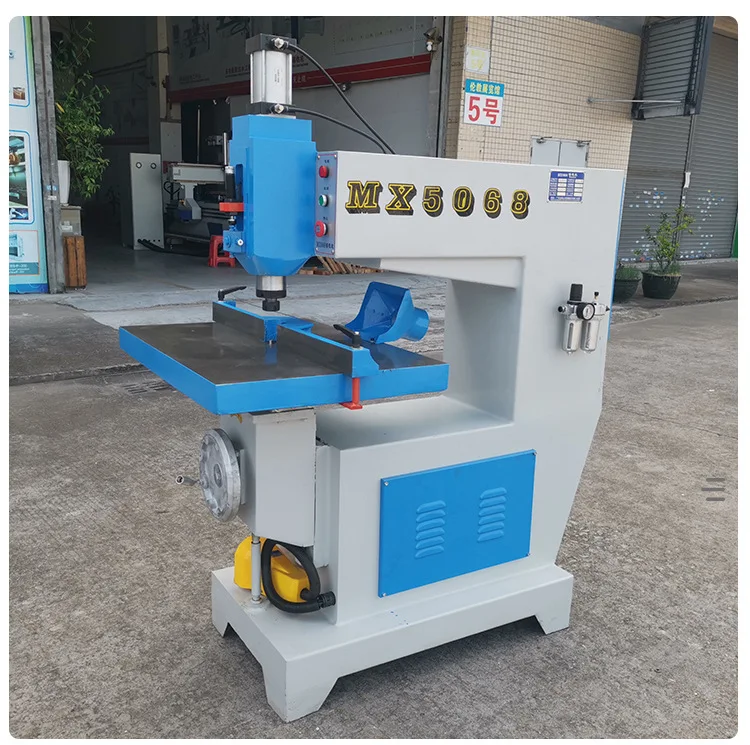
1. What the TEBAK MX5068 machine is for
The TEBAK MX5068 is described in the product record as a high-speed woodworking shaper, router machine, vertical milling machine and spindle moulder for solid wood. For a B2B buyer, this places the machine in the category of stationary wood-shaping equipment used to form profiles, edges, grooves and other machined features on solid-wood workpieces.
The verified product record provides two firm reference points: model MX5068 and maximum working thickness of 150 mm. The different machine terms in the title describe the intended equipment family, but they do not by themselves confirm every configuration or performance value. This guide therefore explains how to assess the machine while keeping unprovided specifications open for supplier confirmation.
2. Verified specifications and open RFQ items
The table below separates the information stated in the product record from assumptions that should not be made during purchasing. Maximum working thickness is a sizing limit to verify against the buyer's actual stock and tooling plan; it is not a throughput promise. Ask the supplier to define the measurement reference and the conditions under which the 150 mm value applies.
3. Understanding the 150 mm working-thickness limit
The listed maximum working thickness is 150 mm. Before comparing quotations, define whether this dimension applies to a straight workpiece, a profiled workpiece, a specific cutter arrangement or a particular fence and table setup. A buyer should also confirm the usable clearance around the spindle and the maximum safe workpiece dimensions for the intended operation.
Working thickness is only one part of capacity. Request the maximum workpiece width, minimum workpiece size, available table area, fence travel, cutter clearance and recommended workholding method. These values are not provided in the product record, so they should be confirmed on the supplier's technical drawing rather than inferred from the MX5068 model number.
4. Shaper, router and spindle-moulder functions
A spindle moulder shapes wood with a rotating cutter mounted on a vertical spindle. A router-oriented configuration may be selected for routing profiles or grooves, while a shaper setup may be selected for repeated edge and contour work. The product title uses several related terms, so the supplier should state the exact standard configuration and the operations supported by the quoted machine.
Ask for a tooling compatibility list, spindle arbor or collet details, cutter diameter range, maximum cutter height, spindle travel and guard arrangement. Do not assume that a machine described as a vertical milling machine includes metal-milling capability. The supplied record describes solid-wood use, so the quotation should remain focused on the intended woodworking application unless the supplier provides separate documentation.
5. Solid-wood processing and application planning
The product title names solid wood as the primary material. Different species, moisture levels, grain directions and cross-sections can produce very different cutting loads and surface results. Prepare a sample list for the supplier that identifies the wood species, approximate moisture condition, workpiece thickness, profile, feed direction and required finish.
For production planning, record the actual operation rather than only the machine category. For example, an edge profile, a slot, a tenon or a repeated contour may require different tooling, fences and guarding. A sample test should document the cutter, feed method, workpiece support, surface quality and any tear-out observed on the buyer's material.
6. Spindle, motor and electrical confirmation
The product record does not provide spindle speed, motor power, spindle diameter, voltage, frequency, phase, control method or electrical protection rating. These are essential fields for an industrial quotation. Ask for the motor nameplate, spindle-speed range, start and stop controls, emergency-stop arrangement, overload protection and destination-country electrical configuration.
For a high-speed woodworking machine, the spindle and cutter system must be evaluated together. Request the permitted cutter dimensions and operating limits, and verify that the quoted motor and spindle are suitable for the planned solid-wood profiles. Do not publish or promise a production rate until the supplier confirms the test conditions and the buyer's material has been sampled.
7. Table, fence, guarding and operator safety
A stationary shaper or spindle moulder should be purchased as a complete work cell, not just as a motor and spindle. Ask for table dimensions, table height, fence construction, fence adjustment, dust extraction ports, cutter guard, emergency stop, interlocks and the required operating clearance.
The buyer should request the operating manual, installation instructions, maintenance schedule and safety documentation before shipment. Confirm which guards and accessories are included in the base price and which are optional. If the machine will be used in a training or multi-shift environment, specify operator access, lockout procedure and routine inspection requirements in the procurement checklist.
8. Dust extraction and workshop integration
Solid-wood machining produces chips and dust, so extraction planning should be completed before the machine arrives. The product record does not state dust-port diameter, airflow requirement or the number of extraction points. Ask the supplier for a dimensioned layout showing the outlet positions and recommended extraction conditions.
Leave enough space for workpiece infeed, outfeed, fence adjustment, cutter changes, inspection and cleaning. The extraction system, electrical supply, machine foundation and operator position should be reviewed together. A compact machine can still create an impractical cell if long solid-wood stock cannot be supported safely on both sides of the table.
9. Maintenance, tooling and spare parts
Request a parts diagram for the MX5068 configuration, including spindle bearings, belts or drive components, switches, guards, fence parts and dust-extraction fittings. Confirm the lubrication points, service intervals and the procedure for checking spindle runout and cutter alignment.
Tooling is a recurring operating cost. Ask whether the quotation includes a starter cutter set, arbor accessories, collets, spacers, wrenches or calibration tools. For distributors, obtain part numbers and lead times for wear parts so that the machine can be supported after installation. The product record does not state these items and they must not be treated as included without written confirmation.
10. RFQ checklist and final buying decision
An RFQ for the TEBAK MX5068 should state model MX5068, the required maximum working thickness of up to 150 mm, wood species, workpiece dimensions, target profiles, tooling, production duty, electrical supply, extraction arrangement, guarding, documentation, packing, warranty and delivery terms. Ask the supplier to attach a technical drawing and a complete accessory list.
The MX5068 is a candidate for solid-wood shaping and routing work where the 150 mm stated maximum working thickness fits the buyer's process. Before issuing a purchase order, confirm spindle and motor data, table and fence dimensions, cutter compatibility, safety equipment, dust extraction, power requirements, sample-test results and the exact scope of supply. This converts a broad product title into a controlled machine specification without inventing unverified performance claims.