
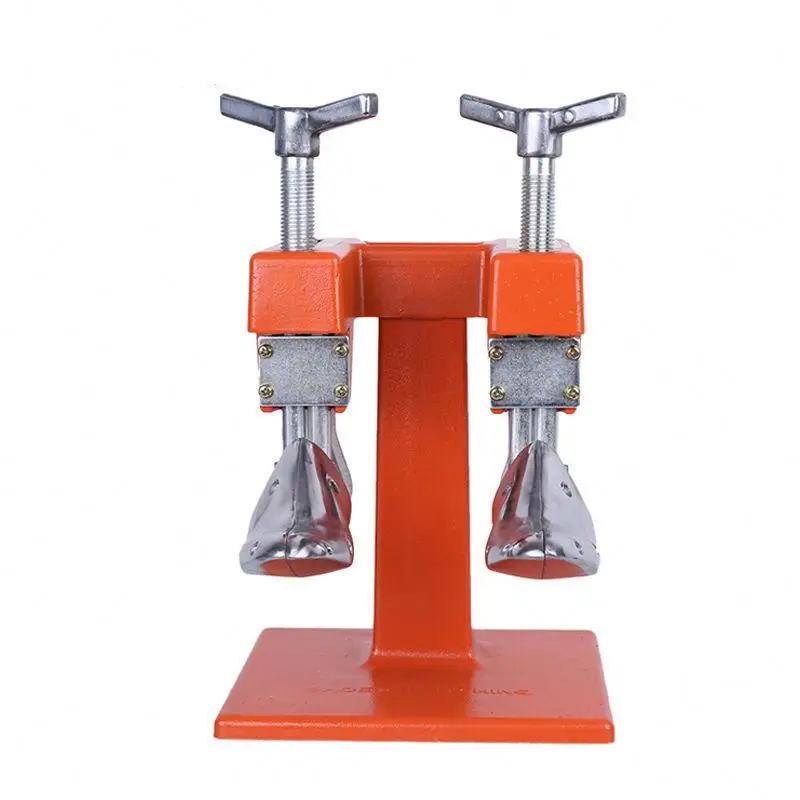
1. What this TEBAK shoe expander is designed to do
A shoe expander is a workshop tool for controlled stretching and fitting correction. The TEBAK model in this product record is a manual shoe leather stretching and pressing machine described for single-head or double-head shoe stretching applications. That makes it relevant to repair shops, footwear sampling rooms, small production lines, and distributors that need a compact mechanical process instead of a powered press.
The buying decision should start with the actual repair task. A buyer working on one pair at a time may prioritize compact handling and repeatable manual adjustment. A workshop serving multiple shoe sizes may instead need confirmation of the compatible shoe-last range, the expansion direction, and whether the supplied configuration is single-head or double-head. Those details are not stated in the supplied product record and should be confirmed before quotation.
2. Verified specification table
The table below separates the information available in the product record from assumptions that should not be used for a purchase order. The listed machine size is 40 × 31 × 36 cm and the listed net weight is 11 kg. These figures matter for bench planning, carton planning, and manual movement, but they should still be checked against the supplier's final packing list.
3. Manual operation and process control
The product record identifies the power as manual. In procurement terms, this means the stretching force and cycle are operator-controlled rather than driven by a stated electric motor or pneumatic circuit. Manual operation can simplify installation and reduce the need for electrical integration, but the buyer should evaluate operator consistency, ergonomic reach, adjustment repeatability, and the time required per pair.
Before placing an order, request a short operating video or a written operating sequence. Confirm how the shoe is positioned, how the expander is adjusted, how the operator releases the workpiece, and whether the machine uses interchangeable contact pieces. A clear sequence is more useful than a generic claim such as high efficiency because it lets the workshop compare the tool with its existing repair method.
4. Aluminum construction and workshop handling
Aluminum is listed as the main material. For a compact manual tool, this can support easier handling and bench relocation, while the working contact areas still need to be evaluated for wear resistance and surface protection. Buyers should ask which parts are aluminum, which parts are steel or hardened, and whether the contact surfaces can be replaced independently.
The 11 kg listed weight should be treated as a handling reference rather than a complete shipping specification. Ask for gross weight, package dimensions, pallet requirements, and the recommended bench or fixture. The listed machine size of 40 × 31 × 36 cm is useful for checking available space, but clearance for the operator's hands and for inserting different footwear must be added to the work-cell plan.
5. Single-head versus double-head configuration
The product title references single and double head shoe stretching. The supplied record does not define which configuration is included in a base quotation. This is a critical commercial point: a single-head arrangement and a double-head arrangement can have different workflows, tooling, adjustment steps, and price structures.
Ask the supplier to state the exact configuration on the proforma invoice. Request product photographs showing the supplied head arrangement, a list of included accessories, the number of contact pieces, and whether left and right shoes are processed by changing fixtures or by using separate heads. Do not treat the title alone as proof that both configurations are included.
6. Shoe materials, size coverage, and stretching direction
The record describes shoe leather stretching, but it does not specify compatible leather thickness, synthetic upper materials, boot shafts, toe shapes, heel zones, or shoe sizes. These are application limits that must be validated with samples. Send the supplier representative samples or photographs of the shoe types, then request a written confirmation of the suitable stretching direction and the maximum expansion range.
A useful sample test should record the original measurement, the adjustment applied, the dwell time, the result after release, and whether the upper shows marks or distortion. For a distributor, keep the test record with the quotation so future buyers can see which applications were actually validated.
7. Procurement checklist for workshops and distributors
Use the following checklist before comparing offers: confirm manual operation; confirm whether the quotation is single-head or double-head; confirm machine size as 40 × 31 × 36 cm; confirm listed weight as 11 kg; confirm aluminum material scope; request compatible shoe sizes and shapes; request included contact pieces; request sample-test evidence; request packing dimensions and gross weight; and confirm spare parts or replacement contact components.
For a small workshop, the most useful comparison is not the lowest unit price. Compare the time needed to position and release a pair, the ease of adjustment, the availability of replacement contact pieces, and the supplier's response to sample validation. For a distributor, compare packaging, product photos, instruction material, configuration labeling, and the supplier's ability to keep the same accessory set across repeat orders.
8. Cost, service, and quotation questions
The supplied product record does not include price, MOQ, lead time, warranty, or certification information. These commercial fields should remain open in the purchase comparison. Ask for a quotation that separates the machine, optional heads, replacement contact pieces, packaging, shipping terms, and any sample-testing service.
Also confirm the after-sales channel, response time for spare-part questions, and whether the supplier can provide an English operation guide. A manual machine has a simple power architecture, but its practical value depends on correct setup and repeatable contact geometry. A clear spare-parts list protects the buyer from replacing the whole machine when only a contact component is worn.
9. Final buying decision
The TEBAK shoe expander is a compact manual solution with a listed 11 kg weight, 40 × 31 × 36 cm size, aluminum main material, and a product title covering shoe leather stretching and pressing. It is a candidate for workshops that value a portable, non-powered fitting tool. The final purchase decision should be made only after confirming the head configuration, sample compatibility, working range, included accessories, packing data, and commercial terms.
For an RFQ, attach the target shoe photographs, required stretching direction, expected daily workload, preferred single-head or double-head configuration, and the five verified product specifications. This gives the supplier a concrete technical brief and makes competing quotations easier to compare.