
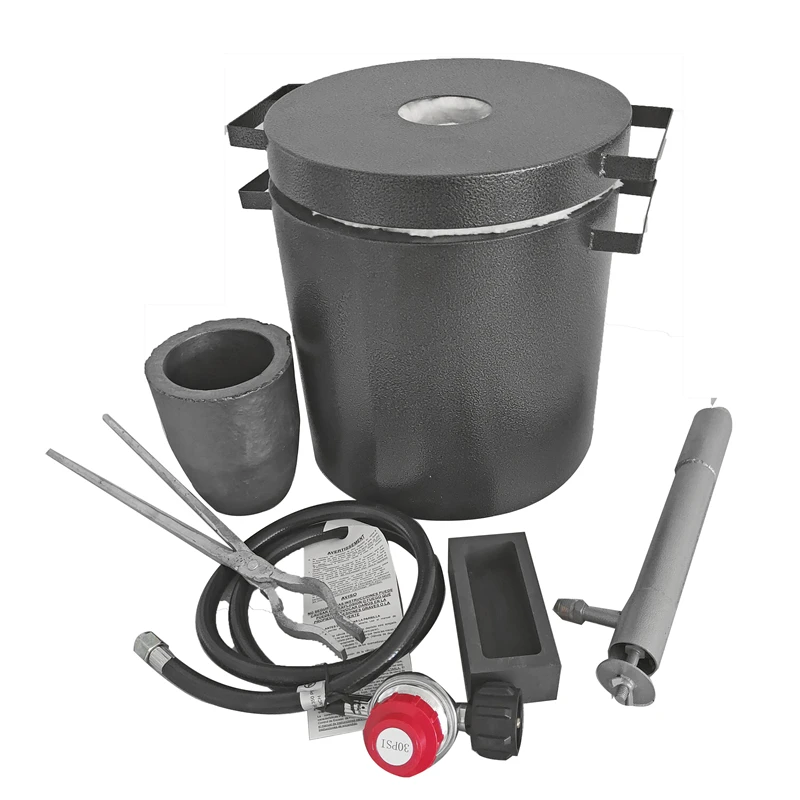
Source-controlled product identity
The Hoting queue identifies Product ID 1601318134021 as a TEBAK metal-smelting furnace listing built around a graphite crucible. The title contains the capacity wording “6kg 10 kg 12kg,” describes a customized metal-smelting furnace and names gold, tin, silver, copper and aluminium melting.
The description contains the phrases “6KG Metal smelting propane graphite crucible Electric Gold Furnace” and “Tin Silver Copper Aluminium Melting Gas Gold Melting Furnace.” These phrases describe possible application or configuration directions, but they do not establish that one delivered machine uses propane, electricity and gas at the same time.
No structured parameter table is supplied for this queue item. The source does not provide crucible dimensions, usable charge mass by metal, furnace temperature, power, voltage, current, gas pressure, fuel consumption, heating time, furnace dimensions, weight, controller, refractory specification, safety system or certification.
This B2B procurement guide focuses on turning an ambiguous graphite-crucible listing into a model-specific RFQ and acceptance plan. It is suitable for jewellery workshops, metal recyclers, casting shops, laboratories, repair businesses, distributors and OEM buyers who need to clarify the actual furnace architecture before ordering.
Recorded source information
| Source wording | What it establishes | What still requires confirmation |
|---|---|---|
| Product ID 1601318134021 | Identity of this queue record | Exact model, revision, nameplate and configuration |
| TEBAK | Brand named by the queue record | Delivered branding, factory nameplate and model code |
| 6kg, 10kg, 12kg | Capacity wording in the title | Whether these are variants, crucible ratings, metal-specific masses or selectable options |
| Graphite crucible | Graphite is named in the product wording | Grade, dimensions, density, volume, safe fill, compatibility and replacement part |
| Customized | The listing suggests configuration may be customized | Drawing, tolerance, MOQ, tooling, lead time and change-control process |
| Metal smelting | General application wording | Melting, holding, alloying, refining, pouring and acceptable process endpoint |
| Gold, tin, silver, copper, aluminium | Examples named in the source | Metal-specific charge mass, temperature, crucible compatibility and contamination controls |
| Propane, electric, gas | Multiple heating/utility words appear | Actual architecture, utility requirements, safety controls and destination compliance |
First RFQ question: what machine is actually being quoted?
Ask the supplier to replace the combined listing title with one model-specific configuration. The quote should state whether the product is an electric furnace, propane-fired furnace, gas-fired furnace, gas-assisted electric furnace, or a graphite crucible supplied for a separate furnace.
Request a model code, nameplate photograph, system diagram and complete bill of materials. Do not accept “propane,” “electric” and “gas” as interchangeable descriptions.
Clarify whether the capacity options 6kg, 10kg and 12kg are separate models or one adjustable unit. Require a capacity table by metal because the same crucible volume does not equal the same mass for gold, tin, silver, copper and aluminium.
Ask whether the named capacities mean nominal crucible rating, maximum charge, recommended charge, usable charge or output per batch. Define the fill height and safety margin for each option.
Request one drawing for each configuration. Each drawing should show crucible seat, furnace opening, lid clearance, lining, burner or heater position, electrical enclosure, gas connection and pouring access.
Record all deviations between the listing, quotation, approved drawing and delivered machine. A verbal explanation is not sufficient for a custom metal-processing order.
Graphite crucible specification
The source names a graphite crucible but provides no grade, shape, internal volume or dimensions. Request the drawing with internal diameter, external diameter, height, wall thickness, base thickness, rim, pouring lip and lifting interface.
Ask for graphite grade, density, purity, binder, coating, oxidation guidance, thermal-shock limits and allowable operating conditions.
Define the difference between crucible capacity and usable charge. The buyer should receive a metal-specific mass limit, maximum fill level and loading procedure rather than a single marketing number.
Confirm compatibility with gold, tin, silver, copper and aluminium separately. Ask about alloying elements, fluxes, cover materials, contamination, wet charge and cleaning.
For precious-metal work, define dedicated crucible requirements and traceability. A crucible previously used for copper or aluminium may not be acceptable for every gold or silver application.
Request a spare-crucible part number, price, lead time, packaging method and inspection rule for cracks, chips, erosion, warping and contamination.
Ask how the crucible is supported and removed when cold and hot. Confirm tongs, lifters, pouring tools, lid and shields, including which accessories are included.
Capacity and metal-specific process data
Do not treat 6kg, 10kg and 12kg as a single confirmed production capacity. The source does not state which metal each value represents or how the mass was calculated.
Send the supplier a separate process table for each metal: material, alloy, purity, charge form, batch mass, target temperature, hold time, pour temperature, expected cycle time and acceptable residue.
Ask for the maximum safe charge and recommended working charge for each variant. Require a definition of whether the number applies to cold charge, liquid metal, crucible rating or one batch.
Define the melt endpoint: first liquid, fully liquid, homogeneous alloy, pour-ready condition, measured temperature or another documented criterion.
Request test records using the buyer's intended charge form. Ingot, scrap, granule, wire, powder and mixed return can produce different heating, oxidation and contamination behavior.
Ask whether the furnace is for melting only or also for holding, alloying, refining, degassing and controlled pouring. Do not assume these functions from the words “metal smelting.”
Measure cycle time for each approved charge and record start temperature, ambient conditions, utility input, setpoint, endpoint and operator actions. Do not convert a demonstration into a guaranteed hourly capacity without repeat tests.
Heating architecture and utility clarification
The source combines propane, electric and gas language. Request a clear utility schedule with one of the following defined architectures: electric resistance, propane burner, gas burner, electric plus inert-gas protection, or another supplier-documented design.
For an electric configuration, request voltage, frequency, phase, rated power, current, plug, cable, grounding, breaker, isolation, heater type, controller and over-temperature protection.
For a propane configuration, request fuel type, regulator, pressure, flow, consumption, burner, ignition, flame failure protection, shutoff, ventilation, exhaust and installation clearance.
For a gas or gas-assisted configuration, identify the gas by name and purpose. Distinguish fuel gas, inert shielding gas, purge gas, compressed air and exhaust.
Request a process and utility diagram. It should show every connection, valve, sensor, alarm, emergency shutoff and required site service.
Confirm whether the graphite crucible is heated by the furnace or supplied for use in another heating system. Do not connect a burner or electrical supply based only on a product title.
Test utility loss, ignition failure, sensor fault, over-temperature, emergency isolation, power interruption and controlled restart before shipment or commissioning.
Temperature, refractory and furnace body
No maximum temperature or operating range is supplied. Request maximum temperature, normal operating range, ramp rate, hold time, uniformity, recovery and continuous-duty limits for the exact model.
Request sensor type and position, display resolution, control accuracy, overshoot, alarm threshold, calibration method and test instrument information.
Ask for the refractory specification: material grade, density, thickness, temperature rating, thermal conductivity, protected surface and replacement procedure.
Confirm whether the graphite crucible is isolated from the furnace body by a refractory lining, support ring, hearth or another structure. Request the assembly drawing.
Inspect the lid, opening, lining, burner or heater clearance, crucible seat and spill containment. Record allowable thermal cycling and maintenance intervals.
Do not borrow temperature or lining data from another TEBAK furnace listing. This source record provides no numeric thermal data.
Define the safe cooling procedure, hot-surface labels, handling time and storage condition. A compact furnace still requires a documented hot-metal workflow.
Customized configuration and engineering change control
“Customized” must be converted into an approved design package. Provide target capacity variant, crucible drawing, furnace footprint, opening, height, utility, control language, accessories and destination requirements.
Ask the supplier to identify which parts are standard and which require tooling, machining or refractory changes. Request MOQ, sample cost, engineering fee, lead time and revision control.
Require drawing approval before production. The drawing should carry Product ID, model, revision, date, customer reference, dimensions, tolerances, materials and utility notes.
Define what happens if the supplier changes crucible material, heater, burner, controller, refractory or enclosure. No substitution should occur without written approval.
Request a pre-production sample or factory video of the exact configuration. A generic furnace photograph does not prove the ordered build.
Confirm nameplate data and manuals before shipment. The nameplate should match the approved model, utilities and capacity.
Keep the quotation, drawing, bill of materials, test report, packing list and warranty as one controlled order file.
Safety and site acceptance
Request a manual covering molten metal, graphite oxidation, hot surfaces, fumes, flux, splashes, refractory failure, electrical hazards, fuel gas hazards and emergency shutdown.
Define PPE with the supplier and site safety professional: heat-resistant gloves, face and eye protection, protective clothing, footwear, ventilation and respiratory controls where required.
Establish a non-combustible base, clear pour path, exclusion zone, lighting, ventilation, fire equipment and emergency isolation before commissioning.
Do not load wet, sealed or unknown containers. Define charge inspection, drying, contamination and storage procedures.
Test lid stability, tip resistance, cable protection, grounding, flame failure if applicable, over-temperature protection, gas shutoff if applicable and emergency isolation.
Confirm whether the supplier provides tongs, crucible lifter, pouring tools, lid, shields, gloves, spare crucible and fire-response accessories. Do not assume accessories from product photos.
Document prohibited metals, fluxes, charge materials and operating conditions. The named metal examples do not automatically approve every alloy or process.
Factory acceptance test
- Verify Product ID 1601318134021, TEBAK brand, exact model and nameplate.
- Resolve whether the ordered unit is electric, propane, gas, gas-assisted or a graphite crucible for another furnace.
- Resolve whether 6kg, 10kg and 12kg are separate variants and define each metal-specific working charge.
- Inspect graphite grade, drawing, dimensions, volume, safe fill, support, lifting and spare part.
- Verify the furnace body, refractory, lid, crucible seat, burner/heater and control assembly.
- Verify maximum temperature, operating range, sensor, accuracy, alarm, ramp and hold performance.
- Verify voltage or fuel/gas utilities, connections, protection, grounding, ventilation and shutoff.
- Run the buyer's exact metal or alloy and charge form under an approved safe procedure.
- Record first liquid, fully liquid and pour-ready endpoints using an agreed measurement method.
- Repeat approved charge cycles to assess cycle-time variation and recovery.
- Test utility loss, sensor fault, over-temperature, emergency isolation, shutdown and restart.
- Verify custom dimensions, tolerances, opening, base, service clearance and lifting points.
- Verify drawings, BOM, manuals, nameplate, packaging, accessories, spare parts and warranty.
- Record every deviation and obtain written corrective action before acceptance.
RFQ checklist
- Product ID 1601318134021, TEBAK brand, exact model, revision and nameplate photograph.
- Architecture: electric, propane, gas, gas-assisted or crucible-only supply.
- Meaning of 6kg, 10kg and 12kg, with metal-specific usable charge and safe fill.
- Graphite grade, purity, dimensions, volume, wall thickness, coating, compatibility and spare part.
- Gold, tin, silver, copper and aluminium process limits, alloy guidance and contamination control.
- Maximum temperature, operating range, ramp, hold, uniformity, accuracy and sensor location.
- Refractory grade, thickness, density, temperature rating, protection and replacement method.
- Electric voltage, frequency, phase, power, current, plug, cable, grounding and breaker.
- Propane/gas type, pressure, flow, consumption, ignition, shutoff, detection and exhaust if applicable.
- Furnace dimensions, crucible opening, base, service clearance, weight, lifting and package.
- Custom drawing, tolerance, MOQ, tooling, lead time, engineering charge and revision control.
- Controller, HMI, alarm, calibration, language, recipe, data retention and fault behavior.
- PPE, handling tools, lid, shields, lifter, tongs, ventilation and fire-response requirements.
- FAT method, buyer sample, test limits, instruments, cycle repetitions and sign-off.
- Warranty, spare crucible, refractory, heater/burner, sensor, controller and service response.
Buyer decision framework
This source confirms a TEBAK graphite-crucible metal-smelting product identity and names 6kg, 10kg and 12kg capacity wording, customized configuration, gold, tin, silver, copper and aluminium applications, and mixed propane/electric/gas wording.
It does not confirm the furnace architecture, temperature, usable capacity, crucible dimensions, utilities, performance or compliance. Approve only after the supplier converts the listing into one model-specific data sheet and drawing.
Compare suppliers by verified metal-specific melt results, crucible traceability, utility safety, custom engineering control, documentation, spare parts and warranty. Do not rank an offer by the title's capacity numbers alone.
Frequently asked questions
What capacity is confirmed?
The title contains 6kg, 10kg and 12kg wording, but the source does not define whether these are variants, nominal crucible ratings or metal-specific charge masses. Confirmation is required.
What material is the crucible?
Graphite is named in the source wording. Grade, dimensions, volume, safe fill and metal compatibility are not provided.
Is the furnace electric or propane?
The source uses electric, propane and gas wording. Request a written architecture and complete utility diagram before ordering.
Which metals are named?
Gold, tin, silver, copper and aluminium are named as application examples. Verify each metal, alloy, charge form and process limit separately.
Is the product customized?
The title describes a customized metal-smelting furnace. Obtain a model drawing, tolerance, revision control and acceptance test for the ordered configuration.
What temperature can it reach?
No numeric temperature is supplied for this source record. Request the exact model's measured temperature range and control data.
Source and contact
This guide is based on the Hoting queue record for Product ID 1601318134021. It preserves the TEBAK identity, graphite-crucible wording, 6kg/10kg/12kg capacity wording, named metals, customization wording and mixed utility terms. Request the corrected model data sheet, crucible drawing, utility diagram, safety documents, test plan, warranty and spare-parts list through the TEBAK sales inquiry channel.
Key specifications
- Source Product ID
- 1601318134021
- Brand
- TEBAK
- Capacity wording
- 6KG, 10KG and 12KG
- Crucible material wording
- Graphite
- Application wording
- Metal smelting
- Metal examples
- Gold, tin, silver, copper and aluminium
- Heating/fuel wording
- Propane, electric and gas appear in the source wording; configuration requires confirmation