
Source-controlled product identity
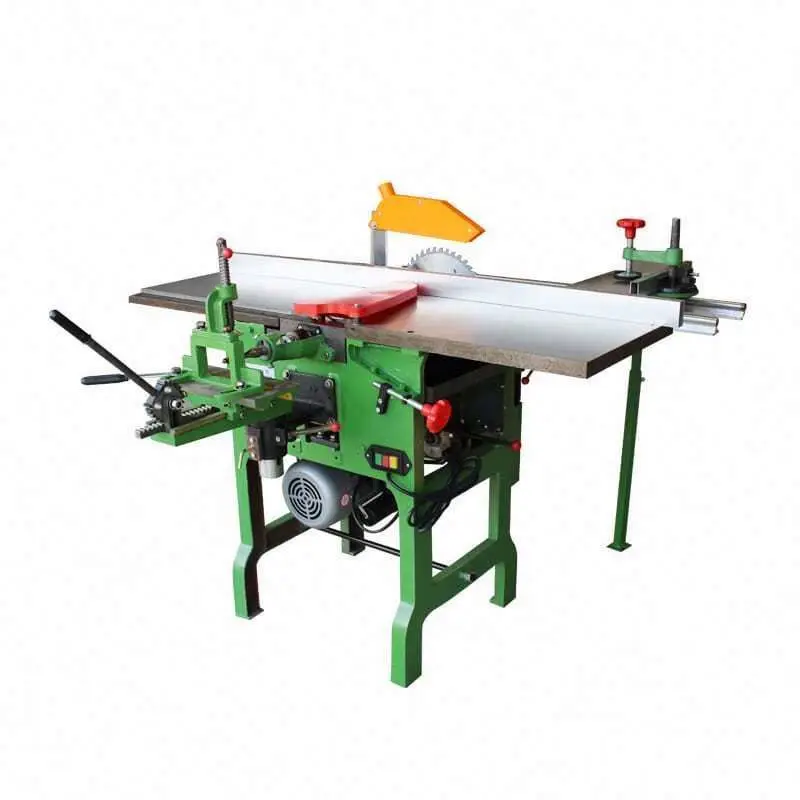
This TEBAK Hoting queue record describes a push-table, multi-functional woodworking machine and multi-purpose machine tool. The product title also uses “electric planer,” “planer equipment,” “punching planer” and “square H.” These phrases identify the listing family and possible process vocabulary, but they do not establish a complete machine configuration or prove that all named operations are included in one delivered unit.
Product ID 1601251658623 should remain on the quotation, approved drawing, sample request and inspection report. The source has no structured parameters. For that reason, this guide does not invent power, voltage, dimensions, cutter size, working width, planing depth, feed rate, spindle speed, material, weight, capacity or certification. Ask the supplier to convert the title-level description into a model-specific datasheet before comparing quotations.
What the source title does and does not confirm
| Source wording | What is recorded | What the buyer must confirm |
|---|---|---|
| Push-table | The title identifies a push-table concept. | Confirm table layout, workpiece support, fence, stops, guards and whether feeding is manual or assisted. |
| Multi-functional / multi-purpose machine tool | The title claims more than one woodworking function. | Request the exact functions included, changeover method, included tooling and independent performance limits. |
| Electric planer / planer equipment | The title uses planer terminology. | Confirm cutterhead, blade type, working width, depth of cut, feed method, dust extraction and test material. |
| Punching planer | The title contains this wording. | Clarify whether punching is a separate drilling, mortising or boring operation and identify its tooling. |
| Square H | The title ends with “Square H.” | Ask whether this is a model suffix, a workpiece profile, a table shape or incomplete listing text. |
Why a multi-function claim needs a configuration sheet
Woodworking machines that combine planing, punching, drilling, mortising or other operations can use different shafts, tables, fences, guards and dust paths. A buyer should not assume that a multi-functional title means simultaneous operation, automatic changeover or a single universal cutter. Request a general arrangement drawing, an operation list, a tooling list and a changeover sequence. Each function should have its own rated limits and acceptance test.
Ask the supplier to mark the delivered configuration on the quotation. If several options share one listing page, record the selected option, motor assembly, table, fence, tooling and protective enclosure as separate line items. Product photos should be matched to the approved drawing rather than treated as a complete specification.
Planing function RFQ checks
If the intended operation is surface planing, confirm the working width, maximum stock thickness, minimum stock size, cutterhead diameter, number and type of knives, knife adjustment, maximum depth of cut, table length, table flatness, fence angle and feed direction. Request the rated spindle speed, motor input, duty cycle, noise declaration and dust extraction port. None of these values is supplied in the queue record.
Clarify whether the workpiece is pushed manually across the cutter or supported by an auxiliary feed. Ask for the permitted wood species, moisture range, grain direction, maximum defect size and recommended pass strategy. A “high power” or “electric planer” label is not a substitute for a test result or a model-specific performance sheet.
Punching and drilling terminology
The title includes “punching planer,” but the source does not define a punch, drill, mortiser or boring head. Ask the supplier to provide a diagram showing the punching unit, tool shank, maximum hole or slot size, depth, center distance, adjustment axes and workholding method. Confirm whether the operation is performed on the same table as planing or requires a separate attachment.
Request the complete tooling package, including cutters, bits, arbors, collets, guards, wrenches and setting gauges. Confirm replacement-tool availability, sharpening requirements and the allowed tool diameter and speed. Do not infer a mortising or drilling capability from the word “punching.”
Push-table, fence and workholding checks
A push-table machine requires safe and repeatable workpiece support. Ask for table material, table dimensions, height adjustment, fence dimensions, fence angle, stops, hold-downs, push blocks, clamps and anti-kickback provisions. Confirm the maximum and minimum workpiece dimensions and the safe distance between the operator and cutting zone.
Request a setup drawing that shows the operator position, feed direction, cutter rotation and guard coverage. Ask how narrow, short, bowed or irregular stock is handled. If the machine is intended for production, define how repeatability is checked across multiple workpieces and how table or fence alignment is maintained during changeover.
Electrical and installation checks
The queue does not provide voltage, frequency, phase, power, current, plug, cable, grounding, breaker or emergency-stop details. Request an electrical nameplate and utility schedule for the exact model. Confirm whether the motor is single-phase or three-phase, whether a starter or variable-speed drive is included, and whether the machine needs separate controls for each function.
Ask for overall dimensions, working height, net weight, packed size, lifting points, floor requirements and installation clearance. A multi-function tool may require additional clearance for fences, long workpieces, dust collection and maintenance access. Do not plan a workshop layout from the product title or a single product photograph.
Dust, noise and workshop environment
Wood planing and punching can create chips and dust. No dust outlet, airflow requirement, enclosure or noise value is recorded. Ask for the dust-port diameter, recommended extraction airflow, chip path, cleanout access and whether separate ports are required for different functions. Confirm that guards do not obstruct extraction or create accumulation points.
Request the supplier’s noise declaration or measured test condition, vibration-control details and recommended personal protective equipment. The buyer should define housekeeping, filter loading, combustible-dust controls and maintenance access with the responsible workshop safety team.
Safety and compliance checks
The available source does not establish CE, UL, ETL, ISO, EMC, guarding or other certification for this exact machine. Ask for the applicable destination-market documents, risk assessment, emergency-stop validation, electrical test record, guard design and operating manual. Confirm interlocks for removable guards, cutter access, punching attachments and unexpected restart after power loss.
Request the lockout/tagout procedure, blade-change method, tool-setting procedure and training requirements. If the machine has multiple functions, require a clear control selection system that prevents an unselected tool from running. Do not claim a safety certification from general company text or the product category.
Factory acceptance test proposal
- Approve the exact model, function list, general arrangement drawing, electrical diagram, tooling package and guard design.
- Verify nameplate data, motor configuration, controls, emergency stop, grounding and no-voltage restart behavior before cutting.
- Run each included function separately with defined test stock, recording dimensions, surface result, cut depth, repeatability and tool condition.
- Test changeover, fence and table adjustments, workholding, dust collection, guard access and recovery after a simulated stop.
- Inspect delivered accessories, spare parts, manuals, warning labels and certificates against the approved quotation and packing list.
RFQ checklist
- Formal model code and a complete list of included functions; clarify “square H” wording.
- Planing working width, maximum stock thickness, minimum stock size and maximum depth of cut.
- Cutterhead diameter, knife count/type, spindle speed, blade adjustment and replacement-tool details.
- Punching/drilling/mortising function, tool size, depth, center distance, attachment and workholding.
- Table dimensions, height, flatness, fence angle, stops, hold-downs and push-block accessories.
- Input voltage, frequency, phase, motor power, current, controls, breaker and grounding.
- Overall and packed dimensions, net/gross weight, lifting points, floor requirements and clearance.
- Dust ports, extraction airflow, chip handling, noise, vibration and workshop environmental limits.
- Guards, anti-kickback, interlocks, emergency stop, overload and unexpected-restart protection.
- Destination-market compliance documents, warranty, spare parts, MOQ, lead time and commissioning scope.
Buyer’s decision framework
This listing may be relevant to a buyer evaluating a compact multi-function woodworking machine, but the source record is not sufficient to select a production configuration. Treat push-table, multi-functional, electric planer, punching planer and square H as source-controlled title claims requiring clarification. A defensible purchase decision should use a model-specific datasheet, function-by-function test, tooling list, safety file, utility schedule and approved drawing.
Frequently asked questions
Is this machine a planer, a punching machine or both?
The title uses both planer and punching terminology, but no structured parameters define the configuration. Ask the supplier for the exact included functions and a drawing of each tool assembly.
What is the planing width and depth?
No working width or depth is provided. Request the model-specific maximum/minimum limits and a test result using the buyer’s material.
Does multi-functional mean automatic changeover?
No. The title does not establish automatic changeover or simultaneous operation. Confirm the changeover procedure, tooling and operator steps.
What does “Square H” mean?
The source contains this wording but does not define it. Ask whether it is a model suffix, workpiece profile, table shape or incomplete title text.
Can I plan installation from the product photo?
No. Request overall dimensions, working height, packed size, service clearance, dust extraction requirements and lifting points before layout or freight planning.
Source and contact
This guide is based on the Hoting queue record for product ID 1601251658623. Before purchase, request a current quotation, model-specific datasheet, general arrangement drawing, electrical schedule, tooling list, safety documents and witnessed test. For sourcing questions, contact the TEBAK sales team through the site’s current inquiry channel.