
Source-controlled identity before quotation
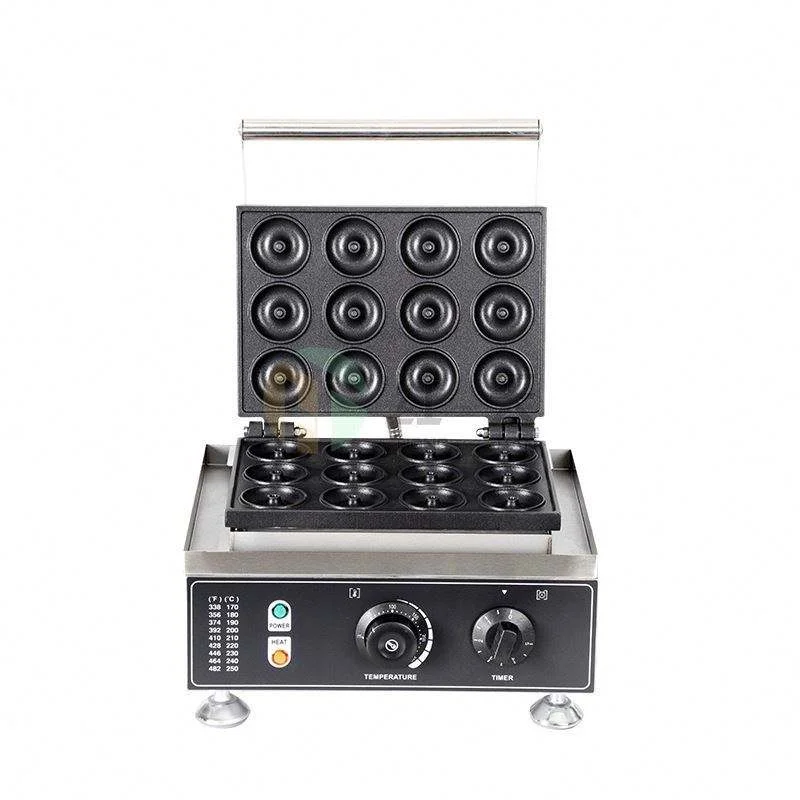
This TEBAK queue record describes a 2024 new commercial restaurant equipment listing for a kitchen donut machine, mini donut making machine and snack equipment. The product title is the only product-level source for the configuration. It identifies the use context and product family, but it does not provide a structured parameter table.
Product ID 1601606444823 is the queue identifier for this buying guide. The source record contains no product-specific values for power, voltage, heating method, temperature, mold, output, dimensions, weight, materials, certification, price, MOQ or lead time.
| Source field or description | Recorded value | Procurement treatment |
|---|---|---|
| Product identity | TEBAK 2024 New Commercial Restaurant Equipment Kitchen Donut Machine Mini Donut Making Machine Snack Equipment | Title-level identity; confirm the exact model, configuration and included parts. |
| Product family | Donut machine; mini donut making machine | Confirm whether the machine forms, cooks, fills, fries or only shapes donuts. |
| Application wording | Commercial restaurant equipment; kitchen; snack equipment | Define the buyer's site, recipe, service rate and food-safety requirements; do not infer duty cycle. |
| Year wording | 2024 | Retain as title wording; confirm current revision, production date and available documentation. |
| Supplier profile | General company description supplied in the queue | It is not a product data sheet or product certification. Request current model-specific documents. |
The source does not provide rated power, voltage, phase, frequency, plug, heating method, gas requirement, temperature range, control type, warm-up time, cavity count, cavity dimensions, donut diameter, product thickness, output per hour, belt or tray speed, batter feed, oil volume, cooking surface, body material, food-contact material, overall dimensions, footprint, net weight, gross weight, packaging, certifications, MOQ, price, lead time or warranty. Every one of these is an RFQ confirmation item.
No numerical performance value should be inferred from the words “commercial,” “mini,” “donut machine,” “restaurant equipment” or “snack equipment.”
1. Define the donut production workflow
Before requesting a quotation, document the buyer's donut type, recipe, batter viscosity, target diameter, thickness, topping process, serving size and expected peak-hour demand.
Clarify whether the required process is portioning, depositing, baking, frying, shaping, filling, cooling or a combination. A title-level donut machine description does not prove which process stages are integrated.
Record the desired product shape, including ring, filled, spherical, flat or other form. Ask the supplier for a product drawing and a sample output made with the buyer's recipe.
Define the batch or continuous workflow. Confirm loading, heating, forming, discharge, cooling, cleaning and changeover time before calculating throughput.
Use product ID 1601606444823 in the RFQ, quotation, sample record and inspection report. Do not replace it with a similar-looking mini donut machine without a written specification comparison.
Request a complete operating sequence from startup to shutdown. Include preparation, preheating, feeding, product release, cleaning and emergency stop.
Do not approve the machine based only on the title, catalog image or the word “commercial.”
2. Electrical, heating and site requirements
The source provides no electrical or heating specification. Ask for voltage, phase, frequency, rated power, current, plug, cable, breaker and grounding requirements for the exact configuration.
Confirm whether the machine is electric, gas-heated, oil-heated, induction-heated or another configuration. Do not infer the heating method from the product category or image.
Request heating-element type, heater location, heat-transfer path and protection from batter, oil, moisture and cleaning chemicals.
Ask for warm-up time under a defined ambient condition and with the machine configured for the buyer's recipe. Record the instrument and test method.
Confirm whether heating zones are independently controlled. Request temperature-sensor location, control tolerance, adjustment method and alarm behavior.
Check whether the site has the required power supply, ventilation, drainage, heat clearance, water connection or exhaust system. These interfaces are not stated in the source.
Request a wiring diagram, installation guide, rated-load label and product-specific electrical safety documentation before shipment.
Do not state a power, voltage, temperature or warm-up value until it is present in the supplier's model-specific documentation.
3. Forming system and mold questions
Ask whether the machine includes a fixed mold, interchangeable plates, a depositor, a cutting tool, a tray or a conveyor. The source does not identify the forming mechanism.
Request cavity count, cavity dimensions, donut outside diameter, hole diameter, product thickness, pitch and usable forming area.
Confirm whether the mold is for mini donuts only or whether different shapes and sizes are available. Ask how a changeover is performed and how long it takes.
Request the mold and food-contact material list, surface finish, release treatment, weld or joint details and cleaning instructions.
Test product release with the buyer's batter, oil or release agent. Record sticking, deformation, broken edges, incomplete rings and residue.
Ask for replacement mold or plate part numbers, expected service life and the conditions that void the service-life estimate.
Do not assume that “mini donut” indicates a standard cavity diameter or a universal replacement plate.
4. Recipe, feeding and product consistency
Provide the supplier with the buyer's recipe inputs: flour or premix, liquid ratio, sugar, fat, leavening, inclusions, filling and target portion weight.
Confirm the acceptable batter viscosity and feeding temperature. Ask whether manual loading, hopper loading, pump feeding or another method is required.
Define the feed volume or portion tolerance and ask how it is adjusted. No dosing accuracy is provided in the source.
Run samples with the buyer's recipe at startup, steady state and after a controlled changeover. Record weight, shape, color, texture, moisture and defects.
Check for underfilled cavities, overflow, uneven browning, sticking, raw centers, burnt edges and variation between cavities.
Ask whether the machine can handle different recipes and what cleaning or adjustment is required between allergens or flavors.
Do not turn a product-family name into a guaranteed pieces-per-hour or grams-per-piece claim.
5. Output and commercial duty validation
The source provides no capacity or output. Ask the supplier to define the test condition for any output claim: cavity count, portion size, recipe, temperature, operator count and cycle time.
Measure the complete cycle from loading to finished product, including preheating, forming, cooking, discharge and reset. Separate theoretical cycle speed from usable output.
Run repeated cycles to observe temperature recovery, feed stability, product release, reject rate, cleaning interruptions and operator handling.
Record the output per hour only after a buyer-approved sample test. State whether the result is gross pieces, accepted pieces or saleable pieces.
Ask for the recommended daily duty, operating hours, changeover frequency and maintenance interval. “Commercial” is not a declared duty rating.
Confirm whether the machine is intended for a restaurant counter, central kitchen, snack kiosk, bakery or another environment.
Do not use a supplier's unqualified output number in a capacity plan or return-on-investment model.
6. Controls, operator access and changeover
Request the control type, display, temperature setting, timer, speed setting, recipe memory, alarm, emergency stop and reset behavior.
Confirm which controls are accessible during production and which require the operator to open a guard or stop the machine.
Ask whether the machine has automatic feed, automatic discharge or manual handling. Confirm the number of operators needed for the buyer's workflow.
Test startup, normal stop, emergency stop, power recovery and restart after a fault. Record whether product or heat remains active after a stop.
Request a complete operation manual with control labels, symbols, cleaning instructions and troubleshooting steps for the exact model.
Confirm language options for the manual and safety labels, and whether labels are durable after cleaning and heat exposure.
Do not promise unattended operation or automatic production unless the supplier documents those functions.
7. Food-contact materials and cleanability
The product record does not specify the body, mold, tray, hopper, chute, guard, gasket or other food-contact materials. Request a complete material list.
Confirm surface finish, sheet thickness, coating, sealant, plastic grade and temperature resistance for every food-contact and hot-zone component.
Inspect cavities, corners, seams, fasteners and discharge paths for residue traps, sharp edges and areas that cannot be reached by the approved cleaning tools.
Ask which parts can be removed without special tools and whether the mold, hopper, tray and product path can be cleaned and dried completely.
Test cleaning after batter, oil, sugar and allergen exposure. Record trapped residue, water retention and time required for disassembly and reassembly.
Confirm approved detergents, sanitizer compatibility, maximum cleaning temperature and restrictions on spraying electrical components.
Do not infer stainless steel, food-grade construction or sanitary design from the product photograph.
8. Safety and compliance review
Request the destination-market safety requirements for the electrical, thermal, mechanical and food-contact configuration. The general supplier description is not product-specific proof.
Confirm guards, pinch-point protection, hot-surface warnings, over-temperature protection, emergency stop, grounding and restart behavior.
If gas, oil or open heating is involved, request the fuel, ventilation, fire-safety, shutoff and installation requirements for the exact model.
Ask for current product-specific compliance documents and test reports for the buyer's destination. Do not claim CE, UKCA, UL, CSA, NSF or another standard without evidence.
Check whether the machine requires a hood, exhaust, heat shield, non-combustible base, drain, water connection or clearance zone.
Request risk instructions for batter overflow, oil splash, heater fault, jam, mold damage, fire, power loss and cleaning incidents.
Keep the supplier's documents, inspection photos and acceptance results linked to product ID 1601606444823.
9. Dimensions, packaging and installation
No overall dimensions, footprint, working height or weight are supplied. Request length, width, height, net weight, gross weight, service clearance and center-of-gravity guidance.
Confirm whether the machine sits on a counter, stand, table, floor frame or conveyor. Verify stability during feeding, opening, mold change and cleaning.
Request the packing list, package dimensions, protection method, lifting points and shipping weight for the exact configuration.
Confirm which molds, trays, hoppers, tools, manuals, guards, cables and spare parts are included or optional.
At receiving, photograph the package before opening. Check the product ID, model, accessories, panels, controls, mold, cable and labels against the packing list.
Do not connect or heat the machine before the destination power, grounding, ventilation and safety requirements are verified.
10. Maintenance, spare parts and service
Request maintenance intervals for heater, sensor, control, mold, hopper, conveyor, bearings, seals and food-contact parts.
Ask for troubleshooting instructions for no heat, uneven heat, sticking, poor release, underfilled cavities, product deformation, alarm and motor faults.
Confirm replacement part numbers, service life, availability, price validity and delivery time for molds, heaters, sensors, gaskets, switches and control components.
Ask whether the supplier supports remote commissioning, installation guidance, operator training and sample testing.
Record warranty scope, exclusions, response time and the documents required for a warranty claim.
Do not treat a general company statement about quality control as proof of a product duty cycle or warranty performance.
11. Buyer-sample acceptance test
Use product ID 1601606444823 and the exact quoted model as the acceptance-test header.
Verify the model, configuration, mold or forming system, controls, included accessories, dimensions, weight and site interfaces.
Run the buyer's approved recipe and record preheat time, setpoint, actual temperature, cycle time, portion weight, shape, color, texture and reject rate.
Test startup, steady production, controlled stop, emergency stop, restart, changeover and cleaning.
Inspect food-contact surfaces, mold release, residue zones, guards, hot surfaces, electrical connections and labels.
Compare the results with the supplier's signed quotation, drawing, data sheet and sample approval. Record all deviations before shipment.
Do not approve production use until food quality, safety, cleanability, service and destination-market documentation are signed off.
12. RFQ checklist
- Confirm product ID 1601606444823 and exact model designation.
- Confirm whether the machine forms, bakes, fries, fills, cuts or combines multiple donut processes.
- Provide voltage, phase, frequency, rated power, current, plug, grounding and breaker requirements.
- Provide heating method, heater layout, temperature range, control tolerance and warm-up test.
- Provide cavity count, cavity dimensions, donut size, thickness, pitch and forming-area drawing.
- Provide feeding method, portion tolerance, recipe limits and changeover procedure.
- Provide verified output under a stated recipe, portion, temperature and operator condition.
- Provide overall dimensions, footprint, service clearance, net weight, gross weight and package data.
- Provide body, mold, tray, hopper, gasket and food-contact material information.
- Provide guards, emergency stop, over-temperature protection and destination-market documents.
- Provide cleaning, maintenance, spare-parts, training and warranty instructions.
- Run a buyer-sample acceptance test before shipment or production approval.
13. Questions for the supplier
What exact process does this donut machine perform, and which operations remain manual?
What are the voltage, phase, frequency, rated power, heating method and warm-up condition?
What are the cavity count, donut dimensions, mold material and replacement-mold options?
What batter viscosity, recipe range and portion tolerance does the machine require?
What saleable output can be documented with the buyer's recipe and target portion?
What are the overall dimensions, working height, weight, package size and service clearances?
Which food-contact materials, coatings, gaskets and surface finishes are used?
How are the mold, hopper, tray, discharge path and guards removed and cleaned?
Which safety devices and destination-market compliance documents are available?
What spare parts, manuals, training, warranty and service response are included?
Can you run a sample using the buyer's recipe and provide temperature, cycle, output and defect records?
14. What not to assume
Do not assume a commercial listing has a certified duty cycle, automatic operation or restaurant approval.
Do not assume mini donut means a standard cavity size, product weight or output.
Do not assume a donut machine includes baking, frying, filling, cooling or packaging functions.
Do not assume the year 2024 identifies the current revision, production date or available spare parts.
Do not assume the general supplier description is a product certificate or a destination-market compliance document.
Do not assume power, voltage, temperature, materials, dimensions, weight or capacity from the image.
Do not approve the machine without a buyer-recipe sample test and a cleaning and safety review.
15. Final procurement decision
The source-confirmed baseline is a TEBAK listing titled as 2024 new commercial restaurant equipment for a kitchen donut machine, mini donut making machine and snack equipment. No structured product specifications were supplied with the queue record.
Proceed only after the supplier provides and the buyer verifies the process scope, electrical and heating system, mold, recipe limits, output test, dimensions, materials, safety, compliance, cleanability, spare parts, warranty and acceptance results.
Editor's note: This guide uses the supplied Hoting queue title, product ID and image. It does not convert title-level wording or a general company profile into unverified engineering specifications, performance numbers, certifications or commercial terms.
Frequently asked questions
- What product is listed?
- The source title identifies a TEBAK commercial restaurant kitchen donut machine, mini donut making machine and snack equipment. No structured product parameters are supplied.
- Does the machine bake, fry or fill donuts?
- The source does not specify the process scope. Confirm whether it forms, deposits, bakes, fries, fills, cools or combines these operations.
- What are the power and output specifications?
- The source provides no power, voltage, temperature, cycle or output data. Request a model-specific data sheet and buyer-recipe sample test.
- What mold size is included?
- The source provides no cavity count or dimensions. Confirm donut size, thickness, mold material, changeover and replacement options.
- What should be verified before shipment?
- Verify process scope, electrical and heating requirements, mold, recipe limits, output, materials, safety, cleaning, documents and acceptance results.