
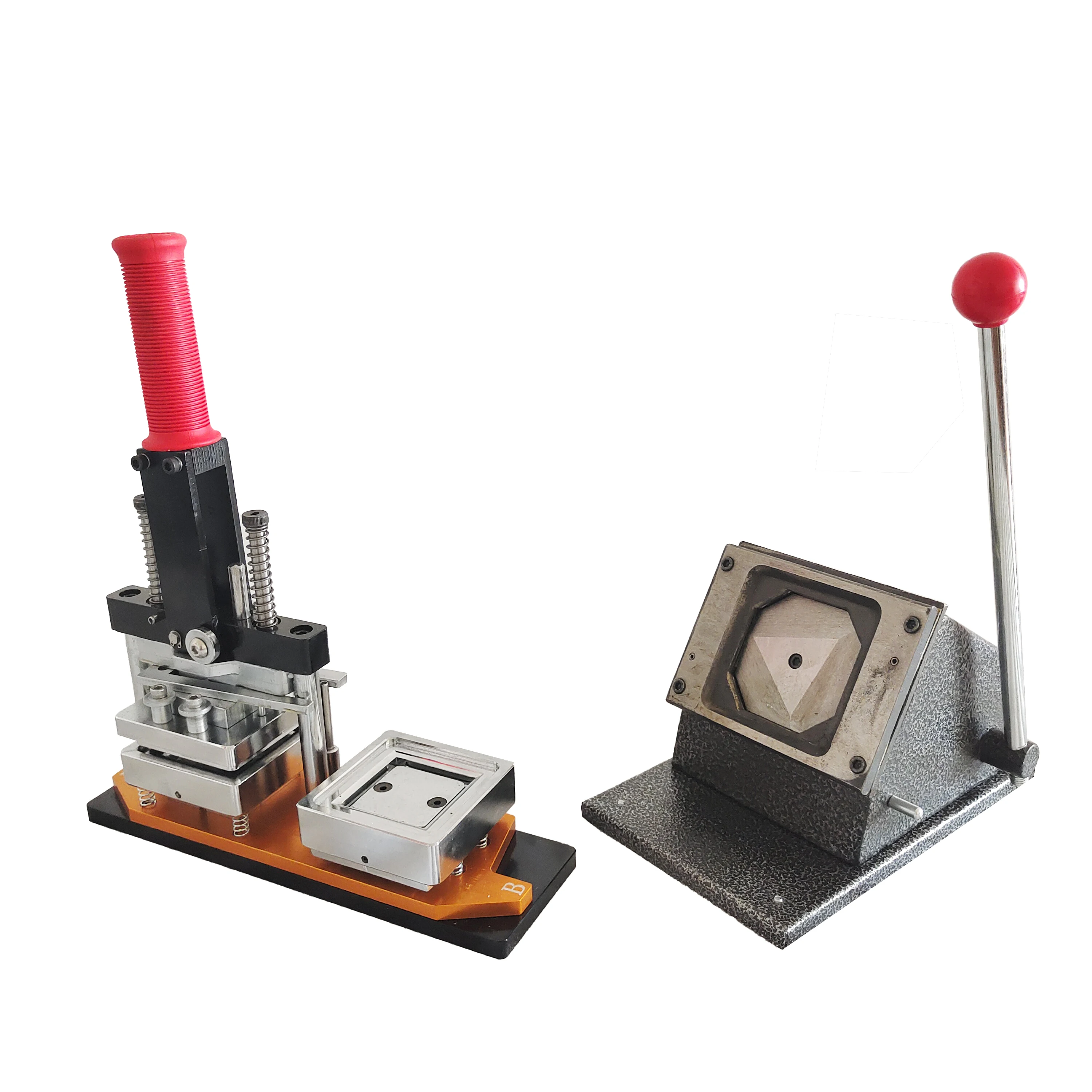
Source-controlled product identity
The Hoting queue identifies Product ID 1601250603734 as a TEBAK fridge magnet and badge making machine kit with magnetic components and a paper cutter, listed under the title "TEBAK 50*50mm 63.5*63.5MM Square Fridge Magnet Making Machine Kit with Magnetic Components and Paper Cutter for Home Decoration".
This listing carries the same eight-size component matrix as two neighbouring entries in the same queue, so this guide deliberately does not re-examine the size table as a listing artefact or the press as a machine. Those angles belong to the sibling records. What this record adds is the framing in its own title: a kit, sold with magnetic components and a cutter, presented for home decoration rather than for souvenir production. That framing raises practical questions about which sizes to start with, how the work is laid out, what a finished piece costs, and whether the product is ready to sit on a retail shelf.
Those are the questions this article works through, using the recorded size list as the only hard data in the record and deriving the rest from it.
The recorded matrix, and what the record does not contain
The parameter block is a size matrix whose header row names three columns, a fridge magnet button making machine, a paper cutter and a fridge magnet. Eight rows follow, each repeating one component size across the three columns. It is reproduced exactly as recorded.
| Fridge Magnet Button Making Machine | Paper Cutter | Fridge Magnet |
|---|---|
| 50*50MM | 50*50MM | 50*50MM |
| 63.5*63.5MM | 63.5*63.5MM | 63.5*63.5MM |
| 53*80MM | 53*80MM | 53*80MM |
| 65*90MM | 65*90MM | 65*90MM |
| 115*40MM | 115*40MM | 115*40MM |
| 120*50MM | 120*50MM | 120*50MM |
| 127*41.5MM | 127*41.5MM | 127*41.5MM |
| 170*50MM | 170*50MM | 170*50MM |
The description repeats the matrix in flat text and adds two entries. The packing entry promises professional, environmentally friendly, convenient and efficient packaging services without giving any packing figures. The company profile names the supplier as Hengshui Mengshang Trading Co., Ltd., describes it as a supplier of product machines, CNC carbide inserts, turning tools and milling tools, and states that TEBAK is its own brand for design and sales. The profile text ends mid-word in the record.
Beyond the eight sizes, the record states no machine specification, no weight for any component, no magnet specification, no price for anything, no delivery time and no packaging figures. That is a thin base for a purchase decision, and the sections below show how far the size list alone can carry the analysis and where the buyer must stop and ask.
The eight sizes are three shape families, not eight steps of one
The size list looks like a scale that runs from small to large. It is not. Taking each recorded size as a rectangle and working out its area and the ratio between its long side and its short side sorts the eight entries into three distinct families, and the difference between the families matters more to a buyer than the difference in size within them.
| Size | Area (mm squared) | Long to short side | Shape family |
|---|---|---|---|
| 50*50MM | 2,500 | 1.00 | Square |
| 63.5*63.5MM | 4,032 | 1.00 | Square |
| 65*90MM | 5,850 | 1.38 | Rectangle, landscape |
| 53*80MM | 4,240 | 1.51 | Rectangle, landscape |
| 120*50MM | 6,000 | 2.40 | Strip |
| 115*40MM | 4,600 | 2.88 | Strip |
| 127*41.5MM | 5,271 | 3.06 | Strip |
| 170*50MM | 8,500 | 3.40 | Strip |
The areas in that table and the ratios beside them are arithmetic on the recorded figures rather than quoted specifications, and they lead to two conclusions a buyer should act on.
The first is that two pairs of sizes are almost identical in area while being completely different in shape. The 63.5 mm square has an area of about 4,032 square millimetres and the 53 by 80 mm rectangle about 4,240, a difference of roughly five per cent, yet one is a square and the other is half again as long as it is wide. The 65 by 90 mm rectangle at about 5,850 square millimetres and the 120 by 50 mm strip at 6,000 differ by less than three per cent in area, while their proportions differ by three quarters. A buyer who thinks of these as four points on a size scale will treat them as substitutes. They are not substitutes. They accept entirely different designs.
The second is that the proportions, not the area, decide whether a design survives. A square suits a single symbol, a crest, a badge, a circular logo or a photograph cropped square. A rectangle of about one and a half to one suits a landscape photograph, a skyline, a name with a subtitle, or a two-line slogan. A strip between about 2.4 to one and 3.4 to one suits a vertical subject: a tower, a tall building, a single word set large, a season and a place name stacked, or a photo of an object taller than it is wide. A design drawn for one family cannot simply be stretched into another. It has to be redrawn, and each redraw is a new artwork, a new proof and a new setup charge at the printer.
That is the practical reason to read the list as three families rather than eight sizes: the number of designs a buyer needs is closer to the number of families they choose to sell than to the number of sizes in the list.
Choosing a starting set rather than the whole list
Because every size carries its own die or mould, its own blank, its own printed artwork and its own stock, each size added to a range multiplies setup cost, storage and dead stock. A workshop starting out should choose a small set and add sizes once the first ones sell, and the arithmetic above suggests how to choose.
Pick one square and one rectangle, and pick them from different shape families rather than from neighbouring areas. A square gives the buyer the format that suits badges, crests and logos, and it is also the format that most easily doubles as a pin badge if the press accepts a pin back, which extends the product range without adding a size. A landscape rectangle of about one and a half to one gives the format that suits a photograph of a place, which is what most souvenirs of that kind are. Those two cover the two ends of the design problem, and neither duplicates the other's area while both are comfortably large enough to hold a readable design.
Add a strip only when the buyer has a subject that is genuinely vertical. The strips in the list are between about 4,600 and 8,500 square millimetres, which is a substantial piece of material, and a strip that carries a subject which is not vertical wastes most of its area on background.
Before fixing the starting set, three questions should be answered. Ask which of the eight sizes the machine can press, because a size list assembled for a listing does not prove that one press covers all eight. Ask which sizes the supplier keeps in stock as components and which are made to order, because a size that is made to order has a different lead time and a different minimum quantity from one held on the shelf. Ask which sizes the supplier's existing buyers actually order most, since a supplier that makes and sells these components knows the demand pattern and the buyer does not.
Magnet and backing questions that scale with size
The recorded material is a fridge magnet, and the record says nothing about the magnet itself: no grade, no thickness, no pull force and no statement of how much of the back the magnet covers.
Ask about pull force for the largest size in the intended range, not for the smallest. A magnet has to hold the finished piece against a steel surface, and a piece that is twice the area and correspondingly heavier needs more magnetic material than a small one. The record gives no weight for any size, so the first step is to ask for the weight of each component, and the second is to ask for the pull force of the magnet fitted to each size, ideally stated as the load the finished piece will hold on a vertical steel surface. A supplier who quotes one pull force for the whole range is describing the smallest size, and the largest piece may slide.
Ask also how much of the back the magnet covers. A magnet sheet across the whole back holds a large piece evenly and keeps it flat against the surface. A magnet in the centre only holds the middle, and a large piece held at the centre alone tends to peel at the corners when it is handled. For strips in particular, the corners are the weak point, and the coverage question should be asked specifically for the longest size the buyer intends to sell.
Finally, ask what the magnet face does to a painted appliance door. A coarse or embossed magnetic face can mark a painted surface if the piece is slid, and that is a complaint a retailer will pass back to the buyer rather than to the supplier.
Laying out the work: the steps, and where the bottleneck sits
A kit of this kind implies a small production line rather than a single operation, and the record describes neither the line nor its throughput. The steps in a line of this kind, in order, are printing, trimming to size, pressing the front and the back together, any finishing such as cleaning or checking, and packing.
The important point about that sequence is that the press is rarely the constraint. A press of this kind closes and opens in seconds, and even a manual press will out-produce the steps around it. The constraint is usually printing, because printed sheets arrive in sheet form from an outside printer, at a cost per sheet and with a setup charge per design, and the buyer has to cut the printed sheet into the individual pieces with the cutter that comes with the kit. That is where labour accumulates, and it is why the number of designs matters more than the number of presses.
Ask the supplier for the cycle time of the press per piece for a stated size, and for the time needed to change a mould, so that the pressing stage can be estimated rather than guessed. Then estimate the trimming stage from the buyer's own side, since it depends on how many pieces fit on a printed sheet and how the cutter is used. The two estimates together show whether one operator can run the line, which is the question that decides the labour cost per piece.
Also ask what the press needs to be operated: whether it requires two hands, whether it needs a bench of a stated size, whether it needs compressed air, and whether it needs a power supply at a stated voltage and frequency. A press that needs compressed air cannot be placed in a room that has none, and a press that needs a particular voltage and frequency may need a transformer or a different model in the buyer's market.
A cost per piece formula, and the term that decides small batches
The record gives no price for the machine, the cutter, the components or anything else, so a buyer cannot calculate a cost from the record. What the record does allow is a structure for the calculation, which should be filled in once the supplier quotes.
The cost of one finished piece is the sum of the component and back cost per piece, the printing cost per piece, the share of the printing setup charge per design, the labour cost of pressing and trimming per piece, and the share of freight, duty and breakage. Written as a formula:
cost per piece = component + back + print per piece + (setup per design / run length) + labour + freight share
The term in brackets is the one that punishes small batches, and it is the term a buyer usually forgets. If a design carries a setup charge and the run for that design is short, the setup spreads over few pieces and dominates the cost. A buyer planning a range of several designs should therefore price each design at the volume that design will actually run at, rather than pricing the whole range as one order, and should ask the supplier and the printer for the setup charge and the minimum run for each design separately.
Two other components of the formula deserve attention at the quoting stage. The back cost should be confirmed as included or separate, because whether a magnet back is part of the component price or a separate purchase changes the cost per piece materially, and the package cost should be included rather than left out, because a kit that reaches the buyer unpacked for retail will need packaging added before it can be sold.
The home decoration framing, and whether the product is retail ready
The title presents this kit for home decoration, which is a different market from the souvenir trade even though the machine is the same. A home decoration buyer makes small runs of personal pieces: a photo magnet for a household, a set for a wedding favour, a name magnet for a kitchen, a batch for a school or a club. Demand is small, varied and custom, and the buyer's problem is different from a souvenir producer's. It is not throughput but the ability to make a handful of pieces in a different design without a large minimum.
That makes the setup economics described above the deciding factor for a home decoration operation as well, and it makes one additional question decisive: whether the buyer can obtain unprinted components and print them locally in small quantities, or whether every design must go through the supplier's printing with its own minimum. A workshop that can print locally can accept a single-piece order. One that cannot must batch designs and refuse small requests.
The framing also raises a question the record does not answer at all, which is whether the product is ready for a retail shelf. Nothing in the record mentions retail packaging, a printed backing card, a barcode, a display stand or a hang tag. A buyer who intends to sell finished pieces into shops rather than to end users directly should ask about retail packaging separately: whether a printed backing card is available, whether the supplier can apply a barcode to the retail pack, what the minimum quantity is for a printed pack, and whether the pieces can be supplied bagged or carded rather than loose. Those items are usually quoted separately and they change the cost per piece.
What the supplier profile raises, and what to ask about it
This record names the supplier brand and the company behind it, and the recorded profile describes a trading business dealing in product machines, CNC carbide inserts, turning tools and milling tools. The recorded text ends mid-word, so it is a fragment rather than a full statement of the company's capabilities.
For a buyer this raises questions worth asking rather than conclusions worth drawing. Ask who actually manufactures the press, since a trading company may sell the products of one or more factories, and ask for the manufacturer's model number and technical documentation for the machine. Ask who holds spare parts and where they are shipped from, and ask what happens to a warranty claim for a machine that fails after it has been exported, including who pays the freight in each direction. Ask whether the dies and the components are made by the same factory as the press or sourced separately, because if they are sourced separately the buyer should know whose tolerance governs the fit between them.
None of this implies a problem with the supplier. It is simply the set of facts a buyer needs in order to know whom to hold responsible when a die does not fit or a press arrives damaged, and it is the kind of information a machine purchase should not be made without.
What a buyer should request before ordering
- Which of the eight recorded sizes this machine actually presses, and which would need a different model.
- The weight of each component size, and the pull force of the magnet fitted to each size rather than one figure for the whole range.
- How much of the back the magnet covers on each size, and specifically on the longest strip.
- Whether the magnet face can mark a painted door.
- The component and back prices per thousand for each size, and whether the back is included or separate.
- Whether any price list or quantity break exists, and at what quantities it steps.
- The printing route: printed components from the supplier, or unprinted components printed locally, with the price and minimum for each.
- The setup or plate charge per design, the number of colours included, the artwork format, the proofing steps and the colour tolerance.
- The margin to be left around the design for print registration within the rim.
- The machine's cycle time per piece by size, the time to change a mould, and the force needed for each size.
- Whether the press is manual, pneumatic or powered, and its power supply or air requirement at a stated voltage and frequency.
- The bench or floor space the machine occupies, and its weight.
- Whether the press accepts pin, key ring and other backs in addition to a magnet back, and whether that is done in the same pressing step.
- The trimming requirement: how many pieces fit on one printed sheet and whether the kit's cutter handles that sheet size.
- Retail packaging: printed backing card, barcode, bagging or carding, and the minimum quantity for each.
- The name of the manufacturer of the machine, its model number and its technical documentation.
- Spare parts and dies availability, prices and lead times, and who ships them.
- Warranty terms, and how a claim is handled across borders.
- Carton or case dimensions, gross weight and quantity per case for the machine, the cutter and the components.
- The lead time for the machine, for additional dies and for printed components, stated separately.
Acceptance and incoming inspection
When the kit arrives, the first check is the one the size list makes necessary: confirm that the die or mould delivered matches the size that was ordered, and confirm it in both millimetres and the inch name the trade uses for that size, because a nominal inch name and a measured millimetre figure are not always the same thing. Lay the die on the bench and measure it before the first press.
Press a short run and measure the finished pieces rather than the components, since the finished size is what must match the design and the packaging. Measure the printed area inside the rim, and check that the design sits squarely with an even rim all round on every piece of the run, not only on the first.
Weigh a sample of each size and record the figures. The record gives no weights, so the buyer's own measurements become the baseline against which later reorders and the magnet specification can be judged, and a size whose weight changes between orders has changed its material.
Test the finished pieces on a vertical painted steel surface and leave them for a day rather than testing them by hand, checking the largest and longest pieces in particular. Slide one deliberately across the surface to see whether the magnet marks the paint. Then flex a piece and drop it on a hard floor to see which layer separates first, because that identifies the weakest bond in the assembly before the buyer has shipped the pieces to a customer.
Finally, count what a printed sheet yields. Take one sheet of the buyer's own artwork and trim it with the kit's cutter to see how many pieces it actually produces and how much waste the process leaves, since that figure feeds directly into the cost per piece and is one of the few that cannot be obtained from the supplier at all.
Buyer decision framework
The source for this guide is a record that lists eight component sizes across a machine, a paper cutter and a magnet component, states a brand and a company profile, and gives no machine specification, no weights, no magnet data, no prices, no packaging figures and no delivery time.
The first decision is which shape families to sell, not which sizes to buy. The eight recorded sizes fall into squares, landscape rectangles of about one and a half to one, and strips of about 2.4 to one and steeper, and two pairs of sizes are nearly identical in area while differing completely in shape. A buyer should choose one family per design and expect to redraw artwork whenever they move between families.
The second decision is the starting set, which should be one square and one rectangle rather than the whole list, with a strip added only when there is a vertical subject to fill it, because each size added brings its own die, blank, artwork and stock.
The third decision is where the constraint sits, which is usually printing and trimming rather than pressing, and which therefore makes the setup charge per design the number that decides whether the operation is viable at the volumes the buyer expects.
The fourth decision is retail readiness, which this record does not address at all. A buyer selling to shops rather than to end users should establish packaging, barcode and carding terms before committing, because those items change the cost per piece and cannot be added later without repricing.
Where the supplier answers the size, magnet, force, cycle time, price and packaging questions, the kit can be costed as a business. Where the answers stop at the recorded matrix, the buyer knows the shape families available and the components that exist, which is enough to begin sourcing components and artwork but not enough to buy a press and a range of dies.
Frequently asked questions
Which sizes are in this kit?
The record lists eight component sizes: 50 by 50 mm, 63.5 by 63.5 mm, 53 by 80 mm, 65 by 90 mm, 115 by 40 mm, 120 by 50 mm, 127 by 41.5 mm and 170 by 50 mm, each shown against the machine, the paper cutter and the fridge magnet columns. The record does not state which size is delivered as the fittings for the machine, or whether one machine presses all eight.
Which size should a new buyer start with?
One square and one landscape rectangle, chosen from different shape families rather than from neighbouring areas, and a strip only when there is a vertical subject to fill it. Each size added carries its own die, blank, artwork, printing setup and stock.
Why does the shape matter more than the size?
Because two of the recorded pairs are nearly the same area but quite different in proportion, so they are not substitutes. The 63.5 mm square and the 53 by 80 mm rectangle differ by about five per cent in area but one is a square and the other is half again as long as it is wide. A design for one must be redrawn for the other.
Is a weight given for any size?
No. The record gives no weight for any component. Ask the supplier for the weight of each size, and measure samples on arrival, since weight and magnet pull force together decide whether a large piece holds on a fridge door.
What magnet is used?
Not stated. The record gives no magnet grade, thickness, pull force or coverage. Ask for the pull force per size and for how much of the back the magnet covers, and ask specifically about the longest strip, where peeling at the corners is the risk.
Can I get unprinted components and print them myself?
Not stated, and this is the question that decides whether the operation can accept small orders. Ask whether unprinted fronts, backs and magnet components can be supplied separately, and at what minimum, before assuming that every design must go through the supplier's printing.
What does the machine need in order to run?
Not stated. Ask whether it is manual, pneumatic or powered, and for its power or air requirement at a stated voltage and frequency, its bench space and its weight, since those determine where it can be installed.
Is the product ready to sell in a shop?
Nothing in the record addresses retail packaging, a backing card, a barcode or a display. Ask about those separately, with their minimum quantities, before planning to sell into retail rather than directly to end users.
What is the price?
The record states no price for the machine, the cutter or the components, and no delivery time. Ask for prices at the buyer's own quantity, the quantity break points, the trade term and the lead times for the machine, the dies and any printed components separately.
Source and contact
This guide is based on the Hoting queue record for Product ID 1601250603734. The recorded size matrix is reproduced above in full and without alteration, with its header row naming a fridge magnet button making machine, a paper cutter and a fridge magnet, and eight rows covering the 50 by 50 mm, 63.5 by 63.5 mm, 53 by 80 mm, 65 by 90 mm, 115 by 40 mm, 120 by 50 mm, 127 by 41.5 mm and 170 by 50 mm sizes. The areas and the long to short side ratios in this article are arithmetic computed from those recorded figures and are not quoted specifications. The packing statement, the company profile naming Hengshui Mengshang Trading Co., Ltd. and the TEBAK brand, and the truncated profile text are reproduced as recorded. No machine specification, weight, magnet data, price, packaging figure or delivery time appears in this article because the record contains none, and the points raised about shape families, starting sets, the production constraint, the cost per piece structure and retail readiness are questions for the supplier rather than claims about the product.
Request which sizes this machine presses, the component weight and magnet pull force for each size, the magnet coverage on the longest strip, the component, back and printing prices at the buyer's quantity with their quantity breaks, whether unprinted components can be supplied, the setup charge per design and the printing minimums, the machine's force, cycle time, mould change time and power or air requirement, the manufacturer's name, model number and documentation, the die prices and lead times, the retail packaging and barcode options with their minimums, and the lead times for the machine, the dies and the printed components separately through the TEBAK sales inquiry channel before placing an order.
Key specifications
- Fridge Magnet Button Making Machine
- Paper Cutter | Fridge Magnet
- 50*50MM
- 50*50MM | 50*50MM
- 63.5*63.5MM
- 63.5*63.5MM | 63.5*63.5MM
- 53*80MM
- 53*80MM | 53*80MM
- 65*90MM
- 65*90MM | 65*90MM
- 115*40MM
- 115*40MM | 115*40MM
- 120*50MM
- 120*50MM | 120*50MM
- 127*41.5MM
- 127*41.5MM | 127*41.5MM
- 170*50MM
- 170*50MM | 170*50MM