
Source-controlled product identity
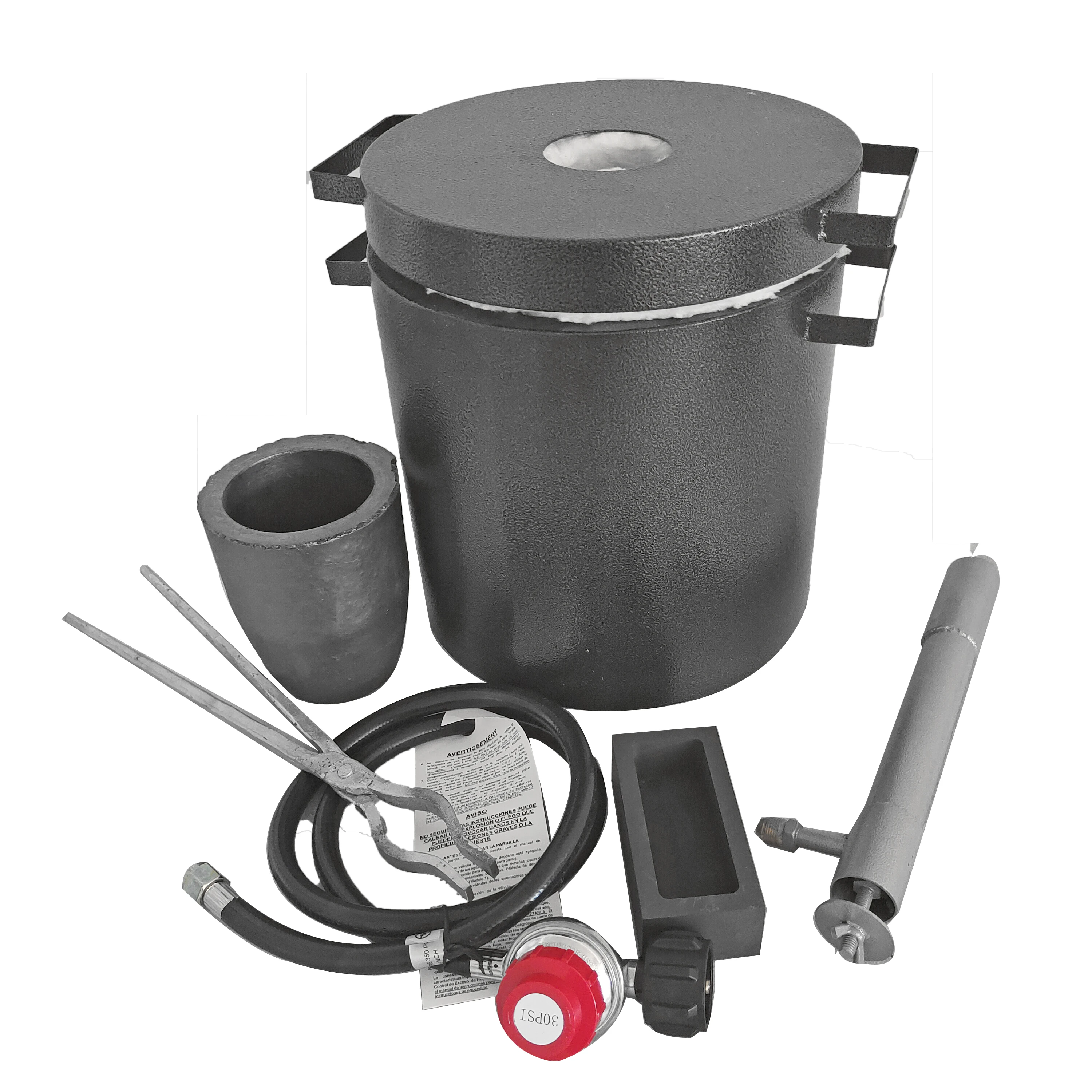
The Hoting queue identifies Product ID 1601244384472 as a TEBAK mini digital electric melting furnace for gold, silver, copper and aluminium applications. The source title also references 6kg, 10kg and 12kg furnace variants and high-temperature melting for tin, silver, copper, aluminium and gold.
The structured source fields identify the type as “Refractory,” the application as “Melting Meta,” the composition as “High Pure,” and the height, top diameter and bottom diameter as “Customers' requirements.” The place of origin is listed as China.
The description adds a 6KG graphite crucible, a highest-temperature statement of 1300℃, a 5CM fireproof ceramic-cotton inner wall, melting-point guidance for metals below 1300℃, example metal capacities, 15-25 minutes to melt 5.5KG of copper, a portable folding-handle design and a furnace weight of 7KG.
There is an important source-record inconsistency: the description states “6KG high quality graphite crucible” but also lists 12KG gold as a melt quantity. These values must not be combined into one verified capacity claim. The buyer should request a corrected model-specific data sheet, crucible drawing, charge-mass definition and test record before selecting a 6kg, 10kg or 12kg configuration.
This B2B procurement guide is for jewellery workshops, metal recyclers, casting shops, educational laboratories, repair businesses and distributors evaluating a compact electric melting furnace. It preserves the source facts and treats all unprovided electrical, thermal, crucible, safety and compliance information as supplier-confirmation or acceptance-test requirements.
Recorded specifications
| Field | Source value | Procurement treatment |
|---|---|---|
| Product ID | 1601244384472 | Use this identifier on the quotation, model drawing, sample order, inspection report and shipping documents. |
| Brand | TEBAK | Confirm the nameplate, exact model, revision and delivered branding. |
| Type | Refractory | Clarify whether this describes the lining, furnace body, insulation system or product category. |
| Application | Melting Meta | Confirm the intended metals, charge form, batch size and operating procedure. |
| Composition | High Pure | Request the actual refractory, lining, crucible and metallic-contact material specification. |
| Height | Customers' requirements | Request the selected model drawing and tolerance before quoting freight or installation. |
| Top diameter | Customers' requirements | Confirm furnace opening, lid, crucible clearance and loading access. |
| Bottom diameter | Customers' requirements | Confirm base footprint, stand, lifting and service clearance. |
| Place of origin | China | Keep the origin statement separate from certification or performance claims. |
| Crucible | 6KG graphite crucible | Confirm whether 6KG is nominal crucible rating, charge mass or a particular variant. |
| Highest temperature | 1300℃ | Request test method, measurement point, hold time, control accuracy and model applicability. |
| Inner wall | 5CM fireproof ceramic cotton | Confirm installed thickness, density, temperature rating, replacement method and exposure protection. |
| Metal guidance | Metals with melting point below 1300℃; examples include gold, silver, copper, aluminium and zinc | Verify each alloy, charge form, crucible compatibility and actual process temperature. |
| Copper melting time | 15-25 minutes for 5.5KG of copper | Request the test conditions, starting temperature, charge form, ambient conditions and end-point definition. |
| Portable design | Folding handle | Confirm handle load rating, locking method, hot-surface clearance and transport procedure. |
| Furnace weight | 7KG | Confirm whether this excludes crucible, lid, power cable, charge and packaging. |
| Gold quantity in description | 12KG gold | Flag for correction because it conflicts with the stated 6KG graphite-crucible field; do not use as a confirmed capacity. |
Resolve the model and capacity before ordering
The title references 6kg, 10kg and 12kg variants, while the description identifies a 6KG graphite crucible and lists several metal quantities. Ask the supplier to issue one model-specific quotation rather than a combined page covering multiple variants.
Request a model code, rated charge mass by metal, crucible internal volume, crucible material, maximum safe fill level and empty-furnace weight for the exact configuration.
Clarify whether “6kg,” “10kg” and “12kg” refer to nominal furnace series, crucible size, maximum charge of one metal or marketing variants. Capacity is not interchangeable across gold, silver, copper, aluminium and zinc because density, charge form and safe fill level differ.
Ask for a cross-reference table: model, crucible, internal diameter, internal height, usable charge, metal-specific charge limit, power, voltage, temperature range, dimensions and weight.
Require the corrected capacity sheet to explain the statement “12KG gold.” If the 12KG value belongs to a different model, variant or charge calculation, it must be removed from the 6KG configuration record.
Keep the title, structured fields, description, quotation and final inspection sheet together. Do not allow a supplier to rely on a product page title after the configuration has been selected.
Temperature and control requirements
The source states that the highest temperature can reach 1300℃. It does not state the controller type, measured temperature, sensor position, accuracy, uniformity, ramp rate, hold time or thermal recovery.
Ask whether 1300℃ is a maximum setpoint, measured chamber temperature, crucible temperature or short-duration peak. Request the sensor type, location and calibration record.
Define the buyer's process endpoint: fully liquid charge, target pour temperature, soak time, alloy homogenization or another criterion. A maximum-temperature number alone does not define melt quality.
Request temperature-control range, display resolution, control tolerance, overshoot, alarm limits and restart behavior after power interruption.
Test temperature at empty, partial and agreed full charge under the supplier's safe procedure. Record ramp, hold and recovery results without treating one demonstration as a universal production guarantee.
Ask whether the controller can store programs for different metals or batches. Confirm password roles, parameter backup, alarm history and manual override.
Verify the controller against an independent calibrated instrument at the supplier's stated test point. Record the instrument identity and calibration date in the acceptance file.
Metal compatibility and charge planning
The description says the furnace can melt metals with a melting point below 1300℃ and gives gold, silver, copper, aluminium and zinc as examples. This is a source statement, not an automatic approval for every alloy or process.
Provide the exact metal or alloy, purity, charge form, mass, expected melt temperature, holding time, atmosphere, flux and pour requirement. Ask the supplier to confirm compatibility in writing.
Verify that the graphite crucible is compatible with each selected metal and any flux. Request crucible grade, density, porosity, coating, oxidation guidance and expected service conditions.
Ask how cross-contamination is controlled when the same crucible is used for gold, silver, copper, aluminium or zinc. For high-purity work, a dedicated crucible and cleaning protocol may be required.
Do not assume the listed example metals have the same charge capacity. Record mass limits separately for every metal and alloy.
Define the acceptable impurity, dross, oxidation and inclusion level for the buyer's product. The source provides no metallurgical quality data.
Ask whether the furnace is intended only for melting or also for holding, alloying, refining, degassing or controlled pouring. Those functions require separate confirmation.
Crucible and furnace lining
The source lists a 6KG graphite crucible. Request the crucible drawing, internal volume, wall thickness, rim, base, lifting method and replacement part number.
Clarify whether the 6KG figure is a graphite manufacturer's nominal rating or a metal-specific charge mass. Ask the supplier to define the density and fill assumptions used.
Inspect the crucible for cracks, chips, warping and contamination before every heat. Establish a rejection rule for damaged graphite.
The inner wall is described as 5CM fireproof ceramic cotton. Request the material grade, density, maximum continuous temperature, installation method, protected surface and replacement procedure.
Confirm that ceramic fibre is contained and protected from charge, tools, air movement and operator contact. Request the safe handling and maintenance instructions for the lining.
Measure the furnace opening, lid clearance and crucible seating. A custom height or diameter must be reflected in the final drawing and packing list.
Define lining inspection after transport, thermal cycling, accidental spill and repeated operation. Record cracks, gaps, erosion or exposed insulation.
Copper melting-time claim
The source states that it takes 15-25 minutes to melt 5.5KG of copper. Ask how this was measured and what the endpoint means.
Request the starting temperature, copper form, charge arrangement, crucible condition, furnace model, setpoint, power supply, ambient temperature and whether the clock starts at switch-on or at the beginning of the heat cycle.
Clarify whether “melted” means the first liquid fraction, a fully liquid charge, a visually fluid bath, a measured temperature or a pour-ready condition.
Repeat the test with the buyer's copper form and agreed mass. Record time to first liquid, time to full liquid, temperature, energy if measured, operator actions and any dross or overflow.
Do not publish 15-25 minutes as a guaranteed production rate. It is a source claim requiring model-specific and process-specific validation.
Test the smallest and largest planned charge within the corrected model limit. Confirm whether repeated cycles change recovery time or lining condition.
Electrical and site requirements
No voltage, frequency, phase, rated power, current, plug, cable, grounding or breaker information is provided. Request a complete electrical data sheet before purchase.
Ask whether the 1300℃ statement applies at the buyer's available supply. Confirm power stability, startup current, cable length, earth connection, over-temperature protection and electrical enclosure rating.
Request a wiring diagram, component list, controller model, sensor model, fuse or breaker recommendation and emergency isolation method.
Define the installation area: non-combustible base, clearance, ventilation, lighting, lifting access, pour path, fire equipment and separation from fuel or moisture.
Confirm whether the portable folding-handle design changes the electrical cable route or requires a specific transport lock. Do not move the furnace while hot or energized.
Test power interruption, over-temperature alarm, sensor fault, controller fault, emergency stop or isolation and controlled restart under a documented procedure.
Ask for the destination-market electrical documents and conformity information. Do not infer certification from the China origin field.
Charging, pouring and handling
Request the complete operating sequence: inspection, crucible placement, charge loading, lid position, heating, temperature confirmation, holding, pouring, cooling and cleaning.
Clarify whether a lid, tongs, pouring tool, crucible lifter, mould, stand or high-temperature gloves are included. The source only mentions that high-temperature gloves should be used.
Define how the 7KG furnace is lifted when cold and how the crucible is handled. The furnace weight is not the weight of a charged crucible or molten metal.
Request a pour path drawing and a safe method for moving molten material. Confirm operator count, handle locking and exclusion zone.
Keep the work area free of moisture and combustible material. The supplier must provide specific hot-metal and spill procedures for the intended site.
Test loading with the buyer's charge form. Confirm that tools do not strike the lining, sensor, lid or crucible rim.
Record cooling time, residual heat, surface temperature and safe storage condition. Do not place a hot furnace in ordinary packaging or on an unverified surface.
Safety and prohibited use
The source explicitly warns not to use the furnace to melt iron because this will shorten the service life. Treat this as a firm operating restriction, not as a suggestion.
Ask the supplier to identify all prohibited metals, alloys, fluxes, contaminated scrap, wet charge, sealed containers and unknown materials.
Require a manual covering hot surfaces, molten metal, graphite, ceramic fibre, fumes, splashes, electrical isolation, fire response and emergency cooling or shutdown.
Use high-temperature gloves as specifically mentioned in the source and require the supplier to state the required PPE for the actual metal and process. Gloves alone do not make the operation safe.
Define eye, face, clothing, footwear, ventilation and respiratory protection requirements with the buyer's safety professional and local regulations.
Check guarding, lid handle, hot-surface labels, tip resistance, cable protection, grounding, over-temperature protection and emergency isolation.
Do not load wet metal or closed containers. Require a documented inspection and drying procedure for charge materials.
Keep personnel away from the pour path and establish a clear response for spill, crucible failure, power loss, smoke, sensor failure or lining damage.
Packaging, transport and incoming inspection
The source lists a furnace weight of 7KG but does not provide package dimensions, gross weight, package materials or included accessories. Request the complete packing list.
Inspect the graphite crucible, folding handle, lining, lid, controller, power cable, sensors, tools, gloves and manuals on arrival if included in the quotation.
Photograph the nameplate, model, crucible, furnace interior, lining thickness, handle, controls and packaging before commissioning.
Check for cracked refractory, crushed ceramic cotton, loose components, bent handle, damaged cable, broken sensor, moisture and corrosion.
Confirm whether the custom height, top diameter and bottom diameter are reflected in the delivered machine and crate. Measure them against the approved drawing.
Ask for shock and moisture protection appropriate to refractory and graphite components. Do not assume a compact package is immune to transport damage.
Keep the furnace dry and secure. Store graphite and lining components according to the supplier's instructions.
Factory acceptance test
- Verify Product ID 1601244384472, TEBAK brand, model, variant and nameplate.
- Resolve whether the order is the 6kg, 10kg or 12kg configuration and obtain one corrected model data sheet.
- Verify the graphite crucible size and reconcile the 6KG crucible field with every listed metal charge quantity.
- Verify height, top diameter and bottom diameter against the approved customer drawing.
- Verify the 1300℃ claim, sensor location, setpoint, measurement method and control tolerance.
- Inspect the 5CM fireproof ceramic-cotton inner wall, material documentation and protected installation.
- Run the buyer's intended metal and charge form under a supplier-approved safe procedure.
- Measure first liquid, fully liquid and pour-ready endpoints; do not rely on visual wording alone.
- Reproduce the copper test with 5.5KG only if the selected model and crucible are approved for that charge.
- Record the 15-25 minute result with starting conditions, setpoint, charge form and end-point definition.
- Verify the explicit restriction against melting iron and document all other prohibited materials.
- Test temperature control, alarm, sensor fault, power interruption, isolation and controlled restart.
- Verify electrical rating, cable, grounding, protection, installation clearance and destination documents.
- Verify folding handle, lifting method, lid, tools, PPE guidance, pour path and emergency procedure.
- Verify 7KG furnace weight definition, package, accessories, warranty, spare crucibles and service support.
RFQ checklist
- Product ID 1601244384472, TEBAK brand, exact model, variant and nameplate photograph.
- Corrected capacity matrix for 6kg, 10kg and 12kg variants by metal, alloy, charge form and safe fill.
- Explanation of the 6KG graphite-crucible field and the separate 12KG gold statement.
- Crucible drawing, grade, internal volume, charge limit, replacement part and compatibility by metal.
- Maximum 1300℃ definition, sensor point, accuracy, overshoot, hold time and calibration record.
- 5CM ceramic-cotton lining material, density, rating, protection, inspection and replacement procedure.
- Metal compatibility, prohibited metals, flux limits, contamination control and alloy guidance.
- Copper test protocol for 5.5KG and the exact definition of the 15-25 minute result.
- Voltage, frequency, phase, power, current, plug, grounding, breaker, cable and electrical drawings.
- Controller, sensor, alarm, over-temperature protection, isolation and power-loss recovery.
- Furnace height, top diameter, bottom diameter, footprint, lid clearance and service access.
- Folding handle load rating, lifting method, hot-surface clearance and pour-path layout.
- 7KG weight definition, package size, gross weight, crate, shock protection and accessories.
- PPE, high-temperature glove specification, ventilation, fire response and operating manual.
- Warranty, spare crucible, lining parts, sensor, controller, service response and training.
Buyer decision framework
This source supports a TEBAK mini digital electric melting-furnace identity with refractory/high-pure fields, customer-defined dimensions, China origin, a 6KG graphite-crucible statement, a 1300℃ highest-temperature statement, a 5CM ceramic-cotton inner wall, sub-1300℃ metal examples, a copper melting-time statement, folding handles and a 7KG furnace-weight statement.
The capacity conflict must be resolved before any purchase decision. A buyer should not treat the title's 6kg/10kg/12kg wording, the 6KG crucible field and the 12KG gold statement as one confirmed specification set.
Approve only a model-specific quotation and factory test covering the actual crucible, metal, charge mass, temperature, timing, electrical supply, safety procedure and dimensions. Compare suppliers by verified melt results, crucible service, lining durability, documentation and support rather than by a generic high-temperature title.
Frequently asked questions
What is the listed maximum temperature?
The source states that the highest temperature can reach 1300℃. Confirm the measurement point, control accuracy, hold time and exact model before using this value in process planning.
What crucible is listed?
The description states a 6KG graphite crucible. Confirm whether this is a nominal crucible rating, metal-specific charge mass or one variant's configuration.
Can it melt iron?
No. The source explicitly warns not to use the furnace to melt iron because this can shorten service life.
Which metals are named?
The source gives gold, silver, copper, aluminium and zinc as examples of metals with melting points below 1300℃. Verify each metal, alloy, charge mass and crucible compatibility.
How long does copper melting take?
The source states 15-25 minutes for 5.5KG of copper. Request the test conditions and reproduce the result with the selected model and buyer's charge.
What are the furnace dimensions?
Height, top diameter and bottom diameter are listed as customer requirements. Obtain an approved model drawing before ordering.
What is the furnace weight?
The description states 7KG for the furnace. Confirm whether this excludes crucible, lid, cable, tools, charge and packaging.
Source and contact
This guide is based on the Hoting queue record for Product ID 1601244384472. The source provides refractory, application, composition, customer-defined dimension fields, China origin and specific description-level furnace information, including the 1300℃ statement and 6KG graphite-crucible field. The 12KG gold statement requires correction before use. Request the corrected model sheet, electrical data, crucible documentation, safety manual, test report, spare parts and warranty through the TEBAK sales inquiry channel.
Key specifications
- Type
- Refractory
- Application
- Melting Meta
- Height
- Customers' requirements
- Composition
- High Pure
- Top Diameter
- Customers' requirements
- Bottom Diameter
- Customers' requirements
- Place of Origin
- China
- Source Product ID
- 1601244384472