
Source-controlled identity before quotation
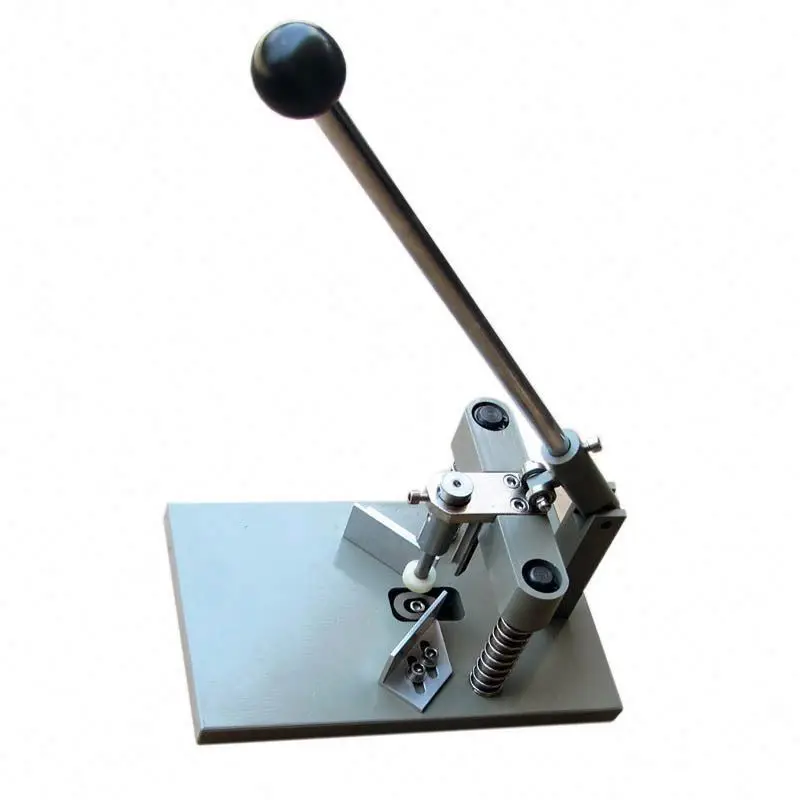
This TEBAK listing describes an A3 paper trimmer, round-corner card cutter and manual die-cutting machine. The structured product fields identify it as a Manual paper cutting corner machine, with the keyword Paper corner cutter, standard speed, desktop feature, corner cutting method and easy-to-operate wording.
Product ID 1601252239442 is the queue identifier for this buying guide. The source description also states an extended handle, adjustable-height paper presses, double aluminum gears for return, a solid metal bottom, five configured pulleys and a detachable tool holder. These are source description claims that must be confirmed on the supplied configuration, not assumed to be universal features.
| Source field or description | Recorded value | Procurement treatment |
|---|---|---|
| Product name | Manual paper cutting corner machine | Structured source value; confirm machine identity and included tooling. |
| Keyword | Paper corner cutter | Catalog keyword; do not treat as a cutting-radius specification. |
| Speed | standard | Non-numeric catalog value; request cycle-time or output definition. |
| Feature | Desktop | Confirm footprint, mounting, stability and required bench space. |
| Cutting way | Corner cutting | Confirm corner geometry, radius, blade/die and material limits. |
| Key words | easy to operate | Marketing wording; verify with setup and repeatability testing. |
| Title application | A3 paper trimmer, round-corner card cutter, manual die cutting machine | Title-level scope; request a model-specific function list. |
| Source description claims | Extended handle; adjustable paper press; double aluminum return gears; solid metal bottom; five configured pulleys; detachable tool holder | Verify each part, material, adjustment range and included quantity. |
The source does not provide corner radius, cutting width, usable A3 area, maximum paper thickness, paper stack height, blade or die material, die life, replacement tooling, cycle time, operator force, machine dimensions, net or gross weight, bench fixing, safety guard, packaging, certification or warranty. These are RFQ confirmation items. Do not infer them from the product title, images or the phrase “standard speed.”
1. Define the buyer's paper and card workflow
Start with the finished product: cards, invitations, tags, photographs, packaging inserts, business cards, labels or another paper product. Record sheet size, finished size, corner shape, paper stock, coating, grain direction, quantity and acceptable edge quality.
The title says A3, but the source does not define whether A3 is the maximum sheet size, a compatible format, a tray dimension or a marketing reference. Ask for the actual maximum sheet dimensions and usable cutting area.
Confirm whether the machine cuts one sheet at a time or a stack. The source does not provide stack height or maximum paper thickness.
Ask whether the corner cutter uses a fixed die, interchangeable die, blade, punch, rotary tool or another mechanism. “Round corner” does not identify the cutting system.
Request a drawing showing the cutting center, sheet stop, side guide, paper press, tool holder and waste path.
Use product ID 1601252239442 in the RFQ subject and inspection record. Do not substitute a visually similar desktop cutter without written approval.
Ask for a sample cut using the buyer's actual paper and card stock. Record corner shape, edge quality, deformation, coating cracks and registration.
Define whether the buyer needs manual operation only or expects a production output. A manual machine needs a time-and-force test, not just a visual demonstration.
2. Verify A3 compatibility and work area
Request the maximum sheet length and width, usable table area, guide travel and stop range. These dimensions are not in the source fields.
Confirm whether an A3 sheet can be positioned without overhang, guide interference or repeated re-registration. Record the exact sheet orientation.
Ask for table flatness, support surface, edge clearance and the distance between paper press and cutting die.
Test A3, A4 and the buyer's custom sheet sizes. For each size, record setup time, guide adjustment, reference edge and final corner position.
Check whether laminated, coated, textured, recycled or adhesive-backed stock changes the usable area or causes slippage.
Confirm the machine's desktop footprint, center of gravity and required front/rear clearance. Desktop does not automatically mean portable or stable without fixing.
Ask whether the bottom is intended to sit on a bench, be screwed down or be held by its own mass. The source says solid metal at the bottom but gives no mass or mounting details.
Do not claim A3 production capability until the supplier demonstrates the buyer's sheet format with the supplied guides and press.
3. Corner geometry and die specification
The source says corner cutting and the title says round-corner card cutter, but no radius is specified. Request the exact corner radius or profile drawing.
Confirm whether the radius is fixed or interchangeable. Ask for all available die sizes, part numbers, prices and lead times.
Request die or blade material, heat treatment, coating, hardness, sharpening method and expected life by paper stock.
Ask whether the cutting tool produces a clean edge on coated card, laminated paper and thin sheets. Test for burrs, compression marks, coating lift and fiber pull.
Confirm tool installation, alignment marks, clamping method and safe access. The detachable tool holder claim does not establish a quick-change or tool-lock design.
Measure the first, middle and last cuts in a sample run. Record radius, symmetry and distance from sheet edges.
Ask for replacement tool drawings so the buyer can verify fit before purchasing spares.
Do not infer a standard corner radius from the product keyword Paper corner cutter.
4. Paper press and registration
The description says paper presses with adjustable height. Ask for the adjustment range, contact area, pad material, locking method and pressure control.
Confirm whether the press is adjustable for one sheet and a stack, and whether its pressure can mark coated paper.
Test sheet movement during handle return and die release. Record lateral shift, edge creep and corner-to-corner variation.
Request the guide and stop drawing. Confirm whether the machine uses a fixed back gauge, side gauge, registration pin, ruler or another reference.
Measure repeatability after changing sheet size and after removing/reinstalling the tool holder.
Check whether the paper press blocks the full A3 area or limits sheet placement.
Ask how waste is removed and whether scraps can obstruct the die or return mechanism.
Do not treat an adjustable press as proof of accurate registration. Accuracy must be measured on the buyer's stock.
5. Manual handle and operator force
The source description claims an extended handle. Request handle length, grip material, pivot geometry, stroke and adjustment points.
Measure the force required at the handle for the buyer's stock and maximum declared thickness. Record peak force, average force and operator posture.
Ask whether the handle can be locked during transport and whether the return action can pinch fingers.
Check handle clearance from the bench, wall, adjacent machines and operator's hand.
Test repeated cycles to identify fatigue, loose pivots, shifting guides or changes in corner quality.
Confirm whether the machine requires two-handed operation, a foot support or a fixed bench position.
Ask for recommended lubrication points, pivot inspection and fastener torque.
Do not claim “easy to operate” as a verified ergonomic result. It is a source keyword and needs buyer testing.
6. Return gears, pulleys and motion
The description mentions double aluminum gears return and five configured pulleys. Request a component diagram that identifies gear material, pulley locations, belts or cables and return travel.
Confirm whether the two aluminum gears are structural gears, return guides or catalog wording for a compound mechanism.
Ask for pulley material, bearing or bushing type, cable/strap specification, adjustment method and replacement parts.
Inspect return motion for smoothness, backlash, binding and unexpected snap-back. Record the handle position and return force.
Check whether paper or scraps can enter the gears and pulleys. Request guards, covers and cleaning instructions.
Run a repeated-cycle test with and without the maximum paper condition. Record changes in registration and corner quality.
Confirm whether the pulleys are configured for one model only or can be adjusted for different dies.
Do not assume aluminum gears or five pulleys guarantee durability, flat return or low maintenance.
7. Detachable tool holder and changeover
The description says the tool holder is detachable. Ask whether this means removable for transport, interchangeable for different dies or adjustable for maintenance.
Request holder dimensions, locating surfaces, locking hardware, alignment method and allowable play.
Measure changeover time and repeatability. After removal and reinstallation, perform a registration and corner-radius check.
Confirm whether the holder can be removed without releasing the paper press, guide or return mechanism.
Ask for a safe tool-change procedure and whether the machine must be secured to a bench.
Request spare holder, fastener and die part numbers. Confirm whether the holder is supplied with the machine.
Check for sharp edges and pinch points during holder removal.
Do not interpret detachable as quick-change unless the supplier provides a documented procedure and target changeover time.
8. Material and edge-quality testing
Build an acceptance matrix using the buyer's materials: office paper, coated card, uncoated card, photo paper, laminated stock, textured stock and any adhesive-backed material.
For each material, record thickness, gsm if available, coating, grain direction, sheet count, die, press setting and cutting result.
Inspect radius, symmetry, edge smoothness, coating integrity, paper compression, fiber pull, cracks and corner deformation.
Test both grain directions and both sides of coated stock. A clean cut in one direction does not prove universal performance.
Record waste, scrap removal, tool cleaning and any need for manual rework.
Ask the supplier for a maximum material range and prohibited materials. The source does not provide one.
Do not use the machine on plastic film, metal sheet or other non-paper materials unless the supplier provides written compatibility and tool data.
Define acceptable defects before ordering and attach sample photos to the inspection file.
9. Speed, throughput and duty cycle
The source lists Speed as “standard,” which is not a measurable output. Ask the supplier to define cycle time, operator sequence and test condition.
Measure time for sheet placement, press adjustment, handle stroke, return, waste removal and next-sheet setup.
Separate one cut per cycle from multiple corners per sheet. A corner cutter may require repeated positioning for one sheet.
Run a sustained test using the buyer's target material. Record cycles per hour, operator breaks, tool cleaning and defect rate.
Ask for recommended daily cycles, rest periods, lubrication and tool inspection for the manual desktop design.
Do not convert “standard speed” into sheets per hour or pieces per minute.
Confirm whether five configured pulleys, adjustable press height or detachable holder change the setup time.
Use the buyer's staffing model to determine whether the manual workflow is suitable. A short demonstration is not a production-capacity proof.
10. Desktop installation and stability
Request overall dimensions, table height, working clearance, net weight, gross weight and packing dimensions. The source does not provide them.
Confirm whether the solid metal bottom is a base plate, frame or cast component. Request material, thickness, flatness and surface protection.
Test the machine on the buyer's intended bench. Record rocking, sliding, tipping, handle clearance and guide alignment.
Ask for fixing holes, recommended fasteners, anti-slip pads and bench requirements.
Check the handle path and operator clearance around adjacent equipment.
Confirm transport position for the extended handle and detachable tool holder.
Inspect the base after unpacking for distortion, corrosion, sharp edges and coating damage.
Do not assume a metal bottom is harder than cast iron in every engineering sense; preserve that source wording only as a description claim and request material confirmation.
11. Safety and maintenance
Identify pinch points at the handle, press, die, return gears, pulleys and detachable holder.
Request guards or covers for the cutting tool and moving return mechanism. The source does not list guard specifications.
Ask for safe hand positions, lockout or securing steps during tool change, cleaning and adjustment.
Confirm whether the machine is entirely manual or uses any powered assist. If powered, request electrical and compliance data.
Keep fingers away from the die and never test alignment with an exposed cutting edge.
Define cleaning instructions for paper dust and scraps. Prevent debris from entering gears, pulleys, guide surfaces and the tool holder.
Ask for lubrication points, lubricant type, inspection intervals and fastener checks.
Replace dull or damaged dies rather than increasing handle force. Excessive force can damage the machine or stock.
12. OEM and customization checks
The source description does not provide an OEM field, so do not assume customization is available even if the company profile mentions design or sales support.
If the buyer needs logo, color, packaging, die radius, paper guide, tool holder or handle changes, request a written feasibility assessment.
Ask for MOQ, sample fee, tooling fee, drawing revision, prototype lead time, production lead time and approval milestones.
Confirm whether customized dies or holders receive new part numbers and whether replacement parts remain available.
Require a pre-production sample using the buyer's stock and target corner profile.
Record all custom dimensions in a controlled drawing. Do not approve an image-only change request.
Confirm branding on machine, package, manual, warranty card and inspection documents.
Keep the base model identity and customized revision separate in the purchase order.
13. Quality and acceptance test
Use product ID 1601252239442 and the source product name Manual paper cutting corner machine as the identity block.
Verify A3 placement, guide range, paper press adjustment, handle movement, return gears, five pulleys and detachable holder against the supplier's drawing.
Measure corner radius and position on the buyer's approved sample. Record die identity, paper stock and press setting.
Repeat the cut after changing sheet size and after reinstalling the tool holder. Record dimensional variation.
Run a sustained manual cycle test and record cycle time, operator force, defects and rework.
Inspect the base, guides, pivots, gears, pulleys, holder, fasteners and cutting tool for damage or looseness.
Confirm packing list, manual, spare die information, maintenance instructions and any stated warranty.
Do not approve shipment until the machine meets the buyer's paper, radius, registration and usability criteria.
14. RFQ checklist
- Confirm model identity and product ID 1601252239442.
- Confirm whether the machine supports A3 sheets as a maximum usable format.
- Provide maximum sheet size, cutting area, table dimensions and guide range.
- Provide corner radius/profile and all available die or blade options.
- Provide maximum paper thickness, stack height and supported materials.
- Provide blade/die material, hardness, life, sharpening and replacement price.
- Provide paper press height range, pressure, pad material and locking method.
- Provide handle length, stroke, force, pivot and return mechanism details.
- Explain double aluminum gears and five configured pulleys with a component drawing.
- Confirm detachable tool-holder dimensions, locking, alignment and changeover method.
- Provide machine dimensions, weight, bench fixing and packing details.
- Provide guards, pinch-point controls, maintenance and cleaning instructions.
- Run a buyer-sample test and provide measured radius, registration, cycle time and defect rate.
15. Questions for the supplier
What is the exact maximum usable sheet size, and how is A3 positioned on the desktop table?
What corner radius or profile is supplied, and is the die interchangeable?
What paper thickness, stack height and materials can be cut without cracking or deformation?
What does “standard speed” mean in cycle time or pieces per hour under a stated test condition?
What are the handle length, stroke and measured operating force?
What are the material, dimensions and service requirements of the double aluminum return gears?
What are the five pulleys for, and what are their materials, bearings and adjustment points?
What exactly is detachable about the tool holder, and how repeatable is reinstallation?
What are the machine dimensions, weight, fixing holes and required bench clearance?
What guards, safe hand positions, maintenance parts and cleaning tools are included?
Can you provide a buyer-sample test using A3 and the target card stock with recorded radius and defect data?
16. What not to assume
Do not assume A3 in the title proves a maximum usable A3 cutting area.
Do not assume Paper corner cutter defines a standard corner radius.
Do not assume standard speed means a known throughput.
Do not assume easy to operate proves low force or good ergonomics.
Do not assume five pulleys or double aluminum gears prove a particular return performance.
Do not assume a solid metal bottom is a verified material grade or mounting solution.
Do not assume detachable tool holder means quick-change or repeatable alignment.
Do not assume the machine cuts stacks, coated stock or laminated stock without testing.
Do not assume a manual die-cutting listing includes spare dies, guards or replacement parts.
Do not approve the machine without a measured buyer-sample test and a complete tooling schedule.
17. Final procurement decision
The source-confirmed baseline is a TEBAK desktop manual paper cutting corner machine described as an A3 paper trimmer, round-corner card cutter and manual die-cutting machine. It is cataloged with standard speed, corner cutting and easy-to-operate wording, and the description claims an extended handle, adjustable paper press, double aluminum return gears, solid metal bottom, five configured pulleys and a detachable tool holder.
Proceed only after the supplier confirms maximum sheet area, corner geometry, paper/material range, die life, operator force, cycle time, dimensions, stability, safety and replacement tooling. The buyer-sample test should measure radius, registration, edge quality, repeatability and manual workflow time.
Editor's note: This guide uses the supplied Hoting queue fields and product image, preserves the stated units and wording, and marks all unreturned engineering, safety, performance and commercial information as supplier-confirmation items.
Key specifications
- Product name
- Manual paper cutting corner machine
- Keyword
- Paper corner cutter
- Speed
- standard
- Feature
- Desktop
- Cutting way
- Corner cutting
- Key words
- easy to operate
Frequently asked questions
- What product type is listed?
- The source identifies a Manual paper cutting corner machine, while the title describes an A3 paper trimmer, round-corner card cutter and manual die-cutting machine.
- What does standard speed mean?
- It is a non-numeric source value. Ask the supplier for cycle time, operator sequence, target material and measured output.
- What corner radius is supplied?
- The source does not provide a radius. Confirm the die/profile drawing and all available replacement tooling.
- What features are described?
- The description mentions an extended handle, adjustable paper presses, double aluminum return gears, a solid metal bottom, five configured pulleys and a detachable tool holder.
- What should be verified before shipment?
- Verify A3 usable area, paper range, radius, die life, press, handle force, stability, safety, replacement tools and a buyer-sample test.