
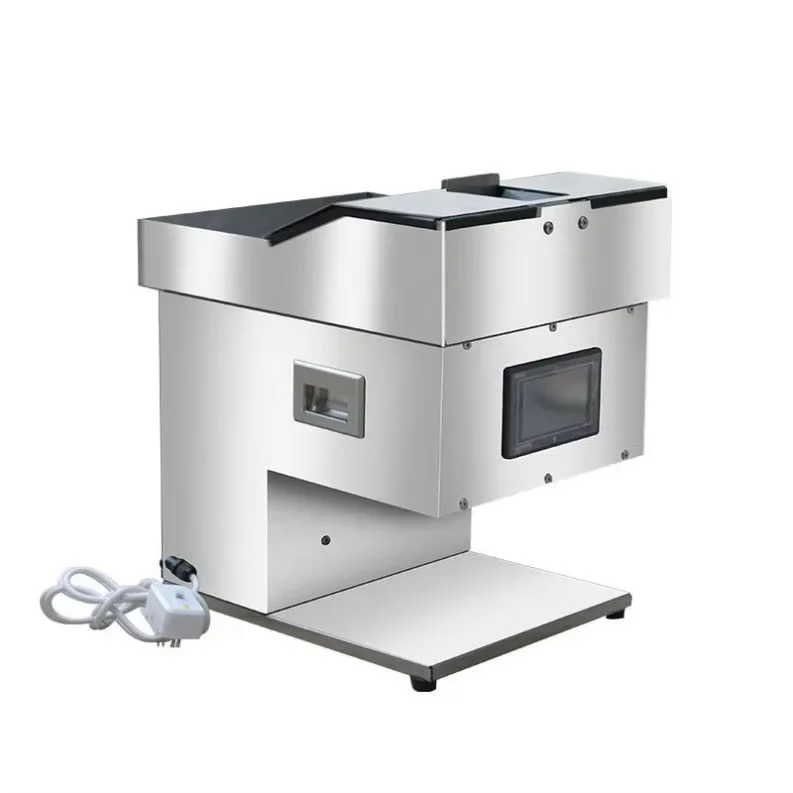
Source-controlled product identity
The Hoting queue identifies Product ID 1601607665942 as a TEBAK automatic/manual shrimp back-opening and removing device, also described as a prawn opener, shrimp line-cutting machine and shrimp back-peeling/deveining machine. The source contains paired values for two configurations: model “table” and “100 vertical”; capacity “50KG/H” for both; range “30-70” for both; power “1.5KW” for both; weight “25kg” and “35KG”; and dimensions “450*360*490mm” and “66*50*70CM”.
The raw record does not explain whether “30-70” is shrimp length, product size, a processing range or a catalog shorthand. It also does not define the unit for the range, the precise operation of peeling versus deveining, the actual yield, the supported shrimp species, electrical voltage, water requirement, blade design, sanitation method, duty cycle or food-contact materials. These are supplier confirmation points and must not be inferred from the product title.
This guide is for seafood processors, shrimp shops, central kitchens, hotels, restaurants, frozen-food processors, wholesalers, equipment distributors and facilities evaluating a manual or automatic shrimp back-opening workflow. The correct configuration depends on incoming shrimp size, shell condition, desired cut pattern, labor model, hygiene system and measured throughput.
Recorded fields and paired configuration reading
| Field | Recorded value | Buyer action |
|---|---|---|
| Product ID | 1601607665942 | Require the same ID on the quotation, model label, inspection sheet and shipping documents. |
| Model | table | 100 vertical | Ask the supplier to provide separate drawings, videos, manuals, prices and BOMs for both configurations. |
| Capacity | 50KG/H | 50KG/H | Define input condition, operator count, recipe, measured output and quality yield behind the 50KG/H figure. |
| Range | 30-70 | 30-70 | Confirm unit and meaning. Do not assume it is shrimp length without written clarification. |
| Power | 1.5KW | 1.5KW | Confirm rated voltage, frequency, phases, current, plug, motor and protection for each model. |
| Weight | 25kg | 35KG | Map each weight to table or 100 vertical and confirm net/gross status. |
| Dimension | 450*360*490mm | 66*50*70CM | Map each dimension to a model and confirm L/W/H order, unpacked state and service clearance. |
| Operation claim | Automatic and manual listing terms | Confirm which steps are automatic, which require an operator and how the two configurations differ. |
| Peeling/deveining claim | Product-description claim | Request a process diagram showing shell removal, back opening, vein removal and final product condition. |
Define the required shrimp process
Before requesting a quotation, define the buyer’s incoming product and required output. Record species, whole or headless condition, shell-on or partially processed condition, frozen or chilled state, thaw level, size distribution, moisture, broken pieces and the proportion of material outside the normal range.
Define the desired result: a back cut, a fully opened back, a deveined shrimp, a peeled shrimp, a shell-on butterfly style or another preparation. The title combines several process words, but the source does not state which operations are included in each model. Use sample photographs and a signed product standard.
Separate nominal throughput from acceptable output. A machine can process 50KG/H while producing an unacceptable cut, leaving veins, damaging meat or requiring excessive rework. Agree how capacity is measured and how many pieces must pass the quality test.
Prepare a representative sample lot with the smallest, largest and most common shrimp sizes. Include shell conditions and recipes that reflect the actual facility. Ask the supplier to run the same lot on both “table” and “100 vertical” configurations if both are under consideration.
Interpret the two model values carefully
The raw record uses the paired model field “table | 100 vertical”. It is not clear whether “100 vertical” is a model name, a vertical layout, a production option or a translation artifact. Request the official model plate, machine drawing, operating video and quotation line for each model.
Do not merge the two sets of values. Keep capacity and range paired to the correct model, then map the 25kg and 35KG weights and the two dimension strings. Ask the supplier to state whether each value is net weight, gross weight, machine size, carton size or installation envelope.
For the table configuration, check the working height, operator posture, feed direction and space around the bench. For the 100 vertical configuration, confirm whether the 66*50*70CM value is the machine body, a frame, an installation space or a packed dimension. Request a dimensioned drawing before planning the room.
Require the final quotation to show separate model names, photos, serial-number rules, included tooling, replacement parts, electrical requirements and acceptance criteria. This prevents a general listing from being used to supply the wrong configuration.
50KG/H capacity: establish a real test method
Both model columns record 50KG/H. Ask the supplier to define whether this is gross incoming weight, processed output, machine-only theoretical capacity or measured capacity with one operator. Ask for the test duration and the size distribution of the shrimp used.
Run a timed acceptance test using a known input mass. Record start and finish time, operator count, incoming condition, rejected pieces, rework, meat loss, remaining veins, broken tails, shell fragments and final acceptable mass. Report both gross throughput and acceptable finished output.
Repeat the test after the machine has warmed up and after a cleaning cycle. A short demonstration may not reveal jam frequency, adjustment drift, fatigue or sanitation delays. For a production facility, test at the planned service window rather than extrapolating from a single batch.
Ask whether capacity changes with size, shell condition, moisture, temperature or product orientation. If the range is 30-70 of an unspecified unit, use at least three representative sizes and record results separately.
Clarify the 30-70 range
The queue field records “30-70” for both models without a unit or label. It may refer to a size code, length, a machine adjustment range or another catalog field. The buyer should request the supplier’s original specification sheet and a dimensioned explanation.
Do not convert 30-70 into millimeters, pieces or a shrimp count without evidence. Add a written RFQ question: “What is the unit and definition of Range 30-70, and what incoming product dimension does it cover?”
For acceptance, prepare samples at the lower, middle and upper confirmed limits. Record the cut line, deveining result, meat damage and operator adjustments. If the buyer’s product falls outside the confirmed range, obtain a written suitability statement or choose a different configuration.
Ask whether the range refers to shrimp length, diameter, grade, weight per piece or a setting scale. Request calibration or adjustment instructions and confirm whether separate guides, blades or fixtures are needed.
1.5KW power and site planning
Both model columns record 1.5KW. Voltage, frequency, phase, current and plug are not provided. Request the exact nameplate for each configuration and confirm the destination supply before ordering.
Ask for motor type, overload protection, emergency stop, start current, earthing, cable length and recommended breaker. Confirm whether water, compressed air, drainage or a dedicated table is required. None of these utilities can be inferred from 1.5KW.
Plan electrical isolation before cleaning, blade adjustment or jam removal. Keep cables and controls away from wet processing areas and follow the supplier’s installation manual. Ask whether the machine has a sealed control box or an enclosure rating appropriate for the facility.
For an imported machine, request destination-market electrical documents for the exact model. Do not treat the power field, China origin or product title as proof of CE, UL, sanitation or other regulatory compliance.
Knife, guide and product-quality verification
The source does not provide blade material, angle, thickness, adjustment range, guide design, replacement interval or sharpening method. Request a complete process drawing showing the cutting path and the parts that contact the shrimp.
Run test pieces through each model and inspect the back-opening position, vein removal, shell retention, meat tearing, tail damage, residual shell and cut depth. Use a pass/fail sample standard with photographs.
Test small and large samples within the confirmed range. Check whether the blade or guide requires different settings, whether the operator must orient every shrimp and whether the machine can handle variations without unacceptable rework.
Ask for spare blades, guides, springs, belts, seals, fasteners and tools. Confirm replacement lead time, sharpening instructions and the safe storage method for cutting parts.
Hygiene, cleaning and food-contact review
Shrimp processing requires control of protein residue, shell fragments, brine, wash water and cross-contamination. Request a complete cleaning diagram for the exact model. Identify every removable food-contact component and the areas that cannot be reached without tools.
Ask for material declarations for guides, blades, chutes, trays, guards, seals and fasteners. The source does not identify stainless grades, plastics, coatings or food-contact approvals. Do not describe those materials as certified until documents match the actual model.
Test the time from shutdown to a clean, inspected and dry machine. Record disassembly steps, tools, water temperature, detergent limits, sanitizing method, drying requirements and reassembly checks.
Inspect hidden cavities, drains, seams and blade holders for retained product. Confirm whether the table and 100 vertical configurations differ in cleaning access or require different sanitation procedures.
Layout, weight and dimension planning
The recorded weight pair is 25kg and 35KG, but the source does not state whether those are net or gross weights. The recorded dimension pair is 450*360*490mm and 66*50*70CM. Map each value to the correct model and confirm whether the dimension is the machine, frame, carton or installation envelope.
Request a layout drawing with feed side, discharge side, operator position, cleaning access, blade-change access and electrical connection. For the table model, confirm bench load, bench height and securing points. For the vertical model, confirm floor stability, frame footprint and lifting points.
At receipt, photograph the packaging, verify the packed weight and compare the model label with the quotation. Inspect the machine body, blades, guides, trays, guards, controls, tools, manuals and spare parts against the packing list.
Factory acceptance test proposal
- Verify Product ID 1601607665942 and the exact selected model: table or 100 vertical.
- Verify the machine drawing, model label, serial-number format and included BOM.
- Confirm the meaning and unit of Range 30-70 with a written specification.
- Confirm incoming shrimp condition, size distribution and required finished result.
- Test the lower, middle and upper confirmed product range.
- Run a timed 50KG/H capacity test with recorded input and acceptable output mass.
- Record operator count, rework, broken pieces, vein residue, shell fragments and meat loss.
- Verify 1.5KW nameplate data, voltage, frequency, current, phase and protection.
- Inspect blade path, guide alignment, cut depth and output consistency.
- Run the cleaning, sanitation, drying and reassembly procedure.
- Verify food-contact parts, material documents, spare blades and replacement tools.
- Verify dimensions and weights for the selected model, including whether values are net, gross, machine or carton.
- Check safety controls, emergency stop, guards, pinch points and electrical isolation.
- Record final acceptance samples, pass/fail limits, warranty and correction procedure.
RFQ checklist
- Product ID 1601607665942 and selected model table or 100 vertical.
- Separate drawing, video, manual, BOM, price and lead time for each model.
- Definition and unit of Range 30-70, supported shrimp size and product condition.
- Meaning of “automatic”, “manual”, “peeler”, “open back” and “removing device” in the exact workflow.
- 50KG/H test method, operator count, input condition, acceptable output and rework rate.
- 1.5KW voltage, frequency, phase, current, plug, breaker and emergency-stop details.
- Blade material, guide design, adjustment range, sharpening and spare-part codes.
- Food-contact material declarations for blades, guides, trays, chutes, guards and seals.
- Cleaning, sanitation, drainage, drying and cross-contamination controls.
- Weights 25kg/35KG mapped to models and identified as net or gross.
- Dimensions 450*360*490mm and 66*50*70CM mapped to models and identified as machine/carton/install size.
- Bench load, floor footprint, operator clearance, lifting points and maintenance access.
- Packaging, spare parts, warranty, training, inspection samples and service response.
Safety and compliance
Cutting and deveining equipment contains sharp parts, moving mechanisms and pinch points. Keep hands away from the feed, blade and discharge areas. Stop, isolate and verify zero movement before clearing a jam, changing a guide or removing a blade.
Use the supplied guards and tools. Do not bypass an interlock or operate with a missing cover. Establish a cleaning lockout procedure and train operators on safe blade handling.
Control wet-area risks by separating electrical connections from wash water, using the specified earthing and following the supplier’s cleaning limits. The source does not provide an enclosure rating or sanitation certification.
Request current destination-market electrical, food-contact and machinery documents for the exact model. Do not claim CE, FDA, HACCP or other compliance without matching evidence.
Buyer decision framework
This candidate offers two recorded configuration labels—table and 100 vertical—with the same listed 50KG/H capacity, 30-70 range and 1.5KW power, but different recorded weights and dimensions. The decisive procurement task is to resolve the paired fields and test the machine on the buyer’s shrimp, process definition and hygiene system.
Approve the order only after the supplier maps every value to a model, defines Range 30-70, demonstrates the required back-opening/deveining result, proves acceptable capacity, confirms electrical and food-contact details, and supplies cleaning and spare-parts documentation.
Frequently asked questions
What are the two models?
The source records “table | 100 vertical”. Request separate model drawings, manuals and quotations; the record does not define the 100 vertical terminology.
What is the capacity?
Both columns record 50KG/H. Confirm the test method, incoming shrimp condition, operator count and acceptable finished output.
What does 30-70 mean?
The record provides no unit or definition. Ask the supplier whether it refers to shrimp length, size, weight, a setting range or another catalog value.
Does the machine peel and devein shrimp?
The title combines peeling, opening and removing terms, but the exact process is not structurally defined. Request a process diagram and test sample.
What power is required?
The recorded power is 1.5KW for both configurations. Confirm voltage, frequency, phase, current, plug and protection before purchase.
Source and contact
This guide is based on the Hoting queue record for Product ID 1601607665942. Recorded fields are models table and 100 vertical, capacity 50KG/H for both, range 30-70 for both, power 1.5KW for both, weight 25kg/35KG and dimensions 450*360*490mm / 66*50*70CM. Before purchase, request the exact model quotation, process diagram, test samples, capacity method, electrical nameplate, hygiene documents, spare-parts list, warranty and destination-market compliance documents through the TEBAK sales inquiry channel.
Key specifications
- Model
- table | 100 vertical
- Capacity
- 50KG/H | 50KG/H
- Range
- 30-70 | 30-70
- Power
- 1.5KW | 1.5KW
- Weight
- 25kg | 35KG
- Dimension
- 450*360*490mm | 66*50*70CM