
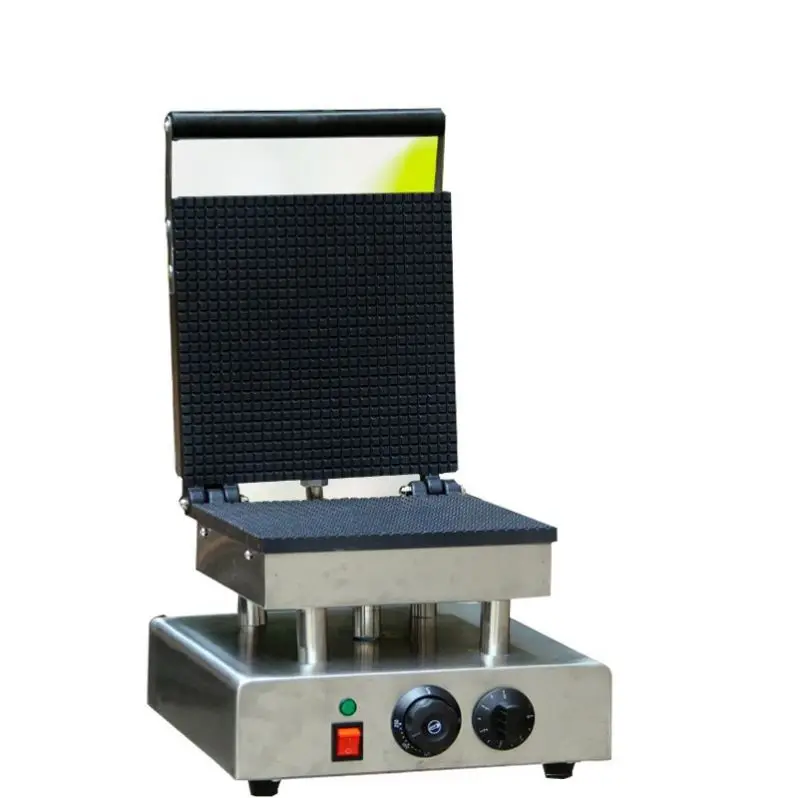
What the source record confirms
The TEBAK source record identifies a commercial egg bubble waffle maker and gives the product name as a commercial non-stick egg bubble waffle maker, electric waffle pancake maker and ice cream waffle cone maker machine. The structured fields confirm an electrical input of 220V-240V/50-60HZ, power of 1.6KW, and the listed payment terms: T/T, Western Union, PayPal and Alibaba payment, with 30% in advance and 70% before shipment.
This guide separates structured fields from title wording. The title uses “commercial,” “non-stick,” “egg bubble waffle,” “pancake,” “ice cream waffle cone” and “machine” language, but the queue does not provide plate dimensions, cavity count, temperature range, heating time, output, coating material, body material, weight, controls, certification or warranty. Those items require model-specific confirmation.
Do not treat the payment terms as a product specification or as a guarantee of transaction protection. Confirm the final quotation, pro forma invoice, payment channel, beneficiary, currency, shipment milestone and inspection conditions before sending funds.
1. Product identity and procurement boundary
Keep the RFQ tied to the TEBAK commercial egg bubble waffle maker, product ID 1601369047188. Ask the supplier to place the product ID, model or configuration code on the quotation, nameplate, manual, test video and packing list.
The title combines several application descriptions: egg bubble waffle, waffle pancake and ice cream waffle cone. These products can require different plate patterns, cavity geometry, forming methods, cooking conditions and release procedures. Confirm whether one delivered configuration supports all requested applications or whether separate plates or models are required.
Request a complete configuration list covering the machine body, upper and lower plates, heating elements, handles, hinges, controls, timer, thermostat, power cord, plug, feet, tools, spare parts and manual. If the supplier offers different plate patterns, coatings or electrical versions, record the selected option in the purchase order.
The source title uses “non-stick” wording, but it does not identify the coating type, base material, coating layers, food-contact documentation, release performance or replacement policy. Treat non-stick performance as a sample-test requirement.
Company-level promotional wording does not establish model-specific electrical compliance, food-contact suitability, coating safety, warranty, duty cycle or destination-market approval. Request documents for product ID 1601369047188.
2. Confirmed source specifications
| Field | Source value | Procurement treatment |
|---|---|---|
| Product ID | 1601369047188 | Match the quotation, nameplate, inspection record and shipping documents. |
| Product identity | Commercial non-stick egg bubble waffle maker / electric waffle pancake maker / ice cream waffle cone maker machine | Confirm the exact plate, mold, forming method and configuration. |
| Voltage | 220V-240V/50-60HZ | Confirm whether the delivered unit supports the buyer's local voltage and frequency, and verify nameplate data. |
| Power | 1.6KW | Confirm whether 1.6KW is rated input power for the complete unit and record current, phase and plug requirements. |
| Payment terms | T/T, Western Union, PayPal, Alibaba payment; 30% in advance and 70% before shipment | Confirm the final commercial terms, payment channel, currency, beneficiary and inspection milestone in the pro forma invoice. |
| Non-stick wording | Title wording | Confirm coating type, substrate, food-contact evidence, cleaning method and replacement policy. |
| Commercial wording | Title wording | Define duty cycle, operating hours, service interval and buyer-specific output test. |
The title-derived rows are procurement questions, not complete specifications. Do not publish a cavity count, plate size, temperature, speed, capacity or coating grade until the supplier supplies written evidence.
3. Plate and mold configuration
Ask the supplier to define the plate pattern for egg bubble waffles. Request a dimensioned drawing showing plate length, width, thickness, cavity geometry, bubble diameter or spacing, edge clearance and usable cooking area.
Confirm whether the upper and lower plates are fixed, interchangeable, reversible or customized. Ask whether pancake and waffle-cone applications use the same plates or separate tooling.
Request photographs of both plate surfaces and the hinge or closing mechanism. Match the photographs to the product ID and the selected quotation.
Clarify whether the machine shapes a cone directly, requires a separate forming tool, or only supplies a cooked sheet that the operator forms manually. The title alone does not establish the forming process.
For ice cream waffle cones, confirm cone diameter, sheet size, forming time, forming tool, operator steps and acceptable seam or overlap. These values are not present in the source record.
For pancake applications, confirm whether the plate is flat, patterned or interchangeable. Do not assume that an egg bubble plate can produce a flat pancake without a separate configuration.
Ask for plate replacement instructions, spare-plate part numbers, lead times and the effect of changing plate type on electrical load and operating settings.
Define the acceptable plate alignment, closing pressure and edge clearance. A title does not prove that the plate can be changed without recalibration.
4. Non-stick coating and food-contact checks
The source title uses “non-stick” wording. Request the coating name, substrate material, coating layers, application process, surface hardness or durability evidence, approved utensils and cleaning method.
Ask whether the coating is applied to the cooking plate, the external body, the forming tool or another component. Do not describe the complete machine as non-stick without a parts list.
Request model-specific food-contact documentation if required by the buyer's market. A non-stick marketing label is not proof of compliance with a particular food-contact rule.
Test release using the buyer's recipe, oil level, sugar level, batter viscosity and cooking condition. Record the plate condition and cleaning method after repeated cycles.
Define acceptable sticking, tearing, residue, discoloration, blistering and coating wear. Do not claim a service life or number of cycles without test evidence.
Ask whether metal tools, scrapers, abrasive pads, alkaline cleaners or sanitizers are prohibited. Record the approved cleaning and utensil procedure in the operating manual.
Confirm whether replacement plates are available and whether they use the same coating specification. Record the price and lead time as a commercial term only after supplier confirmation.
Do not infer coating material or safety from the supplied image, title or brand description. Require a written specification for the delivered configuration.
5. Electrical configuration and installation
The structured voltage field is 220V-240V/50-60HZ and the structured power field is 1.6KW. Ask the supplier to confirm whether the unit is single-phase, the rated current, plug, cable, grounding and protection details.
Confirm the buyer's destination supply before ordering. A range shown in a listing does not by itself prove that one unit automatically accepts every voltage and frequency combination in that range.
Request the nameplate photograph, wiring diagram and electrical data sheet for product ID 1601369047188. Match voltage, frequency and power to the quotation and pre-shipment inspection.
Ask whether 1.6KW is the maximum input, rated heating input or total connected load. Confirm whether multiple heating zones can operate simultaneously.
Confirm switch, thermostat, timer, indicator, fuse, thermal protection, overload behavior and power-interruption restart behavior. The queue does not list any of these controls.
Specify the destination plug and cable standard. Confirm whether an adapter is supplied or whether the buyer must choose a destination-specific cord.
Request installation clearances, ventilation guidance, heat protection and safe access to the power switch. A table format does not define the required workstation.
Do not describe the unit as energy efficient or low consumption without measured data. The only confirmed power field is the source value 1.6KW.
6. Heating and temperature control
The queue does not provide temperature range, control resolution, heating time, recovery time, thermostat accuracy or surface uniformity. Ask whether the unit uses a thermostat, fixed gears, electronic controller, timer or another method.
Request the temperature setpoint range and identify the measurement point. A controller setting, plate surface temperature and air temperature are not interchangeable.
Test the machine at buyer-approved low, middle and high settings using an agreed measurement method. Record preheat time, plate readings, batter load, cooking time and recovery after opening the plates.
Confirm whether upper and lower plates are independently controlled. Ask for temperature balance and acceptable deviation across the usable cooking area.
Define the required condition for each application. Egg bubble waffles, pancakes and cones may require different batter thickness, cooking time, forming steps and release behavior.
Ask how the machine indicates that it is ready. Confirm indicator lights, audible signals, timer behavior, manual release and cool-down instructions.
Do not convert the 1.6KW power value into a cooking temperature or production rate. Electrical input and thermal performance require separate evidence.
7. Application validation: egg bubble waffles
For egg bubble waffles, send the supplier the buyer's recipe profile, batter viscosity, batch size, loading method, target color, texture and acceptable bubble release.
Confirm cavity count, cavity size, plate geometry and usable cooking area. None of these values is present in the queue.
Test batter distribution across the plate. Record overflow, underfill, uneven bubbles, edge leakage and whether the operator must rotate or flip the plate.
Measure preheat, loading, cooking, opening, release and cleaning time. Do not promise output until the test conditions and batch size are recorded.
Inspect surface color, texture, shape and breakage. Repeat the test across multiple cycles to observe release and heat recovery.
Confirm the tools required for removal and whether they may contact the non-stick surface. Record approved tools and handling method.
Ask whether different batter formulas require different settings or plate treatments. The title does not establish one universal recipe.
Document the sample test with product ID, plate configuration, recipe, setting, cycle time, result and photographs.
8. Application validation: pancake and waffle-cone wording
Clarify whether the phrase “waffle pancake maker” means a flat pancake, a patterned waffle pancake or another product. Request a sample and drawing for the exact plate.
For ice cream waffle cones, confirm whether the unit makes a flat sheet or a finished cone. Ask for the forming tool, cone dimensions, operator steps and seam acceptance criteria.
Test sheet flexibility, forming time, cracking, sticking and cooling behavior with the buyer's recipe. The source provides no cone or sheet dimensions.
Confirm whether one plate configuration supports both bubble waffles and cone sheets. If not, quote each plate or machine option separately.
Ask whether the plate change affects preheat, temperature setting, power draw or cleaning procedure.
Do not describe the unit as a multi-purpose machine with validated support for every title application without separate test records.
9. Commercial duty cycle and output
“Commercial” is a title description and not a defined duty rating. Ask the supplier to state recommended operating hours, continuous-use limit, rest intervals, service interval and environmental conditions.
Define the buyer's workload in batches per hour, operating hours per day, recipe and required product mix. Ask the supplier to test the exact configuration under those conditions.
Record preheat, loading, cooking, opening, release, plate cleaning and recovery. Include operator steps when calculating practical cycle time.
Do not use the 1.6KW value to calculate pieces per hour. Output depends on plate size, recipe, operator method, cooking time and recovery.
Ask whether the unit is intended for a kiosk, restaurant line, catering station, test kitchen or another environment. Confirm ventilation, clearance and cleaning access.
If the buyer needs to change between bubble waffles, pancakes and cones, define changeover time, plate storage, cleaning and recipe control.
Request maintenance and spare-part terms for the intended duty cycle. Do not claim high output, fast heating or continuous production without an identified test.
10. Controls and operator workflow
Request a labeled control-panel drawing showing power, temperature, timer, indicators, zone controls and safety isolation. The source does not list the control layout.
Ask the supplier to demonstrate batter loading, plate closing, cooking, opening, release, forming and cleaning. Match the demonstration to the selected plate configuration.
Confirm handle movement, hot-surface boundaries, hand clearance and the method for preventing accidental plate closure.
Ask whether the operator needs gloves, tongs, cone rollers, trays, scrapers or other accessories. Record supplied and optional accessories separately.
Define training for heat warnings, electrical isolation, coating protection, batter spills, grease or sugar residue and emergency shutdown.
Request manual and label language for the destination market. Match the documents to product ID 1601369047188 and the selected electrical version.
Do not infer an automatic timer, alarm, thermostat or digital display from the product category.
11. Cleaning, hygiene and maintenance
Request cleaning instructions for the plates, hinge, body, controls, cable and any removable tray or forming tool. Confirm whether the machine must be cool and disconnected before cleaning.
Ask which cleaners and tools are approved for the non-stick surface. Do not use abrasives or metal scrapers unless the supplier confirms they are safe for the exact coating.
Define cleaning frequency for batter, sugar, oil and food residue. Record the cleaning steps and inspection points in the buyer's work instruction.
Request maintenance intervals for heating elements, thermostat or controller, hinge, handle, plate coating, cable, switch and insulation. These component categories require confirmation.
Ask how to identify uneven heating, damaged coating, loose hinge, faulty indicator, damaged cable or abnormal power draw.
Request spare-part numbers and lead times for plates, coating-related parts, heating elements, controllers, knobs, hinges, handles and cords.
Confirm warranty duration, exclusions, service response and replacement procedure for the exact model. These values are not provided by the queue.
Do not claim food-contact compliance, coating durability, sanitation performance or certification without model-specific documentation.
12. Payment and commercial terms
The source lists T/T, Western Union, PayPal and Alibaba payment, with 30% in advance and 70% before shipment. Treat this as a source-listed commercial term, not a final contractual commitment.
Ask the supplier to issue a pro forma invoice naming product ID 1601369047188, exact plate configuration, electrical version, quantity, unit price, currency, packaging, shipment terms and inspection scope.
Confirm whether the 30% advance and 70% before shipment apply to the exact order, customization, spare plates and shipping charges. Record any different terms in the signed quotation.
Confirm the beneficiary name and account details through the agreed platform or verified business channel. Do not rely on a changed bank detail sent only by informal message.
Ask whether payment fees, platform fees, taxes, freight, insurance, duties, inspection and local charges are included or excluded. The queue does not provide a landed price.
Define the release condition for the 70% balance: inspection report, nameplate photograph, sample test, packing photograph, video or another agreed document.
Confirm refund, cancellation, delay, damage and shortage terms in the final contract. Do not infer protection from the list of payment channels.
13. Electrical and food-contact compliance
Request current documents for the exact machine and electrical version if the destination market requires electrical, EMC, food-contact or hygiene evidence.
Do not substitute company-level ISO wording for model-specific documentation. Ask which component and standard each document covers.
Confirm whether the cooking plate, coating, forming tool and utensils have food-contact documentation appropriate to the buyer's market.
Ask whether the electrical file identifies voltage, frequency, rated power, current, grounding, protection and test conditions. A 220V-240V/50-60HZ listing does not replace a nameplate and test record.
Define labeling, manual language, warning symbols, plug, cable and destination-market requirements before shipment.
Do not claim CE, ETL, NSF, FDA or another certification unless a current document for product ID 1601369047188 is supplied and its scope is clear.
14. Packaging and export checks
Request packing photographs showing the machine, plates, forming tools, handles, cable, plug, manual, spare parts and protective packaging.
Confirm package dimensions, net weight and gross weight. The queue provides no weight or logistics values.
Protect the non-stick plate surface, hinge, handles, controller and cable from impact and moisture. Ask how removable plates and forming tools are secured.
Confirm the destination plug and electrical version before packing. Match the nameplate to the buyer's order.
Request a pre-shipment video showing the nameplate, power test, control operation, plate closing, sample cooking and included accessories.
For export orders, request packing list, product identification, manual language, commercial invoice data and any destination-market documents required by the buyer's broker.
15. Pre-shipment acceptance test
Confirm product ID 1601369047188, TEBAK identity and the exact egg bubble waffle maker configuration.
Verify the nameplate against 220V-240V/50-60HZ and 1.6KW, including current, phase, plug, cable and grounding.
Verify plate type, cavity or forming geometry, coating description, cooking area, hinge, handle and included tools.
Run preheat and loaded tests using the buyer's representative recipe. Record preheat, cooking, recovery, release and cleaning times.
Test bubble waffle and any required pancake or cone application separately. Record plate, recipe, setting, forming tool and acceptance result.
Inspect sticking, tearing, coating damage, uneven heating, batter leakage, plate alignment and hot-surface handling.
Test controls, indicators, timer or thermostat if included, power interruption behavior, cable, grounding and shutdown.
Photograph the nameplate, plates, coating, controls, accessories, packaging and finished samples. Resolve discrepancies before shipment.
16. RFQ checklist
- Confirm product ID 1601369047188, TEBAK brand and exact machine configuration.
- Define whether the unit is for egg bubble waffles, pancakes, waffle cones or separate plate options.
- Provide plate type, cavity geometry, usable area, dimensions, material, coating and replacement details.
- Confirm 220V-240V/50-60HZ, 1.6KW, current, phase, plug, cable, grounding and protection.
- Provide temperature range, control method, timer, preheat, recovery and surface-uniformity data.
- Define non-stick coating type, substrate, food-contact evidence, cleaning restrictions and durability test.
- Define commercial duty cycle, service interval, operating hours and buyer-specific output test.
- Provide food sample tests for bubble waffles, pancakes and cones when required by the order.
- Provide forming tools, accessories, spare plates, spare parts, manual and labels.
- Provide dimensions, weight, footprint, clearances, ventilation and workstation drawings.
- Confirm payment terms, currency, beneficiary, inspection milestone and balance-release condition.
- Provide packing dimensions, net/gross weight, shipping marks and pre-shipment photographs.
- Provide model-specific electrical, food-contact, hygiene, warranty and destination-market documents.
17. Questions for the supplier
Which plate and mold configuration is supplied for egg bubble waffles, pancakes and ice cream waffle cones? Are separate plates required?
What are the plate dimensions, cavity geometry, usable cooking area, material grade, coating type and replacement cost?
Does the 1.6KW value represent rated input power for the complete machine? Please provide current, phase, plug, cable and nameplate data.
Does the unit support all combinations within 220V-240V/50-60HZ, or is a specific electrical version selected at order?
What temperature range, control method, timer, preheat time, recovery time and surface uniformity can you document?
What does “non-stick” mean for this exact plate? Please provide coating, substrate, food-contact and cleaning information.
What are the recommended operating hours, rest intervals, duty cycle and tested output for the selected configuration?
Can you test the buyer's recipe for egg bubble waffles and, if required, pancake or cone forming? Please provide settings and results.
What accessories, forming tools, spare plates, manuals and replacement parts are included?
Do the 30% advance and 70% before shipment terms apply to this exact configuration, and what inspection evidence releases the balance?
18. What not to assume
Do not treat “commercial” as a defined duty cycle, output or continuous-use guarantee.
Do not treat “non-stick” as a complete coating specification or proof of food-contact compliance.
Do not assume that one plate makes bubble waffles, pancakes and finished cones without separate tooling or forming steps.
Do not infer temperature, cavity count, plate size, preheat time, cycle time, weight or output from the product title.
Do not assume every voltage and frequency combination in the listing range is available in one delivered unit; verify the nameplate.
Do not claim CE, ETL, NSF, FDA, warranty, coating life, energy efficiency or production capacity without model-specific evidence.
19. Final procurement decision
The TEBAK commercial egg bubble waffle maker has a source-confirmed electrical baseline of 220V-240V/50-60HZ and 1.6KW. The source also lists payment terms of 30% in advance and 70% before shipment through the named channels. The product identity and application wording point to egg bubble waffles, pancakes and ice cream waffle cones, but the exact plate, coating, control system, output and compliance details remain to be confirmed.
Proceed only after the supplier identifies the plate and mold configuration, electrical version, heating controls, coating and food-contact evidence, duty cycle, sample performance, included accessories, payment milestone and model-specific documents. Complete a buyer-specific sample test before shipment.
Editor's note: This guide uses the supplied Hoting queue fields only. It separates structured specifications from title wording and does not add unsupported dimensions, temperature, cavity count, output, material grade, certification, warranty or coating-life claims.
Key specifications
- Volts
- 220V-240V/50-60HZ
- Power
- 1.6KW
- Payment terms
- T/T, Western Union, PayPal,Alibaba payment. 30% in advance and 70% before shipment
Frequently asked questions
- What electrical fields are confirmed?
- The source lists 220V-240V/50-60HZ and 1.6KW. Confirm current, phase, plug, grounding and the exact nameplate for the delivered unit.
- Does one machine make bubble waffles, pancakes and cones?
- Those applications appear in the title. Confirm whether separate plates or forming tools are required for each product.
- What does non-stick mean here?
- The title uses non-stick wording, but no coating type or food-contact documentation is provided. Request the exact plate and coating specification.
- What payment terms are listed?
- The source lists T/T, Western Union, PayPal and Alibaba payment, with 30% in advance and 70% before shipment. Confirm the final pro forma invoice and inspection milestone.
- What commercial data should be confirmed?
- Request duty cycle, operating hours, preheat, recovery, output test, plate dimensions, temperature range, weight and warranty for the exact configuration.