
What the source record confirms
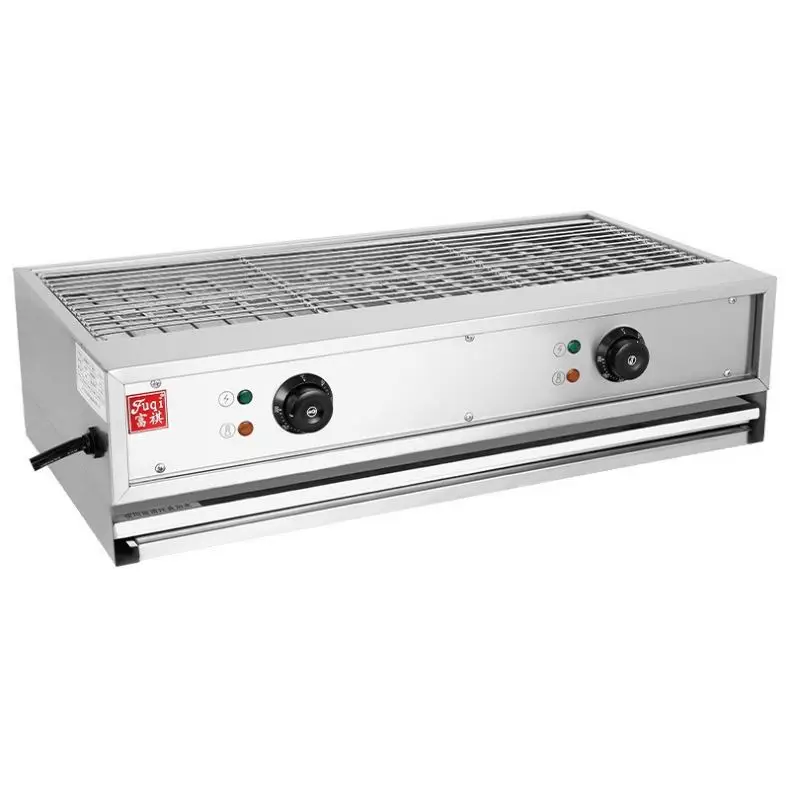
The TEBAK source record identifies a commercial table electric grill and gives the product name “Electric Barbecue Grill.” It also identifies the brand as TEBAK. The source title contains additional wording about stainless steel, grilled gluten, chicken wings, rice, baked oysters and food processing.
This guide treats the two structured fields as the confirmed baseline: product name and brand. The other title phrases are procurement clues that require model-specific confirmation. The available record does not provide wattage, voltage, frequency, heating element type, temperature range, cooking surface dimensions, material grade, weight, controls, output, certification or warranty.
Do not turn title wording into engineering specifications. “Stainless steel” needs a material grade and a list of the parts to which it applies. “Commercial” needs a duty-cycle definition. “Electric” needs a complete nameplate. Application wording needs a buyer-specific food sample and operating test.
1. Product identity and procurement boundary
Keep the RFQ tied to TEBAK Electric Barbecue Grill, product ID 1601368953637. Ask the supplier to place the product ID, model or configuration code on the quotation, nameplate, manual, test video and packing list.
The source identifies a commercial table electric grill. It does not define whether the unit is a flat griddle, grooved grill, wire-grid grill, contact grill, heated plate, skewer grill or another configuration. Request a dimensioned drawing and a clear description of the cooking surface.
The title mentions grilled gluten, chicken wings, rice and baked oysters. These terms may describe intended applications or listing keywords, but they do not prove that one configuration is suitable for all of them. Ask the supplier to identify the tested food types, surface, temperature and accessories for each application.
Request a configuration list covering the grill body, cooking surface, heating elements, thermostat or controller, handles, grease tray, feet, power cord, plug, tools, spare parts and manual. If the supplier offers different surface patterns, plate materials or control versions, record the selected option in the purchase order.
Company-level promotional or quality-control wording does not establish model-specific food-contact suitability, electrical compliance, heat performance, warranty or destination-market approval. Request documents for product ID 1601368953637.
2. Confirmed source fields
| Field | Source value | Procurement treatment |
|---|---|---|
| Product ID | 1601368953637 | Match the quotation, nameplate, inspection record and shipping documents. |
| Product name | Electric Barbecue Grill | Confirm the exact grill type, surface and configuration. |
| Brand | TEBAK | Confirm the brand marking and model reference on the delivered unit. |
| Commercial table format | Title wording | Confirm footprint, support arrangement, operator clearance and duty cycle. |
| Electric operation | Title and product name wording | Request voltage, frequency, phase, current, wattage, plug and grounding details. |
| Stainless-steel wording | Title wording | Confirm material grade, thickness, surface finish and parts covered. |
| Food applications | Title wording: grilled gluten, chicken wing, rice, baked oyster | Test representative food items and confirm suitable cookware or surface configuration. |
The last four rows are listing or title signals, not complete technical specifications. They belong in the RFQ confirmation section until the supplier provides drawings, nameplate data and sample-test evidence.
3. Grill type and cooking surface
Ask the supplier to define the grill surface: flat, ribbed, grooved, mesh, perforated, contact or another design. Request top and side drawings with the usable cooking area, surface height, grease path and surrounding clearance.
Confirm whether the cooking surface is fixed, removable, reversible or replaceable. Ask how it is mounted, how it is cleaned and whether different surface options use the same heating system.
Request the surface material grade, thickness, finish and treatment. If stainless steel is included, identify whether it applies to the cooking plate, body, splash guard, grease tray, frame or only the external panels.
Ask whether the surface is suitable for direct food contact and request the applicable documentation for the destination market. Do not infer food-contact compliance from the word “stainless.”
Confirm the surface's heat distribution and recovery test using the buyer's representative food. Record the measurement locations and test conditions rather than accepting a general statement such as “even heating.”
Define acceptable sticking, browning, scorching, grease drainage and cleaning results for the buyer's process. The source does not provide any of these performance values.
If the buyer needs to grill gluten, chicken wings or oysters, send representative samples and specify size, starting temperature, preparation, cooking time and target result. Application wording alone does not establish a validated recipe or capacity.
4. Electrical specification and installation
The product is described as electric, but the queue does not list voltage, frequency, phase, current or wattage. Request a nameplate photograph and electrical data sheet for the exact TEBAK configuration.
Confirm the destination supply, plug type, cable length, grounding method, switch, fuse or breaker requirement and any residual-current protection. Do not infer a 220V or 110V version from the product title.
Ask whether the grill has one heating circuit or multiple independently controlled zones. Confirm the power of each circuit, control logic and behavior when one zone is switched off.
Request the wiring diagram and the location of the power switch, thermostat, indicator, controller, terminal and cable entry. Confirm whether the operator can isolate the unit before cleaning.
Ask how the machine behaves after a power interruption. Confirm restart behavior, temperature recovery, indicator state and operator reset requirements.
For export orders, specify destination voltage and frequency only after the supplier confirms the available electrical configuration. Record the selected configuration on the purchase order and inspection checklist.
Do not call the unit energy efficient or low consumption without measured data. The queue provides no power or energy-use value.
5. Temperature control and heating behavior
The source does not specify temperature range, control method, thermostat accuracy, heating time or recovery time. Ask whether the grill uses a thermostat, electronic controller, fixed heating levels, manual adjustment or another system.
Request the temperature setpoint range, measurement point, display resolution, control increment and allowable deviation. Define whether the value refers to the plate, air, surface probe or controller setting.
Test the grill at the buyer's required low, middle and high settings using a calibrated test method agreed by both parties. Record preheat time, surface readings, food load and recovery time.
Confirm whether the cooking surface has hot spots and how they are measured. A single center-point reading is not evidence of uniform heating across the usable surface.
Ask how grease, food moisture and repeated loading affect recovery. The source provides no duty-cycle or output value, so the buyer should establish a practical operating test.
Define the safe maximum surface temperature and the cool-down procedure. Request warnings for hot surfaces, handles, grease trays and splash areas.
Do not convert a cooking application in the title into a temperature claim. Chicken wings, rice, gluten and oysters may require different conditions and accessories.
6. Commercial duty cycle and output
“Commercial” is a source title term, not a defined duty rating. Ask the supplier to state the recommended operating cycle, continuous-use limit, rest intervals, daily operating hours and service conditions.
Define the buyer's expected workload in food pieces, batches, surface area or operating hours. Then ask the supplier to test the actual product under those conditions.
Request a test record showing preheat, loading, cooking or grilling duration, recovery between loads and the final result. Do not publish a pieces-per-hour value unless the supplier provides an identified test method.
Confirm whether the grill is intended for countertop use at a food stall, restaurant, catering station, test kitchen or another environment. The title says table format but does not define installation conditions.
Ask for the recommended ventilation, clearance, grease management and heat shielding. These are installation requirements that cannot be inferred from the body material.
Clarify whether the product is designed for one food category or mixed use. If gluten, chicken wings, rice and oysters are all planned, define changeover, cleaning and cross-contact controls.
Do not claim high output, fast preheating or continuous production without a configuration-specific test.
7. Food application validation
The title names grilled gluten, chicken wings, rice and baked oysters. For each item, ask the supplier to identify the required surface, cookware, rack, tray, lid, skewer, grease path and temperature method.
Send representative samples or a written food specification. Include size, starting temperature, moisture, marinade, oil, preparation, target appearance and acceptable internal or surface result.
Test the surface with the buyer's actual food-contact workflow. Record whether food sticks, tears, burns, leaks grease or requires additional cookware.
For oysters or other wet foods, ask how moisture and shell fragments are handled. Do not infer a dedicated oyster tray or splash guard from the title.
For rice or grain-based foods, clarify whether the unit is expected to cook, toast, grill, reheat or hold the product. The title does not define the operation.
For gluten or similar products, define the intended shape, thickness and contact surface. Request sample results at the buyer's planned load.
For chicken wings, define raw or pre-cooked condition, batch size, skin or coating, grease handling and cleaning between batches. These variables affect the test and are not provided by the queue.
Record the sample test in an acceptance sheet with product ID, surface configuration, control setting, food details and observed result.
8. Stainless-steel and hygiene questions
The title includes stainless-steel wording. Request the material grade, thickness, finish and location for every stainless component. Do not describe the entire machine as stainless steel without a parts list.
Ask for the cooking-surface material and any coating, plating or non-stick treatment separately from the external body material. Confirm cleaning-agent compatibility and replacement options.
Request a drawing of seams, corners, welds, fasteners and grease channels. Identify areas where food residue or water can collect.
Confirm whether the grease tray, splash guard, cooking plate and handles are removable. Ask for cleaning instructions and whether tools are required.
Define the buyer's sanitation procedure, cleaning frequency, inspection points and dry-storage requirements. These are process controls and must not be presented as built-in features.
Ask whether the surface can be cleaned while warm, and which cleaning agents are approved. Do not use abrasive or corrosive agents without supplier confirmation.
Request model-specific food-contact or hygiene documents if required by the buyer's market. Stainless appearance is not proof of a particular standard.
9. Grease, smoke and ventilation planning
The source does not provide grease-tray dimensions, drainage path, smoke control, splash guard or extraction requirements. Request a complete grease-management drawing.
Confirm where grease flows during grilling, how the tray is removed, its capacity, cleaning method and replacement availability. Ask whether the tray is included or optional.
Ask how smoke and heat are managed in the intended installation. The buyer should plan ventilation, clearances and heat protection from supplier drawings rather than the title.
Test the grill using the buyer's highest-grease food and record smoke, splashing and cleaning needs. Do not claim low smoke or smokeless operation without evidence.
Confirm whether a hood, filter, splash guard, lid or other accessory is supplied. Do not infer any of these from “commercial table electric grill.”
Define the safe handling method for hot grease and food residue. Request warnings for tray removal and hot-surface contact.
Ask whether the grill can be placed near combustible surfaces and what minimum clearance is required. The source provides no installation safety rating.
10. Controls, operator workflow and ergonomics
Request a labeled control-panel drawing. Confirm the power switch, temperature control, zone controls, indicator lights, timer, emergency isolation and any display.
Ask how the operator loads food, adjusts the setting, removes food, handles grease, cleans the surface and shuts down. The source does not define the workflow.
Confirm working height, handle clearance, hot-zone boundaries and safe hand positions. Request a demonstration video showing normal use with the selected configuration.
Ask whether operators need heat-resistant gloves, tongs, trays, racks or other accessories. Record supplied and optional accessories separately.
For repeated use, test operator reach, loading time, cleaning time and posture. “Table” does not establish an ergonomic layout.
Define training for hot-surface warnings, electrical isolation, grease removal, cleaning agents and emergency response.
Request manuals and labels in the destination language where required. Match them to product ID 1601368953637 and the selected electrical version.
11. Maintenance, safety and documentation
Request the safety manual, electrical diagram, operating instructions, cleaning procedure, spare-parts list and troubleshooting table for the exact configuration.
Confirm maintenance intervals for heating elements, thermostat or controller, wiring, switches, cooking surface, grease tray, feet, handles and insulation. These component categories require supplier confirmation.
Ask how the operator identifies an unevenly heated surface, damaged cable, loose terminal, worn control, warped plate or blocked grease path.
Request replacement part numbers and lead times for heating elements, controllers, knobs, trays, plates, feet and cords. Do not claim that any part is stocked without written terms.
Confirm the warranty scope and service procedure in writing. The source does not provide warranty duration or response time.
Request model-specific electrical, food-contact, hygiene, EMC or destination-market documents when required. Do not substitute company-level certification wording for product evidence.
Do not claim CE, NSF, ETL, ISO9001, food-contact compliance or explosion protection unless the supplier provides current documents for this exact unit.
12. Packaging and export checks
Request packing photographs showing the grill body, cooking surface, grease tray, guards, handles, controls, cable, plug, manual, tools and spare parts.
Confirm package dimensions, net weight and gross weight. The queue provides no weight or logistics values.
Protect the cooking surface, controls, heating elements and grease tray against impact and moisture. Ask how the supplier immobilizes removable parts for transport.
Confirm the destination plug, cable labeling and electrical documents before shipment. Do not ship a 220V or 110V version without written configuration confirmation.
Request a pre-shipment video showing the nameplate, control operation, cooking surface, grease handling, included accessories and a sample test.
For international orders, request the packing list, manual language, product identification and any destination-market documents required by the buyer's broker or safety team.
13. Pre-shipment acceptance test
Confirm product ID 1601368953637, TEBAK brand and Electric Barbecue Grill product identity.
Verify the nameplate voltage, frequency, phase, current, wattage, plug and grounding against the buyer's order.
Verify the exact cooking-surface type, dimensions, material grade, finish, grease tray and included accessories.
Run preheat and loaded tests at the agreed control settings. Record preheat time, surface readings, loaded food, recovery and final result.
Test representative gluten, chicken wing, rice or oyster applications only when they are part of the buyer's order. Record the food condition, load, cookware and target result.
Inspect grease flow, splash, smoke, handles, hot zones and cleaning access. Record any difference between the sample unit and the quoted configuration.
Test switches, thermostat or controller, indicators, cable, grounding and shutdown. Verify that the operator can isolate the unit before cleaning.
Photograph the nameplate, cooking surface, controls, accessories, packaging and finished samples. Resolve discrepancies before shipment.
14. RFQ checklist
- Confirm product ID 1601368953637, TEBAK brand and exact Electric Barbecue Grill configuration.
- Define grill type, surface pattern, usable cooking area, plate thickness and replacement method.
- Provide voltage, frequency, phase, current, wattage, plug, cable, grounding and protection data.
- Provide temperature range, control method, setpoint increment, surface accuracy and recovery test.
- Define the stainless-steel grade, thickness, finish and parts covered by the title wording.
- Provide grease-tray, drainage, splash, smoke and ventilation drawings.
- Define the commercial duty cycle, recommended operating hours, rest intervals and sample output test.
- Confirm which food applications are tested: gluten, chicken wings, rice, oysters or another product.
- Provide sample-test settings, food condition, load, cookware and acceptance criteria.
- Provide dimensions, weight, footprint, clearance, support and service-access drawings.
- Provide controls, handles, heat zones, accessories, safety warnings and operator workflow.
- Provide cleaning, hygiene, maintenance, spare-parts, warranty and troubleshooting documents.
- Provide model-specific electrical, food-contact and destination-market compliance evidence if required.
- Provide packing dimensions, net/gross weight, shipping marks and pre-shipment photographs.
15. Questions for the supplier
What exact grill type and cooking surface are supplied? Please provide a dimensioned drawing, surface pattern, usable area and material grade.
What are the voltage, frequency, phase, current, wattage, plug, cable, grounding and protection details?
What control system and temperature range are included? Please provide preheat, surface-uniformity and recovery test results.
Which components are stainless steel, what grades and thicknesses are used, and which parts are suitable for the buyer's cleaning process?
How are grease, smoke and splash managed? Please provide grease-tray dimensions, drainage, clearance and ventilation requirements.
Which of the title applications were actually tested: grilled gluten, chicken wings, rice, baked oysters or another food?
Can you test the buyer's representative food, load and cookware? Please provide the settings and acceptance results.
What are the product dimensions, net weight, gross packed weight, footprint and operator clearances?
Which accessories, spare parts, manuals, guards, trays and replacement plates are included?
What model-specific electrical, hygiene, food-contact, warranty and destination-market documents are supplied?
16. What not to assume
Do not treat “commercial” as a defined duty cycle or output guarantee. Request a configuration-specific workload test.
Do not treat “stainless steel” as a complete material specification. Confirm grade, thickness, finish and parts covered.
Do not infer voltage, wattage, temperature range, heating method, surface area or cooking capacity from the title.
Do not assume that gluten, chicken wings, rice and oysters are all supported by one configuration. Test each required application.
Do not claim low smoke, even heating, fast preheat, food-contact compliance, CE, warranty or high output without evidence.
17. Final procurement decision
The TEBAK Electric Barbecue Grill has a source-confirmed baseline of product identity and brand: product ID 1601368953637, product name Electric Barbecue Grill and brand TEBAK. The commercial table, electric, stainless-steel and food-application phrases remain procurement questions requiring drawings, nameplate data and buyer-specific tests.
Proceed only after the supplier identifies the grill type, cooking surface, electrical configuration, temperature controls, stainless-steel parts, grease and ventilation arrangement, duty cycle, included accessories and model-specific documentation. A representative food test should be completed before shipment.
Editor's note: This guide uses the supplied Hoting queue fields only. It separates structured source fields from title wording and does not add unsupported power, voltage, temperature, dimensions, material grade, capacity, certification, warranty or performance claims.
Key specifications
- Product name
- Electric Barbecue Grill
- Brand
- TEBAK
- Product ID
- 1601368953637
- Application wording
- Commercial table electric grill; gluten, chicken wing, rice and baked oyster terms in title
Frequently asked questions
- What product name is confirmed?
- The source parameter block lists Electric Barbecue Grill. Confirm the exact grill type, surface and configuration before ordering.
- What brand is listed?
- The source lists TEBAK. Match the brand and product ID 1601368953637 on the quotation, nameplate and packing list.
- Is the grill stainless steel?
- The title uses stainless-steel wording, but no grade, thickness or part list is provided. Ask the supplier to identify the exact stainless components.
- What electrical power and voltage are supplied?
- The available structured fields do not provide voltage, frequency or wattage. Request the exact nameplate and electrical specification.
- Can it grill gluten, chicken wings, rice and oysters?
- Those applications appear in the title. Confirm the required surface, cookware, controls and buyer-specific sample results for each food.