
Source-controlled product identity
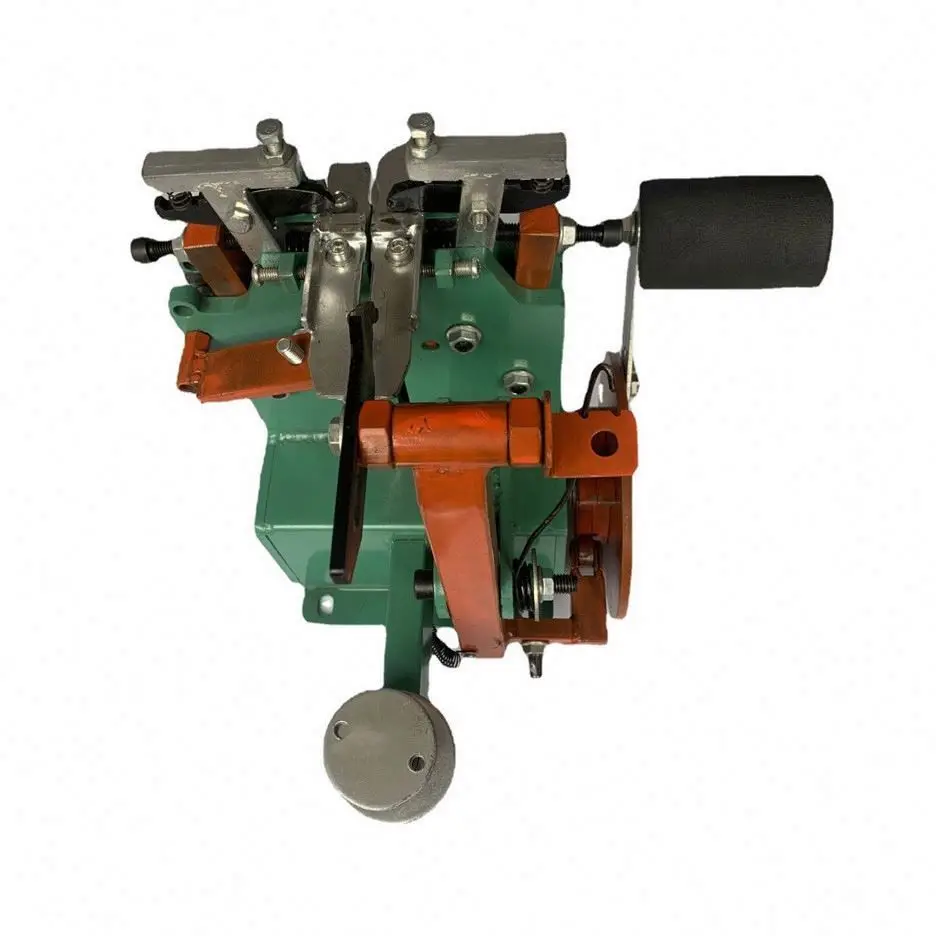
This TEBAK Hoting queue record identifies a CX-04 manual band saw blade feeder and band saw blade tooth setter for sawmill blade tooth-setting work. The product title uses three related descriptions: manual band saw blade feeder, band saw blade tooth setter and sawmill blade tooth setter. The structured record contains two combined fields: Model with CX-04 and a 0-45 kerf angle, plus Speed Teeth/Minute with 500 and a 10-40MM saw blade width.
Product ID 1601251048317 should remain on the quotation, drawing, sample inspection record and packing list. The source does not separate each combined label into a complete machine datasheet. Therefore, this guide preserves the values exactly as recorded and asks the supplier to clarify whether “kerf angle” means a tooth-set angle, blade inclination or another adjustment, and whether “500” means a maximum setting rate, a manual reference value or another catalog definition.
Recorded specifications
| Source field | Recorded value | Procurement treatment |
|---|---|---|
| Model | CX-04 | Source-recorded model; confirm the nameplate, revision, included tooling and whether CX-04 is the complete machine code. |
| Kerf Angle | 0-45 | Source-recorded range; confirm the unit, reference plane, adjustment mechanism, scale accuracy and whether this is tooth-set angle or another blade angle. |
| Speed Teeth/Minute | 500 | Source-recorded value; confirm whether it is maximum, nominal or adjustable, and define the blade, tooth form and operator conditions used for the figure. |
| Saw Blade Width | 10-40MM | Source-recorded range; confirm whether it means band width, blade body width, compatible stock width or a clamping range. |
What a buyer should clarify about the CX-04 function
The title combines a feeder and a tooth setter. Those may be two functions of one manual workstation, or the listing may use feeder terminology for a blade positioning mechanism. Ask the supplier for a process drawing showing how the band saw blade enters the machine, how it is supported, how the tooth is positioned and how the operator performs the setting action.
Request a labeled drawing of the blade path, feed rollers or guides, tooth-setting head, anvil, clamp, scale, handwheel and finished-blade exit. Confirm whether the machine advances the blade one tooth at a time, indexes by a fixed pitch, or relies on the operator to position each tooth. The source does not specify pitch indexing, feed accuracy, tooth count detection or automatic compensation.
Ask whether the CX-04 is intended for straight sawmill blades, segmented blades, bands with welded joints, carbon-steel blades, high-speed-steel blades or another construction. Confirm the permitted tooth shape, gullet form, rake geometry and blade thickness before placing an order. The 10-40MM value alone does not prove compatibility with every sawmill blade.
Kerf angle range: preserve the label and define the measurement
The source records “Kerf Angle” as 0-45. It does not state a degree symbol, reference datum or whether the number is a tooth-set angle, blade tilt, guide angle or kerf-related adjustment. Do not convert this range into a tooth geometry specification without supplier confirmation.
Ask the supplier to mark the angle on a drawing. The drawing should show the zero reference, positive direction, moving part, scale graduations, locking method and maximum permitted setting force. Request the measurement tolerance and repeatability at several positions across the range. If the angle is used to set alternating tooth geometry, ask how left/right tooth movement is selected and how the center tooth or raker is treated.
For acceptance testing, use a calibrated angle gauge or an agreed optical measurement method. Record the requested setting, measured setting, left/right difference and repeatability after a series of manual cycles. Confirm whether the 0-45 range is continuous, stepped or limited by interchangeable tooling.
Speed teeth per minute: define the test condition
The source field reads “Speed Teeth/Minute” with a value of 500. This is a rate statement, not a guaranteed production output. A manual tooth setter may require different times for positioning, clamping, setting, inspecting, reversing or correcting a tooth. Ask the supplier whether 500 means machine strokes, tooth positions, set actions or another counted event per minute.
Request the test condition for the 500 value: blade width, blade thickness, tooth pitch, tooth form, setting angle, operator experience, number of consecutive teeth and whether loading or inspection time is excluded. Record both the theoretical rate and the validated average rate from a representative batch. Do not use the source number as a labor plan until the counting method is agreed.
Ask whether the rate changes with 10-40MM blade width or with narrow and wide tooth pitch. Confirm if a larger blade, welded joint, heavy gauge or irregular gullet requires a slower setting rate. A safe procurement comparison should report rate together with the exact blade sample and the quality result after setting.
Saw blade width range and dimensional compatibility
The source records “Saw Blade Width” as 10-40MM. The unit is written as MM in the queue record. Confirm whether this means the band’s overall width, the exposed blade body, the clamping span, or a compatible workpiece range. Ask for the minimum and maximum thickness, tooth pitch, gullet depth, coil diameter and welded-joint limits.
Request a dimensional interface drawing with blade entry height, guide spacing, clamp opening, support width, tooth-setting head position and clearance around the blade. Confirm how the blade is supported when it is fed through a long length. If a workbench, stand, guide rail or extension is required, list those items in the quotation rather than assuming they are included.
Ask the supplier to test at the buyer’s actual width near both ends of the stated range. A machine that accepts 10MM blade stock may not deliver the same stability or setting quality at 40MM. Record blade tracking, edge support, deformation, burrs, tooth damage and operator access for each sample.
Manual operation and operator controls
The title describes the unit as manual. Confirm which actions are manual: blade feeding, tooth alignment, angle adjustment, clamping, setting, reversal, measurement and release. Request a step-by-step operating sequence and identify every handwheel, lever, pedal, clamp and lock.
Ask how the operator confirms that the correct tooth is under the setting head. Check whether the machine has a scale, pointer, stop, index mark, tooth counter or inspection gauge. The source does not state an automatic sensor or counter. Do not claim automatic operation from the rate field.
For ergonomic review, request working height, handle force, reach distance, repetitive-action guidance and recommended operator position. Confirm whether a second operator is needed for long blades. Record how the blade is handled at the welded joint and how the machine prevents unexpected movement during manual feeding.
Tooth-setting quality and inspection
A tooth setter should be evaluated by the quality of the finished tooth pattern, not only by speed. Ask the supplier to define acceptable left/right set, tooth height, pitch consistency, rake or kerf geometry, burr condition and blade straightness. The source provides no tolerance for any of these results.
Request a sample test using the buyer’s blade. Inspect the first, middle, last and welded-joint areas, and measure a statistically meaningful sequence of teeth. Record the requested angle, actual angle, set amount, variation, tooth damage, blade tracking and any operator corrections. Ask whether the machine includes a setting gauge, microscope, magnifier or measurement fixture.
Confirm how the machine handles alternating tooth patterns and special tooth sequences. Ask for tooling changes for different tooth pitches, tooth shapes or blade gauges. List each included die, anvil, punch, guide and adjustment scale with a part number.
Tooling, wear parts and setup
No punch, anvil, die, guide, clamp, gauge or replacement part is listed as a structured field. Ask for a complete tooling inventory and identify the blade profile for which each tool is intended. Confirm setup time when moving between blade widths and tooth patterns.
Request material, hardness or wear guidance for the tooth-setting contact parts, but do not assume a material grade without supplier documentation. Ask how often the punch, anvil or guide should be inspected and what wear limit requires replacement. Obtain prices and lead times for critical wear parts before approval.
Confirm whether the machine requires lubrication, special oil, compressed air, electrical power or only manual operation. The source does not provide utility requirements. Ask for a maintenance schedule, lubrication points, recommended lubricant and a storage procedure for the blade-contact surfaces.
Safety and shop-floor integration
Band saw blades have sharp edges and may store spring energy when coiled. Ask the supplier for handling instructions, edge guards, blade support, clamp protection and a safe procedure for loading, feeding, reversing and removing a blade. Confirm how the machine prevents the blade from sliding or whipping during manual work.
Inspect pinch points around rollers, guides, clamps, handwheels and the tooth-setting head. Request guards or shields where they are necessary without obstructing inspection. Confirm emergency stop requirements if any powered motion is present; the source does not establish whether the unit has powered components.
Plan the workstation around long blade lengths. Request overall footprint, recommended clearance, bench or stand requirements, floor loading, lighting and storage for coils or finished blades. These dimensions are not provided and must be confirmed for the selected configuration.
Factory acceptance test proposal
- Confirm the model nameplate as CX-04, included tooling, revision, manual and approved dimensional drawing.
- Verify the 10-40MM saw blade width range with buyer-supplied samples at the lower, middle and upper range.
- Set several requested kerf-angle positions across the recorded 0-45 range and measure actual results against an agreed method.
- Run a representative tooth-setting batch and record the meaning and measured result of the stated 500 teeth/minute rate.
- Inspect blade tracking, clamp stability, tooth pattern, left/right setting, welded-joint handling, burrs and blade damage.
- Test manual controls, locks, guards, pinch-point protection, lubrication access, maintenance instructions and spare tooling.
RFQ checklist
- Formal CX-04 model code, revision, nameplate and list of included accessories.
- Definition of “Kerf Angle 0-45”: unit, reference plane, adjustment type, scale, tolerance, lock and measurement method.
- Definition and test basis of “Speed Teeth/Minute 500”: counted action, blade sample, operator condition and validated average.
- Definition of “Saw Blade Width 10-40MM”: band width, body width, clamping span or another dimension.
- Compatible blade thickness, tooth pitch, tooth form, gullet depth, material, welded-joint and coil limits.
- Blade path, guides, rollers, clamp, anvil, punch, setting head, support length and dimensional interface drawing.
- Tooth-setting pattern, left/right selection, center or raker tooth treatment, set tolerance and inspection gauge.
- Manual operating sequence, handle/lever functions, index method, tooth counter, operator count and ergonomic data.
- Tooling inventory, wear-part materials, replacement limits, spare-parts prices and lead times.
- Power, compressed air, lubrication or other utility requirements; if none, request written confirmation.
- Guards, blade-handling instructions, pinch-point protection, emergency-stop provisions and shop-floor safety file.
- Overall dimensions, workbench/stand requirements, clearance, packaging, MOQ, lead time, warranty and training.
Buyer’s decision framework
This listing may suit a sawmill or blade-service buyer comparing a compact manual band saw blade feeding and tooth-setting workstation. The source provides a useful starting boundary—CX-04, a recorded 0-45 kerf-angle range, a stated 500 teeth/minute rate and 10-40MM blade width—but not a complete performance guarantee. Approve the purchase only after the supplier defines every combined field, demonstrates the buyer’s blade samples and provides a measured tooth-quality report.
Frequently asked questions
Is CX-04 an automatic tooth setter?
The source title calls it manual. Confirm which actions are manual and whether any powered or automatic indexing components are included.
What does the 0-45 kerf angle mean?
The source records “Kerf Angle” as 0-45 without a unit or reference plane. Request a drawing and measurement method before treating it as a tooth-setting angle.
Does 500 teeth/minute mean real production output?
It is a source-recorded rate, but the counting method and test conditions are not supplied. Validate it with the buyer’s blade, operator sequence and quality criteria.
Can the CX-04 accept every 10-40MM saw blade?
The source records a 10-40MM width range, but thickness, pitch, tooth form and material limits are not provided. Confirm all dimensional and profile limits.
Are tooling and gauges included?
The queue record does not list included tooling. Request an itemized tooling and spare-parts list with part numbers and prices.
Source and contact
This guide is based on the Hoting queue record for product ID 1601251048317. Before purchase, request a current quotation, CX-04 drawing, angle definition, blade-compatibility table, sample tooth-setting report, tooling list, safety instructions and maintenance documentation. For sourcing questions, contact the TEBAK sales team through the site’s current inquiry channel.
Key specifications
- Model
- CX-04 | Kerf Angle | 0-45
- Speed Teeth/Minute
- 500 | Saw Blade Width | 10-40MM