
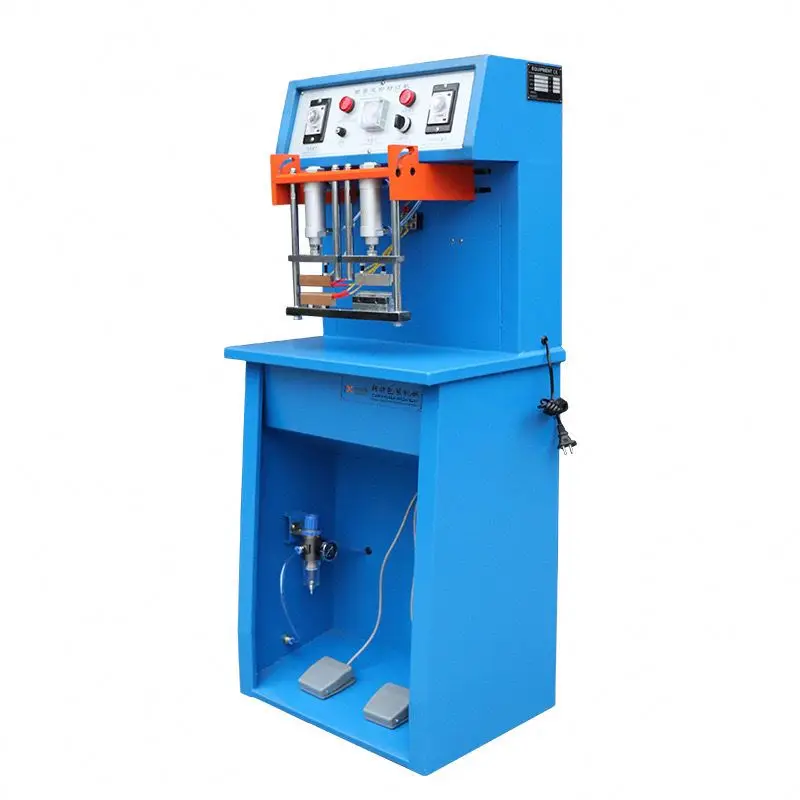
Source-controlled product identity
The Hoting queue identifies Product ID 1601247353531 as the TEBAK TS-80 date-coding and tail-sealing machine. The source title positions it for hand cream, cleanser, glue, plastic and other soft tubes.
The supplied record confirms five numeric fields: sealing width 0-80mm, a capacity field of 1800W, sealing speed 15 times/min, overall dimensions 1190*510*380mm and weight 42KG. Because the source labels 1800W as “Capacity,” this guide preserves that wording as a rating field and asks the supplier to confirm whether it means electrical input power, installed capacity or another value.
Voltage, frequency, sealing temperature, tube material limits, tube diameter, date-coding method, code size, cooling time, reject handling and certifications are not supplied. They remain RFQ, supplier-confirmation and acceptance-test requirements.
Recorded specifications
| Field | Source value | How to use it in procurement |
|---|---|---|
| Product ID | 1601247353531 | Keep this identifier on the quotation, sample order, inspection report and shipping documents. |
| Brand / model | TEBAK TS-80 | Confirm nameplate, revision and included configuration before payment. |
| Sealing width | 0-80mm | Confirm whether this is the supported tube-tail width, actual seal length or adjustment range. |
| Capacity field | 1800W | Ask the supplier to clarify the field, rated input, current, phase and duty cycle. |
| Sealing speed | 15 times/min | Confirm test conditions, operator steps, tube size, coding operation and acceptable seal rate. |
| Dimensions | 1190*510*380mm | Plan floor space, access, guard clearance, utilities and packaging removal. |
| Weight | 42KG | Check bench or floor support, lifting method and shipping documentation. |
| Application wording | Hand cream, cleanser, glue, plastic and soft tubes | Validate each tube laminate, seal layer, diameter, fill level and product compatibility. |
| Temperature | Not supplied | Request operating range, stability, sensor location and validated setpoints for each tube material. |
| Date coding | Date coding / embossing in title | Confirm embossing or printing method, character size, code layout, tooling and readability test. |
| Compliance | Not supplied in the source record | Request electrical, EMC, guarding, food/cosmetic contact and destination-market documents as applicable. |
Define the tube before comparing machines
A tube sealer is selected around the tube tail and seal layer, not around the product name alone. Send the supplier tube material, laminate structure, outside diameter, tail width, wall thickness, shoulder shape, fill level, cap configuration and target seal appearance.
For hand cream and cleanser, confirm whether the tube is PE, laminated PE, plastic laminate, aluminum laminate or another structure. For glue, record viscosity, solvent or water base, residue at the tail and the time available between filling and sealing.
For plastic tubes, ask which layer is intended to soften or fuse and whether the process requires a particular temperature, pressure or dwell time. Do not assume that every “plastic” tube seals under the same setting.
Confirm whether the 0-80mm source field describes the seal width or the adjustable tail width. Request a dimensioned diagram showing the jaws, seal area, tube centerline, product clearance and code position.
Request buyer-supplied sample tubes at minimum, nominal and maximum dimensions. Test filled tubes as well as clean empty tubes because product residue can change the seal.
Sealing process and temperature confirmation
The source does not provide sealing temperature, heating method, temperature tolerance, dwell time or cooling behavior. Ask for the complete process window and the measurement method used to establish it.
Confirm whether sealing is thermal, impulse, ultrasonic, hot-air, mechanical or a combination. Ask which parts contact the tube, how they are heated, how pressure is applied and how the seal is released.
Define the setpoint, actual jaw temperature, heating-up time, recovery time between cycles and temperature uniformity across the stated width. A controller display alone is not evidence of seal temperature.
Test the seal at low, nominal and high tube-wall thickness. Record peel strength, leak performance, visual width, wrinkles, burn marks, channel leaks and deformation.
Test the impact of product residue at the tail. Confirm cleaning instructions and whether the machine can reject or rework a contaminated seal.
Ask how the process handles starts, stops, long idle periods, power recovery and a cold machine. Record the first acceptable cycle and the stable production cycle.
Capacity field and electrical planning
The source lists “Capacity 1800W.” Because capacity is ambiguous, request a written clarification: rated input power, heater power, total installed load, maximum consumption or another definition.
Confirm voltage, frequency, phase, current, plug, breaker size, grounding, residual-current protection and cable requirements for the destination site.
Measure actual power during warm-up and steady operation with the buyer's tube and cycle. Record peak current, average power, recovery behavior and whether coding equipment changes the load.
Ask whether date coding is powered by the same electrical system and included in the 1800W field. Confirm separate circuits, fuses and controls.
Test emergency stop, guard opening, heater fault, sensor failure, over-temperature, power interruption and restart behavior. The source does not list these protections.
Interpreting 15 times per minute
The source gives a sealing speed of 15 times/min. Request the definition of one “time”: one tube, one jaw close, one completed seal, or another action.
Ask whether the stated rate includes loading, positioning, coding, sealing, cooling, inspection, unloading and operator movement. If it is a machine-only rate, record the assumed cycle steps.
Run a timed trial using the buyer's tube and code. Record completed acceptable tubes per minute, operator count, stoppages, warm-up, changeover and rework.
Separate mechanical cycle speed from good production output. A fast seal with a high leak or code-failure rate is not a usable capacity figure.
Test short runs and extended runs. Record jaw temperature drift, code readability, seal consistency, residue accumulation, fatigue points and maintenance interruptions.
Define the acceptance rate and rejection reason. Keep sample count, start time, end time, acceptable pieces, rejects and reworked pieces in the report.
Date coding and embossing requirements
The title says date coding embossing but does not specify the method. Confirm whether the TS-80 uses embossed characters, hot-stamp foil, inkjet, thermal transfer, laser or another coding process.
Specify code content, character height, number of lines, code location, date format, batch or lot field, contrast, permanence and legibility after handling.
Request the typeface, tooling, plate, character set, replacement process and changeover time. Confirm whether the code is formed in the seal, on the tube tail, on a label or on another surface.
Test fresh code and code after storage, rubbing, oil, water, cleaning, transport and product contact. Define the pass/fail method for every code position.
Ask for sample images at the buyer's actual tube color and surface finish. A readable mark on a white demonstration tube may not remain readable on a glossy or colored tube.
Confirm whether coding is synchronized with the seal cycle and what happens when the code is missing, incomplete, double-marked or misaligned.
Machine layout and installation
The recorded dimensions are 1190*510*380mm and weight is 42KG. Plan a stable installation surface, operator side, guard opening, tube infeed, finished-tube removal and service access around this envelope.
Confirm whether the dimensions include coding accessories, guards, handles, cables, control box, air fittings or protruding fixtures. Ask for an installation drawing and utility connection points.
Check doorways, lift capacity, stairs, pallet dimensions and final positioning before shipment. The 42KG weight should be used for handling planning, but verify whether it is net or operating weight.
Request vibration limits, leveling requirements, anchoring and floor loading. Confirm whether the machine can sit on a bench or requires a dedicated frame.
Keep hot surfaces, electrical panels and moving jaws accessible for service but protected from operators. Define the restricted area and guarding requirements.
Tube feeding, alignment and seal appearance
Confirm how the operator loads and centers a tube. Ask for guide dimensions, jaw adjustment, shoulder clearance, tail straightness requirements and protection against skewed sealing.
Test tubes with different fill levels and tail lengths. Record whether product pressure, air pockets or residual material changes the seal location.
Inspect seal width, alignment, symmetry, wrinkles, folds, pinholes, burned areas and tube deformation. Use a documented visual standard rather than a general statement that the seal looks good.
Check the end trim or tail shape if the machine cuts, folds, embosses or leaves the tail untrimmed. The source title does not define these functions.
Confirm changeover between tube sizes, material structures and code formats. Record tools, adjustment points, sample count, time and skill required.
Ask whether the machine can hold the stated 0-80mm range across all supported materials or whether the range is material-specific.
Quality testing for filled tubes
Use buyer samples filled with the actual hand cream, cleanser or glue. Product viscosity, temperature, residue and volatile components can affect sealing and coding.
Perform leak, burst or pressure testing suitable for the product and package. Define test pressure, dwell, sample count and pass/fail criteria with the packaging team.
Check seal strength before and after conditioning. Record sample storage temperature, time, orientation and any visual changes.
Inspect contamination at the seal. A clean external surface does not prove that the seal channel is free from product.
Measure code location and readability after sealing. Confirm that the date mark does not crack the tube, weaken the tail or interfere with downstream packaging.
Run a repeatability study across operators and shifts if the buyer expects production use. Record adjustments and rejected samples rather than reporting only the best run.
Safety, guarding and maintenance
Request guards and interlocks for the sealing jaws, heated parts, coding tool, cutters and moving mechanisms. Confirm emergency stop position and reset procedure.
Ask for over-temperature protection, sensor-failure response, heater fault, pressure fault, jam detection and power-loss behavior. None of these features are established by the source record.
Identify hot surfaces, sharp tube edges, moving jaws, pinch points, electrical energy, fumes and product residue. Provide operator training and lockout procedures.
Request cleaning instructions for product-contact or residue-prone areas. Confirm compatible solvents and whether the machine can be cleaned without damaging heaters, sensors or coding tools.
Define inspection intervals for jaws, heater, temperature sensor, pressure mechanism, guides, cutters, coding plate, cables and safety switches.
Ask for spare-part numbers, lead times, warranty coverage, troubleshooting codes and service response. Include a preventive-maintenance log in the handover package.
Factory acceptance test
- Verify Product ID 1601247353531, TEBAK brand, TS-80 nameplate and exact revision.
- Verify sealing width range against a dimensioned drawing and buyer tubes across the required range.
- Clarify the 1800W “Capacity” field and verify input voltage, frequency, phase, current and rated load.
- Measure the 1190*510*380mm envelope and confirm the 42KG weight definition and handling points.
- Run buyer-supplied hand-cream, cleanser, glue and plastic tubes where applicable.
- Record tube material, diameter, wall thickness, tail width, fill level, residue and temperature condition.
- Measure jaw temperature, stability, recovery, dwell, pressure and actual seal width.
- Test the 15 times/min claim using an agreed cycle definition and record good output, rejects and rework.
- Test date coding method, character size, code position, contrast, permanence and changeover.
- Inspect seal appearance, alignment, wrinkles, burn marks, channel leaks, contamination and deformation.
- Perform leak or pressure tests with agreed sample count and acceptance criteria.
- Test guards, interlocks, emergency stop, over-temperature, sensor failure, jam and restart protection.
- Test startup, warm-up, idle recovery, continuous run, stop and power interruption.
- Verify cleaning, maintenance, calibration, spare parts, manuals, training and service terms.
- Attach cycle logs, temperature logs, code samples, leak results, photographs and deviations to the order.
RFQ checklist
- Product ID 1601247353531, TS-80 model, revision and nameplate photograph.
- Meaning of 1800W “Capacity,” rated input, heater load, current, phase and duty cycle.
- Voltage, frequency, plug, grounding, breaker, residual-current protection and cable.
- Actual supported tube materials, diameters, wall thicknesses, tail widths and fill limits.
- Meaning of 0-80mm sealing width and dimensioned jaw, guide and seal-area drawing.
- Operating temperature, tolerance, heating method, dwell, pressure and cooling behavior.
- Definition and test conditions for 15 times/min sealing speed.
- Date-coding method, tooling, character size, code content, position, legibility and permanence.
- Tube alignment, feeding, loading, changeover, adjustment and operator requirements.
- Dimensions 1190*510*380mm, 42KG weight definition, support, lifting and service clearance.
- Seal strength, leak test, contamination limits, visual standard and rejection handling.
- Guards, interlocks, emergency stop, over-temperature, sensor failure and restart behavior.
- Cleaning chemicals, residue management, maintenance intervals and calibration.
- Spare parts, warranty, training, commissioning, service response and lead time.
- Electrical, EMC, guarding, material-contact and destination-market compliance documents.
Buyer decision framework
This source identifies a TEBAK TS-80 tail-sealing and date-coding machine with a stated 0-80mm sealing-width field, 1800W capacity field, 15 times/min speed, 1190*510*380mm dimensions and 42KG weight. A purchase decision still requires clarification of the 1800W label, tube compatibility, thermal process, coding method and quality results.
Approve the machine only after the supplier demonstrates repeatable seals and readable codes on the buyer's filled tubes, under an agreed cycle definition and with documented electrical and safety behavior.
Compare suppliers using good output, leak results, code legibility, material range, changeover time, cleaning, serviceability, spare parts and documentation rather than the headline cycle rate alone.
Frequently asked questions
What is the TS-80 sealing width?
The source lists 0-80mm. Confirm whether this is the seal width, tube-tail width or adjustment range and validate it on buyer samples.
What does 1800W capacity mean?
The source calls the field “Capacity” and gives 1800W. Ask the supplier to clarify whether it is installed capacity, input power, heater power or another rating.
Can it seal hand-cream, cleanser and glue tubes?
The title names these applications, but compatibility depends on tube material, wall structure, diameter, residue, fill level and the validated sealing process.
Does it print or emboss dates?
The title says date coding embossing, but the method and code details are not supplied. Confirm the coding technology, tooling, character size and permanence.
Is 15 times/minute guaranteed production output?
It is a source-listed sealing speed. Confirm what one cycle includes and measure acceptable good output with loading, coding, inspection and rework included.
What certifications are included?
No machine-specific certifications are provided in the source record. Request destination-market electrical, EMC, guarding and applicable contact-material documents.
Source and contact
This guide is based on the Hoting queue record for Product ID 1601247353531. The source confirms the TEBAK TS-80 product wording and five listed specifications, but not the complete thermal, coding, electrical or compliance profile. Before purchase, request sample trials, process windows, acceptance tests, manuals, spare-parts terms and warranty through the TEBAK sales inquiry channel.
Key specifications
- Sealing width
- 0-80mm
- Capacity
- 1800W
- Sealing speed
- 15 times/min
- Dimension(L*W*H)
- 1190*510*380mm
- Weight
- 42KG