
Source-controlled product identity
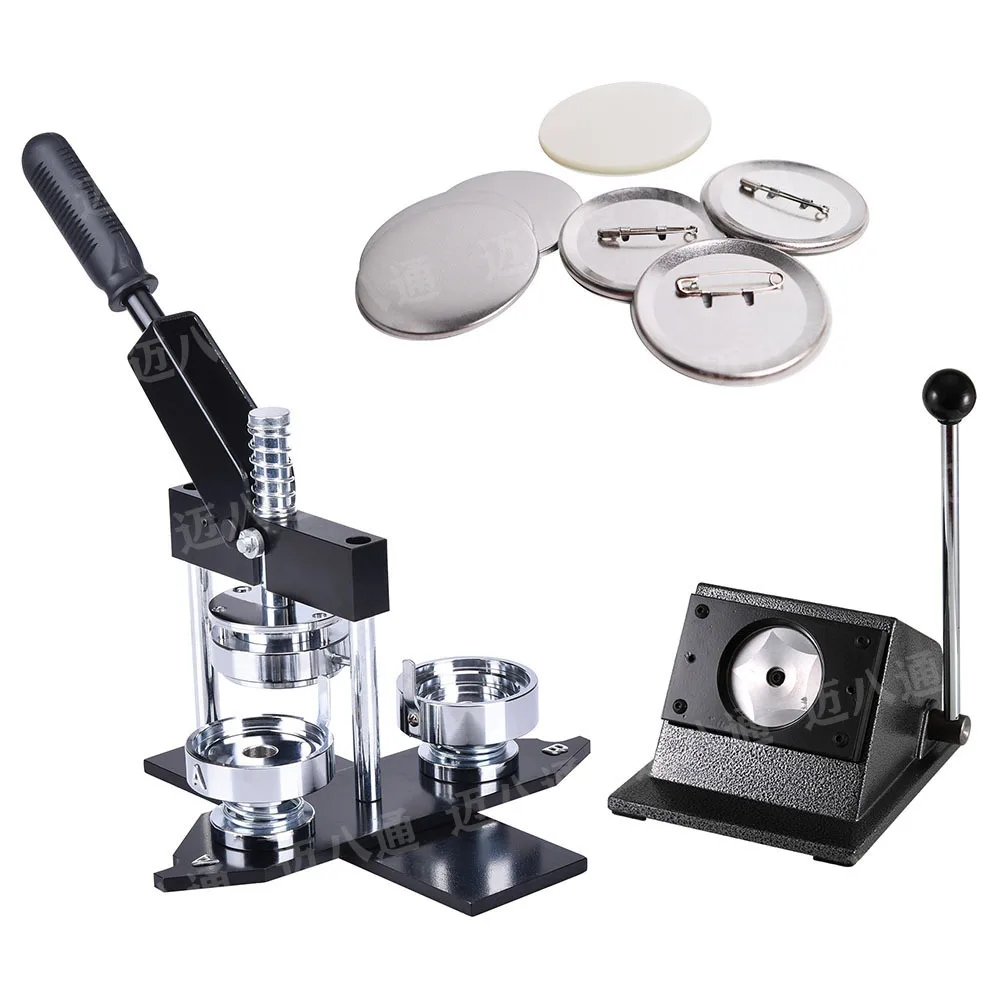
The Hoting queue identifies Product ID 1601284604912 as a TEBAK metal button badge press machine for 56mm, or 2-1/5 inch, round buttons. The listed package includes one badge maker machine and 100 button parts.
The source describes an aluminum-alloy body and handle, a solid base and an ergonomic long handle. It lists the machine size as 18.7 x 9.7 x 6.5 in and the applicable paper range as 120-157g/m2.
The source also uses promotional wording such as “easy to operate,” “repeatedly tested many times” and “the rate of pressed products is extremely high.” These are supplier descriptions, not an independently verified production guarantee. The buyer should define an acceptance sample and measurable defect criteria.
This B2B procurement guide turns the listing into a practical specification for event agencies, schools, museums, retail promotions, campaign teams, maker spaces, print shops and small-batch merchandisers. It focuses on the 56mm format, component compatibility, paper control, operator training, repeatability and incoming inspection.
Recorded specifications
| Field | Source value | Procurement meaning |
|---|---|---|
| Product ID | 1601284604912 | Use this ID on the quotation, purchase order, packing list and acceptance report. |
| Brand | TEBAK | Verify the nameplate and delivered brand marking. |
| Button diameter | 56mm / 2-1/5 inch | Confirm the die set, button parts and artwork template all match this size. |
| Included machine | 1.1 x Badge Maker Machine | Confirm one complete press is included and identify all supplied tooling. |
| Included parts | 100 x Button parts | Confirm the 100-piece count, component type, finish and 56mm compatibility. |
| Body and handle | Aluminum alloy | Request the alloy or finish specification if corrosion, appearance or weight matters. |
| Base | Solid base | Inspect stability, fasteners, underside protection and bench contact. |
| Machine size | 18.7 x 9.7 x 6.5 in | Reserve bench space and confirm whether this is packed or working size. |
| Applicable papers | 120-157g/m2 | Test the buyer's actual paper stock, coating, print coverage and cut accuracy. |
Confirm the 56mm format before ordering
Button presses are tooling-dependent. Ask the supplier to confirm that the 56mm / 2-1/5 inch description refers to the finished button diameter, not the blank, paper circle, die cavity or external shell dimension.
Request a drawing or dimensional diagram for the upper die, lower die, forming ring, back plate, pin, spring and paper guide. The buyer should be able to identify every component that controls the finished diameter.
Ask whether the supplied 100 button parts include front shells, printed-paper discs, clear covers, pin backs, clutch backs, plastic backs or another component set. “Button parts” is not enough for a production plan.
Confirm whether all included components are matched to the same 56mm die set. Mixed sizes can create apparent press defects that are actually component incompatibility.
Define the finished-button tolerance. A 56mm nominal size does not by itself define edge closure, paper alignment, back-plate position or pin orientation.
Request the artwork template with finished diameter, bleed, safe area, fold area and registration guidance. The template must match the actual tooling supplied with the machine.
If the buyer expects another diameter later, ask whether interchangeable dies are available and what must be changed: upper die, lower die, forming ring, cutting tool, shell, cover and back plate.
Included 100-piece kit
The listing states “100pcs free button parts.” Treat this as a package quantity that needs a component breakdown, not as a complete production specification.
Ask the supplier for a counted packing list. It should state the quantity of each part, for example shells, backs, covers, pins, clutches and any paper or film components, without assuming that every kit uses the same construction.
Confirm whether the 100 pieces are 100 complete button sets or 100 individual parts. The wording does not resolve this point.
Inspect the surface finish, scratches, dents, burrs, plating, pin strength and back-plate fit. Record acceptable cosmetic limits before purchasing replacement kits.
Ask whether the included parts are intended for testing only or for saleable production. If they are samples, request the specification and source of repeat-order components.
Request component packaging that prevents bent pins, scratched shells and mixed size parts during transport.
Confirm availability, MOQ, lead time and pricing for replacement 56mm parts. A machine is not operationally useful if the initial 100-piece kit cannot be replenished consistently.
For branded campaigns, ask about component color, finish, back type, pin orientation and custom packaging. These are separate buying decisions from the press itself.
Paper and artwork control
The source lists applicable papers at 120-157g/m2. Treat this as the stated range, not a guarantee for every paper formulation or print process.
Test paper within the full range, including the buyer's actual stock. Grammage alone does not describe stiffness, coating, moisture, surface friction, ink coverage or die-cut behavior.
Ask whether the paper is supplied as a pre-cut circle or printed sheet for manual cutting. Confirm the required paper diameter, cutting tolerance and alignment method.
Define artwork bleed and safe area for the 56mm finished button. The supplier should provide a production template that shows visible area, fold line and concealed area.
Run a small sample set using light coverage, dark coverage, photos, fine text, full-bleed color and high-contrast registration marks. Check whether paper wrinkles or shifts during forming.
Inspect the edge after pressing. The paper should be captured evenly without exposed corners, torn edges, folds, bubbles or print damage under the buyer's agreed criteria.
Control paper storage for humidity, flatness and cleanliness. A stable press cannot compensate for curled, damp or contaminated paper.
If the buyer uses laminated, coated, synthetic or recycled stock, obtain supplier approval and perform a sample test before committing to a campaign quantity.
Mechanical construction and operator ergonomics
The listing describes the body and handle as aluminum alloy and the base as solid. Ask the supplier to identify which parts are aluminum alloy and which are steel, polymer, plated or coated.
Inspect the handle pivot, linkage, pins, bushings, springs, fasteners and die alignment. These parts control repeatability more directly than the marketing phrase “easy operation.”
Measure the force required across a complete press cycle with the approved 56mm kit. The buyer should define an acceptable operating effort for the intended operators.
Check the long-handle grip for secure attachment, rounded edges, slip resistance and pinch-point clearance. A longer handle can change leverage and stored energy.
Verify that the solid base remains stable on the intended bench without unexpected sliding, rocking or lifting during the press cycle.
Ask whether the base includes mounting holes or non-slip feet. Do not drill or modify the base before confirming the warranty and frame structure.
Inspect the press with the die removed and installed. Confirm that access for cleaning, part loading and jam removal is safe and practical.
Record lubrication points, cleaning instructions, wear parts and recommended inspection intervals. No maintenance schedule is supplied in the source record.
Production workflow for small batches
Separate the workflow into artwork preparation, paper cutting, component kitting, first-side forming, button assembly, back-side forming, inspection and packing.
Keep one approved 56mm die set with the machine. Label spare or replacement tooling to prevent mixing with another diameter.
Use a first-piece approval at the start of each batch. Check artwork orientation, edge capture, shell finish, back attachment, pin orientation and visible defects.
Keep paper and button parts in matched lots. Record supplier, batch, quantity and inspection result for any campaign that requires traceability.
Count completed buttons by accepted and rejected units. Record the defect type rather than relying on a general claim of high pressing rate.
Use a simple defect taxonomy: incomplete closure, paper shift, wrinkle, exposed edge, scratched shell, loose back, bent pin, wrong orientation, wrong diameter and contamination.
Define rework rules. Some defects can be re-pressed after safe disassembly; others require a new shell, cover, paper or back. Do not rework a part without confirming the result.
Pack finished buttons so pins and printed faces are protected. Confirm carton count, inner protection, moisture control and labeling for shipment.
Quality claims and acceptance criteria
The supplier states that the machine was repeatedly tested and that the rate of pressed products is extremely high. Request the actual test method, sample count, component set, paper weight, operator method and defect calculation.
Do not convert a supplier statement into a numeric yield guarantee unless the quotation includes a measurable acceptance standard.
Build the FAT around the buyer's own materials: the 56mm components, the intended paper within 120-157g/m2, the artwork template and the trained operator procedure.
Define an agreed sample size and record every accepted and rejected unit. Separate machine defects from component defects and paper defects.
Repeat the test after a reasonable operating interval to check whether linkage heating, spring behavior, die contamination or operator fatigue changes the result.
Check dimensional consistency using a suitable gauge. Confirm finished diameter, back fit, pin orientation and closure without damaging the sample.
Inspect the first, middle and last samples from the test run. This can reveal material variation that a first-piece check alone misses.
Require corrective action for any failure. The supplier should identify whether the cause is die alignment, component tolerance, paper specification, operator sequence or frame movement.
Packaging, spares and service
Request a complete packing list for the press, 100-piece kit, die set, tools, instructions and protective materials. The source does not list included accessories beyond the machine and button parts.
Ask for gross weight, package dimensions, shock protection, moisture protection and carton markings. The machine size of 18.7 x 9.7 x 6.5 in is recorded as machine size, not confirmed package size.
Request spare or replacement parts: die components, forming rings, springs, pins, linkage parts, fasteners, handle grip, cutting tools and 56mm button kits.
Define technical support for die alignment, paper setup, jam removal, lubrication and component selection. Ask for a short setup video or illustrated manual for the delivered configuration.
Confirm warranty scope for frame, linkage, dies, springs and normal wear items. Wear parts should be identified separately from manufacturing defects.
Ask for service response time, spare-part availability, remote troubleshooting and the process for reporting a failed sample batch.
Safety and operator training
Request a manual covering pinch points, stored handle force, die access, sharp metal edges, spring or linkage failure, jam removal and safe cleaning.
Train operators to keep fingers outside the die area, use the intended handle path and stop before clearing a misloaded component.
Check the base, frame, handle, pivot, fasteners and die alignment before each shift or campaign batch. Do not operate a press with loose or cracked structural parts.
Keep the work surface clean and dry. Paper scraps, metal fragments and adhesive residue can affect alignment and surface quality.
Define a safe procedure for replacing dies or parts. Isolate the handle and support moving components before maintenance.
Use appropriate eye protection when dealing with broken springs, sharp shells or failed components. Confirm site-specific PPE with the responsible safety professional.
Do not allow untrained users to test the machine without supervision, especially in schools, public events or maker spaces.
Factory acceptance test
- Verify Product ID 1601284604912, TEBAK brand and exact 56mm / 2-1/5 inch configuration.
- Count one badge maker machine and confirm the delivered 100-piece kit breakdown.
- Verify the upper die, lower die, forming ring and button parts all match 56mm.
- Measure the machine at 18.7 x 9.7 x 6.5 in and confirm whether the dimensions are working or packed size.
- Inspect aluminum-alloy body and handle claims, solid base, pivot, linkage, fasteners and finish.
- Test base stability, handle travel, pinch-point clearance and operator access.
- Run the buyer's paper stock across the stated 120-157g/m2 range where practical.
- Run light, dark, full-bleed, fine-text and photographic artwork samples.
- Record finished diameter, paper alignment, edge capture, shell finish, back fit and pin orientation.
- Count accepted and rejected units and classify every defect.
- Repeat the sample using the same components after an operating interval.
- Verify die change, cleaning, lubrication, jam removal and safe maintenance procedure.
- Verify packing list, manual, spare-part list, warranty and component replenishment path.
- Sign acceptance only after the agreed sample yield and defect limits are met.
RFQ checklist
- Product ID 1601284604912, TEBAK brand, exact model and 56mm / 2-1/5 inch finished diameter.
- Complete drawing and part list for dies, forming rings, shells, covers, backs, pins and clutches.
- Clarification of whether 100 button parts means 100 complete sets or 100 individual parts.
- Body, handle, base, linkage, spring, pivot, fastener and surface-finish specifications.
- Machine size confirmation: 18.7 x 9.7 x 6.5 in, with working versus packed dimensions.
- Applicable paper range 120-157g/m2 and test results for the buyer's actual stock.
- Artwork template, bleed, safe area, paper diameter, cutting tolerance and registration guidance.
- Acceptance yield, sample size, defect taxonomy, measurement method and rework rules.
- Die alignment, finished-diameter tolerance, edge capture, back fit and pin-orientation limits.
- Replacement 56mm parts, die components, springs, pins, linkage parts and availability.
- MOQ, sample, lead time, package dimensions, gross weight and shipping protection.
- Operator manual, maintenance schedule, lubrication, jam removal and safety instructions.
- Warranty scope for frame, dies, linkage, springs and consumable or wear parts.
- Training, remote support, spare-part response and failed-batch corrective-action process.
Buyer decision framework
This source confirms a TEBAK manual metal button badge press for 56mm / 2-1/5 inch round buttons, one machine, 100 button parts, aluminum-alloy body and handle, solid base, 18.7 x 9.7 x 6.5 in machine size and 120-157g/m2 applicable papers.
It does not confirm the exact component breakdown, die tolerance, press force, production rate, package dimensions, replacement-part availability or certification. Approve the purchase only after a sample test using the buyer's paper and button components.
Compare offers by component compatibility, repeatable edge closure, safe operation, die support, replacement kits, documentation and total cost per accepted button. Do not rank a supplier by the phrase “high rate” without a defined sample and defect standard.
Frequently asked questions
What button size does this press make?
The source lists 56mm and 2-1/5 inch round buttons. Confirm that this is the finished button diameter and that all supplied tooling and parts match.
What is included?
The source states one badge maker machine and 100 button parts. Request a component-level packing list and confirm whether the 100 pieces are complete sets or individual parts.
What paper can be used?
The stated applicable range is 120-157g/m2. Test the buyer's actual paper because coating, stiffness, moisture and print coverage also affect forming.
What is the machine made of?
The source describes the body and handle as aluminum alloy and the base as solid. Request the detailed material and finish specification if it affects durability or appearance.
Is the pressing yield guaranteed?
No numeric guarantee is supplied. The supplier's high-rate statement should be converted into a buyer-specific sample test, defect classification and acceptance limit.
What are the machine dimensions?
The listed machine size is 18.7 x 9.7 x 6.5 in. Confirm whether this is operating size or packed size and reserve additional handling clearance.
Source and contact
This guide is based on the Hoting queue record for Product ID 1601284604912. It preserves the TEBAK identity, 56mm format, included 100-piece wording, aluminum-alloy construction, solid base, machine size and paper range. Request the final die drawing, component list, sample test, safety manual, spare-part list and warranty through the TEBAK sales inquiry channel.
Key specifications
- Source Product ID
- 1601284604912
- Brand
- TEBAK
- Button diameter
- 56mm / 2-1/5 inch
- Included machine
- 1.1 x Badge Maker Machine
- Included button parts
- 100 x Button parts
- Body and handle
- Aluminum alloy
- Base
- Solid base
- Machine size
- 18.7 x 9.7 x 6.5 in
- Applicable papers
- 120-157g/m2