
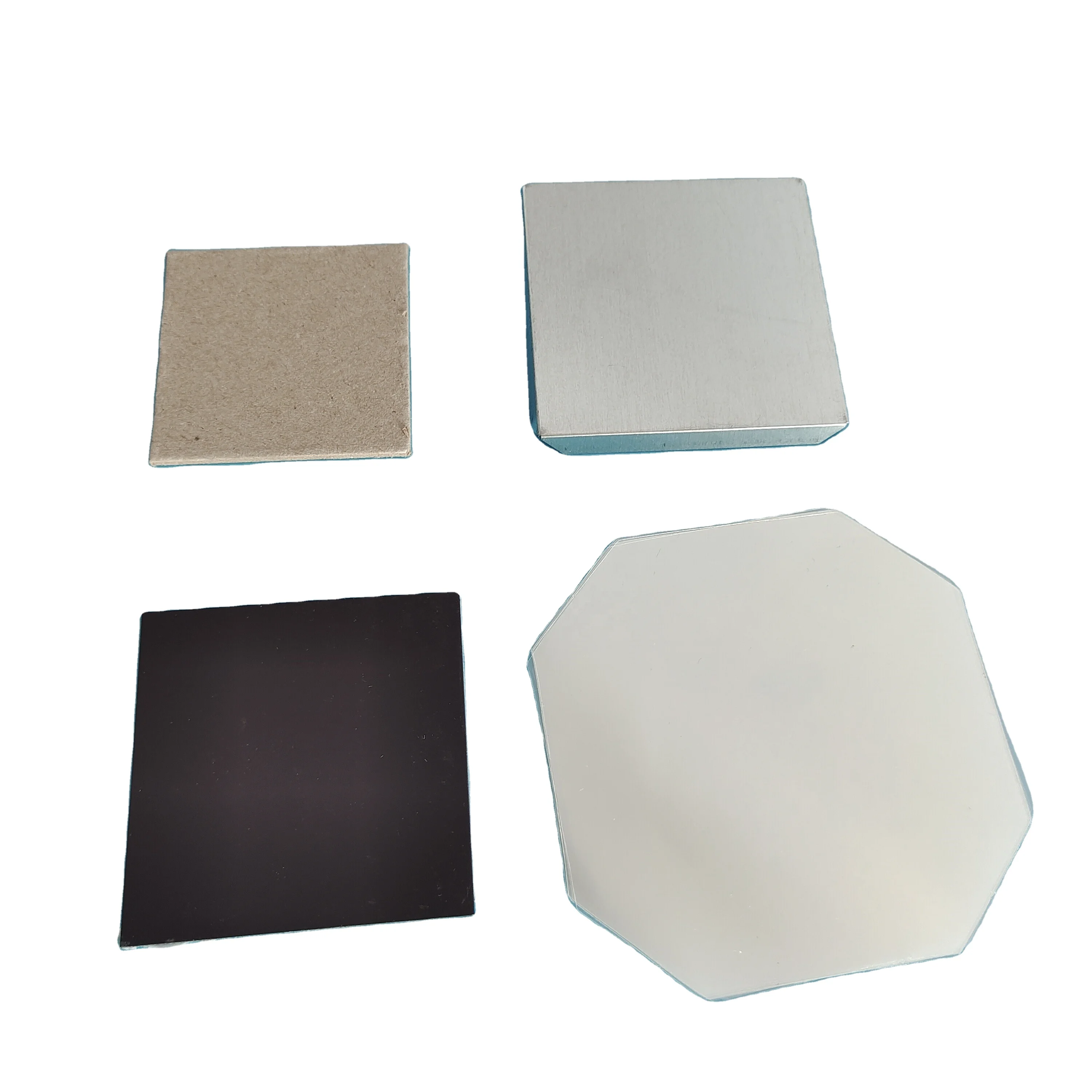
Source-controlled product identity
The Hoting queue identifies Product ID 1601250493925 as fridge magnet material and a making set, listed under the title "TEBAK Factory Price Fridge Magnet Material 80*53mm 63.5*63.5mm 50*50mm Fridge Magnet Material". The record carries the fullest parameter block in this queue, with sixteen populated rows, plus a product description that lists the contents of the set.
Sixteen rows look like thoroughness. Read against each other, they are not: three of the rows contradict the description, one row is labelled with a unit that belongs to a different kind of quantity, one row states a production rate that cannot be true, and one row is a marketing template that describes no product at all.
This is worth setting out carefully, because the useful facts in the record are genuinely useful. The size is given, the material of two layers is given, the shape is given, the colour is stated to be custom, a minimum order quantity is given and the contents of the set are described in the text. A buyer who takes the block at face value, however, would order a box that cannot exist and would believe a daily output roughly a hundred times faster than one finished piece per second.
This guide reproduces the record, audits its internal consistency with arithmetic that a buyer can repeat, separates the rows that can be used from the rows that cannot, and lists the questions that follow.
The sixteen recorded parameters, verbatim
| Parameter | Recorded value |
|---|---|
| Applicable Industries | Hotels, Garment Shops, Building Material Shops, Manufacturing Plant, Machinery Repair Shops, Food & Beverage Factory, Farms, Restaurant, Home Use, Retail, Food Shop, Printing Shops, Construction works , Energy & Mining, Food & Beverage Shops, Other, Advertising Company |
| Warranty of core components | 6 Months |
| Dimension(L*W*H) | 47*35*28cm |
| Weight | 27KG |
| Warranty | 6 Months |
| Button material | Steel |
| Product name | 80*53MM Fridge Magnet |
| Usage | Diy Badge |
| Application | fridge |
| Size | 80*53mm |
| Color | Custom Requirement |
| Material | Metal + ABS |
| Kw | 27kg/1000pcs |
| Shape | Rectangular |
| MOQ | 100pcs |
| Output | 10000000pcs/day |
What the description says the set contains
The description states the contents of the set in these words, reproduced as recorded: one 80*53mm fridge magnet machine body with mould, one 80*53mm cutter, and 200pcs material consisting of cover, bottle, magnet and film. It states that one set has a gross weight of 25kg and that the box size is 47*35*28mm. The title of the same listing names three sizes, 80*53mm, 63.5*63.5mm and 50*50mm.
That paragraph contains the size of the box in millimetres while the parameter block gives the same three numbers in centimetres, gives a gross weight of 25 kilograms while the parameter block gives 27 kilograms, names a set of four material components one of which is unclear, and describes a machine with a mould and a cutter for one size only while the title names three sizes. Each of those points is taken in turn below.
Audit one: the box cannot be the size the description says
The description gives the box as 47 by 35 by 28 millimetres. The parameter block gives the same numbers in centimetres. Both cannot be right, and the millimetre reading can be ruled out with arithmetic that needs no external figure beyond the set's own stated weight.
A box of 47 by 35 by 28 millimetres has an internal volume of about 46 cubic centimetres, which is 46 millilitres, a little less than a third of a standard drink can. The same description states that the set weighs 25 kilograms. If 25 kilograms occupied 46 millilitres, the contents would need an average density of about 543 grams per cubic centimetre. For comparison, osmium, one of the densest naturally occurring metals, has a density of about 22.6 grams per cubic centimetre. The figure required would be roughly twenty four times denser than osmium.
No packing material and no machine can do that, so the millimetre label in the description is an error and the centimetre figures in the parameter block are the correct reading. That is worth stating plainly rather than treating as a curiosity, because a buyer who orders on the basis of the description line, for example to arrange a courier collection on a small parcel rate, will have a shipment collected on the wrong service and a box that does not exist.
The corrected box is 47 by 35 by 28 centimetres, which is about 46 litres and about 0.046 cubic metres. At a stated set weight of 25 to 27 kilograms that gives a packed density of roughly 540 to 590 kilograms per cubic metre, which is a normal figure for a machine packed with materials in a box with some void space. This is the reading to plan freight on, and the buyer should ask the supplier to confirm the units in writing and to confirm whether 47 by 35 by 28 is the outer carton or the inner box.
Audit two: the same set weighs 27 kilograms and 25 kilograms
The parameter block gives a weight of 27KG. The description gives the set a gross weight of 25kg. Since the description describes the same set, the two figures differ by two kilograms and the direction of the difference is itself informative.
Gross weight is normally greater than net weight, because gross includes the packing. Here the figure that appears in the parameter block, which a reader would take as the machine's weight, is the larger of the two, while the figure described as gross is the smaller. Either the parameter block's 27 kilograms is the set's net weight and the description's 25 kilograms is simply wrong or was carried over from another product, or the parameter block's 27 kilograms includes something the description's figure does not.
Ask which figure is the gross weight and which is net, and ask for the net weight of the machine body alone, the weight of the materials pack of 200 pieces and the weight of the box. Only then does the set's weight reconcile, and the reconciliation matters because the buyer is paying freight on the packed weight and handling a machine of this weight in a workshop that may have to lift it onto a bench.
The recorded box volume of about 0.046 cubic metres is the figure to take to a forwarder, and at 25 to 27 kilograms per set the buyer can compute the number of sets that fit a given load once the forwarder supplies the usable volume. The two kilograms of doubt change the freight calculation by less than a tenth, but they change the verification of the first delivery, because a set that arrives at a weight the buyer did not expect is a set the buyer cannot check.
Audit three: ten million pieces a day is not achievable on this equipment
The output row states 10,000,000 pieces per day. That figure can be tested against the arithmetic of time and against the arithmetic of material, and it fails both.
A day contains 86,400 seconds. Producing ten million pieces in a day would require about 116 finished pieces every second, sustained around the clock. For scale, one finished piece per second would produce 86,400 pieces a day, so the stated rate is about 116 times faster than a machine completing one piece every second. No press fed by hand, and no machine of the type described in this record, produces a finished magnet assembly more than a hundred times a second.
The material arithmetic fails in the same direction. Taking the record's own figure of 27 kilograms per thousand pieces, which is 27 grams per piece, ten million pieces would consume about 270 tonnes of material in a single day. That is the output of a large industrial plant rather than of a workshop appliance, and it is inconsistent with a product whose minimum order quantity is stated as 100 pieces.
The most likely explanation is that the output field is a platform template field left at a default or at a maximum that the listing form permits, and that it was never intended as a manufacturing statement. The practical consequence for a buyer is a rule: an unverifiable capacity figure should not be used to select a supplier, and a supplier who cannot or will not state a realistic daily output for a named size and a named printing process has not yet answered the question that matters.
What the buyer should ask for instead is the output of the specific operation in the specific configuration: how many pieces one press can complete per hour with one operator feeding it, how many covers one cutter can trim per hour, and how many of those hours a day the workshop actually runs. A figure of, for example, pieces per hour per operator is checkable, comparable and useful; a figure of pieces per day for a factory the buyer has not seen is not.
Audit four: the row labelled Kw is not power
The row labelled Kw carries the value 27kg/1000pcs. The abbreviation Kw conventionally means kilowatts, a unit of power, and the value attached to it is a mass per thousand pieces, a completely different kind of quantity. The label is therefore wrong, and the value needs its own scrutiny.
Read as written, 27 kilograms per thousand pieces is 27 grams per piece. That is a plausible order of magnitude for a magnet blank of 80 by 53 millimetres made from a printed cover, a metal front, a backing and a magnetic layer, so the value itself is not absurd.
It does, however, coincide exactly with the weight figure of 27 kilograms given in the parameter block for the whole set, which raises the possibility that the number was duplicated from the weight field into this field by mistake. There is no way to tell from the record which it is, so the buyer should ask for the unit weight of one finished 80 by 53 millimetre assembly and the breakdown of that weight by layer.
A note on comparability: a different listing from the same supplier in the same queue quotes a lower unit weight for the same nominal 53 by 80 millimetre rectangle, in the range of 23 grams per piece. That is a separate record and not a figure from this one; it is mentioned only to show why the question is worth asking rather than to suggest a specification. If the same nominal size carries two different unit weights in two listings, the difference lies in the construction, most likely the thickness of the metal front, of the backing board or of the magnetic layer, and only the supplier can say which construction applies to which listing. Ask for the unit weight and the layer breakdown, and note it, because unit weight is the figure that turns a price per thousand pieces into a price per kilogram of material and lets a buyer compare two quotations on equal terms.
What is genuinely usable in the block
Four rows can be used as they stand or with a single clarification.
The size row gives 80 by 53 millimetres and the shape row says rectangular, which agree with the title and with the description's mention of an 80 by 53 millimetre machine body and cutter. This is the size the set is built around, and it is the only size the description actually specifies for the mould and the cutter.
The material row gives Metal plus ABS, and the button material row says Steel. Taken together they describe a product with a metal front, which the second row calls the button in the terminology used for badge making, and a body made of ABS plastic. That is consistent with the construction of this class of product, in which a printed cover sits over a metal shell and the shell carries the magnetic backing on the rear. What the rows do not say is the grade or the thickness of the steel, whether it is plated and with what, or the grade of the ABS, and none of those is a trivial detail: the plating and the steel thickness decide how the front resists denting and corrosion, and the grade of the ABS decides how the housing behaves if it is left in sunlight or in a hot vehicle.
The colour row says the colour is a custom requirement, which is the commercially interesting row in the whole block because it confirms that the visible face is supplied to the buyer's design rather than being a stock pattern. That single word is what turns this from a novelty into a product line, and it is also the row that raises the questions the block does not answer: by what printing method the custom face is produced, how many colours are included, what artwork format is required, whether a proof is supplied before production, what the minimum quantity is for a printed design as distinct from the minimum order quantity for blanks, and how long a custom run takes. None of those appears in the record.
The minimum order quantity row states 100 pieces. That is a low figure for a printed product and a plausible figure for loose materials, so the buyer should establish what the 100 pieces refers to: the machine and mould sets, the blank materials, or the printed covers in a single design. A minimum order quantity of 100 printed covers would allow a buyer to test many designs cheaply; a minimum of 100 machines would not. The two possibilities differ by two orders of magnitude in cash and the record does not distinguish between them.
One size or three
The title names three sizes: 80*53mm, 63.5*63.5mm and 50*50mm. The parameter block specifies 80*53mm for the product name and for the size, and the description states that the set contains one machine body with a mould and one cutter, both in 80 by 53 millimetres, together with 200 pieces of material.
So the listing that advertises three sizes describes a set for one of them. Two readings are possible. Either the three sizes are three separate products sold under one title, in which case the buyer must specify which one they are ordering and the other two are not included, or the one size is an example and the mould and cutter can be supplied in any of the three sizes at a stated price. The buyer should ask which, ask what a second size costs as an additional mould, and ask whether the cutter is common to all three or is size specific.
This matters because a rectangular 80 by 53 millimetre magnet and a square 63.5 millimetre magnet take different designs. A design drawn for one does not print on the other without being redrawn, and a buyer planning a range of souvenir or photo products will want to know early which sizes share tooling and which do not. The record also names the rectangular size only, so any plan built on the two square sizes is built on the title rather than on the specification.
The layer the record barely mentions: the magnet
The product is a fridge magnet, and the record says almost nothing about the part that makes it one. The material row gives Metal plus ABS, the button material row gives Steel, and neither describes the magnetic layer.
The description's list of materials mentions cover, bottle, magnet and film, so a magnetic layer is supplied with the set. What is not stated is what kind of magnet it is, how thick it is, what its holding force is, and whether it is a flexible magnetic sheet or a rigid ferrite piece. On a fridge magnet these are the figures that decide whether the finished product holds a photograph on a painted steel door, slides down it, or falls off when the door is closed sharply.
The holding force depends on the magnet's grade, on the area it covers, and on the thickness of the material between the magnet and the door, which in this construction is the metal front and any plating and any adhesive. Ask for the magnet's type, thickness and grade, ask for the holding force of a completed assembly in grams or newtons, and ask how it is measured, because a figure quoted for a bare magnet sheet is not the same as the figure for the finished assembly. Ask also how the magnetic layer is attached, whether by self-adhesive, by a clip formed into the metal shell, or by pressure, since an attachment that fails after a season in a humid kitchen ends the product's life without the magnet itself being at fault.
Ask about the two square sizes at the same time, since a 50 by 50 millimetre magnet has a smaller area than an 80 by 53 millimetre one and may need a different magnet thickness to hold the same photograph.
The fourth material component, and what the set actually hands the buyer
The description lists the 200 pieces of material as cover, bottle, magnet and film. Four components, one of which is unclear.
Cover and magnet are self-explanatory in this construction, and film most likely refers to a protective or laminating film over the printed face. A bottle, in a set of flat magnet components, does not describe an obvious part, and the term is most likely a mistranslation of a backing or a base piece, or of the rigid board that sits between the printed cover and the magnet. The buyer should ask for a photograph of the four components laid out separately with their names, because the correct term matters for reordering: an order placed for covers and film that should have included backing boards will arrive incomplete.
The quantity is worth checking as well. The set is described as containing a machine, a mould, a cutter and 200 pieces of material, and the buyer should establish whether the 200 pieces consist of 200 complete sets of all four components, which would make 200 finished magnets, or 200 pieces in total distributed across the four components, which would make fifty. The difference is a factor of four, and it is a question of one line in a specification sheet.
Warranty stated twice, and what it covers
The block contains two warranty rows, one for core components and one plain, both reading six months. Two identical periods for two different scopes suggests that the same figure was entered twice, and the buyer should ask what the difference is intended to be, what counts as a core component, and what is excluded.
On this product the parts that can fail are the press mechanism and its bearing or cam, the mould and the cutter, and the spring or the forming die that holds the shell while the magnet is pressed. The mould and the cutter are also the parts most exposed to wear and to damage by an operator using the wrong material or too much force. Ask explicitly whether the mould and the cutter are covered, whether a worn mould is a warranty item or a consumable, and what the replacement price and lead time are. Ask how a claim is handled across a border, who pays the return freight, and whether the remedy is a part, a repair or a credit, because a six month warranty that requires shipping a machine back is worth less than a six month warranty that ships a part.
The row that describes no product
The first row lists applicable industries: hotels, garment shops, building material shops, manufacturing plants, machinery repair shops, food and beverage factories, farms, restaurants, home use, retail, food shops, printing shops, construction works, energy and mining, food and beverage shops, other, and advertising companies.
That list is a platform template. It names almost every industry category the listing form offers, including several, such as energy and mining or food and beverage factories, with no plausible connection to a fridge magnet set. It contains no information about the product and should not be read as one, and its presence among otherwise specific rows is the clearest sign in the record that some fields were filled to complete a form rather than to describe a machine.
The practical reason to point this out is that the same habit probably produced the output row and possibly the millimetre label, so a buyer reading this block should treat the fields that cannot be checked as unverified rather than as weak evidence, and should rely on the rows that can be measured.
What a buyer should request before ordering
- Written confirmation of the box dimensions and their units, and whether 47 by 35 by 28 is the outer carton or an inner box, since the description states millimetres for the same three numbers that the parameter block states in centimetres.
- The gross weight and the net weight separately, the weight of the machine body alone, the weight of the materials pack and the weight of the box, since the record gives 27 kilograms in one place and 25 kilograms in another.
- A realistic output figure for a named size in a named configuration: pieces per hour per operator for pressing and for cutting, and the number of hours worked per day.
- The unit weight of one finished 80 by 53 millimetre assembly and the breakdown of that weight by layer, together with an explanation of the row labelled Kw.
- Whether the set includes tooling for one size or three, the price of each additional mould, and whether the cutter is size specific or common.
- Whether the minimum order quantity of 100 pieces applies to machine and mould sets, to blank materials or to printed covers in a single design, and the minimum for a printed run as distinct from blanks.
- The printing method for the custom face, the number of colours included, the artwork format and template, whether a proof is approved before production, and the lead time for a custom design.
- The steel grade and thickness of the front, whether it is plated and with what, and the grade of the ABS body with its behaviour in sunlight and heat.
- The magnet type, thickness and grade, the holding force of a completed assembly and how it was measured, and how the magnetic layer is attached.
- A photograph of the four material components laid out separately with their names, since the term bottle is unclear in this construction.
- Whether the 200 pieces of material make 200 finished magnets or 100 or 50, by component count.
- What the six month warranty covers, whether the mould and cutter are included, whether they are treated as consumables, and the replacement prices and lead times.
- Packaging: carton grade, internal protection, units per carton and per pallet, and the packed dimensions and weights for a full order rather than for one set.
- The food contact and child safety considerations for a decorative item that will be handled and that may be given to children, and the documentation the supplier holds for the destination market.
- Price at the buyer's quantity for the set and for each component separately, the trade term, payment terms and lead time.
Acceptance and incoming inspection
Because so much of this record has to be verified rather than read, the first delivery is the specification. The checks below are the ones that settle the open questions.
Weigh and measure the shipment. Record the carton's dimensions and its gross weight, then open it and weigh the machine, the cutter, the mould and the materials pack separately. Compare the machine's weight with both the 27 kilogram and the 25 kilogram figures in the record and record which one it matches, since that single measurement resolves which figure was wrong. Measure the box in centimetres and confirm that the millimetre figure in the description was indeed an error.
Count and identify the components. Lay out the four materials and photograph them with their names, count them and confirm whether the 200 pieces make 200 finished magnets or fewer. Check whether a cover, a backing piece, the magnet and the film are each present in equal numbers, because an unequal distribution will show up as leftover components at the end of a run.
Measure the unit weight. Weigh ten finished assemblies and divide, then compare the result with the 27 grams per piece implied by the Kw row, and record the figure as the buyer's own reference for future orders.
Test the magnet on a real door. The only meaningful test of a fridge magnet is a painted steel surface, not a bench. Assemble a finished magnet and test it on a domestic refrigerator door, a painted steel cabinet and a stainless steel appliance front, and note whether it holds, slides or falls, since stainless steel fronts are frequently non-magnetic and are a common surprise in markets where kitchens have them. Record the result for the reference assembly and for the smallest size if more than one size is ordered.
Test the tooling on the actual material. Press and trim a small run using the supplied components, and record whether the cutter cleanly trims the cover stock supplied, whether the press forms the shell without marking it, and whether any part of the machine flexes under normal operation. Tooling problems appear within the first few hundred pieces, so a run of that length is enough to find them, and repeating the same run at the end of the shift will show whether the machine's output drops as it warms or as the operator tires.
Confirm the electrical and mechanical basics. If the machine has any motor, confirm the voltage and plug match the order and that the supply is suitable. Check the machine for sharp edges on the die and the cutter, since these are hand-operated tools in a workshop, and check that the working position is stable and that the machine does not move when the lever is operated firmly.
Finally, record everything measured into a file that travels with future purchase orders. On a product whose specification is assembled from a template in places, the buyer's own measurements are the only reliable specification, and they are also the evidence needed if the second shipment differs from the first.
Buyer decision framework
The source for this guide is a record with sixteen populated parameters, a description that contradicts three of them, and one row that describes no product. Sorting the rows by what they can be trusted for is the whole of the buying decision.
Four rows are usable: the size of 80 by 53 millimetres matches the title and the description's tooling; the shape is rectangular; the material is metal plus ABS with a steel front; and the colour is custom to the buyer's requirement, which is the row that makes the product interesting.
One row is useful but needs its scope established: the minimum order quantity of 100 pieces, which could refer to machines, to blanks or to printed covers, with a difference of two orders of magnitude in cash between the readings.
Three rows cannot be used as written. The box dimension conflicts with the description in its unit, and the millimetre reading can be ruled out because it would require a density twenty four times that of osmium. The weight appears as 27 kilograms in one place and 25 kilograms as a gross figure in another, in the wrong direction. The output figure of ten million pieces a day would require about 116 finished pieces per second and about 270 tonnes of material a day.
One row carries a wrong label and a value that may be duplicated from elsewhere. One row is a platform template with no content. Two rows state the same warranty period for two different scopes.
The purchase becomes a decision once five things are known. First, the true packed dimensions, weights and units, so that freight and handling are planned on facts. Second, whether the tooling covers one size or three and what a second size costs, since the title advertises three and the specification describes one. Third, the magnet's type, thickness and holding force as measured on a real door, since the magnet is the product. Fourth, the printing arrangement for the custom face, including method, proofing and the minimum for a printed run, since a custom face is the reason to buy this set at all. Fifth, what the hundred piece minimum applies to and what the six month warranty covers.
Until those answers are in hand, this record describes a rectangular 80 by 53 millimetre magnet set with a machine, a mould, a cutter and 200 pieces of material, whose weight and packing are stated inconsistently, whose capacity figure is not credible and whose magnetic layer is barely described. Each of the five gaps is a question for the supplier rather than an inference.
Frequently asked questions
Is the box 47 by 35 by 28 centimetres or millimetres?
Centimetres. The description says millimetres while the parameter block says centimetres for the same three numbers. A 47 by 35 by 28 millimetre box holds 46 millilitres, and the described set of 25 kilograms would need a density about twenty four times that of osmium to fit in it, so the millimetre label is an error.
Does the set weigh 27 kilograms or 25 kilograms?
The record gives both, and the smaller figure is described as the gross weight, which is the wrong way round. Ask for gross and net separately, plus the weight of the machine, the materials pack and the box.
Can it really produce ten million pieces a day?
No. Ten million pieces in a day of 86,400 seconds requires about 116 finished pieces per second, and at the record's own 27 kilograms per thousand pieces it would consume about 270 tonnes of material a day. The figure is almost certainly a template field. Ask for pieces per hour per operator instead.
What does the row labelled Kw mean?
The label means kilowatts, but the value is 27 kilograms per thousand pieces, which is a mass. Treat the label as wrong and the value as unverified: ask for the unit weight of one finished assembly, since 27 kilograms also appears as the set weight and the number may have been duplicated.
Does the set include moulds for all three sizes in the title?
The description specifies one machine body with a mould and one cutter, both in 80 by 53 millimetres. The title names three sizes. Ask whether the other two are separate products, and what an additional mould costs.
How strong is the magnet?
Not stated. Ask for the magnet type, thickness and grade and for the holding force of a completed assembly with the method used to measure it, and test it on a painted steel door, a painted cabinet and a stainless steel appliance front, since stainless fronts are often non-magnetic.
What is the bottle in the material list?
Unclear in a set of flat components, and most likely a mistranslation of a backing or base piece. Ask for a photograph of the components laid out with their names before ordering replacements.
Do the 200 pieces make 200 magnets?
Not established. If all four components are present 200 times over, the answer is 200; if the 200 pieces are spread across four components, it is 50. Ask for the component count.
What does the 100 piece minimum order quantity apply to?
Not stated, and the reading matters. Ask whether it applies to machine and mould sets, to blank materials or to printed covers in one design, and ask separately for the minimum of a custom printed run.
What printing is available for the custom face?
The colour row says custom requirement, which confirms the face is made to the buyer's design, but the method, the number of colours, the artwork format, the proofing step and the lead time are all unstated. These are the questions that decide whether the product suits a souvenir or photo range.
What does the six month warranty cover?
Not stated beyond the period, which appears twice for two scopes. Ask whether the mould and cutter are covered or treated as consumables, and what the replacement prices and lead times are.
What is missing from the record altogether?
The magnet type, thickness and holding force; the steel grade and thickness and its plating; the ABS grade; the printing method and proofing; the unit weight of a finished assembly; the packed dimensions and weights stated consistently; the tooling for the two square sizes; the scope of the minimum order quantity; the scope of the warranty; the price; and the lead time. None of these is a defect in the product; all of them are gaps the buyer must close before ordering.
Source and contact
This guide is based on the Hoting queue record for Product ID 1601250493925. All sixteen recorded parameters are reproduced above verbatim, including the row labelled Kw whose value reads 27kg/1000pcs and the output row reading 10000000pcs/day. The contents of the set, the statement that one set has a gross weight of 25 kilograms, the statement that the box is 47 by 35 by 28 millimetres and the list of material components reading cover, bottle, magnet and film are quoted from the record's description, as is the title naming the three sizes 80*53mm, 63.5*63.5mm and 50*50mm. No magnet type, magnet thickness, magnet grade, holding force, steel grade, steel thickness, plating specification, ABS grade, printing method, colour count, artwork format, proofing arrangement, unit weight of a finished assembly, tooling price for a second size, warranty scope, price or lead time appears in this article because the record contains none. The density calculation that rules out the millimetre reading of the box, the calculation of the pieces per second and of the material tonnage implied by the stated output, the arithmetic on the stated unit weight and the comparison drawn with a separate listing in the same queue are arithmetic and reasoning applied to figures stated in the record and are not claims about the product beyond what those figures say. Every point about the magnet, the tooling, the components, the printing, the minimum order quantity and the warranty is a question for the supplier rather than a statement of what the product has.
Request written confirmation of the box dimensions with their units and whether the size given is an outer carton or an inner box; the gross and net weights with the weight of the machine body, the materials pack and the box stated separately; a realistic output figure expressed as pieces per hour per operator for pressing and for cutting together with the hours worked per day; the unit weight of one finished 80 by 53 millimetre assembly with the weight broken down by layer and an explanation of the row labelled Kw; whether the set includes tooling for one size or three, the price of each additional mould and whether the cutter is size specific; what the 100 piece minimum order quantity applies to and the minimum for a custom printed run; the printing method for the custom face, the number of colours, the artwork format and template, whether a proof is approved before production and the lead time for a custom design; the steel grade and thickness of the front and its plating, and the grade of the ABS body; the magnet type, thickness and grade, the measured holding force of a completed assembly and how it is attached; a photograph of the four material components laid out separately with their names; whether the 200 pieces make 200 finished magnets by component count; what the six month warranty covers and whether the mould and cutter are included or treated as consumables, with their replacement prices and lead times; the carton grade, internal protection and the packed dimensions and weights for a full order; the documentation held for the destination market for a handled decorative item that may be given to children; the price for the set and for each component separately at the buyer's quantity, with the trade term, payment terms and lead time; and the price and lead time for the two square sizes named in the title, quoted through the TEBAK sales inquiry channel before ordering.
Key specifications
- Applicable Industries
- Hotels, Garment Shops, Building Material Shops, Manufacturing Plant, Machinery Repair Shops, Food & Beverage Factory, Farms, Restaurant, Home Use, Retail, Food Shop, Printing Shops, Construction works , Energy & Mining, Food & Beverage Shops, Other, Advertising Company
- Warranty of core components
- 6 Months
- Dimension(L*W*H)
- 47*35*28cm
- Weight
- 27KG
- Warranty
- 6 Months
- Button material
- Steel
- Product name
- 80*53MM Fridge Magnet
- Usage
- Diy Badge
- Application
- fridge
- Size
- 80*53mm
- Color
- Custom Requirement
- Material
- Metal + ABS
- Kw
- 27kg/1000pcs
- Shape
- Rectangular
- MOQ
- 100pcs
- Output
- 10000000pcs/day