
What the source record confirms
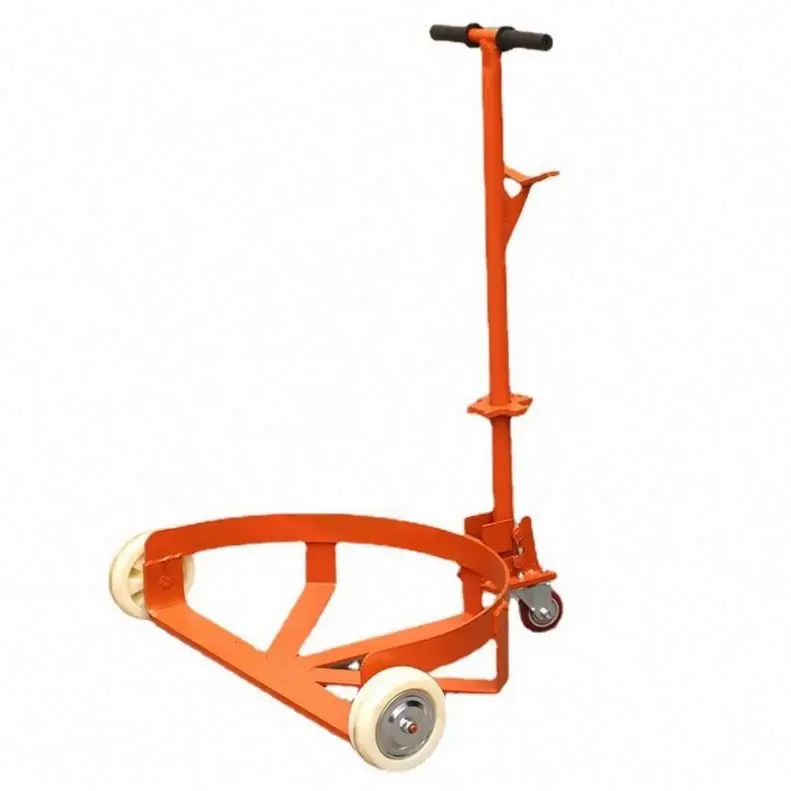
The TEBAK source record identifies a factory wholesale low tank mechanical oil drum truck, also described as a steel model moving oil drum cart or drum trolley. The product ID is 1601252555243. This guide uses the supplied numerical fields as the confirmed procurement baseline and keeps unreturned engineering details as RFQ items.
| Source field | Confirmed value | Procurement meaning |
|---|---|---|
| Rated Load | 200kg | Declared rated load in the source record; confirm the rating basis and safety factor. |
| Suitable for barrel height | 915mm | Declared suitable barrel height; confirm how height is measured and the allowable range. |
| Applicable drum specifications | 55 gallons | Declared drum size; confirm actual drum dimensions, rim, base and filled weight. |
| Packaging size | 950*530*210mm | Declared packaging dimensions; confirm gross weight and crate or carton details. |
| Front Wheel | Φ125*40mm | Declared front-wheel size; confirm material, bearing, tread and load rating. |
| Universal wheell | Φ75*30mm | Declared universal-wheel size; preserve the source wording and confirm caster details. |
| Net Weight | 17kg | Declared net product weight; confirm whether accessories are included. |
The source does not provide a model-specific drawing, steel grade, coating, brake configuration, barrel clamp design, wheel material, operating clearance, warranty, certification or destination-market compliance documents. These items should be confirmed before an order is released.
1. Procurement identity and scope
Use the exact product identity in the RFQ: TEBAK Factory Wholesale Low Tank Mechanical Oil Drum Truck Steel Model Moving Oil Drum Cart Drum Trolley. Ask the supplier to confirm that the quotation corresponds to product ID 1601252555243.
Clarify whether the quoted item is a manual drum truck, a low-tank drum cart, a drum trolley or a combination of those descriptions. Ask for a dimensioned drawing showing the frame, drum support, wheels, handle, retaining points and contact surfaces.
Keep the product ID on the quotation, drawing, nameplate photograph, inspection report, packing list and operating instructions. Do not approve a visually similar trolley without written confirmation that its load and barrel interface are the same.
Define the application: internal warehouse movement, loading-area transfer, workshop handling, production-line supply or another use. Route, floor condition, slopes, door widths, turning radius and lifting points can change the suitable configuration.
Confirm whether the trolley is intended for an empty drum, a filled drum or both. A 55-gallon description does not by itself establish the filled mass of every liquid or the safe handling method.
2. Load, stability and safety margin
The source declares a rated load of 200kg. Ask the supplier to define whether this is a uniformly distributed static load, a rolling load on a specified floor, or a maximum load under a stated test condition.
Confirm the load center, drum orientation and support points used for the 200kg rating. A load placed high, off-center or partly outside the support area can affect tipping behavior even when the total mass is below the stated rating.
Request the allowable center-of-gravity range and the maximum safe slope. The source provides no slope, braking or stability value, so do not infer one from the product images.
Ask for a static-load test and a rolling-load test using the intended drum shape. Record the surface, speed, turning condition, load position and any deformation or wheel lift.
Confirm whether the 200kg rating includes the drum, contents, fittings, removable supports and any accessories. Ask for the net trolley weight separately from the rated payload.
Define the buyer's safety margin. If the trolley will cross thresholds, ramps or uneven floors, request a supplier recommendation based on the actual route rather than applying the 200kg number without context.
Require an operator procedure covering loading, securing, pushing, pulling, parking, slope control, empty-drum handling and emergency response.
3. Drum compatibility and 55-gallon confirmation
The source lists applicable drum specifications as 55 gallons and suitable barrel height as 915mm. These are procurement references, not a substitute for a dimensional fit check.
Ask for the supported drum outside diameter, base diameter, rim profile, body height range, filled weight range and allowable shape variation. Confirm whether the 915mm value describes the complete drum, the body, the support point or another measurement.
Confirm whether the trolley accepts steel drums only or also plastic or composite drums. The title says steel model, but it does not specify whether the drum itself must be steel or whether that wording describes the trolley frame.
Ask how the drum is retained during movement. Confirm cradle shape, straps, hooks, clamps, lip supports, center guides or other retention parts. Do not assume that a low tank alone prevents drum movement.
Request a drawing with the drum contact points and clearance. Check interference with bungs, plugs, labels, rims, pallets and drum handling accessories.
Test the exact drum model used by the buyer, including the filled condition. Record loading effort, alignment, retention, stability, wheel tracking and unloading effort.
If multiple drum suppliers will be used, provide the dimensional range and ask for a written compatibility matrix. A nominal 55-gallon label can cover different external dimensions.
4. Frame, steel and surface treatment
The title describes a steel model, but the queue does not provide the steel grade, tube profile, plate thickness, weld specification or surface treatment. Request a material and construction schedule.
Ask for the frame material, load-bearing member sizes, weld method, weld inspection approach and corrosion-protection system. Confirm which parts are structural and which parts are covers, guides or wear pieces.
Confirm whether the finish is painted, powder coated, galvanized, plated or untreated. Ask for coating color, thickness, pretreatment and repair instructions only if the supplier can document them for this model.
Define the operating environment: dry warehouse, outdoor loading area, humid plant, washdown zone, chemical exposure or corrosive atmosphere. A generic steel frame may need a different coating or material for these environments.
Ask for photographs of welds, frame corners, drum contact surfaces and wheel mounting points on the quoted configuration. Do not treat a general factory photograph as model-specific evidence.
Confirm whether the frame has sharp edges, pinch points or exposed fasteners near the operator and drum. Require guards or edge treatment where the route or work method creates a foreseeable hazard.
5. Wheel and mobility specification
The source lists a front wheel of Φ125*40mm and a universal wheel of Φ75*30mm. It does not state wheel material, tread width interpretation, bearing type, swivel angle, fork material, brake or floor rating.
Ask the supplier to confirm the number and arrangement of each wheel type. The source wording gives dimensions but not a complete wheel layout.
Confirm whether the front wheel is fixed or steering, and whether the universal wheel is a swivel caster. Ask for the mounting height and turning geometry in the dimensioned drawing.
Request wheel material and tread hardness for the buyer's floor. Steel, polyurethane, rubber and nylon can behave differently on concrete, epoxy, steel plate, thresholds and wet floors.
Ask for individual wheel load ratings and a total mobility rating under the stated 200kg payload. Confirm whether the rating includes dynamic effects during starting, stopping and turning.
Confirm bearing type, sealing, lubrication, debris protection and replacement part numbers. Wheel dimensions alone do not establish service life.
Ask whether any wheel brake, parking brake, drum brake or handle lock is included. The source provides no brake information, so treat braking as a required confirmation.
Perform a route test with the actual drum. Record push force, turning effort, wheel tracking, vibration, threshold crossing and parking behavior.
6. Dimensions, packaging and site fit
The declared packaging size is 950*530*210mm. Packaging dimensions are not the same as assembled product dimensions. Request the assembled length, width, height, handle height, support height and folded or removable-part configuration.
Confirm the 915mm suitable barrel height against the assembled trolley geometry. Ask for the clearance above the drum and any overhead obstruction risk.
Check doorways, aisles, racks, lift gates, loading docks and turning areas. Use the supplier's assembled drawing rather than the 950*530*210mm packaging value for site planning.
Ask for gross packed weight, package type, lifting instructions, moisture protection and impact protection. The source confirms only net weight of 17kg, not the shipping weight.
Request packing photographs and a packing list that identifies the frame, handle, wheels, fasteners, retaining parts, tools and manuals.
Confirm whether assembly is required on arrival. If the handle or wheels are shipped separately, request assembly steps and fastener torque values if applicable.
Match package markings to product ID 1601252555243 and the purchase order. Photograph the package and the product before unloading or signing for delivery.
7. Manual operation and ergonomics
Ask the supplier to describe the loading method. Confirm whether the operator tilts the drum, rolls it over a lip, uses a lifting aid or requires a second person.
Request the handle height, grip shape, operator clearance and recommended pushing direction. No ergonomic dimension is provided in the source.
Define the expected movement frequency and route length. A trolley for occasional workshop movement may require a different wheel and handle arrangement from one used continuously in a warehouse.
Measure push and pull force with the target drum mass on the actual floor. Record starting force, steady rolling force, turning force and force over thresholds.
Confirm whether the drum remains upright during loading, movement and unloading. If the process requires tilting, document spill risk, bung position and operator control.
Provide training for loading, retention, route control, parking and inspection. The 17kg net trolley weight does not determine the operator's handling risk with a loaded drum.
Ask for inspection points before each shift: wheel condition, frame cracks, loose fasteners, retention parts, handle damage, corrosion and unusual movement.
8. Drum contents, leakage and workplace controls
The product title refers to an oil drum truck, but the source does not identify permitted liquids, chemical compatibility, leak containment, grounding or hazardous-area suitability.
State the actual drum contents and request compatibility confirmation for the contact surfaces, coating and wheels. Do not infer chemical compatibility from the word oil.
Ask whether the trolley includes a drip tray, spill containment, drain provision or absorbent system. The queue provides no such feature, so it must be confirmed or treated as an external requirement.
For flammable or hazardous contents, consult the responsible safety team before purchase. Request model-specific documents for grounding, static control, ignition-risk controls and destination-market requirements where relevant.
Confirm how leaks are detected and managed during movement. Define parking, inspection and cleanup procedures for the buyer's liquid.
Keep the trolley away from incompatible materials and unapproved washdown chemicals. Request finish-maintenance instructions for spills and corrosion.
Do not describe the trolley as explosion-proof, antistatic, food-safe, chemical-resistant or hazardous-area approved unless the supplier provides exact model evidence.
9. Acceptance testing
Write acceptance criteria before placing the order. The test should use the buyer's actual drum, payload and route.
Verify product identity, rated-load marking, net weight, assembled dimensions, wheel sizes and drum-height compatibility against the quotation.
Load a drum representing the intended 55-gallon format and confirm alignment, support, retention, stability and unloading.
Run the trolley over the actual floor and route. Include starts, stops, turns, thresholds, ramps if permitted, parking and a realistic handling frequency.
Inspect the frame for deflection, cracks, loose fasteners and interference. Check wheels for tracking, swivel, abnormal noise, tread damage and bearing play.
Confirm any brake or retention feature by a documented test. If none is included, record that the buyer must provide an external control method.
Photograph the measured configuration and attach results to the signed inspection report. Do not approve from product photographs alone.
Define remedies for failed fit, unstable movement, incorrect wheel size, incomplete accessories or damage in transit.
10. Maintenance and spare parts
Request a maintenance schedule for wheels, bearings, frame fasteners, retention parts, handle joints, coatings and any brake or clamp components.
Ask for wheel replacement instructions and part numbers. The source wheel dimensions should be repeated on the spare-parts list without changing the source values.
Confirm inspection intervals for cracks, welds, corrosion, deformation, loose hardware and damaged drum-contact surfaces.
Define cleaning materials and methods that are compatible with the surface treatment and the drum contents.
Ask for recommended spare wheels, fasteners, straps, clamps, handles and protective parts based on the buyer's duty cycle.
Confirm local service availability, remote support, warranty response, spare-part lead time and the process for reporting a safety defect.
Keep a maintenance record with product ID 1601252555243, date, payload, route, defect and repair action.
11. Commercial and delivery confirmation
Request a quotation that repeats the exact product ID, title, six confirmed source fields and every included component.
Confirm price basis, MOQ, lead time, shipping term, packing method, insurance, duties, destination delivery and payment terms in writing.
Ask whether the quoted price includes wheels, handle, drum-retention parts, tools, spare parts, manual and inspection documents.
Confirm whether the 950*530*210mm packaging size is for one complete trolley or a partially disassembled package. Request gross weight.
Match the packing list to the order before dispatch. Any substitution of wheel, frame, coating or retention component requires written approval.
Request pre-shipment photographs showing the nameplate or product identifier, wheel arrangement, frame, handle and all accessories.
Confirm warranty scope and exclusions for overload, corrosive contents, outdoor exposure, impact, modified components and wheel wear.
Keep the quotation, drawing, test record, packing list, manual, warranty and correspondence in one procurement file.
12. RFQ checklist
- Confirm product ID 1601252555243 and the exact low tank mechanical oil drum truck configuration.
- Repeat the rated load of 200kg and define the load test, load center and safety margin.
- Confirm suitable barrel height of 915mm and provide the dimensional measurement method.
- Confirm 55-gallon drum compatibility using the buyer's actual drum dimensions and filled mass.
- Repeat packaging size 950*530*210mm and request assembled dimensions and gross packed weight.
- Repeat front wheel Φ125*40mm and universal wheel Φ75*30mm; confirm arrangement, material, bearing and brake.
- Repeat net weight 17kg and confirm included accessories and weighing method.
- Provide steel grade, tube or plate dimensions, weld details and surface treatment.
- Provide drum support, retention, clamp, strap, cradle and spill-control details.
- Provide route, floor, slope, turning and push-force test results for the target payload.
- Provide chemical compatibility, hazardous-area and grounding documents where applicable.
- Provide drawings, manuals, inspection criteria, spare parts, warranty and delivery terms.
13. Questions for the supplier
Does product ID 1601252555243 include the handle, all wheels, drum-retention parts and any brake or parking feature?
How is the 200kg rated load tested, and what load center, floor and movement conditions apply?
How is the 915mm barrel-height value measured, and what barrel diameter and base range is supported?
Does 55 gallons refer to one specific drum dimension, and can you confirm fit using the buyer's drum drawing?
Are the frame and drum-contact parts steel, and what are the grade, thickness, weld and surface-treatment details?
What do the front wheel Φ125*40mm and universal wheel Φ75*30mm fields mean in the complete wheel layout?
What are the assembled dimensions, gross packed weight and lifting or assembly requirements?
Can the trolley be used with the buyer's oil or chemical contents, and what compatibility or safety documents are supplied?
What inspection, spare-wheel, maintenance and warranty support is available in the destination market?
Which parts are included in the quotation and which parts must be purchased separately?
14. What not to assume
Do not convert the 200kg rated load into a guarantee for every route, slope or drum position.
Do not assume every 55-gallon drum has the same outside dimensions or filled weight.
Do not assume 915mm is the complete dimensional fit range without a drawing and test.
Do not assume the steel model has a particular steel grade, coating, corrosion resistance or hazardous-area approval.
Do not assume wheel size proves wheel load rating, floor suitability, braking or service life.
Do not assume 950*530*210mm packaging size is the assembled trolley size.
Do not assume the 17kg net weight includes handle, wheels, clamps, straps or accessories.
Do not assume oil-drum handling means leak containment, chemical compatibility or grounding is included.
Do not approve a substitute model without comparing its drawing, load test, wheel arrangement and drum interface.
15. Final procurement decision
The source-confirmed baseline for this TEBAK item is a low tank mechanical oil drum truck or drum trolley with a declared rated load of 200kg, suitable barrel height of 915mm, stated 55-gallon applicability, packaging size of 950*530*210mm, front wheel Φ125*40mm, universal wheel Φ75*30mm and net weight of 17kg.
Proceed to purchase only after the supplier provides the drawing, steel and coating details, drum-fit confirmation, wheel layout, stability and route test, safety information, included-component list and commercial terms. The purchase order should identify product ID 1601252555243 and attach the accepted drum and load test.
Editor's note: This guide uses the supplied Hoting queue fields and preserves their original units and wording. Unreturned technical, safety and commercial information is marked for supplier confirmation rather than inferred.
Key specifications
- Rated Load
- 200kg
- Suitable for barrel height
- 915mm
- Applicable drum specifications
- 55 gallons
- Packaging size
- 950*530*210mm
- Wheel Specifications
- Front Wheel:Φ125*40mm Universal wheell:Φ75*30mm
- Net Weight
- 17kg
Frequently asked questions
- What is the confirmed rated load?
- The source record states a rated load of 200kg. Confirm the test basis, load center, route and safety margin before ordering.
- What drum size is listed?
- The source lists 55 gallons and a suitable barrel height of 915mm. Confirm the actual drum diameter, base, rim and filled weight.
- What are the listed wheel dimensions?
- The source lists a front wheel of Φ125*40mm and a universal wheel of Φ75*30mm. Confirm wheel arrangement, material, bearing and brake details.
- Is the packaging size the assembled size?
- No. 950*530*210mm is the source packaging size. Request assembled dimensions and gross packed weight separately.
- Does the listing prove chemical or hazardous-area compliance?
- No. Request model-specific compatibility, grounding, safety and destination-market documents for the actual drum contents and workplace.