
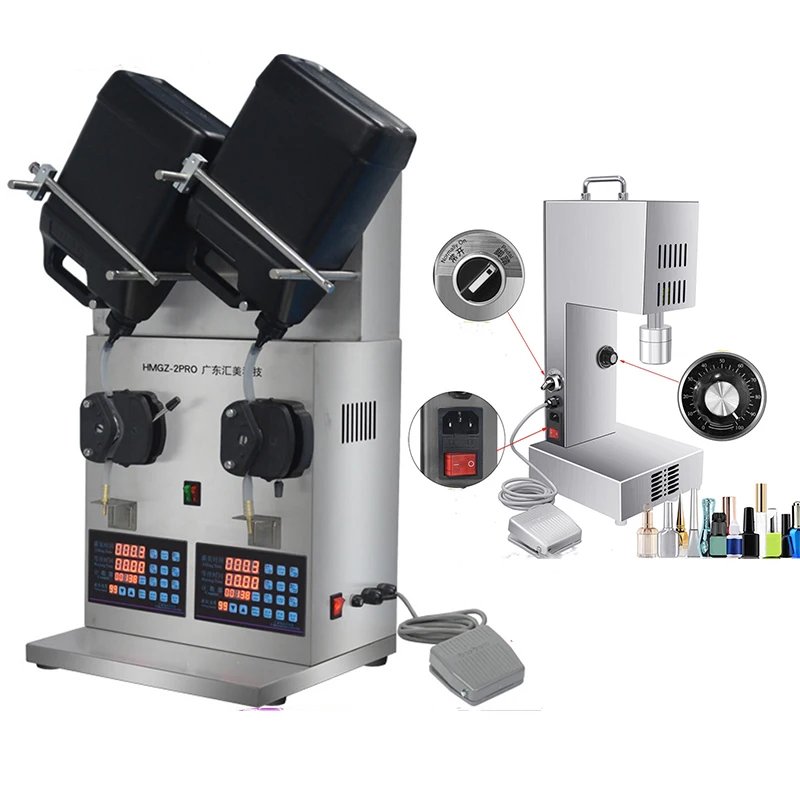
Why this cosmetics filling machine needs a specification-led RFQ
The TEBAK queue record identifies a fully automatic digital control filling machine for glue, UV gel, nail polish and gel bottles. It lists the brand as TEBAK, the applicable object as cosmetics and the filling accuracy description as “High precision filling.” Those are the confirmed source fields.
The title names several possible applications, but the record does not provide a numeric filling range, output rate, power, voltage, bottle dimensions, nozzle count, hopper capacity, material grade, control interface, certification or accuracy tolerance. A procurement buyer should therefore use the listing as a product lead and convert the missing information into a model-specific RFQ before comparing suppliers or approving a purchase order.
This guide keeps the source facts separate from verification questions. It does not turn the phrase “high precision filling” into a percentage, gram tolerance, repeatability figure or yield claim. It also does not assume that glue, UV gel, nail polish and other cosmetic liquids share the same nozzle, pump, cleaning method or filling program.
For a cosmetics operation, the key decision is not whether the machine title contains the word automatic. The key decision is whether the exact product, container, viscosity, fill volume, batch size and cleaning process have been tested on the ordered configuration. Request that evidence before finalizing commercial terms.
1. Controlled product identity
The source product ID is 1601266431768 and the brand is TEBAK. The source title describes a fully automatic digital control glue UV gel filling machine, nail polish filling machine and gel bottle filling machine. The applicable object field is cosmetics.
Preserve the product identity in the quotation using the exact product ID and a configuration code if the supplier has one. If the supplier offers multiple pumps, nozzles, hoppers or control versions under the same listing, ask for a separate model number for the configuration being quoted. Do not rely on a listing title alone to establish that a particular machine is suitable for all named products.
The source says “High precision filling.” In procurement documents, retain that as the supplier's source description and request the underlying test method. Ask whether the phrase refers to volume accuracy, weight accuracy, repeatability, dispensing consistency or another internal standard. Require the supplier to state the unit of measurement and the conditions used for the test.
The record does not supply a formal product standard, certification, food-contact statement, cosmetic GMP statement or electrical approval. None should be added to the purchase specification without source documents. Ask the supplier to provide applicable documentation for the destination market and the exact machine configuration.
2. Source-confirmed specification table
| Field | Source value | Procurement treatment |
|---|---|---|
| Brand | TEBAK | Confirm the nameplate and commercial invoice use the same brand and product ID. |
| Source product ID | 1601266431768 | Use this ID to tie the quotation, drawings, test report and shipment photos together. |
| Product type | Fully automatic digital control filling machine | Confirm which steps are automatic and which require operator loading, setup or cleaning. |
| Named applications | Glue, UV gel, nail polish and gel bottle filling | Test the buyer's actual liquids and containers separately; do not assume one setup fits all. |
| Applicable object | cosmetics | Confirm product-contact materials and destination-market documentation. |
| Filling accuracy description | High precision filling | Request a numeric tolerance, repeatability method, sample size and test report. |
| Unspecified technical fields | No numeric filling, electrical or capacity fields in the queue record | Keep these as open RFQ items rather than estimates. |
The source table is intentionally short because the queue record is short. A procurement guide should not fill gaps with typical market values. The missing fields affect suitability, total cost, installation, cleaning and acceptance testing.
3. Define the cosmetic liquid before selecting the filling system
Glue, UV gel and nail polish can have very different flow behavior. The source names these applications but does not provide viscosity, solids content, solvent content, temperature sensitivity, thixotropy, particle size or curing behavior. Send the supplier a product data sheet or a controlled sample description for each liquid to be filled.
For every liquid, record the product name, batch temperature, viscosity measurement method, density if used for weight-based filling, presence of glitter or particles, solvent compatibility and required cleaning agent. If formulas are confidential, provide enough technical information for pump and seal selection under a confidentiality agreement.
Ask whether the supplier has tested the exact liquid or only a similar reference product. A demonstration using water is not evidence of suitability for nail polish, UV gel or adhesive. A test using one cosmetic formula does not automatically validate every formula in the buyer's portfolio.
Confirm whether the liquid needs warming, agitation, deaeration or protection from light. The source does not state a heating system, mixer, vacuum function, nitrogen protection or UV shielding. Do not include any of those as installed features unless they appear in a model-specific quotation.
Define the acceptable start-up and changeover behavior. Some viscous products may require recirculation or a short priming cycle, while some solvent-based liquids may require special seals and ventilation. Those are design questions for the supplier, not assumptions derived from the word “fully automatic.”
4. Confirm the meaning of “fully automatic”
The source title uses the phrase “Fully automatic digital control.” A buyer should translate that phrase into a step-by-step cycle description. Ask whether the operator manually loads empty bottles, places caps, starts the cycle, removes filled bottles, changes recipes and cleans the machine. Ask which of these steps are included in the quoted machine and which require a separate line or accessory.
Request a process diagram showing container infeed, positioning, filling, anti-drip action, bottle discharge and control confirmation. If bottle loading is manual, the machine may be a semi-integrated filling station even though the title says fully automatic. That does not make it unsuitable, but the labor and line-layout assumptions must be accurate.
Ask whether the machine can run one bottle size or multiple bottle sizes. Confirm the adjustment method, change parts, tooling, changeover time and whether a recipe can be saved for each SKU. The queue record contains no bottle-size or changeover fields.
Clarify what the digital control system displays and controls. Possible fields include fill volume, fill time, cycle count, speed, alarm state, recipe selection and manual jog. None are confirmed by the source. Request screenshots or a live demonstration of the actual control panel and the software language options.
Ask what happens after a bottle is missing, tilted, misaligned or rejected. Confirm whether the system detects no bottle, stops filling, prevents a spill, records an alarm or requires operator intervention. These functions must be verified in the ordered configuration.
5. Filling volume and accuracy requirements
The source provides only “High precision filling.” Before requesting a quote, define the required nominal fill volumes for each cosmetic SKU. Record the unit used for release, such as milliliters or grams, the target quantity, the permitted tolerance and the number of samples used for acceptance.
Ask the supplier whether the machine fills by time, volume, weight, piston displacement, gear-pump rotation or another method. The source does not identify the pump or metering principle. The method affects calibration, cleaning, viscosity range and the relationship between mass and volume.
Request an accuracy and repeatability report using the buyer's actual product and container. The report should list target quantity, individual results, average, maximum deviation, repeatability, sample count, product temperature and machine settings. Do not accept “high precision” as the only measurable acceptance criterion.
Define whether the accuracy statement applies at the beginning, middle and end of a batch. Verify the effect of hopper level, product temperature, air bubbles, nozzle drip, container position and operator changeover. The source does not state compensation or calibration functions.
Ask how the machine is calibrated and whether calibration is recipe-specific. Confirm the available adjustment resolution, calibration records, password controls and the process for correcting drift. If the machine is used for regulated cosmetic production, retain calibration records with the batch documentation where applicable.
Do not calculate a production yield or material saving from the source phrase. Without a numeric tolerance and test method, there is no defensible basis for estimating giveaway, reject rate or product recovery.
6. Pump, nozzle and seal selection
The source names glue, UV gel, nail polish and gel bottle filling but does not identify the pump, valve, nozzle or seal materials. Ask the supplier to propose a product-contact path for each liquid and to identify every wetted component.
Request the pump model, operating range, maximum viscosity supported, particle tolerance, seal material, hose material, valve type, nozzle type and anti-drip method. Confirm whether one pump can handle all products or whether change parts are needed. Do not assume that a pump suitable for a thin liquid is suitable for a viscous gel or adhesive.
For nail polish or solvent-containing products, ask about chemical compatibility, swelling, embrittlement, vapor exposure and cleaning solvent compatibility. The source provides no solvent or seal data. These questions are essential before the machine is connected to production materials.
For UV gel or light-sensitive products, ask whether the hopper, hose, valve and nozzle require opaque or light-shielded components. The queue record does not state a light-protection feature. Treat it as an RFQ item if the formula is light-sensitive.
For products with glitter, suspended particles or fillers, confirm whether the nozzle can pass the particle size without blockage and whether agitation is required. Ask for a product-contact drawing and a cleaning method that does not damage seals or leave residue.
Request spare nozzles, seals, hoses and pump service parts as a separate quotation. Record part numbers and replacement intervals only after the supplier confirms them for the selected configuration.
7. Bottle and packaging compatibility
The source title mentions gel bottle filling but gives no bottle diameter, height, neck finish, opening size, material, shape or allowable tolerance. Supply drawings or samples for every bottle format to be filled.
Ask the supplier to confirm the bottle positioning method, fixture, clamp, nozzle entry depth and allowable variation. A narrow cosmetic bottle, a wide jar, a soft tube or an irregular container may require different tooling. Do not treat a “gel bottle” phrase as a complete container specification.
Confirm whether the filled bottle remains open for downstream capping and whether the machine supports a cap, brush, inner plug or other closure component. The source does not mention cap placement or sealing. If those steps are required, quote them separately.
Request a change-parts list for each bottle size. The list should identify fixture plates, guides, clamps, nozzles and software settings. Ask for estimated changeover time based on the buyer's actual formats, not a generic claim.
Test the filled bottle for splash, stringing, drip, air entrapment, product on the neck and interference with the cap or brush. These quality points are especially important for nail polish and gel packaging. The source does not confirm any anti-drip or clean-fill function.
Confirm whether the machine can handle transparent, colored, frosted or decorated bottles without affecting sensors. Ask for sensor type, detection limits and test results on the actual package.
8. Digital control and recipe management
Because the source says digital control, ask for the control panel specification and a demonstration of the filling cycle. Confirm the display type, language, access level, recipe fields, manual mode, alarm history, emergency stop behavior and data backup method.
Ask whether the recipe stores fill quantity, speed, dwell time, suction-back, nozzle height, bottle format and product temperature. These are possible settings, not source-confirmed features. Only list the fields that the supplier demonstrates or documents for the ordered model.
Define who can edit and approve recipes. If multiple cosmetic SKUs are produced, uncontrolled changes can create batch variation. Request user roles, password protection and a change log if those controls are required by the buyer's quality system.
Confirm the control system's power supply, restart behavior and recovery after an interruption. The queue does not provide rated voltage, power, PLC brand, HMI model or communication interface. Ask for the electrical diagram and component list only after the exact configuration is selected.
Ask whether the machine records cycle counts or production data. Do not promise MES, ERP, barcode, USB or network connectivity unless it is explicitly offered. If integration is required, define the protocol, data fields, ownership and acceptance test in the quotation.
Request a digital-control training outline. It should cover recipe creation, calibration, manual jog, alarm clearing, cleaning mode, format change and backup. Training scope should be written into the order rather than inferred from the product title.
9. Hygiene, cleaning and changeover
Cosmetics filling requires a cleaning and changeover plan that matches the formulation. Ask the supplier to identify all product-contact parts that can be removed without special tools and to provide the cleaning sequence for glue, UV gel and nail polish.
Confirm whether hoses, nozzles, valves, hoppers and pump heads are removable. Request the recommended cleaning agent, rinse method, drying method and maximum exposure time. The source does not state whether the machine can be cleaned in place or whether it supports a validated cleaning cycle.
Ask how residual product is drained or recovered. Thick or fast-setting adhesives may require a different shutdown procedure from nail polish. UV-sensitive products may require light control during cleaning and storage. These requirements depend on the formula and must be confirmed with the supplier.
Request the material specification for seals, hoses, gaskets, hopper surfaces, nozzles and other wetted parts. Do not add stainless-steel grade, food-contact status or cosmetic-contact approval without documentation.
Define a visual cleanliness acceptance test and, where the buyer's system requires it, a residue or carryover test. Run the test after a representative product changeover. The queue record provides no cleaning validation data.
Keep spare contact parts available for production continuity. Ask for part numbers, lead times, storage conditions and replacement instructions. A machine can be highly precise in a demonstration but still create downtime if the product-contact path cannot be serviced quickly.
10. Safety and operating environment
The source does not list voltage, power, dimensions, weight, air requirement, noise, enclosure, ventilation or safety certifications. Request an installation sheet before planning the production area.
For solvent-containing nail polish or other volatile products, ask the supplier to describe ventilation requirements, ignition-source controls, electrical classification and enclosure limitations. Do not assume the machine is suitable for a hazardous environment merely because it is intended for cosmetics.
For adhesives and gels, confirm operator protection during cleaning and blockage removal. Ask how the pump is isolated, how pressure is relieved and how a nozzle is safely cleaned. These are important operating procedures but are not confirmed by the queue record.
Request the machine's emergency stop, guard, interlock and alarm functions if the buyer requires them. Ask for a risk assessment or safety document for the exact model where available. Do not claim CE, ISO or other certification without actual documentation.
Confirm ambient temperature, humidity, dust control, drainage and bench requirements. If the machine uses compressed air, request pressure, flow and air-quality requirements. The source does not state any pneumatic specification.
Ask for net weight, gross weight, packed dimensions, lifting points and installation access. Do not estimate these values from the product image or title.
11. Acceptance test for cosmetic filling
Build the acceptance test around the buyer's liquid and container. Use the exact formula or an agreed representative sample, the actual bottle, the ordered pump, the selected nozzle and the final recipe. A water-only demonstration cannot verify glue, UV gel or nail polish performance.
Record the source product ID, machine configuration, liquid name, lot, temperature, target fill quantity, bottle format, nozzle, pump, recipe and operator. Record individual fill results and the test method used to determine quantity.
Test at the beginning, middle and end of a run where practical. Check fill quantity, drip, stringing, splash, product on the bottle neck, air bubbles, container positioning and downstream closure fit. Define pass/fail criteria before the test.
Test the stated “high precision filling” description with a numeric requirement agreed in the purchase order. The requirement should include tolerance, repeatability, sample size and test conditions. If a supplier cannot provide a numeric specification, record the limitation instead of translating the phrase into an invented value.
Run a changeover test for at least two bottle formats or two recipes if both are in scope. Record change parts, settings, time, cleaning steps and first-off approval. Confirm that the stored digital recipe can be recalled without unintended changes.
Photograph the nameplate, control screen, pump, nozzle, product-contact path, bottle fixture and packed accessories. Match the photos to the final quotation and packing list. Record any deviation as an open item before shipment.
12. Commercial RFQ checklist
- Confirm TEBAK brand and source product ID 1601266431768.
- Confirm the exact product scope: glue, UV gel, nail polish, gel bottles or a defined subset.
- Provide liquid viscosity, density if relevant, temperature, solvent compatibility and particle information.
- Confirm numeric filling range, target volumes, fill method, tolerance and repeatability.
- Define what “High precision filling” means and request the supporting test method.
- Confirm pump, valve, nozzle, hose, seal and other wetted-part materials.
- Provide bottle drawings, neck dimensions, opening size, height, diameter, shape and material.
- Confirm nozzle count, positioning, fill height, anti-drip or suction-back behavior and change parts.
- Describe which steps are automatic and which are manual despite the fully automatic title.
- Confirm digital-control functions, recipe fields, user access, alarms, backup and training.
- Provide rated power, voltage, frequency, phase, plug, air requirement and electrical diagram.
- Provide machine dimensions, weight, packed dimensions, gross weight and installation clearance.
- Provide cleaning, changeover, maintenance and spare-parts documentation for the ordered setup.
- Provide applicable safety, material and destination-market documents for the exact model.
- Agree on a product-specific pre-shipment test and written acceptance criteria.
13. Questions for the supplier
Ask: What is the exact model number behind product ID 1601266431768? Which liquid was used to support the “high precision filling” description? What is the numeric tolerance and repeatability at each quoted fill volume? Is the machine suitable for both thin nail polish and viscous UV gel, or are different pumps and nozzles required?
Ask: What bottle sizes are supported? What is the smallest and largest fill quantity? How many nozzles are included? Is the filler time-based, volume-based, weight-based or pump-calibrated? How is product drip controlled? Are bottle detection, misalignment detection and no-bottle protection included?
Ask: What does fully automatic include in the delivered scope? Is bottle loading manual? Are capping and labeling excluded? Can recipes be saved by SKU? What are the HMI language, alarm history, password and backup functions? Is a changeover demonstration included?
Ask: Which materials contact glue, UV gel and nail polish? Are seals and hoses compatible with the buyer's solvent? What cleaning chemicals are allowed? Can the product path be removed? What are the recommended service intervals and spare-part lead times?
Ask: What are the rated power, voltage, frequency, plug, air pressure, air flow, dimensions, weight and packed dimensions? Which safety documents and certifications are available? Can the supplier provide a test using the buyer's liquid and bottle before shipment?
14. What not to assume from the listing
Do not assume a numeric “high precision” tolerance. Do not assume a filling range, speed, pump technology, nozzle count, container size, automatic cap placement, conveyor, recipe memory, remote connectivity, heating, mixing, vacuum, light shielding, explosion protection, stainless-steel grade, cosmetic GMP compliance or certification. None of these fields is supplied in the queue record.
Do not assume every product in the title can use the same product-contact path. Glue, UV gel and nail polish may require different seals, cleaning agents, flow settings and change parts. Validate each liquid and bottle combination in scope.
Do not assume that a machine described as fully automatic is a complete packaging line. Confirm infeed, filling, discharge, capping, labeling, inspection and packing responsibilities. Quote each station separately if the buyer needs an integrated line.
Do not assume that an image proves the final configuration. Ask for current photos, nameplate, electrical details, control screen, nozzle arrangement and included accessories for the exact order.
Do not assume that a supplier's general company profile is evidence of product-specific performance. Use the source product ID and a configuration-specific test report to tie claims to the machine being purchased.
15. Final procurement decision
The TEBAK product is a credible RFQ starting point for cosmetics filling because the source identifies the brand, cosmetic application, digital-control and fully automatic positioning, named glue/UV gel/nail polish/gel-bottle use cases, and a “High precision filling” description.
The record is not sufficient for a release-ready purchase specification. The missing numeric and engineering fields are exactly the fields that determine suitability: fill range, tolerance, speed, pump, nozzle, liquid compatibility, bottle format, electrical configuration, cleaning, safety, dimensions and acceptance test.
Proceed when the supplier provides a model-specific quotation and verifies the buyer's liquid and container. Keep the source phrase “High precision filling” in the description until it is replaced or supplemented by a measurable, written acceptance criterion.
Editor's note: This guide uses only the supplied Hoting queue fields. It does not invent performance figures, certification, materials, dimensions, electrical data, production capacity, case studies or customer results. Every missing field remains a supplier-confirmation item.
Key specifications
- Source product ID
- 1601266431768
- Brand
- TEBAK
- Product type
- Fully automatic digital control glue, UV gel, nail polish and gel bottle filling machine
- Applicable object
- cosmetics
- Source filling accuracy description
- High precision filling
- Source title applications
- Glue, UV gel, nail polish and gel bottle filling
- Unspecified fields
- Filling range, output speed, power, voltage, container size, nozzle count, accuracy value, materials and certifications require RFQ confirmation
Frequently asked questions
- What source specifications are confirmed?
- The queue confirms TEBAK as the brand, cosmetics as the applicable object, and High precision filling as the source accuracy description. The title names glue, UV gel, nail polish and gel bottle filling.
- What does High precision filling mean numerically?
- The source does not provide a tolerance, repeatability value or test method. Request a numeric specification and product-specific test report before ordering.
- Can one setup fill glue, UV gel and nail polish?
- Do not assume that. Confirm viscosity, chemical compatibility, pump, nozzle, seal, hose and cleaning requirements for every liquid in scope.
- Is this a complete automatic packaging line?
- The title describes a fully automatic filling machine, but the source does not define infeed, capping, labeling or inspection scope. Confirm each station and operator step.
- Which technical fields require RFQ confirmation?
- Filling range, output speed, power, voltage, container size, nozzle count, numeric accuracy, product-contact materials, safety documents and certifications are not supplied and must be confirmed.