
Source-controlled product identity
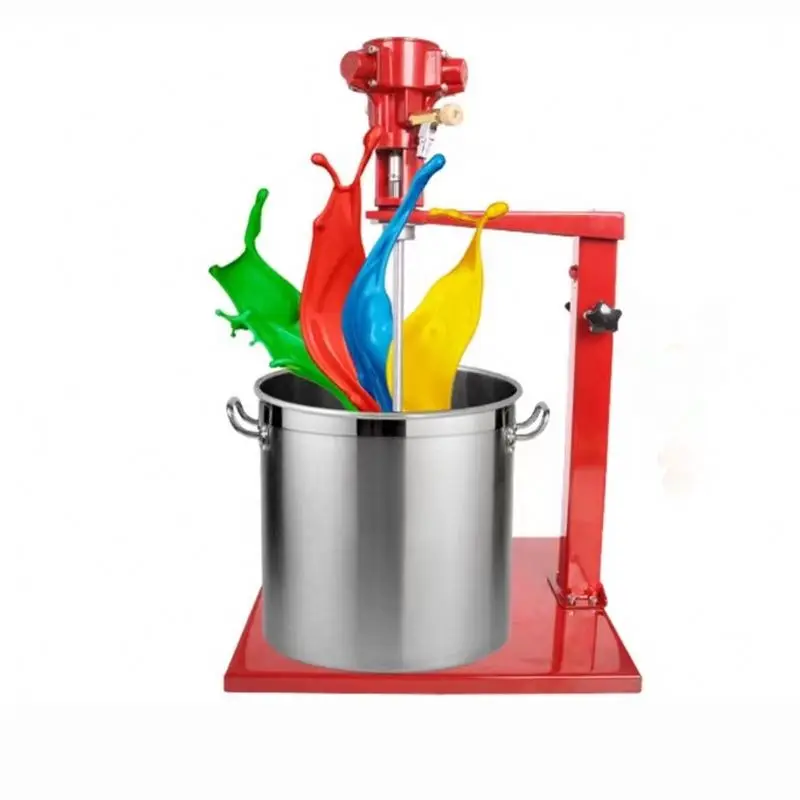
This TEBAK Hoting queue record describes a high-efficiency mixing machine for soap and liquid products. The title uses the phrases “pneumatic lifting,” “dispersing,” “liquid washing,” “20 L-200 L mixer machine,” while the description identifies cosmetics, paint, liquid soap, perfume, cream, agitator, liquid blender, stirring and industrial paste mixer applications. These are source-level product and application statements. They do not constitute a complete model-specific engineering datasheet.
Product ID 1601247268546 should remain on the quotation, approved drawing, sample record, packing list and inspection report. The title gives a 20 L–200 L range, but the queue record has no structured parameters confirming whether this is vessel volume, working volume, a model family range or an optional configuration range. Keep the range visible and ask the supplier to state the exact selected capacity in writing.
What the source wording confirms
| Source wording | Recorded meaning | Procurement treatment |
|---|---|---|
| High efficiency mixing | The listing claims a high-efficiency mixing application. | Request a measured mixing result using the buyer’s formulation, batch size, viscosity and target homogeneity. |
| Soap, liquid washing and detergent | The title positions the machine for liquid cleaning-product processing. | Confirm formulation, foaming behavior, chemical compatibility, cleaning method and sanitary requirements. |
| Pneumatic lifting | The title identifies a pneumatic lifting feature or configuration. | Confirm lift stroke, load, air pressure, air consumption, guide system, stops and guarding. |
| Dispersing | The title includes a dispersing function claim. | Request disperser type, blade, shaft speed, shear range and a test result; do not infer high-shear performance. |
| 20 L-200 L mixer machine | Title-level capacity range. | Confirm the selected gross volume, working volume, minimum fill, maximum fill and model code. |
| Cosmetics, paint, perfume, cream and paste | Description-level application vocabulary. | Match the machine to viscosity, solids, abrasiveness, temperature and solvent compatibility for the actual formula. |
Capacity and batch-size clarification
The 20 L–200 L wording is the most important purchasing boundary in the source title. It may refer to several models rather than one adjustable vessel. Ask the supplier to provide a model matrix showing each capacity, vessel dimensions, usable working volume, recommended minimum fill, maximum fill, freeboard and the corresponding motor, agitator and lifting assembly.
Do not assume that a 20 L vessel can safely process a 20 L batch. Liquid detergents and cosmetic formulations need headspace for agitation, foam and thermal expansion. Request the gross vessel volume, normal working volume and maximum validated fill. For viscous paste or cream, ask for the minimum batch size at which the impeller remains covered and the formulation circulates correctly.
Use the buyer’s actual formula for sample testing. Record raw-material density, viscosity, solids content, temperature, mixing time, speed profile, fill level and homogeneity result. If the supplier quotes a 20 L–200 L range without a model-specific configuration, keep the quotation conditional until the selected capacity and test data are approved.
Mixing, stirring and dispersing functions
The description combines agitator, liquid blender, stirring machine and industrial paste mixer language with a dispersing claim. These functions can require different blade geometries, shaft arrangements and speed ranges. Ask for a process drawing identifying the main agitator, disperser, scraper, baffle, bottom outlet and any recirculation or homogenizing head.
Request the speed range and control method for every shaft. Confirm whether the listed speed is fixed, variable, inverter-controlled or recipe-controlled. Ask for the impeller diameter, shaft diameter, blade material, clearance to the vessel wall and bottom, direction of rotation and permitted operating level. None of these specifications is provided as a structured field in the queue record.
For dispersing, define the intended outcome: pigment wetting, powder incorporation, particle-size reduction, emulsion preparation or simply circulation. A disperser claim does not establish a particle-size result or shear rate. Request a test protocol using the buyer’s ingredients and define acceptance criteria such as visual uniformity, viscosity range, sedimentation, particle size or batch-to-batch repeatability.
Pneumatic lifting system
The title includes pneumatic lifting, but it does not provide cylinder size, stroke, air pressure, air consumption, lifted mass, guide arrangement or control logic. Ask whether the pneumatic actuator lifts the mixing head, moves a dispersing shaft, raises a cover or supports another assembly. Request an elevation drawing showing the lowest and highest positions and the safe working zone.
Confirm the required compressed-air quality, pressure range, flow, filtration, regulator, lubricator policy and connection size. Ask how the lift is held when air pressure is lost and whether mechanical stops, locks or anti-drop devices are fitted. Test the lift with the selected vessel, shaft, motor, cover and tooling installed, not only with an unloaded frame.
Define the operator controls for lifting and rotation. The machine should prevent unsafe movement when the cover is open, the shaft is running or a person is inside the guarded area. Request emergency-stop behavior, restart interlock, pinch-point protection and a lockout procedure for maintenance.
Vessel, wetted parts and chemical compatibility
No vessel material, thickness, finish, jacket, seal, gasket or outlet specification is supplied. Ask the supplier to identify the wetted material grade, internal finish, weld treatment, surface roughness, cover, manway, sight port, sampling port, bottom outlet and drainability. Confirm whether the selected cosmetics, soap, paint, perfume or paste formulation is compatible with every wetted part.
Request seal and gasket material, temperature range, chemical resistance and replacement part numbers. For solvent-containing perfume or paint formulations, obtain a compatibility statement for the vessel, seals, hoses and electrical enclosure. Do not treat a general stainless-steel or “industrial” description as proof of compatibility or cleanability.
Ask for a vessel drawing with internal diameter, straight-side height, cone or dished bottom, outlet position, impeller clearance and available headspace. These details are needed to validate mixing and to plan cleaning, filling, sampling and transfer.
Power, controls and plant utilities
The queue record does not provide motor power, voltage, frequency, phase, current, control cabinet rating, speed-control method or electrical protection. Request a complete utility schedule for the exact model and selected capacity. Separate the loads for the agitator, disperser, lift controls, pump, heater, vacuum device and instrumentation if any are included.
Ask for the electrical nameplate, wiring diagram, emergency-stop circuit, overload protection, grounding arrangement, IP rating and destination-market plug or terminal configuration. Confirm whether the pneumatic lift requires a dedicated air line and whether the machine includes a regulator, gauge, solenoid valve and filter.
For a production line, define the transfer path, filling method, discharge height, pump or gravity outlet, hose connection, floor loading and maintenance clearance. The 5.5 kg or 0.5 kW values from other products in the queue do not apply here and must not be transferred to this machine.
Cleaning, changeover and contamination control
Soap, cosmetics, paint, perfume, cream and paste batches can have different cleaning risks. Ask for a written cleaning and changeover procedure covering drain-down, flushing, manual access, shaft removal, seal inspection, dead-leg control and waste handling. Confirm whether the vessel can be cleaned in place or must be opened and manually scrubbed.
Request the time and water or solvent quantity used for a representative changeover. Define acceptance checks for residual color, odor, active ingredient, microbial risk where relevant and cross-contamination. If the buyer handles multiple formulations, specify whether separate impellers, hoses, gaskets or vessels are required.
Factory acceptance test proposal
- Approve the exact model, selected capacity, vessel drawing, shaft arrangement, blade list, lift drawing and utility schedule.
- Verify vessel dimensions, wetted materials, finish, outlets, seals, cover, guards, nameplate and supplied accessories.
- Test pneumatic lifting with the complete head assembly, recording stroke, load, air pressure, air loss behavior, stops and repeatability.
- Run mixing and dispersing samples using an agreed formulation, recording fill volume, viscosity, speed, time, temperature and homogeneity result.
- Test emergency stop, restart prevention, overload response, guard access, cleaning access and discharge operation.
- Inspect manuals, drawings, spare parts, certificates, packaging and model identification against the purchase order.
RFQ checklist
- Formal model code and selected configuration within the title-level 20 L–200 L range.
- Gross vessel volume, usable working volume, minimum fill, maximum fill, freeboard and batch-size limits.
- Agitator, disperser, scraper and homogenizer functions; shaft count, impeller type, diameter and clearance.
- Speed range, control method, motor power, torque, rotation direction and operating duty.
- Pneumatic lift purpose, stroke, lifted mass, air pressure, consumption, guide, stops, lock and anti-drop protection.
- Vessel and wetted-part materials, wall thickness, surface finish, weld treatment, seals and chemical compatibility.
- Vessel dimensions, cover, manway, sight port, sampling port, baffles, bottom shape, outlet and drainability.
- Voltage, frequency, phase, current, electrical protection, grounding, control cabinet and destination-market compliance.
- Compressed-air quality, filtration, regulator, gauge, connection, plant utility limits and failure behavior.
- Cleaning/changeover procedure, drain-down, spare seals, hose materials, contamination controls and validation.
- MOQ, lead time, warranty, commissioning, training, sample testing and responsibility for formulation trials.
Buyer’s decision framework
This listing may suit a buyer comparing a pneumatic-lift mixing and dispersing platform for liquid cleaning products, cosmetics, paint, perfume, cream or paste. The source record is not sufficient to select a production machine by capacity alone. Treat high efficiency, pneumatic lifting, dispersing and 20 L–200 L as source-controlled claims requiring model-specific confirmation. Approve the purchase only after the supplier provides a capacity matrix, process drawing, utility schedule, material and seal information, sample result and safety documentation.
Frequently asked questions
Is the machine adjustable from 20 L to 200 L?
The title states a 20 L–200 L range, but the source does not say whether this is one adjustable machine or a family of models. Ask for the exact model and capacity matrix.
Does the machine include both mixing and dispersing?
The title includes both terms, but the source does not define the installed shafts or blades. Request a process drawing and an itemized tooling list.
What does pneumatic lifting move?
The source does not identify the lifted assembly. Confirm whether it raises the head, shaft, cover or another component, and request stroke, load and safety details.
Can it process soap, cosmetics, paint and perfume with the same setup?
The description lists those application categories, but compatibility and cleaning requirements are not provided. Test the buyer’s formulations and confirm vessel, seal and hose materials.
What motor power and voltage are required?
No electrical parameters are recorded for this item. Request the exact nameplate and utility schedule for the selected capacity and shaft configuration.
Source and contact
This guide is based on the Hoting queue record for product ID 1601247268546. Before purchase, request a current quotation, model-specific capacity matrix, process and lift drawings, utility schedule, wetted-material declaration, sample test and safety documents. For sourcing questions, contact the TEBAK sales team through the site’s current inquiry channel.