
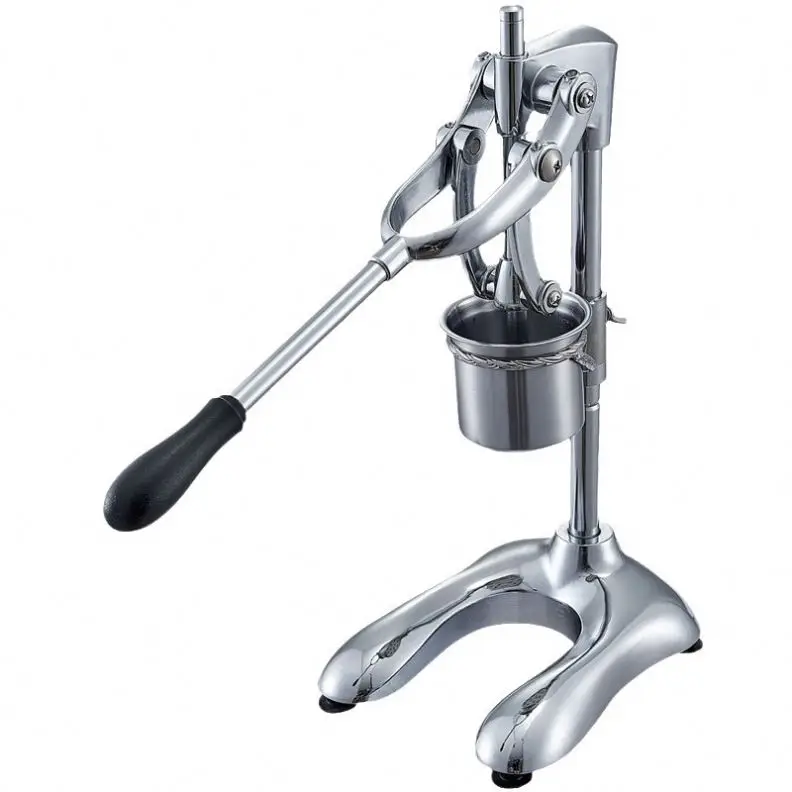
Why the LN-16 should be specified as a mashed-potato extruder
The TEBAK LN-16 is listed as a commercial stainless steel manual machine for making long French fries or chips from soft food. The source description is explicit about the feed material: the machine is not suitable for strong foods such as raw potatoes and is intended for soft foods such as mashed potatoes. This is the most important procurement boundary for the product.
The queue record provides a manual operation mode, 5kg machine weight, stainless steel material, 200*260*450mm machine size, a 16holes nozzle, a 30cm basket, a 0.58kg basket weight and a 520*110*100mm basket size. It also identifies model LN-16. These values can anchor an RFQ, but they do not establish output rate, strip cross-section, food-contact grade, cleaning validation or operator ergonomics.
Use the machine as a mashed-potato extrusion tool rather than as a raw-potato cutter. The listing title contains French fries and chips language, while the body explains that the input should be mashed potato or another soft food. A purchase order should repeat the soft-food limitation so the buyer, operator and quality team do not test the wrong material.
This guide separates source-confirmed facts from supplier questions. It does not infer production capacity from the 16holes nozzle, the 30cm basket or the 5kg weight. It also does not add a numeric strip size, cooking result, certification, corrosion grade, warranty or recipe performance that is absent from the supplied record.
1. Controlled product identity
The source product ID is 1601276939547 and the model is LN-16. The product is described as a stainless steel super-long French fries squeezer, long potato French fries and chips maker, and manual fries powder machine. The application wording references home and business use and mentions several markets, but the source does not provide a quantified market performance claim or customer case study.
Keep the model, source product ID and feed-material limitation together in the quotation. If a supplier offers different nozzles, basket lengths or frame sizes under the same listing, request a configuration code and a photo of the exact ordered unit. Do not use the model name alone to assume that every nozzle or basket option is included.
“Manual” is the source power/operation value. It should not be rewritten as an electric or pneumatic machine. Confirm what manual force is required, whether the operator uses a lever or another mechanism, and whether the machine needs bench anchoring. These details affect labor, safety and installation but are not provided in the queue record.
The source says the machine is suitable for soft foods such as mashed potatoes. Ask the supplier to identify other validated soft-food inputs if the buyer plans to use sweet potato, taro, cassava, vegetable puree or a composite recipe. Do not assume all purees have the same extrusion behavior.
2. Source-confirmed specification table
| Field | Source value | Procurement treatment |
|---|---|---|
| Model | LN-16 | Confirm the model on the nameplate, quotation and pre-shipment photos. |
| Power / operation | Manual | Confirm operating mechanism, force, stroke, cycle and bench anchoring. |
| Machine weight | 5kg | Confirm whether this includes removable parts and whether it is net or gross weight. |
| Material | Stainless steel | Request material grades and identify product-contact surfaces; no grade is supplied. |
| Machine size | 200*260*450mm | Confirm length, width and height order and whether the dimensions include handles. |
| Nozzle | 16holes | Confirm hole arrangement, hole dimensions and whether the nozzle is replaceable. |
| Basket length | 30cm | Confirm whether this is usable extrusion length or basket body length. |
| Basket weight | 0.58kg | Confirm whether the value is net weight of the supplied basket. |
| Basket size | 520*110*100mm | Confirm measurement order and clearance around the basket during operation. |
| Feed limitation | Soft foods such as mashed potatoes; not raw potatoes | Include in operator instructions and acceptance testing. |
The table preserves the catalog wording. It does not convert “16holes” into a strip width or “30cm” into a guaranteed finished product length. Those values need a drawing or sample test.
3. Feed-material preparation
The machine's operating boundary makes feed preparation a central procurement issue. Raw potatoes are described as unsuitable, while mashed potatoes are described as suitable. Ask the supplier to define the acceptable puree texture, particle size, temperature, moisture, starch condition and allowable inclusions.
For a repeatable process, standardize the mashed-potato recipe before testing. Record potato variety or puree source, cooking method, cooling state, added water or oil, seasoning, mixing time and temperature. The queue does not provide a recipe, so the buyer should not assume that a household mashed-potato consistency will match the supplier's demonstration material.
Request a test using the buyer's actual prepared mash. Evaluate whether the material feeds continuously, whether the operator can complete a full stroke without tearing the strip, and whether the mash leaves residue around the nozzle. A machine can extrude one soft sample while still requiring a different preparation method for production.
Ask whether the machine can handle small particles, herbs, cheese, starch granules or other additions. The source only states soft foods such as mashed potatoes. Keep any additional ingredients outside the confirmed scope until the supplier tests them.
Define the acceptable feed temperature. Temperature can change texture and extrusion force, but the queue provides no temperature range. Ask the supplier to state the test temperature and the permitted operating range if the product is used in a commercial kitchen.
4. Nozzle and strip geometry
The source lists a 16holes nozzle. That indicates the supplied nozzle has sixteen openings, but it does not state hole shape, diameter, spacing, material thickness or whether all openings extrude simultaneously. Request a dimensioned nozzle drawing before ordering.
Do not infer finished French-fry dimensions from the 16holes count. Ask for the cross-section of each opening, the expected strip profile, the tolerance and whether the profile changes with feed firmness. Run a sample test with the buyer's mash and measure the actual extruded strips.
Confirm whether the nozzle can be removed for cleaning and whether replacement or alternative nozzles are available. Ask for nozzle part numbers, spare cost and lead time. If the buyer needs more than one strip profile, quote the additional tooling separately.
Check the nozzle-to-basket relationship. The basket is listed with a 30cm length and a 520*110*100mm size, but the source does not explain how the extruded strips are supported or cut. Ask whether the operator manually cuts the strips, whether the basket determines finished length, and how the product is transferred to the fryer.
Request a photograph of the nozzle face and basket in the exact configuration. Listing images may show accessories or options that are not included in the base quotation.
5. Basket and product handling
The source specifies a 30cm basket length, 0.58kg basket weight and 520*110*100mm basket size. Confirm whether 30cm describes the usable food-contact length and whether 520*110*100mm is the external basket dimension. The two fields may describe different measurement references.
Ask how the basket is supported during extrusion, how it is removed, and whether the operator must hold it in position. Confirm the clearance needed to load the basket and transfer the extruded product. The machine is manual, so operator posture and hand placement should be included in the risk review.
Request the basket material, wire or sheet construction, handle design and product-contact finish. The source gives stainless steel for the machine but does not explicitly assign a grade to the basket. Do not add a stainless grade or food-contact certification without documentation.
Ask whether the basket is dishwasher-safe, whether it can be sanitized with the buyer's cleaning chemicals, and whether food residue can remain in seams or corners. Confirm drying and storage requirements between shifts.
Test transfer from the basket to the fryer or tray. Check whether the 30cm output is stable, whether strips stick together, and whether the basket can be carried safely at the expected food load. The source provides basket weight but not working load, so the supplier must confirm the safe product load.
6. Manual force, cycle and operator safety
Manual operation means the supplier should document the operating motion. Ask for the lever or pressure mechanism, stroke length, maximum recommended force, return motion, pinch points and safe hand positions. The queue does not provide any force or cycle data.
Run an ergonomic trial with the intended operator group. Observe loading, pressing, basket removal, cleaning and repeated cycles. Record whether the machine needs a fixed bench, clamps or anti-slip feet. A 5kg machine may be easy to move, but movement during pressing can affect safety and strip quality.
Ask whether the machine includes a lock, guard, pressure stop or mechanical limit. Do not assume that manual equipment has no safety risk. Identify the nozzle, pressing mechanism, basket edge and any pinch locations in the work instruction.
Define a maximum recommended duty pattern only after supplier confirmation and an operator trial. The source does not specify continuous use, cycle time, cooling, maintenance interval or fatigue limit.
Keep raw potatoes out of the operating procedure. Forcing a hard food into a manual extruder can damage the mechanism or create an unsafe release of force. The source's limitation should appear on the label, instruction sheet and staff training material.
7. Machine dimensions and installation
The source lists machine size as 200*260*450mm. Confirm the dimension order, units, whether the measurement includes the operating handle and whether the height is measured in the operating or stored position.
Plan clearance around the machine for loading mash, moving the basket, pressing, cleaning and transferring strips. The product is described as suitable for home and business, but no bench height, footprint, anchoring or clearance is supplied. Ask the supplier for an installation sketch.
Confirm whether the machine can stand on a stainless worktable, whether it requires bolts or clamps, and whether the table must support the pressing load. Request the center of gravity or a handling recommendation if the machine is moved between production areas.
Ask for packed dimensions, gross weight, carton protection and accessory list. Do not use 200*260*450mm as a shipping-carton size without supplier confirmation. The 5kg field may be machine net weight, not shipment weight.
For an export order, confirm whether the basket is packed inside or beside the machine and whether any assembly is required. Match the packing list to the exact LN-16 configuration.
8. Stainless steel and cleaning controls
The source lists stainless steel material and a corrosion-resistance advantage. It does not state a steel grade, surface finish, weld treatment or product-contact certification. Ask the supplier to identify the material of the body, nozzle, pressing plate, basket, fasteners and any seals.
Request the cleaning sequence for mashed potato residue. Confirm whether the nozzle, basket and food-contact components can be removed without special tools, whether hot water is permitted, and which cleaning agents should be avoided.
Inspect for seams, threads, corners and gaps where starch can dry. Ask how the machine should be dried after cleaning and whether any parts require food-safe lubricant. Do not claim sanitation performance or a food-contact standard without documentation.
Run a changeover cleaning test using the buyer's actual mash. Record disassembly time, cleaning time, drying time and visual inspection points. If the operator cannot access a residue area, ask the supplier for a design explanation or cleaning tool.
Confirm spare parts for the nozzle, basket, seals, fasteners and pressing components. Request part numbers and service instructions. The source does not provide a warranty or service interval, so those remain commercial RFQ fields.
9. Output quality and frying preparation
The machine is used to extrude mashed potato into long strips to be fried. The source does not specify a finished strip width, length tolerance, moisture target, frying temperature, oil type, frying time or final product yield. Do not describe a guaranteed fried-food result from the extrusion fields alone.
Define the output acceptance criteria with the buyer's recipe. Measure strip cross-section, length, continuity, surface tearing, breakage, sticking and weight per basket. Then conduct a controlled frying test using the buyer's fryer and recipe.
Check whether strips from all sixteen openings are consistent. Record the opening position and any variation. If some channels produce different profiles, ask whether the nozzle or feed pressure needs adjustment.
Confirm the transfer time from extrusion to frying. A soft strip can deform while waiting. The source does not state a buffer or conveyor, so the buyer should design a handling sequence that matches the manual basket.
Do not use the product's country or market references as evidence of output quality. Those references describe where the description says the product is popular; they do not replace a test with the buyer's material and process.
10. Acceptance test before shipment
Use the exact LN-16 machine, 16holes nozzle and supplied basket. Prepare the buyer's mashed potato or an agreed test mash. Record recipe, temperature, moisture, batch size, operator, machine position and basket configuration.
Test repeated manual cycles and record the time, effort and output from each cycle. Measure the extruded strips at multiple positions and check whether the 30cm basket can receive the output without sticking or overflow. Define a sample size before the test.
Inspect nozzle removal, basket removal, cleaning access, machine stability and operator hand clearance. Verify that the supplied dimensions and weight match the quotation, allowing for a defined measurement tolerance.
Test the machine with a soft food only. Do not use raw potatoes in the acceptance test because the source explicitly says the machine is not suitable for strong foods such as raw potatoes.
Photograph the nameplate, nozzle face, basket, machine dimensions, packing and included accessories. Record any spare nozzle or basket supplied. Tie the test report to product ID 1601276939547 and model LN-16.
11. RFQ checklist
- Confirm product ID 1601276939547 and model LN-16.
- Confirm manual operation and provide the pressing mechanism, stroke, force and safe hand positions.
- Confirm machine net weight as 5kg and provide gross shipment weight.
- Confirm stainless-steel parts, material grades, finishes and product-contact documentation.
- Confirm machine size 200*260*450mm, measurement order and whether the handle is included.
- Confirm the 16holes nozzle, hole geometry, profile, material and replaceability.
- Confirm 30cm basket length and define usable length versus external basket length.
- Confirm basket weight 0.58kg and safe product loading weight.
- Confirm basket size 520*110*100mm and measurement order.
- Confirm that the unit is for mashed potatoes or other soft food and is not for raw potatoes.
- Provide tested puree texture, temperature and composition limits.
- Provide cycle time, operator guidance, output consistency and cleaning procedure.
- Provide packed dimensions, carton weight, accessories and spare-part list.
- Run a pre-shipment test with the buyer's mash and define strip-quality acceptance criteria.
12. Questions for the supplier
Ask: What does LN-16 mean in the current configuration? Are all sixteen nozzle openings identical? What are the hole dimensions and finished strip profile? Is the nozzle removable and are alternative profiles available?
Ask: Is 30cm the usable output length, basket length or a marketing description? How does the basket support the extruded strips? What is the maximum safe product load in the basket? Is the 0.58kg value net basket weight?
Ask: What mashed-potato consistency was used in the demonstration? What moisture, temperature and particle limits apply? Can the machine process sweet potato, taro or other soft purees? If so, request separate test evidence rather than a general statement.
Ask: Which stainless-steel grades are used in the body, nozzle and basket? Can the food-contact parts be removed? Which cleaning agents are permitted? Are replacement nozzles, baskets and seals available?
Ask: Does the 5kg machine weight exclude the basket? What are the packed dimensions and gross weight? Does the unit require bench anchoring? What force and cycle pattern are recommended for safe manual operation?
13. What not to assume from the listing
Do not assume the machine cuts raw potatoes, works as a potato slicer, has an electric motor, provides automatic feeding, or guarantees a fixed production rate. The source says manual and explicitly excludes strong foods such as raw potatoes.
Do not assume “16holes” is a strip dimension or that a 30cm basket guarantees 30cm finished strips. Confirm nozzle geometry, cutting method and actual output.
Do not assume stainless steel means a specific grade, food-contact certification, corrosion standard or sanitation validation. Request documents for the exact product-contact parts.
Do not assume 5kg is shipping weight or that 200*260*450mm is carton size. Confirm net, gross, product and packed measurements separately.
Do not calculate output, labor savings, yield or fried-product quality from the model name, market references or image. Those claims need a controlled test with the buyer's soft-food recipe.
14. Final procurement decision
The TEBAK LN-16 is a defined manual extruder for long fries made from mashed potato or other soft foods. The source gives a practical starting specification: stainless steel construction, 5kg machine weight, 200*260*450mm size, 16holes nozzle, 30cm basket length, 0.58kg basket weight and 520*110*100mm basket size.
Approve the machine only after the supplier confirms the nozzle profile, basket working dimensions, safe load, manual force, cleaning access and soft-food test method. Keep raw potatoes outside the intended application because the source expressly excludes them.
Editor's note: This guide uses only the supplied Hoting queue fields. It does not add a motor, numeric capacity, strip size, certification, steel grade, warranty, production rate, frying result or customer case study. Missing information remains supplier-confirmation content.
Key specifications
- Source product ID
- 1601276939547
- Model
- LN-16
- Power / operation
- Manual
- Machine weight
- 5kg
- Material
- Stainless steel
- Machine size
- 200*260*450mm
- Nozzle
- 16holes
- Basket length
- 30cm
- Basket weight
- 0.58kg
- Basket size
- 520*110*100mm
- Source application limitation
- Not suitable for strong foods such as raw potatoes; intended for soft foods such as mashed potatoes
Frequently asked questions
- What is the LN-16 intended to process?
- The source says it extrudes mashed potato and other soft foods into long strips for frying. It is not suitable for strong foods such as raw potatoes.
- What are the main source-listed dimensions?
- The machine size is 200*260*450mm, the basket is listed as 520*110*100mm, and the basket length is 30cm. Confirm dimension order with the supplier.
- Is the machine electric?
- No electric power value is provided; the source lists Power as Manual. Confirm the operating mechanism and required manual force.
- What does 16holes describe?
- It is the source description for the nozzle opening count. Request the hole geometry and strip profile instead of assuming a finished size.
- What should be tested before purchase?
- Test the buyer's mashed-potato recipe, nozzle, basket, manual cycle, strip consistency, cleaning access and operator safety. Do not use raw potatoes for the test.