
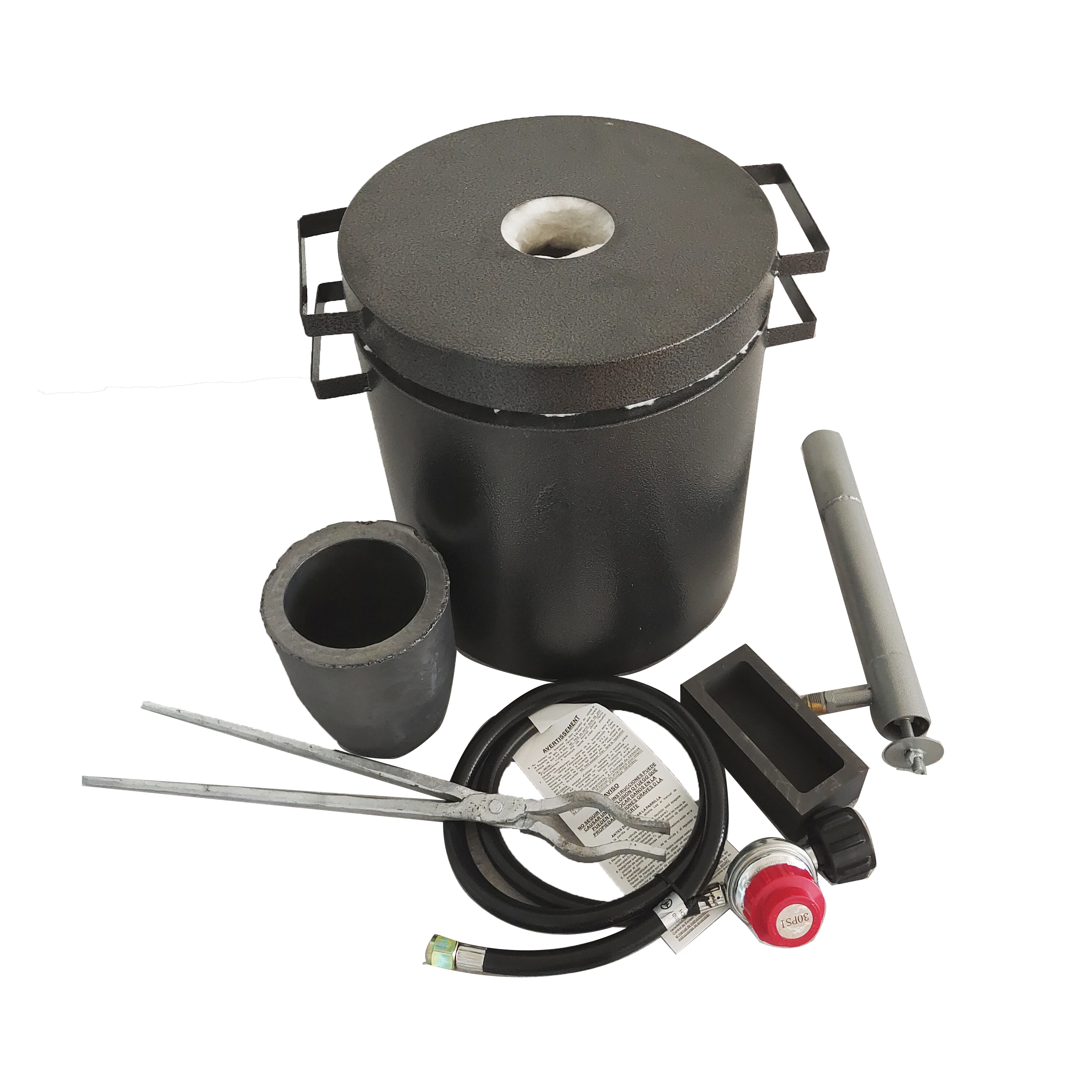
Source-controlled product identity
The Hoting queue identifies Product ID 1601244189819 as a TEBAK mini digital electric melting furnace listing for gold, tin, silver, copper and aluminium melting. The structured source fields record type “Refractory”, application “Melting Meta”, composition “High Pure”, height “Customers' requirements”, top diameter “Customers' requirements”, bottom diameter “Customers' requirements” and place of origin China.
The source does not provide furnace capacity, operating temperature, heating power, voltage, frequency, phase, fuel mode, heating rate, holding time, crucible type, molten-metal output, insulation construction, cooling method, controls or certification. These are supplier confirmation points. The title words “mini”, “digital”, “electric”, “gold”, “gas” and the listed metals are treated as listing claims, not verified engineering specifications.
This guide is for jewellery workshops, precious-metal service operations, foundries, casting laboratories, metal-recycling operations, educational laboratories and distributors evaluating a small melting furnace. The correct purchase decision depends on the alloy, batch size, target temperature, crucible compatibility, atmosphere, operator protection and destination-market electrical requirements.
Recorded specifications
| Field | Recorded value | Buyer action |
|---|---|---|
| Product ID | 1601244189819 | Require the same ID on quotation, nameplate, inspection report and shipping documents. |
| Type | Refractory | Request the exact refractory construction, grade, lining thickness and service temperature. |
| Application | Melting Meta | Confirm the intended metals, alloy families, batch size and permitted operating procedure. |
| Composition | High Pure | Ask what “High Pure” refers to: lining, crucible, body material or another component. |
| Height | Customers' requirements | Provide a dimensional drawing and confirm total height, chamber height and service clearance. |
| Top diameter | Customers' requirements | Confirm opening diameter, usable chamber diameter and lid or insulation clearance. |
| Bottom diameter | Customers' requirements | Confirm external base diameter, internal chamber diameter and support footprint. |
| Place of origin | China | Confirm commercial documents, marking, export packaging and destination import requirements. |
| Capacity and temperature | Not provided | Request rated batch mass, temperature range, measured heating curve and melt test. |
| Power and fuel | Not provided | Confirm electric or gas configuration, voltage, power, frequency, phase and connection. |
Define the metal and alloy workflow
“Metal melting” is not a sufficient process specification. Create a melt schedule listing each metal or alloy, batch mass, starting form, target temperature, hold time, pouring temperature and contamination controls. Gold, silver, copper, aluminium and tin have different process requirements and may require different crucibles, linings, tools and ventilation arrangements.
Ask the supplier which metals were tested on the quoted configuration. Request the test charge, achieved temperature, time to melt, melt cleanliness and crucible condition. Do not infer performance for one metal from a title that names several metals.
For jewellery work, record whether the charge is clean grain, shot, scrap, sprue, sheet or mixed returns. Confirm how the furnace handles oxides, coatings, solder residues, unknown alloy content and repeated use.
For recycling or foundry work, define sorting, preheating, flux use, dross handling, sampling and traceability. The machine listing does not establish that any of these procedures are supported.
Capacity is a missing purchase field
The queue record provides no crucible volume, rated charge mass or output per cycle. Ask for minimum and maximum batch mass, usable melt volume, recommended fill ratio and the effect of different metals on capacity.
Request a drawing that identifies chamber dimensions, crucible position, freeboard and pouring clearance. A nominal physical size does not equal usable metal capacity because lining, crucible walls, insulation and safe headspace reduce the working volume.
Run a buyer-witnessed test using a representative charge. Record initial mass, final melt mass, time to target condition, dross, losses, pour temperature and post-test lining or crucible condition.
Separate theoretical capacity from safe repeatable batch size. A buyer should not operate at a limit that leaves insufficient freeboard or makes pouring unstable.
Temperature and heating verification
The source does not state maximum temperature, working range, temperature accuracy, heating rate or temperature uniformity. These must be supplied in writing for the selected metal and crucible configuration.
Request the temperature sensor type, controller range, display resolution, control tolerance, alarm behavior and calibration method. Confirm whether the displayed value is measured at the chamber, crucible or another location.
Run a cold-start heating test and a repeated-cycle recovery test. Record time to the buyer’s target condition, temperature stability during hold, variation between locations if relevant and the result after opening the lid or pouring.
Do not convert the “digital” listing word into a claim of accurate closed-loop control. Verify actual controller behavior and test data.
Electric and gas configuration must be resolved
The title contains both electric and gas wording, while the structured record does not provide a fuel or electrical specification. Treat the energy source as unresolved until the supplier confirms the exact model.
For an electric configuration, request voltage, frequency, phase, rated current, total power, plug, protective earth, breaker, cable size and permissible voltage tolerance. Ask for a wiring diagram and nameplate photograph.
For a gas configuration, request fuel type, inlet pressure, consumption, burner arrangement, ignition, flame failure protection, ventilation, exhaust and local gas compliance documents. Do not install or operate a gas version based only on a product title.
Confirm whether electric and gas versions use the same chamber, controls, lining and crucible. If they are different products, require a separate model code and separate quotation.
Refractory lining and “High Pure” clarification
The type field records “Refractory” and the composition field records “High Pure”, but the source does not define the material or which component it describes. Ask for the lining composition, grade, thermal conductivity, maximum service temperature, thickness, curing process and replacement method.
Confirm whether the crucible is included and identify its material, capacity, shape, working temperature, chemical compatibility and expected replacement interval. A refractory lining and a crucible are not interchangeable specifications.
Inspect the chamber for cracks, voids, loose material, contamination and uneven surfaces. Request a first-use and dry-out procedure, especially if the lining must be cured before a production melt.
Ask how the lining handles thermal cycling and accidental spills. Record inspection criteria and stop-use conditions in the maintenance manual.
Dimensions and custom manufacture
Height, top diameter and bottom diameter are all recorded as customer requirements. Prepare a dimensioned requirement before requesting a quotation: total height, chamber height, outer diameter, opening diameter, base footprint, lid clearance, working height, pouring direction and service access.
Explain whether the custom dimension refers to the outer body, inner chamber, refractory lining or crucible. Require a drawing approval process with revision number, tolerance, material note and inspection points.
Confirm how custom dimensions affect thermal performance, capacity, lead time, minimum order quantity, tooling and spare parts. Do not accept “customer requirements” as a final specification.
Check whether the requested size fits the buyer’s bench, extraction hood, lifting method and safe pouring route. A compact furnace still needs heat clearance and operator access.
Crucible, tools and pouring safety
Request the complete accessory list: crucible, lid, tongs, pouring tools, lifting handles, temperature probe, molds, spare lining and maintenance tools. The source does not confirm any included accessory.
Define the pouring method before ordering. Check crucible seating, tilt or lift arrangement, handle clearance, operator position, spill containment and mold placement. Verify that the buyer’s molds and tools fit the furnace workflow.
For precious-metal and non-ferrous work, segregate tools by alloy family when cross-contamination matters. Establish cleaning and inspection rules for crucibles, tongs and work surfaces.
Do not use unapproved crucibles, fluxes or tools. Ask the supplier to list compatible consumables and their codes.
Ventilation, site and operator controls
Heating metals can produce heat, fumes, oxides and hazardous residues. The source does not define emissions or ventilation requirements. Have the buyer’s safety team evaluate local extraction, make-up air, fire protection, heat shielding and emergency access.
Confirm the furnace’s external temperature, hot-surface locations, lid behavior, handle temperature and clearance zones. Mark the operating area so personnel do not pass through the pouring route.
Provide PPE suitable for the actual metal, temperature and process: face and eye protection, heat-resistant clothing, gloves, footwear and respiratory controls when required by the risk assessment. PPE does not replace guarding or extraction.
Keep water, wet tools and incompatible materials away from molten metal. Define spill response, fire response, first aid and emergency isolation before commissioning.
Acceptance test proposal
- Verify Product ID 1601244189819, exact model, nameplate and energy configuration.
- Approve the custom height, top diameter, bottom diameter and chamber drawing.
- Confirm refractory grade, lining thickness, curing method and inspection criteria.
- Confirm crucible material, capacity, shape, working temperature and compatibility.
- Confirm intended metals and alloy test schedule.
- Measure empty furnace dimensions, opening, chamber and base footprint.
- Verify voltage, power, frequency, phase, current or gas pressure and consumption.
- Run a cold-start heating test to the buyer’s target condition.
- Record temperature display, sensor position, control tolerance and stability.
- Run a representative charge test and record mass, melt time, dross and final condition.
- Test repeated cycles and inspect lining, crucible, lid and controls.
- Verify pouring tools, lifting method, spill containment and operator clearance.
- Check guards, alarms, emergency isolation, grounding or gas safety devices.
- Verify packaging, origin marking, manuals, spare parts and warranty documents.
- Record a stop-use procedure for lining cracks, sensor faults and control failures.
RFQ checklist
- Product ID 1601244189819 and exact electric/gas model code.
- Metal and alloy list, charge form, batch mass, target temperature and hold time.
- Rated capacity, usable volume, fill ratio and measured melt test data.
- Maximum temperature, working range, heating curve, sensor and controller accuracy.
- Refractory material, “High Pure” definition, grade, thickness and replacement method.
- Crucible material, size, compatibility, included quantity and spare price.
- Custom height, top diameter, bottom diameter, tolerances and drawing revision.
- Electric voltage, power, frequency, phase, current, plug and earth; or gas fuel, pressure and consumption.
- Ventilation, exhaust, hot-surface, fire and emergency requirements.
- Included tongs, lid, tools, temperature probe, molds, lining and manuals.
- Dry-out, curing, cleaning, dross handling, maintenance and calibration instructions.
- Packaging, origin documents, warranty, spare parts, lead time and inspection protocol.
Safety and compliance
A melting furnace involves high heat, refractory surfaces and potentially molten metal. Use a documented risk assessment, controlled access, heat shielding, appropriate PPE and a defined pouring route before operation.
Never assume that “digital” means fail-safe control. Verify over-temperature protection, sensor failure response, emergency isolation and grounding for an electric model. For a gas model, verify ignition, flame failure, leak testing, ventilation and local fuel compliance.
Keep wet tools, water and combustible materials away from molten metal and hot surfaces. Follow the supplier’s refractory curing and cooldown procedure. Stop operation if the lining cracks, the crucible is damaged, the sensor is unstable or the controls behave unexpectedly.
Request destination-market machinery, electrical or gas documents and a model-specific manual. The source does not provide CE, ISO or other certification, so none should be claimed without matching evidence.
Buyer decision framework
This candidate has a recorded refractory type, metal-melting application, High Pure composition wording, customer-defined dimensions and China origin. It does not yet have the capacity, temperature, power, fuel, crucible or safety data needed for a production purchase.
Approve the order only after the supplier resolves the electric/gas ambiguity, supplies a dimensioned furnace and crucible drawing, demonstrates the buyer’s metal batch and documents the controls and safety requirements. Keep listing language separate from verified specifications.
Frequently asked questions
What is the furnace capacity?
The source does not provide capacity or rated batch mass. Request usable volume, recommended batch mass and a witnessed melt test.
What metals can it melt?
The title names gold, tin, silver, copper and aluminium, while the application field says metal melting. Treat the metal list as a listing claim until the supplier provides model-specific test evidence and crucible compatibility.
Is it electric or gas?
The title contains both electric and gas wording, but the structured fields do not resolve the energy source. Request the exact model code, nameplate and full electrical or gas specification.
What do the customer-requirement dimensions mean?
Height, top diameter and bottom diameter are recorded as customer requirements. Provide a dimensioned drawing and confirm whether each dimension refers to the outer body, inner chamber, lining or crucible.
Does High Pure describe the whole furnace?
The source does not define the term. Ask which component it describes and request the relevant material or composition document.
Source and contact
This guide is based on the Hoting queue record for Product ID 1601244189819. Recorded fields are refractory type, metal-melting application, customer-defined height/top/bottom diameters, High Pure composition wording and China origin. Before purchase, request the exact model, capacity, temperature, energy source, crucible, refractory, custom drawing, safety controls, test report, spare parts, warranty and destination-market compliance documents through the TEBAK sales inquiry channel.
Key specifications
- Type
- Refractory
- Application
- Melting Meta
- Height
- Customers' requirements
- Composition
- High Pure
- Top Diameter
- Customers' requirements
- Bottom Diameter
- Customers' requirements
- Place of Origin
- China