
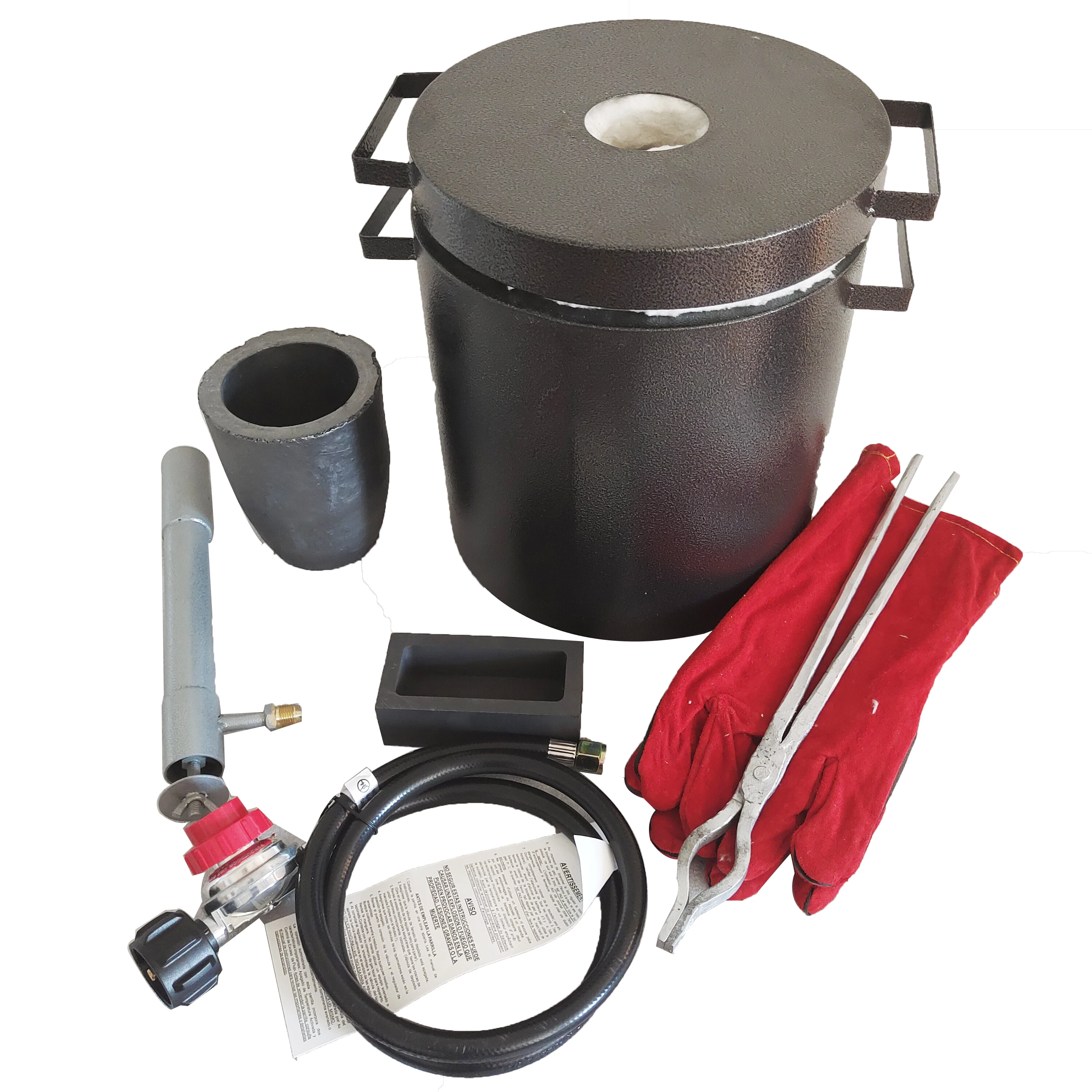
Source-controlled product identity
The Hoting queue record contains a listing titled TEBAK Mini Digital Electric Gold Melting Furnace for tin, silver, copper and aluminium melting. The structured parameter list is empty. No capacity, electrical rating, heating element, controller range, maximum temperature, warm-up time, melt rate, crucible, dimensions, weight, material, safety protection or compliance document can therefore be treated as confirmed.
The title describes the product as mini, digital and electric and lists several metal applications. These are listing statements, not a verified technical datasheet. The word “gold” does not establish precious-metal suitability, and the listed metals do not prove that one configuration can melt all of them safely or without cross-contamination.
Product ID 1601244152837 should appear on the quotation, nameplate, controller, furnace body, crucible documentation, inspection report and packing list. This guide supports procurement by jewelry workshops, non-ferrous casting operators, repair businesses, distributors, educational labs and small-batch metal processors that need a traceable RFQ and acceptance plan.
Confirmed fields and open procurement questions
| Information | Source status | Buyer action |
|---|---|---|
| Product ID | 1601244152837 | Require the same ID on quotation, nameplate, inspection report and shipping documents. |
| Mini | Title claim only | Request external dimensions, hot-zone dimensions, working clearance and service access. |
| Digital | Title claim only | Confirm controller type, display unit, sensor, setpoint range, alarms and calibration method. |
| Electric | Title claim only | Request voltage, frequency, phase, rated power, current, cable, plug and breaker requirement. |
| Gold melting | Application claim | Request a precious-metal test, contamination controls, crucible history and recovery procedure. |
| Tin, silver, copper and aluminium | Application claims | Request material-specific limits, temperatures, crucible compatibility and measured test results. |
| Capacity | Not supplied structurally | Define charge mass, usable volume, fill limit, molten output and material-specific rating. |
| Crucible | Not supplied structurally | Confirm material, grade, dimensions, lid, safe load, included quantity and replacement part. |
| Temperature | Not supplied | Request rated temperature, controller range, measured melt temperature and stability. |
| Safety and compliance | Not supplied | Request electrical, thermal, EMC and destination-market documentation for the exact model. |
Define the metal and process before choosing a furnace
A compact electric furnace should be selected from the alloy, batch mass, target temperature, contamination tolerance, holding requirement and pouring method. Gold, silver, copper, aluminium and tin impose different requirements on heat input, crucible material, atmosphere, flux, dross control and cleaning.
Write the requirement as a repeatable batch test: material identity, charge form, charge mass, target molten mass, target temperature, maximum hold time, pouring vessel, acceptable residue, expected cycle count and daily operating hours. State whether the buyer needs melting only or also holding, alloying, degassing, skimming and controlled pouring.
For a distributor, separate configurations by voltage, power, crucible and controller rather than merging them under a generic title. For a workshop, require a test using the actual feedstock. For a laboratory or school, prioritize guarded operation, training, ventilation, emergency isolation and documented limits over the headline “digital” claim.
Clarify what “mini” means
Mini is not a measurable capacity or installation specification. Request the external dimensions, hot-zone dimensions, lid clearance, bench footprint, controller projection, cable exit, cooling clearance and space needed to load and pour safely.
Ask whether the listed configuration is intended for intermittent use or continuous cycles. A compact enclosure may have a small charge volume while still requiring significant heat clearance, ventilation and electrical capacity.
Measure the actual sample unit with the crucible, lid, controller, handles, feet and cable fitted. Record the operating envelope, not only the carton or bare-body dimension. Include room for tongs, a receiving mold, heat-resistant surfaces and emergency access.
Do not describe a furnace as portable, desktop or workshop-safe without verifying weight, handles, surface temperature, cable routing, ventilation and local installation rules.
Verify the digital controller
Digital appears in the title, but the source gives no controller model, display unit, sensor type or control accuracy. Request a wiring diagram, controller photograph, manual page and complete setpoint specification.
Confirm whether the display shows setpoint, estimated furnace temperature, sensor temperature or measured melt temperature. Ask for the sensor location and the difference between controller reading and the buyer's independent reference instrument.
Request setpoint range, resolution, stability, alarm thresholds, over-temperature cutoff, sensor-failure response, power-loss recovery and reset behavior. If the controller has a timer or hold function, document how it behaves after the target is reached.
Run a display verification at multiple operating points. Record controller reading, independent instrument reading, time to stabilize and variation during holding. A digital screen alone does not prove temperature accuracy.
Electrical configuration and installation
The product is titled electric, but voltage, frequency, phase, rated power and current are not structured parameters. Request the exact nameplate and electrical datasheet for the production configuration.
Confirm whether the unit is available for the destination voltage and frequency. Ask for rated current, plug type, cable cross-section, breaker, residual-current protection, earthing, insulation and enclosure requirements.
Do not connect the sample using an adapter or extension cable selected from the title. The buyer's electrician should confirm the circuit, protective device and grounding method. Record the nameplate values on the inspection report.
Test start-up current, steady current, controller behavior, heating-element switching, over-temperature isolation and power-loss recovery. Verify that protective devices interrupt the heat source and that restart requires the intended operator action.
Request EMC, electrical-safety and destination-market documents for the exact voltage and controller configuration. Do not reuse documents from a different furnace version.
Capacity, crucible and charge control
No capacity or crucible specification is supplied. Ask whether capacity is expressed as charge mass, molten output, crucible volume or a material-specific rating. Request the safe fill level and the maximum charge for each listed metal.
Request crucible outside and inside dimensions, wall thickness, material, grade, density, lid, pouring lip, dry weight and replacement part. Confirm whether the crucible is included or optional and whether the furnace requires a particular shape.
Inspect the crucible for cracks, chips, contamination and uneven walls before the first heating cycle. Record its dry mass and dimensions. Follow the supplier's preheating or dry-out instruction and document the first-use process.
Weigh the charge and recovered metal in a test. Record dross, residue, metal retained in the crucible and any contamination. For precious-metal work, keep charge, dross and recovery records separately by batch.
Confirm loading tools, tongs, lifting points, lid clearance and pouring height. Do not fill to the rim or lift a hot crucible without a documented tool and handling method.
Metal-specific procurement tests
Aluminium and tin may need different charge preparation, flux and dross procedures from copper. Silver and gold require stronger contamination controls and traceable recovery. The title lists the materials but provides no measured capability.
For aluminium, record charge form, target temperature, dross, recovery and surface quality. For tin, record oxidation, holding behavior and the effect of repeated cycles. For copper, request explicit thermal capability and a test because a title list does not prove copper suitability.
For silver and gold, define crucible segregation, flux, cleaning, material identity, weighing and recovery. Ask whether the supplier has tested the exact crucible and controller configuration with the buyer's intended material.
Use the same test format for every candidate furnace. Record charge mass, starting state, target, time, temperature measurement, electrical input, dross, recovered output and operator observations.
Thermal performance and melt temperature
No maximum temperature, heating power, warm-up time or recovery time is supplied. Request rated temperature, hot-zone temperature, measured melt temperature, control range, stability and thermal uniformity.
A valid test should identify the material, charge mass, ambient conditions, starting temperature, controller setting, measurement instrument and hold time. Record the time to reach the target and temperature variation during holding.
Ask whether the sensor measures the chamber, crucible wall or melt. If the controller does not measure the melt directly, agree on a calibrated method for confirming melt temperature before pouring.
Test recovery after loading a defined charge. An empty furnace may reach a high reading quickly while a loaded furnace cannot maintain the required process. Record the electrical current and controller behavior during recovery.
Furnace body, insulation and hot-zone safety
No body material, insulation, refractory lining, lid construction or outer-surface temperature is supplied. Request a cross-section or material description showing the hot zone, insulation, shell, lid, base and serviceable parts.
Inspect lid fit, hinge or lifting method, handle temperature, gaps, exposed hot surfaces and controller protection. Confirm whether the lining can be repaired or replaced and whether the supplier provides a dry-out procedure.
Measure surface temperatures at agreed points during a stable run. Keep the machine on a non-combustible, level surface with the required clearance. Do not infer cool-touch behavior or safe proximity to combustible materials from the word “mini.”
Ask for instructions covering refractory moisture, first heating, cooling, lid opening, broken crucible and molten-metal spill response. These controls belong in the commissioning documentation.
Ventilation and operator protection
Melting produces heat, fumes, metal vapor, flux fumes and splashes. The source record provides no ventilation or exhaust requirement. Request the supplier's installation guidance and define the work area before purchase.
Confirm non-combustible flooring, heat clearance, extraction, air supply, fire protection, PPE, restricted access and emergency isolation. A compact electrical furnace still requires a site-specific safety assessment.
Request procedures for charging, skimming, crucible lifting, pouring, cleaning, power isolation, burns, fire, broken crucibles and accidental restart. Use the destination site's safety rules and qualified professionals where required.
For precious-metal work, add contamination controls and secure storage. For teaching or shared workshops, add training records, supervision, lockout and a clear operator checklist.
Packaging and incoming inspection
No dimensions, weight, packing method or carton specification are supplied. Request product dimensions, gross weight, carton dimensions, pallet need, moisture control, shock protection, lifting points and marks.
Inspect the shipment for cracked refractory, damaged crucible, bent lid, broken display, loose wiring, missing tools and damaged insulation. Photograph the carton, product label, controller, accessories and internal protection before commissioning.
Confirm whether the controller, sensor, cable, plug, crucible and tongs are supplied installed or separately packed. Match each part number to the quotation and packing list.
Ask for spare crucibles, heating elements, thermocouples, lids, fuses, controllers and cables as applicable. None of these parts is confirmed by the source record and should be listed explicitly in the RFQ.
Factory acceptance test proposal
- Verify product ID 1601244152837, exact model, nameplate and voltage configuration.
- Record external dimensions, hot-zone dimensions, bench footprint, cable clearance and operating envelope.
- Verify digital controller model, display meaning, sensor, setpoint range, alarms and calibration method.
- Record voltage, frequency, phase, rated power, current, cable, plug, breaker and earthing requirements.
- Inspect body, lid, refractory, insulation, hot-zone opening, handles and service points.
- Verify crucible material, grade, dimensions, safe load, lid, tongs, inclusion status and replacement part.
- Test over-temperature, sensor failure, power-loss, emergency isolation and restart behavior.
- Measure warm-up, target temperature, melt temperature, holding stability and recovery after loading.
- Run an agreed aluminium, tin, silver, copper or gold test with defined charge and recovery limits.
- Record electrical input, cycle time, dross, residue, recovered output and contamination observations.
- Inspect charging, lifting, pouring, lid movement, splash control and operator clearances.
- Review manual, ventilation, fire safety, electrical documents, warranty, spare parts and packing.
RFQ checklist
- Product ID 1601244152837 and photograph of the exact production nameplate.
- Mini-furnace dimensions, hot-zone size, bench footprint, lid clearance and service access.
- Digital controller model, sensor, display meaning, range, resolution, stability and alarms.
- Voltage, frequency, phase, rated power, current, cable, plug, breaker, earthing and insulation.
- Maximum temperature, measured melt temperature, warm-up, recovery and holding time.
- Capacity definition: charge mass, molten output, usable volume, fill level and material-specific limit.
- Crucible grade, dimensions, wall thickness, safe load, lid, tongs, included quantity and replacement.
- Material-specific capability for gold, silver, copper, aluminium and tin with test evidence.
- Body, refractory, insulation, lid, service parts, commissioning and dry-out instructions.
- Over-temperature, sensor failure, emergency isolation, power-loss and restart protections.
- Ventilation, heat clearance, fire protection, PPE, access control and installation requirements.
- Electrical-safety, EMC, thermal and destination-market compliance documents.
- Sample test: charge, target, time, controller setting, measurement instrument, dross and recovered output.
- MOQ, sample cost, lead time, spare parts, service, warranty and inspection terms.
Buyer decision framework
This listing is a mini digital electric melting-furnace candidate whose structured source record contains no confirmed technical parameters. Approve it only after the supplier resolves electrical configuration, controller behavior, capacity definition, crucible compatibility, material-specific testing, thermal limits, protective controls, installation requirements and destination-market documents.
For a distributor, create separate SKUs for each voltage, controller, crucible and capacity configuration. For a workshop, prioritize a controlled sample melt using the actual feedstock. For precious-metal work, prioritize segregation and recovery records. A digital display can improve repeatability only when its sensor, calibration, control range and measured relationship to melt temperature are documented.
Frequently asked questions
Is this definitely a gold-melting furnace?
Gold melting appears in the title, but the source provides no temperature, crucible, contamination or test data. Require a gold-specific capability statement and a buyer-approved test before making that claim.
What is the furnace capacity?
No capacity is provided in the structured parameters. Ask whether capacity means charge mass, molten output, crucible volume or a material-specific rating.
What voltage and power does it use?
The listing title says electric but provides no voltage, frequency, phase, power or current. Obtain the exact nameplate and electrical datasheet for the unit being quoted.
Is the crucible included?
The source does not confirm a crucible or its material. Request the accessory list, crucible specification and replacement quotation.
Can it melt copper, aluminium, silver and tin?
Those applications appear in the title, but no material-specific test is supplied. Require separate limits and measured sample results for each required metal.
Source and contact
This guide is based on the Hoting queue record for product ID 1601244152837, whose structured parameter list is empty. Before purchase, request the current quotation, exact electrical configuration, nameplate, controller and sensor data, furnace drawing, crucible documentation, measured temperature test, material sample results, safety manual, compliance documents, packing list, spare-parts offer, warranty and final machine photographs. For sourcing questions, contact the TEBAK sales team through the site's current inquiry channel.