
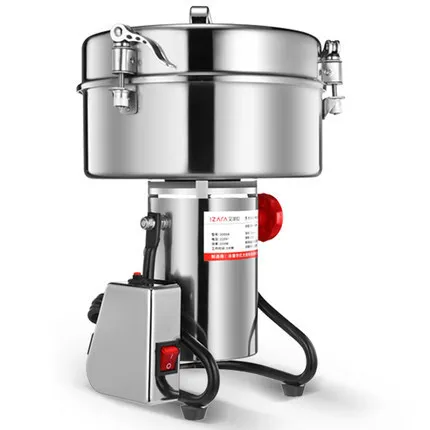
Why an 800G flour mill still needs a specification-led purchase review
The TEBAK New 800G Small Home Use Flour Mill is presented as a mini rice, corn, walnut, coffee, cocoa, soybean and peanut powder grinding machine. The supplied queue record identifies Grain Processing Equipment, an 800g capacity, 2200W power, 9kg weight, Motor and Gear as core components, a provided machinery test report, and a one-year warranty.
The record also contains fields that require careful interpretation. Capacity appears as both “800g” and “800G.” The machinery-function field reads “304 Stainless clap, 403 Stainless clap, 304 Stainless button,” but it does not clearly identify which part each material describes or whether “clap” and “button” are source typos. An RFQ should preserve the wording while requiring a part-by-part material drawing.
This guide is for importers, food-equipment distributors, small food businesses, farms, restaurants, bakeries, seasoning producers and home-use appliance channels. It separates confirmed source fields from the test data needed to evaluate fineness, throughput, heat, cleaning, electrical fit and safe use.
1. Controlled identity from the source record
The source product ID is 1601277172126. Its title describes a new 800G small home-use flour mill and lists rice, corn, walnut, coffee, cocoa, soybean and peanut powder grinding. The queue category is Hoting. The type field says Grain Processing Equipment, while the application field says Food Industry Equipment.
The record lists 2200W power, 9kg machine weight and 800g capacity. These values should be carried into the quotation exactly as source fields. They do not establish grinding rate, final particle size, motor speed, duty cycle or the maximum safe load for every ingredient. Those performance values require a defined sample test.
The source lists a machinery test report as Provided, but no report number, test method, date, tested ingredient, particle-size result or electrical condition is supplied. Ask for the actual report and verify that it belongs to product ID 1601277172126 and the quoted 2200W configuration.
2. Source-confirmed specification table
The following table preserves the available product fields. It does not convert marketing language into unverified technical claims.
| Field | Source value or procurement control |
|---|---|
| Product ID | 1601277172126 |
| Product type | Grain Processing Equipment; small home-use flour mill |
| Capacity | 800g and 800G are both listed; confirm whether this is nominal batch load, hopper size or usable grinding load |
| Power | 2200W |
| Weight | 9kg |
| Core components | Motor, Gear |
| Machinery test report | Provided; request the document and test conditions |
| Warranty | 1 Year; core components also listed as 1 Year |
| Material/function field | 304 Stainless clap, 403 Stainless clap, 304 Stainless button; ambiguous source wording |
| After-sales | Online Suport |
| Showroom | None |
| Marketing type | High quality; marketing wording, not a measured performance result |
3. Resolve the 800g capacity definition
Ask the supplier what the 800g value measures. It may refer to a rated batch load, an upper hopper volume, a nominal capacity or a product-title convention. Request a dimensioned hopper drawing, maximum fill line, minimum batch load and the permitted loading procedure.
Test the machine with a weighed sample rather than filling the chamber by eye. Record ingredient mass before grinding, the processing time, the output mass, residual material, screen or blade configuration and motor temperature. Repeat the test with the buyer's main ingredient. Capacity should not be advertised as hourly production or continuous throughput unless a duty-cycle test supports that claim.
Rice, corn, walnut, coffee, cocoa, soybean and peanut have different moisture, oil and hardness characteristics. Confirm which ingredients are approved, which need pre-processing and which are excluded. In particular, ask whether oily nuts and cocoa are permitted in the same configuration as dry grain, and how cross-contamination is prevented.
4. Power, motor and electrical compatibility
The source lists 2200W but does not provide voltage, frequency, phase, current, plug, cable, grounding, breaker requirement or motor speed. Request the exact nameplate photograph and electrical specification for the export configuration. Confirm whether the quoted 2200W is input power, rated power or another value.
Motor and Gear are identified as core components. Ask for motor model, gear arrangement, overload protection, thermal protection, restart behavior and service access. A power rating alone cannot establish grinding speed, output or continuous operation. Request a test at the intended load and record the electrical condition used.
Before installation, define the socket, earth connection, isolation method and dry operating area. Powder and cleaning moisture can affect electrical safety. Confirm which panels may be opened by the operator and require power isolation before cleaning, inspection or jam removal.
5. Material ambiguity and food-contact parts
The machinery-function value reads “304 Stainless clap, 403 Stainless clap, 304 Stainless button.” The source does not define these terms. Do not silently rewrite them as a complete stainless-steel construction claim. Ask the supplier to identify every wetted or powder-contact component, its material grade and its function.
Request a part drawing for the grinding chamber, cover, blade or cutter, screen, fasteners, discharge path, gasket and buttons. Confirm whether “304 Stainless” applies to the chamber, cover or a button, and whether “403 Stainless” applies to the blade or another wear part. Ask the supplier to correct the material schedule if the source wording is a translation or transcription error.
For food-processing buyers, request product-specific food-contact declarations and any destination-market documents required by the buyer. The source's “High quality” marketing field is not a certification. Do not claim food-grade, hygienic or corrosion-resistant performance without documents for the actual components.
6. Fineness, screens and grinding result
No particle-size range, screen mesh, blade geometry, powder uniformity or pass rate is provided. Ask whether the unit uses a screen, fixed cutter, rotating blade, gear-driven mill or another mechanism. Request an exploded diagram and the part numbers of all grinding assemblies.
Define the buyer's output target before sampling. For flour, powder, spice or coffee, specify the desired particle-size range, allowable coarse fraction, moisture condition and number of passes. Weigh both input and output. Keep the same ingredient preparation and cleaning state between tests so the results are comparable.
Ask whether the operator may adjust fineness during operation and whether adjustment requires stopping and opening the machine. Confirm the safe procedure for changing screens or cutters. If multiple assemblies are available, list each assembly separately in the quotation and packing list.
7. Ingredient-specific procurement checks
Rice and corn can behave differently according to moisture and hardness. Request a test using the buyer's actual grain specification. Confirm whether the machine accepts whole kernels or requires pre-crushing, and whether foreign material must be removed before loading.
Walnuts, peanuts and cocoa may introduce oil and residue. Ask whether these materials are approved for the quoted machine, whether the grinding chamber can be fully disassembled, and whether seals or screens retain oils between batches. Confirm the cleaning method and any required solvent or detergent restrictions.
Coffee, soybean and other ingredients may require separate cleaning or a dedicated chamber to prevent flavor transfer. Ask for a changeover procedure, estimated cleaning time, replacement gasket information and a method for inspecting hidden residue areas.
8. Heat, duty cycle and operator workflow
The source does not provide operating temperature, noise, vibration, duty cycle, cooling method or recommended rest interval. Request a time-based test at the 800g load and with the buyer's most demanding ingredient. Record start and end temperatures, housing heat, motor sound, powder discharge and any overload event.
Do not equate 2200W with commercial continuous service. The product title includes small home use, while the applicable-industries field lists factories, farms, restaurants, food shops and other businesses. This broad source wording is not a duty-cycle guarantee. Ask the supplier to identify the intended operating class and allowable cycle.
Map the operator sequence: inspect and weigh ingredient, load, close the cover, start, monitor, stop, isolate power, collect powder, clean and inspect. Confirm whether one operator can safely perform the process and whether the powder container must be held in place. Document any required personal protective equipment and dust-control measures.
9. Dust, cleaning and maintenance
Powder grinding can create airborne dust and residue. Ask the supplier whether the machine has a sealed cover, discharge seal, dust outlet or recommended local extraction. The source does not provide dust-control data, so do not claim dust-free operation.
Request a cleaning diagram showing removable parts, non-removable parts, dry-cleaning steps, permitted water contact and drying requirements. Confirm how the operator removes retained powder from the chamber and discharge path without reaching into moving parts. Power must be isolated before disassembly or jam clearing.
Motor and Gear maintenance should include lubrication, inspection intervals, replacement parts and abnormal-noise diagnosis. Ask whether the gear assembly is sealed, what lubricant is used and how to prevent lubricant contamination of food-contact areas.
10. Machinery test report and acceptance sample
Because the source says Machinery Test Report: Provided, request the complete report before approving a bulk order. It should identify product ID, configuration, ingredient, input mass, operating time, electrical conditions, output result, particle-size method, temperature observations and any acceptance criteria. A statement that a report exists is not the same as verified test evidence.
Use the buyer's sample ingredients where possible. Test the listed 800g load, then a lower load and the most difficult approved ingredient. Record output mass, coarse residue, powder temperature, cleaning time, noise observations, vibration, motor behavior and any need for a second pass.
Pre-shipment inspection should compare the machine with the approved sample, material schedule, nameplate, accessories, grinding assembly, warranty terms and packing list. Photograph the model label and core components. Keep the test report and inspection record together for traceability.
11. Warranty and online support
The source lists a one-year warranty and one-year warranty of core components. Confirm whether these periods start at shipment, delivery or commissioning, and identify which parts are covered. Ask whether motor, gear, grinding chamber, screen, cutter, switch and seals have different terms.
After-sales service is listed as “Online Suport.” Request the support channel, response time, language, diagnostic information required, spare-part process and remote troubleshooting procedure. Ask for a digital manual, wiring diagram, exploded parts list and cleaning instructions.
Warranty exclusions should be explicit. Confirm how overloading, incorrect ingredients, unauthorized disassembly, water ingress and normal wear parts are handled. Keep service terms in the quotation rather than relying on the product-title wording.
12. Applicable industries and channel positioning
The applicable-industries field lists hotels, garment shops, building material shops, machinery repair shops, manufacturing plants, food and beverage factories, farms, restaurants, home use, retail, food shops, printing shops, construction works, energy and mining, food and beverage shops, advertising companies and other businesses. This is a broad platform field, not proof that the machine is appropriate for each industry.
The application-fields field lists vegetable processing plants, canneries, wineries, meat-processing plants, commercial catering, snack-food factories, dairy-product factories, beverage factories, flour mills, seasoning plants, bakeries, fruit-processing plants, cooking-oil factories and frozen-food factories. Match the actual ingredient, hygiene requirement and duty cycle to the machine before selecting a channel.
For home-use or retail channels, confirm packaging, instructions, plug, language and safe loading limits. For food factories and commercial kitchens, require a documented test, cleaning plan, material schedule and installation assessment. The same 800g title should not be used as a substitute for a validated industrial capacity.
13. RFQ checklist
- Confirm product ID 1601277172126, model code and exact 800g configuration.
- Define whether 800g is nominal batch load, hopper size, usable capacity or another value.
- Confirm 2200W as input or rated power, plus voltage, frequency, phase, current, plug and grounding.
- Provide motor model, gear arrangement, overload protection, thermal protection and duty cycle.
- Resolve “304 Stainless clap, 403 Stainless clap, 304 Stainless button” in a part-by-part material drawing.
- Identify all approved ingredients, preparation requirements, exclusions and changeover procedures.
- Provide grinding mechanism, screen or cutter options, particle-size range and test method.
- Provide the actual machinery test report and repeat the test with buyer samples.
- Confirm dust control, cleaning, lubrication, spare parts and safe jam-clearing instructions.
- Confirm one-year warranty scope, online support, packing, manual, lead time and inspection terms.
14. Questions for the supplier
Ask the supplier to answer these questions in the quotation: What does 800g measure? What is the maximum continuous operating time? Which voltage and frequency apply to the 2200W version? What exactly are the 304 Stainless and 403 Stainless parts? Does the machine use a blade, screen, gear mill or another mechanism? What particle-size result was measured for rice, corn, nuts, coffee, cocoa, soybeans and peanuts? How are oily ingredients cleaned? What report is included under Machinery Test Report: Provided? What does the one-year warranty cover? What does Online Suport include?
If these questions remain unanswered, keep the order at RFQ or sample-review stage. The nominal capacity, power and marketing type do not by themselves establish output, fineness, food-contact compliance or continuous commercial suitability.
15. Final procurement decision
This TEBAK 800G flour mill is a candidate for small-batch grain and ingredient powder processing where the buyer can validate the exact ingredient and workflow. The source-confirmed anchors are product ID 1601277172126, 800g/800G capacity wording, 2200W power, 9kg weight, Motor and Gear core components, a provided machinery test report, one-year warranty and online support.
Approve the order only after the supplier defines capacity, electrical configuration, material parts, grinding assembly, test method, duty cycle, cleaning process and warranty scope. Keep the product ID, nameplate photograph, machinery test report, material drawing and inspection record together. This prevents a broad home-use listing from being treated as a validated industrial flour mill.
Editor's note: Product facts in this guide are limited to the supplied Hoting queue record. Company-level statements are not treated as product-specific certification, performance evidence or customer proof.
Key specifications
- Product type
- Grain Processing Equipment; small home-use flour mill
- Source product ID
- 1601277172126
- Nominal capacity
- 800g / 800G
- Power
- 2200W
- Machine weight
- 9kg
- Core components
- Motor, Gear
- Machinery test report
- Provided
- Warranty
- 1 Year; core components warranty also listed as 1 Year
- Machinery function field
- 304 Stainless clap, 403 Stainless clap, 304 Stainless button; source wording is ambiguous and requires confirmation
- After-sales service
- Online Suport
- Showroom location
- None
- Marketing type
- High quality
- Applicable industries
- Source lists hotels, restaurants, farms, food factories, retail, home use and other industries
- Application fields
- Source lists vegetable processing, cannery, winery, flour mill, bakery, seasoning, beverage and other food-processing fields
Frequently asked questions
- What capacity and power are listed?
- The source lists 800g and 800G capacity wording plus 2200W power. Confirm whether capacity is batch load, hopper size or usable load, and confirm the electrical configuration.
- What are the core components?
- The source lists Motor and Gear. Request the motor model, gear arrangement, protection, duty cycle and spare-part information.
- What does the stainless material field mean?
- The source reads 304 Stainless clap, 403 Stainless clap, 304 Stainless button. The wording is ambiguous, so require a part-by-part material drawing and corrected quotation.
- Is a machinery test report available?
- The source says Provided, but no report details are included. Request the actual report and verify its product ID, configuration, ingredient and test conditions.
- Is this suitable for continuous factory use?
- The source does not provide a duty cycle, throughput or temperature limit. Validate the exact ingredient and workflow with a defined sample test before commercial use.