
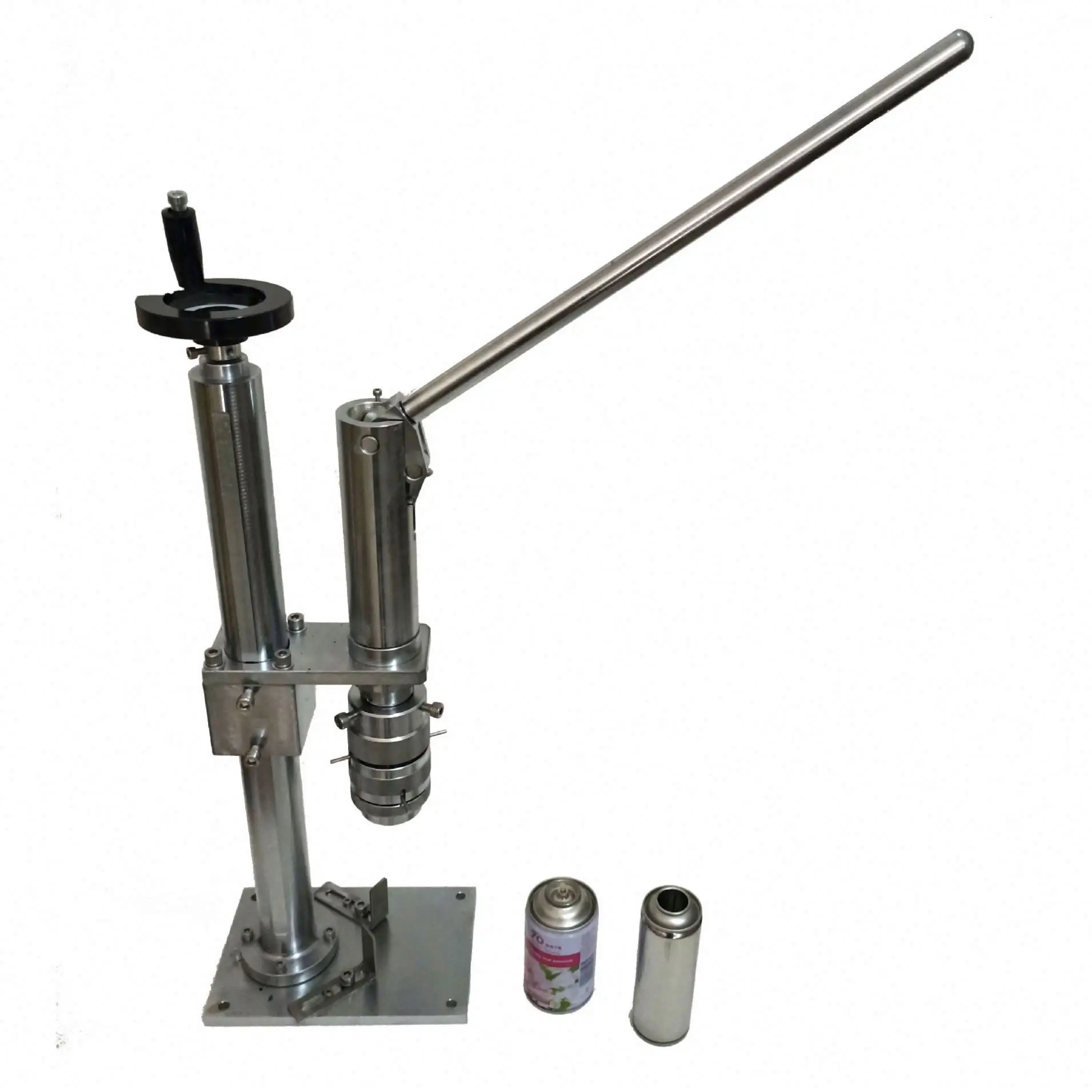
Source-controlled product identity
The Hoting queue identifies Product ID 1601251615647 as a TEBAK semi-automatic aerosol filling and crimping machine, also described as a manual aerosol cans sealing machine. The structured source fields identify the product name as Aerosol crimping machine, list Easy to Operate as a key selling point, specify a Hand-control feature and classify the automatic grade as Manual.
Those are the only verified product fields supplied for this queue item. The source does not provide fill volume, filling medium, can diameter, valve type, crimp dimensions, output, pressure, motor power, voltage, air consumption, machine dimensions, weight, materials, sealing integrity, hazardous-area suitability or certification. This guide deliberately treats those missing fields as supplier-confirmation, RFQ and factory-acceptance requirements.
The machine may be relevant to aerosol contract packers, household-product manufacturers, personal-care producers, automotive-care brands, industrial-maintenance product suppliers, laboratory packaging teams and distributors evaluating a manual or semi-automatic aerosol line component. The purchase decision must start with the exact can, valve, formulation, propellant, fill target, leakage standard and local regulatory requirements.
Recorded specifications
| Field | Recorded value | Buyer action |
|---|---|---|
| Product ID | 1601251615647 | Require the same identifier on the quotation, nameplate, inspection record and shipping documents. |
| Product name | Aerosol crimping machine | Confirm whether the quoted unit crimps only or integrates liquid/product filling and propellant filling. |
| Key selling point | Easy to Operate | Request an operator workflow, training requirement, changeover steps and demonstrated cycle. |
| Feature | Hand-control | Clarify every hand control, foot control, pneumatic control, safety control and reset function. |
| Automatic grade | Manual | Confirm which tasks are manual: can loading, filling, valve placement, crimping and discharge. |
| Filling volume | Not provided | Confirm target, tolerance, dosing method, repeatability and compatible product viscosity. |
| Can and valve range | Not provided | Request diameter, height, neck, valve cup, mounting-cup and actuator compatibility. |
| Crimp specification | Not provided | Request crimp diameter, depth, tooling, adjustment range and leak-test method. |
| Utilities | Not provided | Confirm voltage, frequency, phase, air pressure, air quality, gas or propellant requirements. |
| Output | Not provided | Run a timed test using the buyer's can, valve, formulation and operating method. |
Clarify the machine boundary before ordering
The title combines “filling” and “crimping,” while the product name field says “Aerosol crimping machine.” Do not assume that one machine performs every aerosol packaging step. Ask the supplier to mark the exact functions included in the quoted configuration.
Request a process diagram showing can loading, product filling, valve placement, crimping, propellant filling if applicable, actuator placement and finished-can discharge. Identify which operations are performed by the machine and which are manual workstations.
Confirm whether “semi-automatic” describes the full line or only the listing title. The structured automatic-grade field is Manual. The quotation should state the exact operator actions, cycle sequence and number of operators required.
Ask for a configuration drawing and a nameplate photograph. Match the model, tooling, controls, valves, pumps, hoses, gauges and guards to the purchase order. Product photographs alone cannot prove the included functions or technical limits.
Define the aerosol product and process
Before requesting a price, create a product dossier for every aerosol SKU. Record product name, formulation, viscosity, density, temperature sensitivity, flammability, corrosiveness, solids content, particle size and compatibility with seals, hoses, pumps and filling surfaces.
State whether the package contains a liquid product, suspension, emulsion, foam, powder or another formulation. Confirm whether the process uses compressed air, liquefied propellant, hydrocarbon propellant, nitrogen, carbon dioxide or another medium. The source provides no filling-medium information.
Provide the supplier with the target fill mass or volume, acceptable tolerance, can material, can diameter, can height, neck finish, valve-cup specification, mounting-cup geometry and actuator type.
Do not select the machine from the product title alone. An aerosol filling and crimping system must be matched to the package geometry and the chemical compatibility of every wetted component.
Filling system requirements
The source does not specify the filling method or dosing system. Ask whether the machine uses a piston filler, pump, pressure filler, time-pressure system, mass-based dosing or another method. Request a process schematic and a list of wetted parts.
Confirm minimum and maximum fill quantity, fill tolerance, repeatability, fill speed, drip control, residual product handling and changeover procedure. Ask how the system responds to an underfilled, overfilled or blocked can.
Test the actual product at the intended temperature. Viscosity, foaming, solids and temperature can change fill behavior. Record start-up waste, product retained in hoses, cleaning losses and the time required to stabilize the dose.
Request the calibration method, reference weights or measures, verification interval and adjustment access. A statement such as “easy to operate” does not replace a documented filling-tolerance test.
Can, valve and component compatibility
The source provides no can or valve dimensions. Request a compatibility table covering can diameter, height, neck, valve cup, mounting cup, stem, gasket, actuator and dip-tube arrangement.
Send representative empty cans and valves to the supplier for a fixture and crimp test. Include dimensional tolerances, surface finish, material and supplier part numbers for components that may vary between batches.
Confirm how the operator positions the can and valve. A manual or hand-controlled machine should have a repeatable locating method that prevents tilted valves, off-center crimps and damage to the can rim.
Test the smallest, largest and most difficult approved package. Record insertion force, alignment, operator visibility, changeover time and the condition of the can after filling and crimping.
Crimping and sealing control
Crimping is a critical package-integrity operation. The source does not provide crimp diameter, crimp depth, tooling type, adjustment range, head travel or pressure. These values must be confirmed for the buyer's valve and can.
Request the crimp-tool drawing, contact surfaces, adjustment method, wear parts and tool-change procedure. Confirm whether the machine detects a missing valve, incorrect position, incomplete stroke or abnormal resistance.
Define the inspection method: crimp diameter, height, profile, concentricity, valve retention, visual defects and leak performance. Use calibrated gauges and a documented sampling plan.
Perform leak testing appropriate to the product and package. The source provides no leakage specification or test method, so the buyer must establish acceptance limits with its packaging, quality and regulatory teams.
Hand-control operation and ergonomics
The recorded feature is Hand-control. Ask for a control-panel drawing identifying start, stop, fill, crimp, reset, emergency stop and any manual jog functions. Confirm whether both hands are needed and how the machine prevents a hand from entering a moving or pressurized zone.
Map the operator sequence from empty-can loading to finished-can removal. Measure reach distance, hand force, visibility, loading orientation, control feedback and the number of repetitive movements per hour.
Request the required training time and the standard operating procedure. “Easy to Operate” should be demonstrated through a complete changeover and production cycle, not treated as a measurable output or safety claim.
Check whether the hand-control arrangement is suitable for left-handed and right-handed operators. Define a safe placement for components, filled cans, rejected cans and cleaning tools.
Utilities, pressure and hazardous-product review
The source provides no electrical or pneumatic requirements. Request voltage, frequency, phase, connected load, current, plug, grounding, air pressure, air flow, air quality, filtration and connection size.
If the machine contacts flammable products or propellants, ask for a documented hazardous-area assessment and the permitted installation environment. Do not infer explosion protection, grounding, ventilation suitability or certification from a product image.
Confirm whether the machine uses pressurized gas, propellant, vacuum, compressed air or another utility. Request pressure ratings for vessels, hoses, regulators, valves and fittings, together with relief and isolation arrangements.
Have a qualified engineer review the complete installation, including ventilation, ignition-source control, static-electricity control, emergency isolation, gas detection and fire protection where applicable. The exact requirements depend on the formulation, propellant and jurisdiction.
Materials and chemical compatibility
No machine material or wetted-part specification is supplied. Request the material, finish, seal type, hose type, valve material and lubricant for every component that contacts the product, propellant, cleaning agent or aerosol can.
Provide the supplier with the formulation and cleaning chemistry under an appropriate confidentiality process. Ask for compatibility confirmation for solvents, alcohols, oils, fragrances, surfactants, acids, alkalis, suspended particles or other ingredients used by the buyer.
Run a soak or exposure check for seals, hoses, gaskets, pump parts and contact surfaces where the chemistry warrants it. Inspect swelling, embrittlement, discoloration, leakage and contamination.
Define cleaning and line-clearance procedures for product changeover. Record drain points, removable parts, flushing fluid, waste collection and the time required to return the system to an approved condition.
Production capacity and changeover
No output rate is provided. Ask the supplier to separate theoretical machine cycles from sustainable output. The test should include manual can loading, valve placement, filling, crimping, inspection, rejection and routine adjustments.
Run the timed test using the buyer's product, can, valve and trained operator. Record accepted cans per hour, dose variation, crimp rejects, leaks, product waste, changeover time and operator count.
Test at the beginning, middle and end of a production period. Check whether pump temperature, product level, pressure, tooling wear or operator fatigue changes the result.
If several SKUs are required, request a changeover matrix. Record tooling changes, recipe changes, flushing, calibration, can-format adjustment, leak-test changes and the number of parts requiring replacement.
Quality-control plan
Create an incoming inspection for cans, valves, gaskets, actuators and product. Verify dimensions, cleanliness, material, lot number and damage before loading components into the machine.
At the machine, inspect fill quantity, valve position, crimp profile, can deformation, leakage, actuator fit and label or surface damage. Define first-piece approval after every changeover or adjustment.
Keep a traceable record of product lot, can lot, valve lot, machine model, tooling, operator, settings, test results and rejects. The source does not define a quality system, so the buyer must set the record requirements.
Use calibrated instruments for mass, dimension, pressure and leak testing. Record the measurement uncertainty or gauge resolution where the acceptance tolerance is tight.
Factory acceptance test proposal
- Verify Product ID 1601251615647, exact model, nameplate and quoted functions.
- Resolve whether the unit performs filling, crimping, or both, and document manual operator steps.
- Confirm can diameter, height, neck, valve cup, valve, gasket and actuator compatibility.
- Confirm product formulation, density, viscosity, temperature and propellant or gas requirements.
- Verify filling method, fill range, tolerance, repeatability, calibration and drip control.
- Verify crimp-tool type, diameter, depth, adjustment, wear parts and changeover method.
- Run the buyer's product, can and valve through a complete loading, filling and crimping cycle.
- Measure fill mass or volume, crimp dimensions, valve retention, can condition and leakage.
- Run a timed capacity test including manual handling, inspection and rejected cans.
- Test smallest, largest and most difficult approved package formats.
- Confirm hand-control functions, emergency stop, guards, interlocks and safe reset.
- Confirm voltage, current, air pressure, air consumption, fittings and grounding.
- Inspect wetted materials, seals, hoses, lubricants and chemical compatibility.
- Verify cleaning, flushing, line clearance, waste collection and product changeover.
- Attach measured results, approved samples, packing list, manuals and spare-parts list to the purchase order.
RFQ checklist
- Product ID 1601251615647 and exact model code.
- Scope of supply: filling, crimping, valve placement, propellant filling and discharge.
- Operator count, manual actions, hand-control sequence and training requirements.
- Can diameter, height, neck, valve cup, valve, gasket, actuator and dip-tube range.
- Filling method, fill range, tolerance, repeatability, speed, calibration and cleaning.
- Crimp diameter, depth, profile, tool drawing, adjustment range and leak standard.
- Product formulation, viscosity, density, temperature, solids and chemical compatibility.
- Propellant, gas, vacuum, compressed-air or other utility requirements and pressure ratings.
- Voltage, frequency, phase, current, plug, connected load and protective earth.
- Air pressure, flow, filtration, dryer, connection size and noise requirements.
- Wetted materials, seals, hoses, pumps, valves, lubricants and cleaning agents.
- Machine dimensions, packed size, net/gross weight, access and service clearance.
- Output test method, accepted cans per hour, waste, rejects and changeover time.
- Guards, emergency stop, interlocks, hazardous-area documentation and destination-market compliance.
- Warranty, service response, spare parts, manuals, training, packing and delivery documents.
Safety and compliance
Aerosol packaging may involve pressurized containers, flammable or hazardous formulations, moving crimping tools and chemical exposure. The machine must not be commissioned from a product title alone. Complete a process-specific risk assessment before installation and production.
Isolate electrical, pneumatic, gas and product energy before tooling changes, cleaning, jam clearing or maintenance. Never bypass guards, interlocks, pressure relief, grounding or emergency isolation.
Use ventilation, ignition-source control, static control, personal protective equipment, spill response and fire protection appropriate to the formulation and propellant. Keep incompatible chemicals and cleaning agents separated.
Request model-specific machinery, electrical, pressure, hazardous-area, chemical-contact and destination-market documents. The source does not provide certificates or regulatory evidence, so no CE, ISO, ATEX or other certification is claimed here.
Buyer decision framework
This candidate has four recorded fields: Aerosol crimping machine, Easy to Operate, Hand-control and Manual. It has no verified numeric data for filling, crimping, utilities, capacity, dimensions, materials or safety classification.
Approve the order only after the supplier identifies the exact process boundary, matches the machine to the buyer's can and valve, demonstrates dose and crimp results, documents utility and hazardous-product requirements, and passes a witnessed leak and production test.
Frequently asked questions
Is this a filling machine or a crimping machine?
The title mentions both filling and crimping, while the structured product name says Aerosol crimping machine. Ask the supplier to document the exact functions included in the quoted configuration.
What aerosol can sizes are compatible?
The source provides no can or valve range. Request a compatibility table and test the buyer's actual can, valve, gasket and actuator.
What is the production speed?
No output is provided. Request a timed test that includes manual loading, filling, valve handling, crimping, inspection and rejects.
Does hand-control mean the machine is safe?
Hand-control is only a recorded feature. Confirm the control sequence, guards, interlocks, emergency stop, safe reset and operator training through a witnessed demonstration.
What voltage or air pressure does it need?
The source provides no utility data. Request voltage, frequency, current, total load, air pressure, flow, filtration and any gas or propellant requirements.
Source and contact
This guide is based on the Hoting queue record for Product ID 1601251615647. Recorded fields are Aerosol crimping machine, Easy to Operate, Hand-control and Manual. Before purchase, request the exact process scope, compatible can and valve formats, filling and crimping specifications, chemical materials, utilities, safety documents, timed output, leak-test results, spare parts, warranty and destination-market compliance documents through the TEBAK sales inquiry channel.
Key specifications
- Product name
- Aerosol crimping machine
- Key Selling Points
- Easy to Operate
- Feature
- Hand-control
- Automatic Grade
- Manual