
Source-controlled product identity
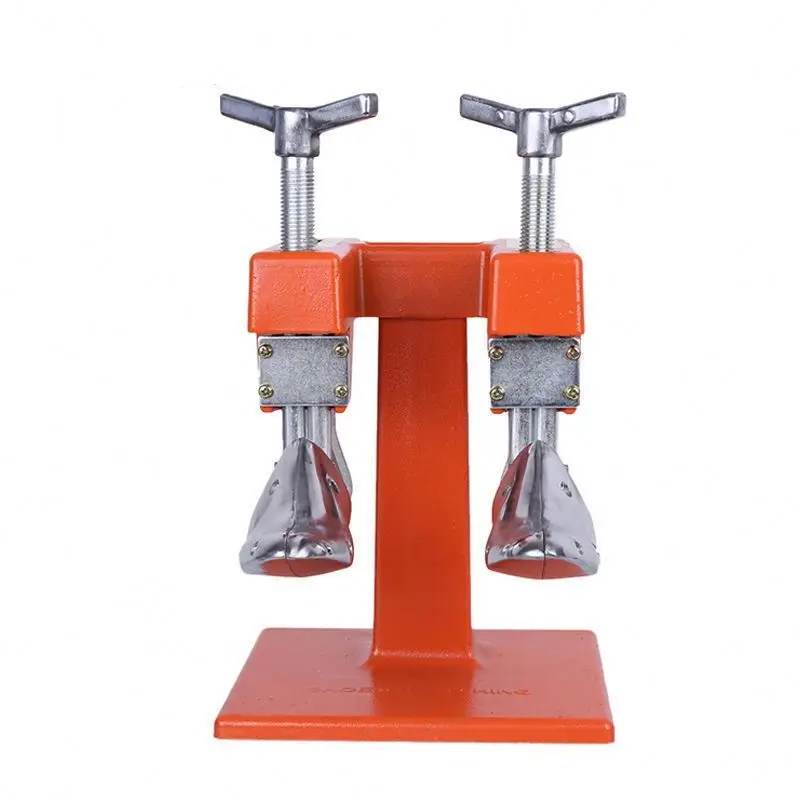
The Hoting queue identifies Product ID 1601276172858 as a TEBAK new-design manual shoe stretcher machine, also described as a one-pair shoe expander or shoe stretcher machine. The recorded fields are brand TEBAK, power manual, weight 11kg, size 40*31*36cm and material aluminum.
The source does not provide shoe-size coverage, last geometry, expansion directions, adjustment travel, compatible upper materials, maximum force, cycle time, output per hour, included adapters, surface treatment or packaging details. These are supplier confirmation points. Do not infer a size range or claim that every shoe can be stretched from the title alone.
This guide is for shoe-repair shops, footwear service counters, cobblers, small footwear manufacturers, retail after-sales departments, uniform and work-boot service teams, distributors and training workshops. The manual format may suit low-volume or operator-controlled work, but procurement should focus on fit, repeatability, material safety and the ability to document the final shoe shape.
Recorded specifications
| Field | Recorded value | Buyer action |
|---|---|---|
| Product ID | 1601276172858 | Require the same ID on quotation, model label, inspection sheet and shipping documents. |
| Brand | TEBAK | Confirm brand marking, nameplate and supplied manual match the quoted product. |
| Power | Manual | Confirm handle, lever, screw or other actuation method and the safe operating force. |
| Weight | 11kg | Confirm whether this is net weight, gross weight or a single-machine weight. |
| Size | 40*31*36cm | Confirm whether this is unboxed machine size, packed size or an installation envelope. |
| Material | Aluminum | Ask which components are aluminum and request material/finish information for contact parts. |
| Expansion scope | Not provided | Confirm length, width, instep, toe box, heel and any separate expansion actions. |
| Shoe compatibility | Not provided | Test representative shoes by size, construction, upper, lining, sole and stiffness. |
Define the repair job before buying
A shoe stretcher is only useful when the buyer defines the desired correction. Record whether the problem is length, forefoot width, instep pressure, toe-box height, localized rubbing, heel area, shaft area or another fit issue. A machine that expands one direction may not solve a different pressure point.
Prepare a sample list covering the buyer’s real work: leather dress shoes, synthetic uppers, work boots, safety footwear, lined footwear, stitched construction, glued construction and shoes with decorative or rigid components. The source does not state compatible materials, so written supplier confirmation and sample testing are required.
Photograph each sample before processing and mark the pressure area. Define the desired dimensional change and the acceptable limits for wrinkles, finish marks, seam stress, adhesive separation, sole distortion and cosmetic damage.
Do not promise a fixed result from “shoe expander” wording. The final change depends on construction, moisture, conditioning, last shape, adjustment direction, dwell time and the operator’s technique.
Confirm last geometry and expansion directions
The queue record does not include the last profile, removable blocks, expansion heads, adapters or adjustment travel. Ask the supplier to show the complete last and identify which areas move when the manual control is operated.
Request a dimensioned drawing showing minimum and maximum shoe length, forefoot width, toe height, instep clearance and heel clearance. Ask whether the machine uses one universal last, interchangeable lasts, a pair of lasts or separate left/right components.
Confirm whether one pair of shoes is processed at the same time or whether “one pair” describes the sales package. The product title alone does not prove simultaneous two-shoe operation.
Test the smallest and largest buyer shoe sizes and both left/right shapes. Check whether the last can be positioned without twisting the upper or stressing the sole.
Manual operation and repeatability
The recorded power is manual, but the actuation mechanism and force are not specified. Request handle length, thread or lever details, mechanical advantage, maximum recommended force and a safe adjustment procedure.
Define a repeatable work instruction: shoe preparation, insertion, adjustment increments, dwell time, release sequence, measurement and inspection. Record how many adjustment turns or steps are used for each shoe type. Do not assume that the same setting applies across different constructions.
Run repeat tests on identical sample pairs. Measure the result after release and after a defined rest period. Check whether the shoe returns toward its original size, whether left and right results differ and whether the operator can reproduce the correction.
Ask for recommended lubrication, thread inspection, cleaning and wear limits. Confirm whether manual force can damage the frame, last or shoe if the operator exceeds the recommended setting.
Material and surface review
The source records aluminum as the material but does not identify which parts use it. Request a component list covering frame, last, expansion blocks, handles, threads, pins, clamps, pads and contact surfaces.
Inspect the finish where the machine contacts the shoe. Sharp edges, rough surfaces, contamination or unsuitable coatings can mark uppers and linings. Request replacement pads, protective sleeves or approved contact materials if required.
Test dark, light, coated, delicate and synthetic materials for transfer, scuffing, indentation and finish change. Record the cleaning method for contact surfaces to prevent color or adhesive transfer between jobs.
Do not describe the equipment as suitable for leather, PU, PVC, textile or safety footwear unless the supplier provides evidence for those materials and the buyer’s own tests pass.
Size, weight and workplace layout
The recorded machine size is 40*31*36cm and weight is 11kg. Confirm whether these are net machine dimensions and weight. Request the packed size, gross weight, bench footprint, handle sweep and service clearance before finalizing the workstation.
Even a compact manual machine needs stable support. Confirm bench load, mounting holes, clamps, anti-slip feet or other securing method. A machine that moves during adjustment can create inconsistent results and a safety risk.
Plan a clean inspection surface for measuring the shoe before and after stretching. Keep the machine away from water, solvents, adhesives, heaters and direct contamination. Provide storage for lasts, blocks, pads and measuring tools.
At receipt, photograph the package, verify the model and Product ID, measure the machine, weigh the unit and compare all accessories with the packing list.
Sample testing and acceptance criteria
Build an acceptance set with representative shoes and clear pass/fail rules. Include at least one easy-to-stretch sample, one difficult or rigid construction and one appearance-sensitive sample. The exact set should reflect the buyer’s service mix.
For every sample, record original length and width at defined reference points, target correction, adjustment setting, dwell time, post-release measurements and cosmetic inspection. Record whether the shoe remains wearable and whether seams, glue lines, linings or soles are affected.
Repeat a subset of tests to evaluate operator consistency. If the buyer needs a defined dimensional change, include a measurement tolerance in the order specification. If the buyer only needs relief at a pressure point, define the acceptable location and appearance outcome instead.
Ask the supplier to participate in a video or in-person test using buyer-supplied samples. Keep the test record with the quotation so the delivered machine can be compared against the demonstrated configuration.
Factory acceptance test proposal
- Verify Product ID 1601276172858, TEBAK marking and the exact quoted configuration.
- Confirm the meaning of “one pair” and whether one or two shoes are processed simultaneously.
- Verify manual actuation method, handle/lever, force limits and safety instructions.
- Confirm 40*31*36cm as machine, packed or installation dimensions.
- Confirm 11kg as net or gross weight and identify included accessories.
- Map every aluminum component and inspect finish, edges and contact surfaces.
- Verify last geometry, left/right arrangement, blocks, adapters and adjustment travel.
- Test representative shoe sizes and constructions from the buyer’s sample set.
- Measure length, width, instep or localized pressure change at defined points.
- Inspect wrinkles, scuffs, color transfer, seam stress, adhesive separation and sole distortion.
- Repeat tests to measure operator consistency and post-release recovery.
- Verify cleaning, lubrication, thread inspection and replacement-part procedures.
- Check bench support, mounting, handle sweep and safe clearance.
- Record acceptance limits, warranty, correction method, spare parts and service response.
RFQ checklist
- Product ID 1601276172858, TEBAK brand and exact model/nameplate.
- Meaning of “one pair” and simultaneous versus sequential shoe processing.
- Actuation mechanism, handle/lever details, adjustment increments and force limit.
- Last length, width, instep, toe and heel geometry with minimum/maximum settings.
- Included blocks, adapters, left/right parts, pads, tools and spare parts.
- Compatible shoe sizes, upper materials, linings, soles and construction types.
- Maximum recommended correction and test results for buyer-supplied samples.
- Weight 11kg defined as net/gross and accessories included.
- Size 40*31*36cm defined as machine, package or installation size.
- Bench load, mounting, anti-slip method, handle sweep and service clearance.
- Aluminum grades/components, surface finish and food/chemical/contact relevance if applicable.
- Cleaning, lubrication, wear limits, calibration and replacement-part codes.
- Packaging, inspection, warranty, training and delivery documentation.
Safety and compliance
Manual stretchers contain moving threads, levers, blocks and pinch points. Keep hands clear while adjusting and release stored force before removing a shoe. Secure the machine on a stable bench and do not extend the handle with an unapproved bar.
Inspect the last and contact surfaces before every job. Stop if the shoe binds, the frame shifts, a thread slips or a component cracks. Do not force a shoe beyond the supplier’s confirmed adjustment range.
Use appropriate eye protection and task-suitable gloves, while avoiding entanglement around moving parts. Keep solvents, adhesives and heat sources away from the machine unless the supplier’s manual permits them.
Request destination-market machinery documents and a model-specific manual. The source does not provide CE, ISO or other certification, so none should be claimed without matching evidence.
Buyer decision framework
This candidate has a clear recorded identity—TEBAK, manual operation, aluminum, 11kg and 40*31*36cm—but lacks the performance fields that determine whether a shoe stretcher is suitable for a professional repair workflow. The purchase decision should therefore be based on a dimensioned last drawing and tests with the buyer’s actual shoes.
Approve the order only after the supplier defines expansion directions, size coverage, compatible materials, adjustment range, repeatability, workholding and included tooling. Keep the title claims separate from the verified specification table.
Frequently asked questions
Is this an electric machine?
The source records power as manual. Confirm the actual actuation mechanism and do not add an electrical requirement unless the supplier’s exact model documentation says otherwise.
What is the weight?
The recorded weight is 11kg. Confirm whether it is net or gross and whether accessories are included.
What are the machine dimensions?
The recorded size is 40*31*36cm. Confirm whether it describes the machine, package or installation envelope.
Which shoe sizes and materials can it stretch?
The source does not provide a size range or material list. Request a dimensioned last drawing and test representative shoes before ordering.
Can it stretch one pair at a time?
The title says one pair, but the process is not structurally defined. Ask whether the machine processes two shoes simultaneously or is supplied as a pair-based product.
Source and contact
This guide is based on the Hoting queue record for Product ID 1601276172858. Recorded fields are TEBAK brand, manual power, 11kg weight, 40*31*36cm size and aluminum material. Before purchase, request the exact model drawing, last geometry, size coverage, expansion directions, sample test, material compatibility, safety manual, accessories, warranty and destination-market compliance documents through the TEBAK sales inquiry channel.
Key specifications
- Brand
- TEBAK
- Power
- Manual
- Weight
- 11kg
- Size
- 40*31*36cm
- Material
- Aluminum