
Source-controlled product identity
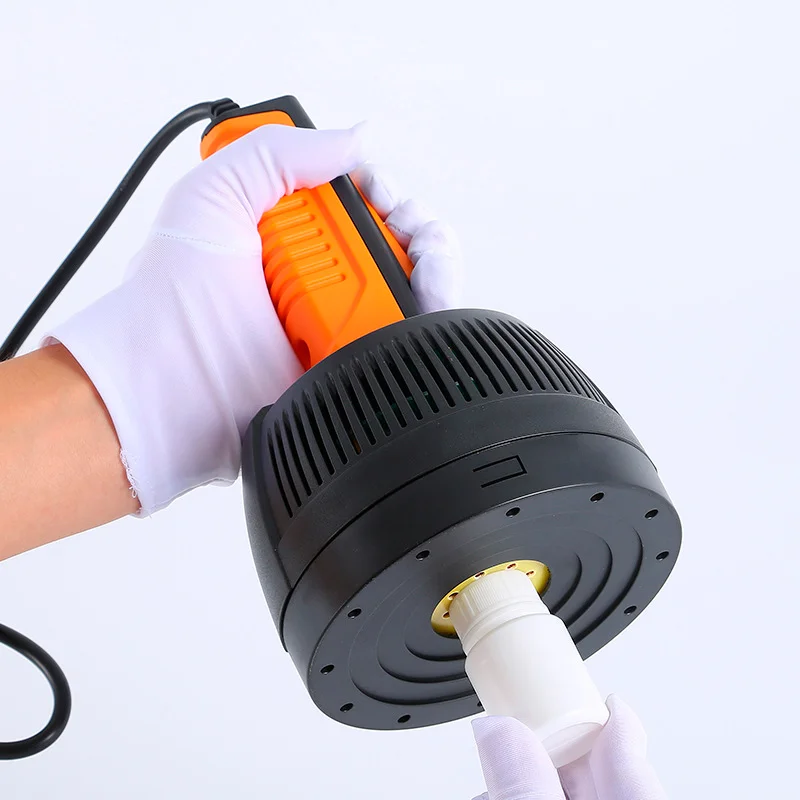
The Hoting queue record identifies a TEBAK Smart Type Portable Induction Sealing Machine for electromagnetic foil sealing on cans, jars and other compatible containers. The structured record lists two model variants, RL-800A and RL-800B, with the same recorded power, a listed voltage value of AC150-170 for both variants, different sealing-diameter ranges, different packing sizes and different weights. These fields are the factual starting point for this B2B procurement guide.
The source description also uses the terms hand-held induction sealing machine, electromagnetic can-lid foil closing machine and smart type. Those labels describe the listing, but they do not by themselves confirm container material, liner construction, seal strength, heating temperature, operating frequency, duty cycle, compatibility with liquids or the electrical standard for a destination market. Those items must be confirmed for the exact quotation and model.
Product ID 1601263443938 should appear on the quotation, model label, inspection report and packing list. This guide is intended for food and beverage packers, cosmetic and chemical distributors, supplement packers, contract manufacturers, small filling lines, laboratory packaging teams and buyers comparing portable induction sealers.
Recorded fields and open RFQ questions
| Information | Recorded value or status | Buyer action |
|---|---|---|
| Product ID | 1601263443938 | Require the same ID on the quotation, nameplate, inspection record and shipping documents. |
| Model | RL-800A | RL-800B | Confirm which model is quoted and keep the model-specific range, package and weight separate. |
| Voltage field | Votlage: AC150-170 | AC150-170 | Preserve the source spelling and value for traceability; request the correct rated input, tolerance, frequency, phase, plug and current before ordering. |
| Power | 0.8kw | 0.8kw | Confirm whether 0.8kW is total rated input, heating power or nominal catalog power. |
| Sealing diameter | 20-100mm for RL-800A; 20-130mm for RL-800B | Test the buyer's actual cap, liner, container opening and seal area at the required range. |
| Packing size | 170*165*285mm for RL-800A; 215*205*305mm for RL-800B | Use for logistics planning only; request unpacked machine dimensions and operating clearance. |
| Weight | 0.8kg for RL-800A; 1kg for RL-800B | Confirm whether the values include cable, coil head, accessories or packaging. |
| Induction foil sealing | Listing function | Confirm liner construction, foil material, polymer seal layer and container compatibility. |
| Portable / hand-held | Listing description | Request handle dimensions, coil-head geometry, cable length, cooling method and ergonomic test. |
| Smart type | Listing label | Define display, controls, alarms, automatic timing, power adjustment and fault protection. |
Choose the model from the container and closure
The model choice should begin with the container opening and liner, not with the carton size or the word “portable.” Record the container material, neck or opening diameter, cap material, cap internal diameter, liner construction, seal layer, foil thickness, product type, fill level and required seal result.
RL-800A is listed with a sealing diameter of 20-100mm, while RL-800B is listed with 20-130mm. These are source-recorded ranges, not a guarantee that every closure within those dimensions will seal. Confirm the usable coil area, cap clearance, container geometry and the supplier's test method for the exact liner.
Prepare a sample matrix before the RFQ: the smallest opening, the largest opening, the most difficult container material, the thinnest and thickest liner, a low-fill and high-fill container, and the actual product or a documented substitute. The same samples should be used for supplier testing and incoming acceptance.
For a contract packer, prioritize changeover control and repeatable seal results. For a small workshop, prioritize safe hand positioning, clear controls and easy cleaning. For a distributor, list RL-800A and RL-800B as separate configurations so that the sealing range, package and weight are not mixed.
How induction foil sealing works in the purchasing process
Induction sealing uses electromagnetic energy to heat a compatible foil liner or sealing element beneath a cap or closure. The heat softens or activates a seal layer so that the liner bonds to the container mouth when the coil head is held in the specified position for the specified time. Actual results depend on the liner, cap, container, product, coil geometry, power, distance, timing and cooling.
The source record does not specify the operating frequency, power-control method, heating time, coil-head design or temperature. Request these values for the quoted model. Ask whether the unit uses a fixed cycle, adjustable time, automatic detection, manual trigger or another control sequence.
Do not approve a sealer by visual appearance alone. A smooth liner can still have weak adhesion, channels, wrinkles, overheating or an incomplete bond. Define objective tests such as peel behavior, leak testing, torque or burst testing where appropriate for the package and product.
Ask the supplier how the sealing head is centered over the cap and what distance is allowed between the coil and liner. Confirm whether the operator must hold the head stationary, whether a guide is available and how the machine handles different cap heights.
Sealing diameter and real package geometry
The listed range is 20-100mm for RL-800A and 20-130mm for RL-800B. Request a drawing that defines the measured diameter: liner diameter, cap inner diameter, cap outer diameter, container opening or effective induction area.
Measure the cap and liner with the same method at several points. Check ovality, skirt shape, cap height, liner offset and the relationship between the liner and the container mouth. A nominal diameter does not describe the complete seal geometry.
Run the smallest and largest samples with the coil centered, then repeat with normal production tolerances. Record the seal appearance, peel behavior, leak result, cycle time, operator movement and any hot spots. If the largest sample requires a special head or reduced speed, document it as a configuration condition.
For a range of bottle, jar or can formats, request changeover instructions and whether the same head supports every size. Do not assume the RL-800B range includes every 20-130mm package shown in listing images.
Electrical specification: resolve the AC150-170 field
The source field is spelled “Votlage” and records AC150-170 for both RL-800A and RL-800B. This value is reproduced exactly for traceability, but its meaning is not sufficiently clear for a purchase order. It may be a catalog entry, a range, a typo or a model-specific electrical description.
Before ordering, request a clear nameplate photograph and an electrical datasheet stating rated voltage, allowable voltage range, frequency, phase, rated current, plug, cable, fuse and earthing requirement. Confirm whether AC150-170 is really the intended input and whether it matches the destination supply. Do not silently reinterpret the value as a standard 110V or 220V version.
Ask whether the 0.8kW value is the maximum input, nominal power, heating power or a measurement at a particular duty cycle. Request start-up current, steady current, recommended breaker and thermal protection. The final quotation should show the exact electrical configuration rather than a copied catalog label.
A qualified electrician should verify the destination circuit. Do not use an adapter, transformer or extension cable selected only from a product title. Record the nameplate and measured voltage/current during factory acceptance and site commissioning.
Power, heating control and seal consistency
Both models are listed at 0.8kw. Power alone does not determine seal quality. Seal consistency depends on how power is delivered, how the coil couples to the liner, how long the head is held, how the container is positioned and how the liner cools after heating.
Request the control interface and adjustment range. Confirm whether the operator sets power, time, temperature, a recipe or another parameter. Ask whether the machine has a timer, audible signal, over-temperature protection, output fault alarm, coil-head detection or automatic shutdown.
Run a repeatability study using one liner lot and one cap lot. Record the chosen setting, head height, cycle time, container material, product level, seal result and cooling time. Test a series of consecutive samples and retain failed examples for root-cause review.
Check for overheating, liner deformation, cap distortion, burnt odor, product temperature rise and damage to labels or nearby components. The acceptance limit should be agreed before production, not chosen after a failed trial.
Container, cap and liner compatibility
The record identifies can-lid foil and jar closing applications but does not confirm specific container materials or liner constructions. Request a compatibility table covering glass, PET, HDPE, PP, metal or any other intended container, as well as cap and liner combinations.
Provide the supplier with the actual cap, liner and container drawings. Identify the sealing layer polymer, foil, backing, adhesive or heat-seal coating, liner thickness and cap supplier. Ask whether the liner needs a particular air gap, pressure, cap torque or dwell time.
Test filled containers with the real product whenever safe and practical. Product viscosity, solids, moisture, oil, alcohol, solvent, powder and temperature can change the seal process or create contamination. If a substitute is used for testing, document the difference and repeat the test with the production product before approval.
Do not describe the unit as suitable for food, medicine, cosmetics or chemicals unless the supplier provides the required material, cleaning and compliance documents for the exact machine and package configuration. The sealer's ability to heat a liner is not the same as regulatory approval of the packed product.
Portable and hand-held operation
The listing describes a portable hand-held induction sealer. Ask for the handle dimensions, total cable length, coil-head weight, control-box layout, trigger location, cooling method and recommended working posture.
Observe an operator sealing the smallest and largest intended packages. Record how the head is aligned, how long it is held, how the operator moves to the next container and whether the cable interferes with the work area. Check for wrist fatigue, hot surfaces, sharp edges, electromagnetic warnings and the risk of accidental activation.
Request duty-cycle guidance. A light portable unit may be convenient for sampling or low-volume work, while continuous production may require a different cooling or conveyor arrangement. Do not infer production capacity from a small package or a low listed weight.
Define cleaning and changeover steps. The coil head should be protected from foil fragments, product spills and condensation. Confirm which areas can be wiped, which cleaning chemicals are allowed and how the unit should be cooled before maintenance.
RL-800A versus RL-800B procurement comparison
| Field | RL-800A | RL-800B | Decision point |
|---|---|---|---|
| Recorded sealing diameter | 20-100mm | 20-130mm | Compare the buyer's actual liner and cap diameter, not only the nominal cap size. |
| Recorded power | 0.8kw | 0.8kw | Confirm whether the electrical and output configuration is genuinely the same. |
| Recorded voltage field | AC150-170 | AC150-170 | Resolve the unclear field with a nameplate and destination-market datasheet. |
| Recorded packing size | 170*165*285mm | 215*205*305mm | Request unpacked dimensions and operating clearance separately. |
| Recorded weight | 0.8kg | 1kg | Confirm included parts and verify actual shipping and handling weight. |
| Best starting use | Packages within the recorded 20-100mm range | Packages within the recorded 20-130mm range | Approve only after sample sealing across the required range. |
This table is a comparison of source-recorded values, not a performance ranking. The larger range of RL-800B does not prove better seal strength or higher output. The final choice should follow the cap, liner and process test.
Packing dimensions, weight and logistics
The recorded packing size is 170*165*285mm for RL-800A and 215*205*305mm for RL-800B. The recorded weights are 0.8kg and 1kg respectively. Confirm whether these values describe the machine and its retail package, and whether the cable, coil head, controller, manual and accessories are included.
Ask for gross weight, carton material, internal protection, moisture protection, shock indicators, carton marks and pallet requirements. Check whether the coil head must be immobilized during transport. Portable electrical equipment can be damaged by impact to the control panel, cable or sealing head even when the carton appears intact.
At receipt, photograph the package before opening. Check model, serial or batch marking, package condition, included parts and visible damage. Compare the actual dimensions and weight with the approved shipping documents. Do not use the package dimensions as installation dimensions.
Keep the original packing material until the unit passes the incoming test. If the buyer expects repeated transport between sites, ask for a reusable case or a documented protection method.
Factory acceptance test proposal
- Verify Product ID 1601263443938 and the exact model, RL-800A or RL-800B.
- Verify the electrical nameplate, correct rated voltage, frequency, phase, current, plug and earthing details.
- Resolve the source-recorded AC150-170 voltage field before energizing the unit.
- Verify rated power 0.8kW and document whether it is input, heater or nominal output power.
- Verify the sealing-diameter definition and demonstrate the smallest and largest approved samples.
- Verify coil-head alignment, working distance, head dimensions and any guide or fixture.
- Use the buyer's actual container, cap, liner and product for a documented sealing trial.
- Record power/time settings, head position, cycle time, product condition and cooling time.
- Perform agreed peel, leak, torque, burst or other package-integrity tests.
- Run consecutive samples and record seal appearance, consistency, rejects and operator actions.
- Check over-temperature protection, timer, alarms, controls, cable, handle and emergency shutdown.
- Verify packing size, gross weight, package protection, manual, spare parts and destination documents.
RFQ checklist
- Product ID 1601263443938 and exact model: RL-800A or RL-800B.
- Clear electrical nameplate: voltage, frequency, phase, current, plug, cable, fuse and earthing.
- Explanation and correction, if needed, of the source field “Votlage: AC150-170.”
- Power definition for 0.8kW: total input, heating power, maximum or nominal value.
- Sealing diameter definition and effective working range for the actual cap and liner.
- Compatible container materials, cap materials, foil and heat-seal layer specifications.
- Coil-head dimensions, centerline, working distance, cooling method and replacement parts.
- Control method, timer, power adjustment, alarms, fault protection and restart behavior.
- Recommended duty cycle, cycle time and operator procedure for the buyer's package.
- Packaging dimensions, net weight, gross weight, internal protection and shipping marks.
- Incoming inspection samples, seal-integrity tests, acceptance limits and defect photos.
- Manual language, wiring diagram, maintenance schedule, spare parts and warranty.
- Destination-market compliance documents and restrictions for the exact electrical version.
Safety and compliance questions
Induction sealing equipment combines electrical power, electromagnetic output, heat and packaging-line handling. Request the operator manual, hazard labels, grounding instructions, hot-surface warnings and maintenance isolation procedure for the exact model.
Ask the supplier to identify electromagnetic exposure controls, restricted areas, warnings for implanted medical devices where applicable, and the safe distance from sensitive electronics. The buyer should review local workplace requirements and conduct a site risk assessment before production use.
Verify that the machine can be cleaned without energizing the coil. Keep liquid away from the controller and cable connections. Inspect the coil head, insulation and cable before each shift. Stop the unit if it smells burnt, overheats, sparks, shows unstable output or damages the package.
Do not claim CE, FCC, RoHS, food-contact compliance or another certification unless the supplier provides current documents that identify the exact model and electrical version. A certificate for a different unit is not evidence for this purchase.
Buyer decision framework
This candidate is a TEBAK portable induction sealer with two recorded configurations. RL-800A is listed for 20-100mm sealing diameter with 170*165*285mm packing size and 0.8kg weight. RL-800B is listed for 20-130mm sealing diameter with 215*205*305mm packing size and 1kg weight. Both are recorded at 0.8kw and the source records AC150-170 for the voltage field.
Approve the unit only after the supplier resolves the voltage field, confirms the exact electrical configuration, demonstrates the buyer's cap and liner, defines the sealing-diameter measurement, provides the control and duty-cycle data, and passes a package-integrity test. The most important open questions are liner compatibility, coil geometry, actual seal strength, electrical safety and repeatability.
Frequently asked questions
What is the difference between RL-800A and RL-800B?
The source records 20-100mm sealing diameter for RL-800A and 20-130mm for RL-800B. It also records different packing sizes and weights. Confirm the complete model datasheets before selecting one.
Can AC150-170 be connected directly to my local supply?
The source field is ambiguous and must be confirmed. Request a clear nameplate and electrical datasheet for the destination market. Do not infer a standard voltage or use an adapter without qualified electrical review.
Can the machine seal any jar or can?
No universal compatibility is confirmed. The cap, liner, container material, opening, coil distance, power and time all affect the result. Test the exact package and product.
Does 0.8kW mean the machine seals faster?
Not necessarily. Seal quality and speed depend on the liner, cap, coil, control method, head position, dwell time and cooling. Ask for measured cycle and integrity-test data.
Is this suitable for food, cosmetics or chemicals?
The listing describes can-lid foil and jar closing applications, but regulatory suitability is not confirmed. Request material, cleaning, electrical and destination-market documents for the exact configuration.
Source and contact
This guide is based on the Hoting queue record for Product ID 1601263443938. The recorded fields are RL-800A and RL-800B models, the source voltage value AC150-170 for both, 0.8kw power, model-specific sealing diameters, packing sizes and weights. Before purchase, request the current quotation, corrected electrical specification, package compatibility table, seal-integrity test, operating manual, package details, spare-parts list, warranty and destination-market documents through the TEBAK sales inquiry channel.
Key specifications
- Model
- RL-800A | RL-800B
- Votlage
- AC150-170 | AC150-170
- Power
- 0.8kw | 0.8kw
- Sealing diameter
- 20-100mm | 20-130mm
- Packing size
- 170*165*285mm | 215*205*305mm
- Weight
- 0.8kg | 1kg