
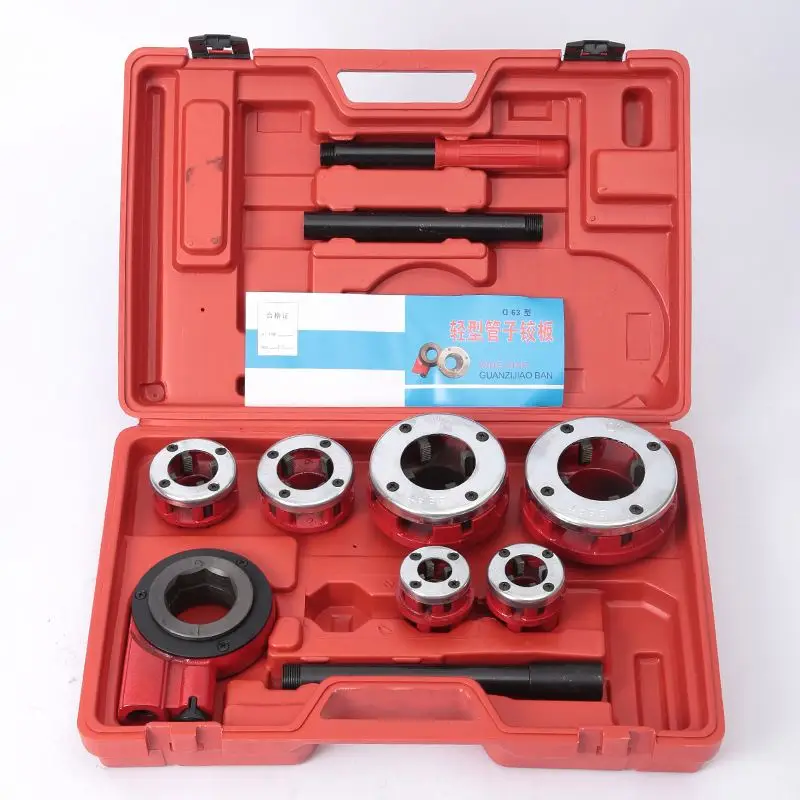
Source-controlled product identity
The Hoting queue record identifies this product as a TEBAK handheld electric threading machine, also described as a portable threading device or small threading equipment. The record contains no structured technical parameter list. It does not state voltage, frequency, input power, motor type, spindle speed, threading range, pipe or rod material, die standard, die sizes, cutting capacity, weight, dimensions, battery configuration, cooling method, protection rating, certification, MOQ, warranty or lead time.
This guide is therefore a procurement and verification document rather than a performance specification. Product ID 1601276451092 should appear on the quotation, model label, datasheet, inspection report, packing list and after-sales record. The product name and supplied images can establish the category and portable form factor, but they do not establish a rated capacity or a safe operating limit.
What is verified and what remains open
| Information type | Source status | Buyer action |
|---|---|---|
| Brand/category | TEBAK handheld electric threading machine | Confirm exact model, nameplate, product ID and whether the same body supports all quoted die sets. |
| Portability | “Handheld” and “portable” are listing descriptions | Confirm net weight, balance, handle arrangement, carrying case and maximum safe operating duration. |
| Electric drive | “Electric” is a listing description | Confirm voltage, frequency, input/rated power, current, plug, phase, speed control and protection. |
| Threading capability | No range or standard supplied | Request thread standards, die sizes, material range, pitch range, maximum section and test samples. |
| Cooling and lubrication | No method supplied | Confirm cutting oil, lubrication points, coolant compatibility, chip control and cleaning procedure. |
| Compliance | No product-level certification supplied | Request destination-market electrical and machinery documentation for the exact model and configuration. |
Define the application before comparing suppliers
A handheld electric threading machine can be used for different work: on-site pipe work, maintenance, fabrication, repair, installation or small-batch shop production. The correct specification depends on the workpiece and thread rather than the product name alone.
Prepare an application sheet before requesting a quotation. List the workpiece material, outside diameter or section, wall thickness where relevant, thread standard, nominal size, pitch, thread length, required class or fit, production quantity, work position, available electricity and expected duty cycle.
Separate pipe threading from bolt or rod threading. A pipe die head, a rebar or rod threading tool and a general-purpose tap-and-die device can have different guides, dies, torque behavior and safety requirements. Ask the supplier to state the intended workpiece category in writing.
Include photographs and sample workpieces in the RFQ when possible. A supplier should quote against the buyer’s actual material and thread requirement, not only against the phrase “portable threading machine.”
Electrical configuration must be confirmed
No voltage, frequency or power is provided in the source record. Request the nameplate photograph and datasheet showing rated voltage, frequency, input power, rated current, phase, plug, cable length, earthing method and allowable voltage tolerance.
Confirm whether the machine is corded, battery powered or offered in more than one configuration. If a battery version exists, request battery voltage, capacity, chemistry, charger input, charging time, spare battery availability and operating time under a defined threading load. Do not assume a battery icon or portable appearance proves battery operation.
For a corded model, check the destination plug and protective-earth arrangement. Confirm whether the quoted power is input power, motor output or maximum draw. Request start-up current and recommended protective-device rating so the buyer can plan field use without relying on an unverified nominal value.
Perform a visual nameplate check during inspection. The voltage and frequency on the delivered unit must match the purchase order and destination. Test the power switch, trigger, speed control, cable strain relief, insulation condition and restart behavior after a power interruption.
Thread standard, die system and size range
The source record does not identify a thread standard or die size. Ask whether the machine uses replaceable die heads, cutting dies, taps, chasers or another system. Request the exact standard for each included die, such as the applicable pipe, metric, Unified or other thread system, without treating a general standard name as proof of compatibility.
Request a die list with part numbers, nominal sizes, pitch or threads per inch, handedness, material and coating. Confirm whether dies are included in the quoted machine or sold separately. A product photograph showing a die head does not prove the die range or thread quality.
Ask the supplier to state minimum and maximum workpiece size separately for each die set. Confirm whether the range is based on pipe nominal size, outside diameter, bolt diameter or another measurement. Require a drawing that shows the die head opening, guide dimensions and clearance around the workpiece.
Check whether the tool can cut new threads, chase damaged threads, or both. These operations may require different die condition and torque. Ask for the recommended replacement interval and the signs of a worn or chipped die.
Material and thread-quality acceptance
Thread quality depends on workpiece material, surface condition, alignment, cutting fluid, die geometry, speed and operator technique. Request the supplier’s approved material range and test it against the buyer’s actual steel, stainless steel, copper alloy or other stock.
Define acceptance by measurable outcomes: major and minor diameter where applicable, pitch or threads per unit length, thread length, crest form, root condition, burr level, fit with a verified mating part, concentricity and surface damage. Do not accept “smooth thread” as the only quality criterion.
Use calibrated gauges or verified mating parts appropriate to the selected standard. Record gauge identification, inspection method, sample material, die part number, cutting fluid, speed setting and number of passes. Retain photographs of the first article and any rejected threads.
Test both a clean new workpiece and a realistic maintenance workpiece if field repair is the intended use. Rust, paint, scale, ovality and damaged ends can change cutting behavior. The buyer should define whether the tool must remove coating or whether the workpiece must be prepared first.
Torque, speed and motor behavior
No spindle speed, torque, motor type or control method is supplied. Request no-load speed, loaded speed range, rated torque, peak torque, overload protection and recommended cutting speed for each material and die size.
Ask whether the tool uses a forward/reverse control, mechanical clutch, electronic current limit or manual release. Confirm how the operator stops rotation if the die binds. A reverse switch should not be treated as an overload-protection device unless the supplier documents its behavior.
Run a load test with the buyer’s workpiece. Record current, speed, torque behavior, heat rise, vibration, noise, chip formation and thread result. Repeat across the smallest and largest quoted die sizes, but only within the supplier’s documented range.
Check the duty cycle: continuous running time, rest time, maximum starts per hour and thermal protection reset. A compact electric tool may be suitable for intermittent repair work but not for continuous production. The quotation must match the intended service profile.
Workholding, alignment and operator control
Handheld operation does not remove the need to control the workpiece. Request the recommended vise, pipe clamp, guide, reaction arm or support fixture. Confirm the maximum reaction force and the correct point for the operator to hold the machine.
Test alignment between the die head and workpiece. Misalignment can produce tapered, damaged or uneven threads and can increase reaction torque. Ask for the supplier’s alignment procedure and inspect the guide nose, clamping arrangement and reaction surface.
Define the safe clearance around the rotating die and workpiece. Long pipe or rod should be supported so it cannot swing or rotate unexpectedly. Short pieces must be held without placing hands near the cutting zone.
Evaluate balance and grip under load, not only during an empty demonstration. Record handle temperature, vibration, trigger access, cable routing and operator fatigue during a representative work cycle.
Lubrication, chips and cooling
The source record does not provide a lubrication or cooling method. Request the approved cutting oil, application method, flow rate or manual dosing instruction, and compatibility with the workpiece and die material.
Clarify whether the machine has an integrated oil system, an external bottle, a drip point or no dedicated system. Ask how chips are directed away from the die and whether a chip shield or collection tray is available.
Run a cutting-fluid trial using the buyer’s intended oil. Record thread finish, die temperature, smoke, odor, leakage, cleanup time and fluid consumption. If dry cutting is permitted, obtain a written material and size limit rather than assuming the machine can operate dry.
Inspect the gear housing, vents, switch and motor for contamination after a full test. Ask for cleaning intervals, filter or brush replacement, lubrication points and a procedure for removing chips without contacting sharp thread edges.
Safety and compliance documentation
No product-level certification or protection rating is supplied. Request the instruction manual, risk warnings, electrical test record and destination-market documents for the exact model, voltage version and die configuration.
Check for guards at rotating or cutting parts, a secure trigger or switch, overload protection, thermal protection, cable strain relief, protective earth and a clear emergency stop method. If the tool is truly handheld, the manual should explain reaction torque and the correct body position.
Review noise and vibration information if the buyer will use the tool repeatedly. Request measured values and test conditions rather than generic statements. The buyer should define hearing, eye, hand and respiratory protection based on the actual material and cutting fluid.
Do not use a company-level ISO claim as a substitute for product compliance. Any certificate, declaration or test report must identify the supplied model and configuration, and its scope must match the destination and intended use.
Portability, weight and service logistics
Although “handheld” and “portable” appear in the title, the source record gives no weight, dimensions, case size or carrying arrangement. Request net weight, gross packed weight, overall dimensions, balance point, handle locations and the dimensions of any die case.
Confirm whether the quoted package includes die heads, dies, reaction arm, guide, oil bottle, wrenches, brushes, manual, charger or spare parts. List each item with a part number and quantity on the packing list.
Ask for a carrying case or protective package suitable for the machine’s weight and cutting components. Dies should be separated and protected from impact, moisture and corrosion. The packaging should prevent the trigger, cable and die head from bearing transport loads.
Request spare-part prices and availability for motor, gear set, clutch, switch, trigger, cable, bearing, guide, die head, dies, brushes, charger and battery if applicable. Confirm whether the buyer or a local service partner can replace them.
Factory acceptance test proposal
- Verify product ID 1601276451092, brand, model, nameplate, package contents and exact electrical configuration.
- Confirm whether the tool is corded or battery powered and record voltage, frequency, input power, current and plug or charger details.
- Verify the die system, included die part numbers, thread standards, nominal sizes, pitch and workpiece range.
- Test the buyer’s actual workpiece materials using an agreed cutting fluid and documented die setting.
- Inspect thread form, pitch, length, diameter, gauge fit, burrs, surface marks, concentricity and repeatability.
- Measure loaded current, speed, torque behavior, heat rise, vibration, noise and duty-cycle performance.
- Test forward/reverse, trigger, overload or clutch protection, thermal protection and restart behavior.
- Verify reaction arm, guide, vise or support requirements and confirm operator clearance around the cutting zone.
- Review cleaning, lubrication, chip removal, die replacement, spare parts, manual and service response.
- Confirm packaging, carrying case, accessories, warranty, MOQ, lead time, inspection terms and destination documentation.
RFQ checklist
- Product ID 1601276451092, exact model, nameplate photograph and current product datasheet.
- Corded or battery configuration; voltage, frequency, input/rated power, current, phase, plug and cable.
- Motor type, no-load/load speed, rated/peak torque, control method, overload and thermal protection.
- Thread standards, die system, part numbers, included dies, nominal sizes, pitch and handedness.
- Minimum and maximum workpiece size defined by outside diameter or the correct standard measurement.
- Approved workpiece materials, wall thickness, surface condition and cutting-fluid requirements.
- Thread-quality tolerance, gauge method, mating-part test, first-article sample and inspection record.
- Guide, reaction arm, vise, clamp, support fixture, alignment procedure and safe working clearance.
- Duty cycle, continuous run time, rest time, thermal reset and maximum starts per hour.
- Net/gross weight, dimensions, balance, carrying case, accessory list and protection of dies in transit.
- Manual, risk warnings, electrical test report, product-level declarations and destination-market documents.
- MOQ, sample cost, lead time, warranty, spare parts, die replacement, service contact and inspection terms.
Buyer decision framework
This listing is a starting point for sourcing a handheld electric threading machine, not a complete technical specification. The source-backed information is limited to the TEBAK product identity, the electric handheld/portable description, the supplied product images and product ID 1601276451092. Approve the machine only after the supplier provides a model-specific datasheet, confirms electrical configuration and thread range, demonstrates the buyer’s actual material and standard, documents safety and service requirements, and passes the agreed acceptance test.
Frequently asked questions
What voltage and power does this threading machine use?
The source record does not provide voltage, frequency, input power or current. Request the exact nameplate and datasheet for the model and destination configuration.
What pipe or rod sizes can it thread?
No threading range is supplied. Ask for a die-by-die capacity chart that defines the measurement basis, material, standard and pitch.
Are dies included?
The source record does not include a structured accessory list. Require a quotation with each die head, die, guide, reaction arm, oil system, case and spare part listed by part number.
Can it be used continuously on a production line?
No duty cycle or thermal data is provided. Request continuous run time, rest time, thermal protection and a representative loaded test before approving production use.
Is the machine safe to use without a vise or reaction arm?
Do not assume so. Confirm the supplier’s workholding and reaction-torque instructions and test stability and operator clearance with the intended workpiece.
Source and contact
This guide is based on the Hoting queue record for product ID 1601276451092 and the supplied TEBAK product imagery. Before purchase, request the current quotation, model label, electrical datasheet, die list, thread-standard confirmation, material test, safety documents, packing list, spare-parts offer, warranty and final machine photographs. For sourcing questions, contact the TEBAK sales team through the site’s current inquiry channel.