
Source-controlled product identity
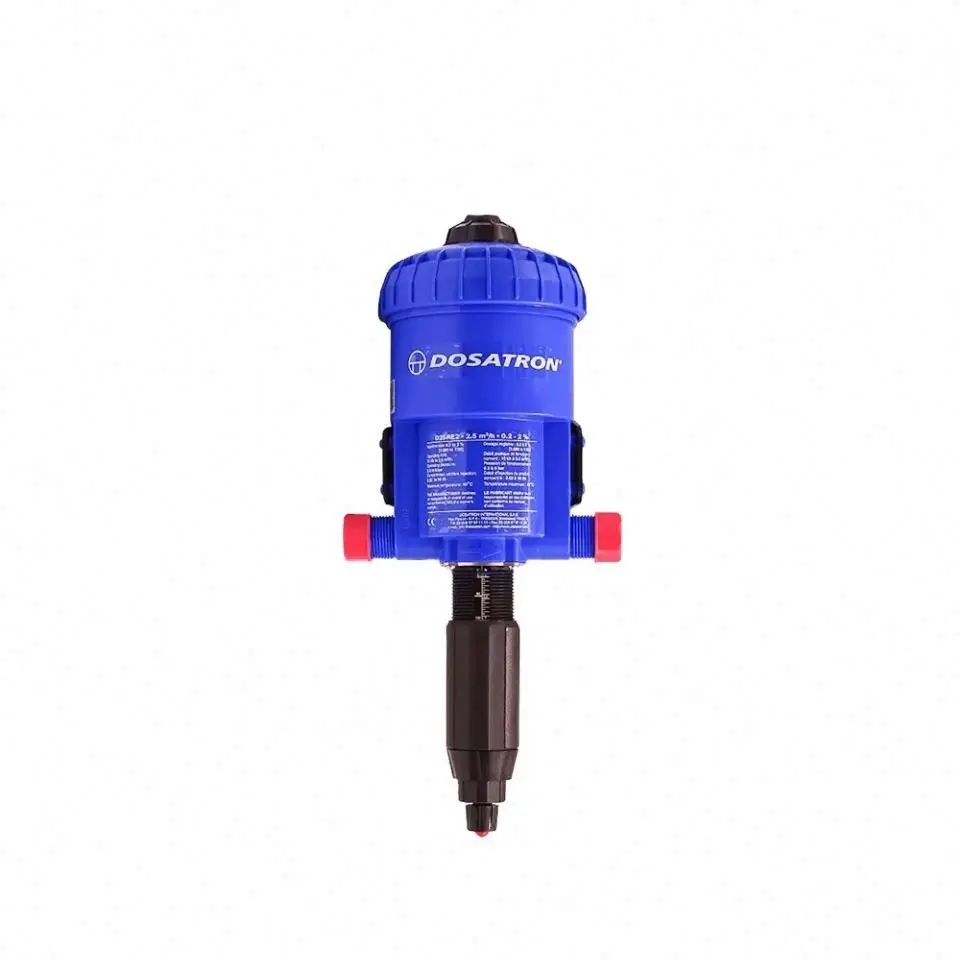
The Hoting queue identifies Product ID 1601251997531 as a TEBAK water-driven dosing chemical fertilizer injector and automatic metering pump dispenser. The source title also uses the terms Dosatron, poultry dosing pump and dosing pump dispenser.
The queue record does not contain a structured technical parameter table. It does not verify the dosing ratio, minimum or maximum water flow, operating pressure, injection rate, head loss, pipe size, body material, seal material, chemical compatibility, accuracy, temperature range, output, dimensions, weight or certifications. This guide therefore treats every one of those values as a supplier-confirmation, RFQ and acceptance-test requirement.
This type of water-powered dosing equipment may be considered for irrigation fertilizer injection, greenhouse nutrient delivery, livestock and poultry drinking-water treatment, sanitation dosing, water-treatment chemical addition and other proportional liquid-injection applications. The correct purchase depends on the water system, chemical formulation, target concentration, flow variation, pressure, backflow protection and local compliance obligations.
What the source confirms and what it does not
| Field | Source status | Buyer action |
|---|---|---|
| Product ID | 1601251997531 | Require this ID on the quotation, unit marking, inspection report and shipping documents. |
| Brand | TEBAK in the title | Confirm the legal seller, manufacturing party, model code and service contact. |
| Product family wording | Water-driven dosing chemical fertilizer injector/doser | Confirm the exact operating principle, proportional range and permitted applications. |
| Additional title references | Dosatron; poultry dosing pump dispenser | Clarify whether these are product-family terms, a model reference or listing keywords. |
| Drive source | Water-driven is stated in the title | Request the required water flow, pressure, bypass arrangement and pressure loss. |
| Dosing ratio | Not provided | Request injection ratio, adjustment method, calibration procedure and tolerance. |
| Flow range | Not provided | Request minimum/maximum water flow and chemical intake flow under measured conditions. |
| Pressure range | Not provided | Request minimum/maximum inlet pressure, outlet pressure and pressure-loss curve. |
| Materials and seals | Not provided | Match wetted materials and seals to the exact fertilizer, disinfectant or treatment chemical. |
| Certification | Not provided | Request model-specific destination-market and drinking-water documents where relevant. |
Clarify the exact product and model
The source title combines a generic water-powered injector description with the term Dosatron and a poultry dosing pump description. Do not assume that the listing is an original Dosatron product, an equivalent model or a private-label unit. Ask the supplier to state the exact TEBAK model code and explain every brand or family reference used in the title.
Request a nameplate photograph, assembly drawing, flow diagram, exploded parts diagram and installation manual for the quoted unit. The quotation should identify the body, motor or water-engine assembly, injector, adjustment scale, suction hose, filter, valves, seals and supplied connectors.
Confirm whether the unit is a proportional injector powered by the water stream, a pump with a water-driven actuator or another dosing arrangement. The phrase “water-driven” alone does not establish the dosing mechanism, performance or operating limits.
Use product images as visual references only. Images cannot prove the injection ratio, material grade, chemical compatibility, pressure rating, calibration accuracy or included accessories.
Define the dosing objective
Write the target concentration in a form the supplier can test. State whether the requirement is a ratio by volume, mass concentration, parts per million, grams per liter, milliliters per liter or another controlled unit.
Identify the liquid being injected: fertilizer concentrate, micronutrient solution, acid, alkali, disinfectant, vaccine, medication, detergent or another chemical. Include concentration, density, viscosity, temperature, suspended solids, pH, oxidizing behavior and any crystallization or precipitation risk.
For poultry or livestock water systems, state whether the unit is used for nutrition, sanitation or medication. A dosing pump for an animal drinking-water system may require additional material, cleaning, traceability and regulatory review. Do not treat a general fertilizer listing as proof of suitability for veterinary medicines or drinking-water contact.
Define the required result at the point of use. The injector outlet concentration may change with pipe volume, mixing length, tank turnover, branch flow, water temperature and chemical draw-down. Include a sampling point and a measurement method in the acceptance plan.
Water-flow and pressure requirements
The source provides no minimum or maximum water-flow value. Request a performance table showing the water-flow range, injection flow, dosing ratio, inlet pressure, outlet pressure and pressure loss for the exact configuration.
Measure the real installation rather than selecting from a nominal pipe size. Record flow at low demand, normal demand, peak demand and at the most distant branch. Confirm that the injector still doses at the lowest expected flow.
Ask whether a bypass installation is required. A bypass can allow service without stopping the main line, but it must be correctly sized and protected against unintended chemical flow. Request a piping diagram showing isolation valves, check valves, filters, pressure gauges, pressure regulators and injection points.
Check pressure surges, water hammer, pump cycling and backflow conditions. Request maximum allowable pressure and pressure-pulse limits. Never infer a safe operating pressure from the appearance or size of the housing.
Dosing ratio, adjustment and calibration
No dosing ratio or adjustment range is supplied. Ask for the minimum and maximum injection ratio, adjustment increments, fixed or variable setting, calibration reference, suction lift and the effect of water-flow changes.
Confirm whether the adjustment scale represents a percentage, a volume ratio, a stroke setting, a flow rate or only an approximate dial position. Require a written calibration procedure using the buyer's chemical or a safe test liquid with equivalent physical properties.
Run a bucket or gravimetric test at several water-flow points. Measure the injected liquid separately from the water flow and calculate the actual concentration. Repeat each point enough times to distinguish repeatability from reading error.
Test start-up, shutdown, low-flow operation, empty chemical container, air in the suction line, clogged filter and a changed chemical temperature. Record whether the injector loses prime or changes ratio after each condition.
Chemical compatibility and wetted materials
The source provides no wetted-part materials. Request a full material list for the body, piston or water motor, injector, suction line, seals, check valves, springs, filters, fittings and lubricants.
Compare each material with the actual chemical concentrate and diluted solution. Fertilizers can contain salts and corrosive components; disinfectants may be oxidizing; acids and alkalis can attack metals, elastomers and plastics. A material that works with water may fail with concentrate.
Provide the supplier with the chemical safety data sheet and ask for a written compatibility response. Include concentration, temperature, exposure time, cleaning fluid and storage condition.
Inspect seals and valves after a controlled exposure or production trial. Check swelling, cracking, hardening, discoloration, leakage, sticking, crystallization and changes in dosing ratio.
Filtration, suction and chemical handling
Ask whether the quoted unit includes an intake filter, foot valve, suction hose, weighted strainer, anti-siphon device and chemical-container connection. The source does not list accessories.
Confirm the maximum suction lift, allowable hose length, hose internal diameter and acceptable viscosity. Test the actual container geometry and the lowest liquid level. A dosing pump may draw differently as the container empties.
Plan for chemical spills, container changes, flushing, line clearance and waste capture. Keep the suction line protected from kinks, heat, sunlight and incompatible materials.
For crystalline fertilizers or solutions with suspended particles, determine whether filtration is needed and how often it must be cleaned. Record filter mesh or pore specification only after supplier confirmation.
Irrigation and greenhouse applications
For irrigation, map the water source, pump, filtration, pressure regulation, main line, branches, valves, emitters and injection point. Confirm that the injector's pressure loss does not reduce uniformity at the farthest irrigation zone.
Test nutrient concentration at the beginning and end of the irrigation run. Check mixing time, line residence time, flushing volume and concentration after zone changes.
Separate fertilizer injection from drinking-water or potable-water assumptions. Add backflow prevention and air-gap or anti-siphon measures required by the local installation authority.
Specify the fertilizer formulation and dilution procedure. Do not assume that a dosing injector can handle concentrated stock, undissolved crystals or mixed products without a compatibility and clogging test.
Poultry and livestock water applications
The title includes poultry dosing pump dispenser, but no animal-health, drinking-water or veterinary specification is supplied. Ask the supplier to define whether the unit is intended for fertilizer, sanitation, nutrition, medicine or general liquid dosing.
For animal drinking-water use, confirm all wetted materials, cleaning method, residue control, dose accuracy, traceability and the applicable local requirements. Obtain product-specific documents from the chemical or veterinary supplier as well as from the pump supplier.
Test low-flow drinker demand, peak demand, line pressure, water temperature and the effect of multiple branches opening simultaneously. Check whether the injector maintains concentration when demand changes rapidly.
Record medication or treatment batches, calibration checks, cleaning, flushing and operator authorization. Do not use a generic title as evidence that a unit is approved for a particular animal medication.
Installation and system design
Request an installation drawing showing flow direction, inlet and outlet, bypass, filter, check valve, pressure gauge, injection hose, chemical tank, drain and sampling point. Confirm all connection standards, thread types, tube sizes and supplied adapters.
Install isolation valves so the unit can be serviced without uncontrolled chemical release. Protect the injector from reverse flow, pressure surges and dry operation according to the supplier's manual.
Provide sufficient straight pipe, mixing length and access for inspection where required. The needed arrangement depends on the injector design and water system, so obtain the supplier's exact recommendation rather than applying an assumed distance.
Mark chemical flow direction and keep chemical and water lines clearly identified. Use secondary containment for concentrate containers and protect the area from unauthorized access.
Flow variation and uniformity testing
A proportional injector may respond to water flow, pressure, chemical viscosity and adjustment setting. Request a curve or table showing actual dosing across the operating envelope.
Test at low, nominal and high water flow. Measure concentration downstream after the line has stabilized and compare results with the target tolerance.
Test a rapidly changing demand pattern, such as zone switching or multiple drinker branches opening. Record overshoot, undershoot, delay and the time required to return to the target.
Where uniformity matters, take samples at more than one downstream location. Compare the first outlet with the farthest outlet and record the sample time relative to pump start and chemical-container change.
Maintenance and service
Request the maintenance schedule for seals, check valves, filters, injection components, lubricants and calibration. The source does not specify service intervals or spare parts.
Ask for a complete spare-parts list with part numbers, materials, recommended quantities and lead times. Include a replacement kit for components exposed to the buyer's chemical.
Define cleaning after fertilizer, disinfectant, acid, alkali or medication use. Confirm flushing liquid, waste disposal, disassembly points, drying and storage conditions.
Keep a service log containing installation date, chemical used, settings, flow measurements, calibration results, leaks, repairs and replacement parts. Recalibrate after any dosing component, seal, hose, valve or adjustment mechanism is changed.
Factory acceptance test proposal
- Verify Product ID 1601251997531, exact TEBAK model and the meaning of Dosatron and poultry-dosing references.
- Confirm water-driven operating principle, flow direction, bypass arrangement and required utilities.
- Confirm minimum/maximum water flow, inlet pressure, outlet pressure and pressure-loss data.
- Confirm minimum/maximum dosing ratio, adjustment method, scale meaning and calibration procedure.
- Test the buyer's chemical or an agreed equivalent at the stated concentration and temperature.
- Measure water flow, injected liquid flow and downstream concentration at multiple operating points.
- Test start-up, shutdown, low-flow operation, flow changes, empty container and air in the suction line.
- Verify suction lift, hose length, intake filter, foot valve, check valve and chemical-container connection.
- Inspect wetted materials, seals, valves, springs, filters, fittings and lubricant compatibility.
- Run a leakage, backflow, pressure-hold and pressure-surge check appropriate to the installation.
- Test irrigation-zone or poultry-water demand changes and downstream concentration uniformity.
- Confirm installation diagram, thread standards, adapters, gauges, isolation valves and safety devices.
- Verify cleaning, flushing, waste handling, calibration, maintenance and spare-parts instructions.
- Confirm model-specific safety, chemical-contact, drinking-water, veterinary or destination-market documents where applicable.
- Attach measured results, approved settings, packing list, manuals and spare-parts list to the purchase order.
RFQ checklist
- Product ID 1601251997531 and exact model code.
- Explanation of the TEBAK, Dosatron and poultry-dosing terminology in the listing.
- Water-driven operating principle, flow diagram, flow direction and bypass layout.
- Minimum/maximum water flow, inlet/outlet pressure, pressure loss and surge limits.
- Dosing ratio, injection range, adjustment increments, calibration and repeatability.
- Minimum/maximum chemical intake flow, suction lift, viscosity, temperature and hose limits.
- Body, injector, piston or water motor, seals, valves, springs, filters and fitting materials.
- Compatibility response for the buyer's fertilizer, disinfectant, medication or treatment chemical.
- Included filter, foot valve, suction hose, check valve, adapters, gauges and spare parts.
- Pipe size, connection standard, thread type, chemical-container interface and installation clearance.
- Measurement method for water flow, injection flow and downstream concentration.
- Installation requirements for irrigation, greenhouse, poultry, livestock or water-treatment use.
- Backflow prevention, anti-siphon, containment, pressure relief and chemical-handling requirements.
- Cleaning, flushing, calibration, maintenance intervals, service procedure and waste disposal.
- Model-specific certificates, manuals, warranty, service response, parts prices and delivery documents.
Safety and compliance
A water-powered chemical injector combines pressurized water, concentrated chemicals, possible backflow and automatic or proportional dosing. Complete a site-specific risk assessment before installation.
Isolate water pressure and chemical flow before disconnecting hoses, filters, valves or the injector. Depressurize the system, contain residual liquid and use chemical-specific protective equipment.
Prevent backflow into the water source with the devices required by the local authority and the system design. Do not assume that a check valve shown in a photograph is included or adequate.
Store and handle fertilizer, disinfectant, acid, alkali, medication and propellant according to their safety data sheets. Keep incompatible chemicals separated and provide spill containment, ventilation and emergency washing facilities where required.
For poultry, livestock, drinking-water or veterinary applications, obtain the relevant product, material and regulatory documents. The source does not provide certificates or approvals, so no drinking-water, veterinary, CE, ISO or other certification is claimed in this guide.
Buyer decision framework
This candidate has a Product ID, TEBAK title, water-driven dosing description and title references to chemical fertilizer, Dosatron and poultry dosing. It has no verified numeric performance or material data.
Approve the order only after the supplier identifies the exact model, demonstrates dosing at the buyer's flow and pressure conditions, confirms chemical compatibility, provides the installation and safety scheme, and passes a witnessed concentration and leakage test.
Frequently asked questions
What is the dosing ratio?
The source does not provide a dosing ratio. Request the minimum and maximum ratio, adjustment method, calibration procedure and measured repeatability.
Does the pump need electricity?
The title describes it as water-driven, but the source does not provide a complete utility specification. Confirm the operating principle and any electrical, pneumatic or pressure-control requirements with the supplier.
Can it inject fertilizer into irrigation water?
The title references chemical fertilizer, but compatibility, flow range and performance are not verified. Test the actual fertilizer, water flow, pressure, concentration and downstream uniformity.
Can it be used for poultry medication?
The title includes poultry dosing pump wording, but this is not approval for veterinary or drinking-water use. Obtain model-specific documents and run a dose, material, cleaning and regulatory review.
What pipe size and pressure are required?
The source provides neither. Request connection standards, minimum/maximum flow, inlet/outlet pressure, pressure loss, bypass design and surge limits.
Source and contact
This guide is based on the Hoting queue record for Product ID 1601251997531. The source identifies a TEBAK water-driven dosing chemical fertilizer injector and uses Dosatron and poultry dosing pump wording, but provides no structured technical specifications. Before purchase, request the exact model, dosing range, water-flow and pressure data, chemical compatibility, installation diagram, backflow protection, measured test results, safety documents, spare parts, warranty and destination-market requirements through the TEBAK sales inquiry channel.