
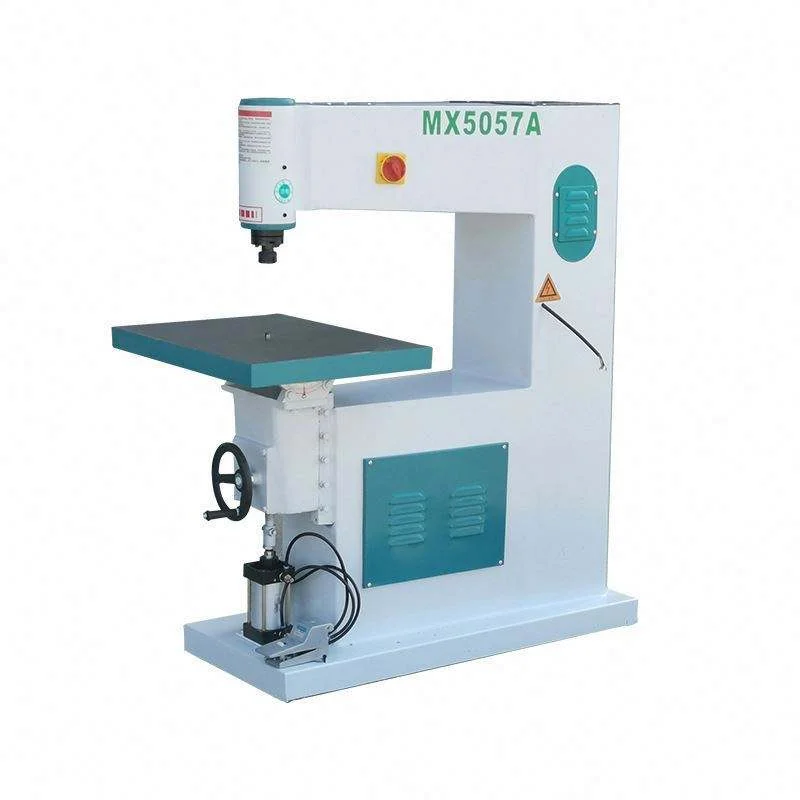
Source-controlled identity before an RFQ
This TEBAK listing describes a high-speed woodworking router, pedal vertical shaper and pin router machine. The title uses the identifier XJ-15, while the structured Type field says MX5068. Treat both identifiers as source-recorded values and ask the supplier to reconcile them on the quotation, nameplate, drawing, manual and inspection report.
Product ID 1601605858910 is the queue identifier for this buying guide. It is not a substitute for the machine model. The source confirms eight engineering fields: type MX5068, working table size 805x600mm, working table stroke 180mm, maximum workpiece thickness 150mm, maximum spindle stroke 65mm, maximum cutter handle diameter 12.7mm, speed 18000r/min and power 3kw.
| Source field | Confirmed value | Procurement treatment |
|---|---|---|
| Title identifier | XJ-15 | Source title value; reconcile with the structured Type field before ordering. |
| Type | MX5068 | Structured source value; require model/nameplate confirmation. |
| Working table size | 805x600mm | Declared table envelope; confirm usable table area and openings. |
| Working table stroke | 180mm | Declared table movement; confirm direction, datum and measured travel. |
| Max. workpiece thickness | 150mm | Declared maximum; confirm reference surface, cutter and safe operating condition. |
| Max. spindle stroke | 65mm | Declared vertical spindle travel; confirm usable cutting travel and stop limits. |
| Max. cutter handle dia. | 12.7mm | Declared cutter shank diameter; confirm collet, chuck and actual tool compatibility. |
| Speed | 18000r/min | Declared speed; confirm no-load/rated condition, tolerance and control method. |
| Power | 3kw | Declared power; confirm motor rating, voltage, frequency, phase and current. |
The source does not provide voltage, frequency, phase, current, plug, spindle taper, collet type, cutter length, spindle runout, feed rate, table material, fence, dust extraction, guarding, emergency stop, noise, vibration, overall dimensions, packed weight, certification, warranty or spare parts. These are RFQ confirmation items. Do not infer them from the product title, images or a general company profile.
1. Reconcile XJ-15 and MX5068
Ask the supplier whether XJ-15 is the commercial series and MX5068 is the machine type, or whether one identifier belongs to a different configuration. Request photographs of the nameplate and control label.
Require the same identifier to appear on the pro forma invoice, technical drawing, manual, packing list, inspection report and warranty document.
Ask for the exact machine configuration behind the 805x600mm table and 3kw power declaration. A type label alone does not prove that every listed dimension belongs to the quoted unit.
Confirm whether the listing is a pin router, vertical shaper or a general high-speed router. Clarify the intended operation, tooling and workholding method.
Request a model-specific video showing startup, table movement, spindle movement, tool installation, cutting and emergency stop behavior.
Keep product ID 1601605858910 in the RFQ subject and acceptance record, while using the supplier-confirmed model as the contractual equipment identity.
Do not approve a quotation that silently replaces MX5068 with another model or treats XJ-15 as a guaranteed engineering model without documentation.
Use the identity discrepancy as a hold point: model mismatch must be resolved before deposit or production.
2. Working table and movement
The source lists a working table size of 805x600mm. Confirm whether this is the full table, usable work area, cast surface or outer frame dimension.
Request a dimensioned drawing showing table edges, openings, fences, mounting points, dust slots and the spindle centerline.
Confirm table material, flatness, allowable load, surface finish and whether the table includes a replaceable insert or sacrificial board.
The source lists a working table stroke of 180mm. Ask whether the stroke is front-to-back, side-to-side, vertical or a translated catalog label. Confirm start and end datums.
Measure actual travel with a calibrated scale or indicator during acceptance. Record usable travel with fence, guard, workholding and dust extraction installed.
Ask for table positioning, locking, return mechanism, feed direction and stop adjustment. Do not assume a numerical stroke equals a safe cutting envelope.
Test table movement without a workpiece and with the buyer's fixture. Check smoothness, backlash, binding, return force and repeatability.
Confirm how the operator controls the table at 18,000r/min. A high-speed spindle does not establish a particular feed rate or table-control method.
3. Workpiece thickness and capacity
The source lists maximum workpiece thickness as 150mm. Confirm the reference point: table top, fence, cutter projection, spindle position or another datum.
Ask whether 150mm applies to every cutter, a specified cutter length, a specific table position or an unloaded demonstration condition.
Confirm actual usable thickness after guard, collet, cutter, fence and workholding clearances are installed.
Test thin and thick sample pieces. Record cutter projection, spindle position, table setting, fence setting and cut depth.
Do not treat maximum thickness as recommended production thickness. Safe thickness depends on wood species, moisture, grain, cutter geometry, feed rate, clamping and cut depth.
Ask for maximum workpiece width, length and mass. The source provides thickness only, not a complete work envelope.
Confirm whether irregular, narrow, small or long workpieces require a fixture, auxiliary fence, template, hold-down or another support.
Define a stop condition for vibration, kickback, burning, cutter chatter, loss of workholding or excessive motor load.
4. Spindle stroke and tool geometry
The source lists maximum spindle stroke as 65mm. Confirm whether this is spindle vertical travel, cutter height adjustment or another movement.
Request upper and lower limit positions, adjustment method, scale resolution, lock mechanism and repeatability.
Measure the 65mm movement with the supplied collet and a safe test tool. Record usable stroke after guard and workholding clearance.
Ask for spindle runout measured at a stated gauge distance and speed. Runout is not provided by the source and should not be inferred from 18,000r/min.
Confirm spindle bearing arrangement, lubrication, cooling, sealing, service access and replacement parts.
Ask whether the spindle is fixed-speed or variable-speed. The source lists 18,000r/min but does not describe control range or speed condition.
Confirm the direction of rotation, start/stop delay, braking behavior and restart behavior after power loss.
Request a drawing identifying spindle nose, taper, collet seat and maximum safe cutter projection.
5. Cutter shank and collet compatibility
The source lists a maximum cutter handle diameter of 12.7mm. Confirm whether “handle” means cutter shank and whether 12.7mm is the maximum supported size or the supplied collet size.
Request collet type, chuck type, clamping range, runout, tightening torque, wrench size and replacement part numbers.
Confirm compatibility with 12.7mm shank tools and smaller shanks. Do not assume a 12.7mm maximum accepts every intermediate diameter without the correct collet.
Ask whether the machine is supplied with a 12.7mm collet, adapters, nuts, spanners or cutters. List each item in the packing list.
Confirm maximum cutter diameter, cutter length, projection, mass, balance grade and approved tool materials. The source provides only shank diameter.
Check that cutter rotation direction, tool geometry and workpiece feed direction match the machine's safety instructions.
Inspect the collet, nut and spindle nose for damage before use. Replace damaged clamping parts rather than compensating with excessive tightening.
Run a no-load test with a balanced approved tool before cutting. Record vibration, sound, current and spindle behavior.
6. Speed and 3kw power verification
The source lists speed as 18000r/min and power as 3kw. Request the nameplate and electrical drawing to identify voltage, frequency, phase, rated current and starting current.
Confirm whether 18,000r/min is no-load speed, rated speed, maximum speed or a fixed setting. Ask for tolerance and measurement method.
Confirm whether 3kw is motor output, electrical input, peak power or a catalog field. Record the supplier's definition in the quote.
Ask for speed control, inverter or controller details. If speed is fixed, request the approved cutter range and material limits at 18,000r/min.
Measure running current under no-load and agreed cutting conditions. Record supply voltage, frequency, instrument and test duration.
Do not select a breaker, cable, socket or generator from power alone. Electrical installation requires confirmed voltage, phase, current and local code requirements.
Test acceleration, stopping, braking, restart after power interruption and overload response. Confirm whether the spindle stops safely before access.
Ask for thermal protection, overload protection, grounding, insulation, emergency isolation and warning labels.
7. Safety, guarding and dust extraction
A high-speed woodworking spindle presents cutting, entanglement, kickback, dust, noise and projectile hazards. Request model-specific safety instructions.
Confirm cutter guard, spindle guard, fence, hold-down, emergency stop, isolation switch and interlocks. The source does not list any of these features.
Ask whether the guard covers the cutter during startup, cutting and table movement. Test access prevention and safe adjustment.
Request dust-extraction port size, airflow recommendation, chip direction and collection requirements. Do not assume a pictured port has a known standard diameter.
Check that dust extraction does not interfere with table travel, fence, tool projection or guard movement.
Define PPE and operating controls for eye, hearing, respiratory and hand protection. Follow the machine manual and local workplace rules.
Never adjust a cutter, collet, fence or workholding system while the spindle is rotating or energized.
Use a lockout procedure before maintenance, cleaning, jam removal or guard removal. Keep the operating zone clear of loose clothing and unsecured material.
8. Workholding and woodworking process
Define the buyer's workpieces by species, moisture, dimensions, grain direction, finish requirement and repeatability target.
Ask whether the machine is intended for template routing, edge shaping, copy work, small-component production or another operation.
Confirm fixture, fence, template pin, hold-down and stop requirements. The source title says pin router but does not specify the pin, fixture or template system.
Test straight cuts, profile cuts and repeat operations only with approved tools and guards. Record feed direction and support method.
Measure finished dimensions, surface quality, burning, tear-out, chatter, kickback and tool wear.
Separate theoretical table movement from usable production envelope. Fence, guard, extraction, tool projection and fixture dimensions reduce available space.
Ask for recommended feed rates and maximum cut depth by material and cutter. The source does not provide process data.
Use the buyer's sample workpieces during acceptance rather than relying on supplier demonstration material alone.
9. Noise, vibration and accuracy
The source does not provide noise, vibration, runout, table flatness, positioning accuracy or repeatability. These values should be measured if they matter to the purchase.
Request test conditions for spindle vibration at 18,000r/min, including tool, projection, fixture, table and measurement location.
Check table flatness, movement smoothness and lock stability. Record any backlash or deflection under a controlled test load.
Measure spindle runout at the collet and at a stated gauge distance. Record gauge resolution and speed.
Run a repeatability test using a fixed fixture and multiple table movements. Record dimensional spread and operator actions.
Check noise at the operator position and at the site boundary if workplace limits matter. Do not infer noise from 3kw power.
Inspect cutters and workholding for balance. An unbalanced tool can create vibration that is not a machine defect.
Set acceptance limits before the test and attach measured results to the order file.
10. Installation and site requirements
Request overall machine dimensions, packed dimensions, net weight, gross weight, center of gravity and lifting points. Only table size and selected movement values are provided in the source.
Confirm bench or floor mounting, leveling feet, anchor points, access clearance and maintenance clearance.
Plan electrical supply from the confirmed nameplate, not only the 3kw field. Confirm cable route, grounding and isolation.
Plan dust extraction, lighting, noise control, workpiece storage and safe operator access.
Check that the 805x600mm working table can be used with the buyer's fixtures and that the 180mm stroke does not collide with the bench or fence.
Confirm shipping restraints and re-alignment requirements after delivery. High-speed spindle and table components must be protected from impact.
Request installation, commissioning and alignment instructions. Record any factory settings that must not be changed by the operator.
Photograph the machine before installation, after leveling and after the first acceptance test.
11. Maintenance and spare parts
Request service intervals for spindle bearings, collet, belts, motor, table mechanism, fence, guard and dust path.
Confirm lubrication points, approved lubricant, cleaning method and prohibited solvents.
Request spare-part numbers and prices for collets, nuts, spindle components, belts, switches, emergency stop, bearings, guards and electrical parts.
Ask how to inspect spindle runout, table stroke, locks, fence alignment and cutter clamping.
Confirm who can perform service and whether local repair affects warranty.
Ask for response time, remote diagnosis, replacement-part lead time and freight responsibility.
Record maintenance after each shift and after any abnormal vibration, cutter impact, overload or power event.
Do not continue operation after a guard failure, loose collet, damaged cutter, abnormal spindle noise or loss of table control.
12. Acceptance test before shipment
Use product ID 1601605858910 and the supplier-confirmed XJ-15/MX5068 identity block. Inspect nameplate, model, table, spindle, guard, fence, control, cable and packing.
Measure working table size and confirm 805x600mm. Confirm whether the dimension is full table or usable area.
Measure table movement and record whether the working table stroke reaches 180mm under safe operating conditions.
Verify maximum workpiece thickness with the specified cutter, collet, guard and fixture. Record the datum used for 150mm.
Verify spindle movement and record the usable 65mm stroke, stops, scale and lock.
Verify 12.7mm cutter-shank compatibility with the supplied collet and approved tool. Measure clamping and runout.
Run no-load and controlled cutting tests at the confirmed 18,000r/min condition. Record vibration, noise, current, temperature and stop behavior.
Confirm 3kw power definition against nameplate and electrical test. Do not accept an unexplained power unit.
Run buyer-sample tests for dimensions, surface, repeatability, dust extraction and operator safety. Photograph every test configuration.
13. Commercial and delivery checks
Confirm price, MOQ, lead time, shipping term, insurance, duties, destination delivery, warranty and spare parts in writing.
Request a packing list naming machine, table, spindle, collet, nut, fence, guard, dust fittings, tools, manual and accessories.
Confirm whether cutter tools, template pins, fixtures or dust hoses are included. Do not infer inclusion from images.
Ask for crate dimensions, gross weight, lifting instructions and shock protection for spindle and table components.
Match carton marks and commercial documents to product ID 1601605858910 and the supplier-confirmed model.
Request outgoing-inspection photos, nameplate photo, drawing, manual, test record and warranty document before dispatch.
Inspect alignment, table movement, spindle and guard immediately after arrival before connecting a cutter.
Keep the signed inspection report with the quotation and purchase order.
14. RFQ checklist
- Reconcile title model XJ-15 with structured Type MX5068.
- Provide a model-specific nameplate, drawing, manual and inspection report.
- Confirm table size 805x600mm as full or usable area.
- Confirm the 180mm table stroke direction, datum, lock and repeatability.
- Confirm 150mm maximum workpiece thickness with cutter, guard and fixture conditions.
- Confirm 65mm spindle stroke and usable adjustment range.
- Confirm 12.7mm shank compatibility, collet type, range and runout.
- Confirm 18000r/min speed condition, tolerance, control and direction.
- Confirm 3kw rating, voltage, frequency, phase, current and startup behavior.
- Provide guard, fence, emergency stop, isolation and dust-extraction specifications.
- Provide noise, vibration, spindle runout, table flatness and repeatability data.
- Provide overall/packed dimensions, weights, installation and lifting instructions.
- Provide warranty, spare parts, service response and buyer-sample acceptance test.
15. Questions for the supplier
Is XJ-15 the commercial model and MX5068 the machine type, or do they identify different configurations?
What is the exact spindle taper, collet system and supported cutter-shank range?
Is 18000r/min no-load, rated or maximum speed, and is it adjustable?
Does 3kw mean motor output or electrical input? What are voltage, frequency, phase and current?
Does 805x600mm describe the complete table or usable working surface?
How is the 180mm table stroke measured, and what is the movement direction?
How is the 150mm workpiece thickness measured, and with which cutter and guard?
What is the spindle runout at the collet and at the stated gauge distance?
What guard, fence, hold-down, emergency stop, isolation and dust-extraction parts are included?
What are the overall dimensions, packed dimensions, net/gross weight and installation requirements?
Which cutters, collets, fixtures, templates and spare parts are supplied or available?
Can you perform a buyer-sample test and provide recorded measurements for table travel, spindle stroke, speed, power and finish?
16. What not to assume
Do not assume XJ-15 and MX5068 are interchangeable without supplier confirmation.
Do not assume 805x600mm is usable table area or that 180mm is a particular movement direction.
Do not assume 150mm thickness applies to every cutter, fixture or cutting condition.
Do not assume 65mm spindle stroke equals 65mm safe cutter projection.
Do not assume a 12.7mm maximum shank means every smaller tool can be clamped without the correct collet.
Do not assume 18,000r/min is adjustable, rated speed or safe for every cutter.
Do not assume 3kw identifies the electrical installation requirements.
Do not assume the title proves pin-router tooling, fences, templates or dust extraction are included.
Do not assume a product image or general company profile proves guarding, certification or accuracy.
Do not approve the machine without model reconciliation, electrical confirmation and a buyer-sample safety test.
17. Final procurement decision
The source-confirmed baseline for this TEBAK woodworking router is title identifier XJ-15 with structured Type MX5068, an 805x600mm working table, 180mm working table stroke, 150mm maximum workpiece thickness, 65mm maximum spindle stroke, 12.7mm maximum cutter handle diameter, 18,000r/min speed and 3kw power.
Proceed to purchase only after the supplier reconciles the two identifiers and confirms the model-specific electrical, spindle, collet, guard, dust-extraction, workholding, accuracy, maintenance and commercial details. Attach the buyer-sample test and signed acceptance report to the purchase order.
Editor's note: This guide uses the supplied Hoting queue fields and product image, preserves the stated units, and marks all unreturned engineering, safety, performance and commercial information as supplier-confirmation items.
Key specifications
- Type
- MX5068
- Working table size
- 805x600mm
- Working table stroke
- 180mm
- Max. workpiece thickness
- 150mm
- Max. spindle stroke
- 65mm
- Max. cutter handle dia.
- 12.7mm
- Speed
- 18000r/min
- Power
- 3kw
Frequently asked questions
- Why does the guide mention both XJ-15 and MX5068?
- XJ-15 appears in the title while MX5068 is the structured Type field. Ask the supplier to reconcile both identifiers on the nameplate and quotation.
- What cutter shank diameter is listed?
- The source lists a maximum cutter handle diameter of 12.7mm. Confirm collet type, clamping range and actual tool compatibility.
- What speed and power are listed?
- The source lists 18000r/min and 3kw. Confirm the speed condition and whether power means motor output or electrical input.
- What table and workpiece values are confirmed?
- The source lists an 805x600mm working table, 180mm table stroke and 150mm maximum workpiece thickness. Confirm datums and usable conditions.
- What should be verified before shipment?
- Verify model identity, electrical data, spindle and collet compatibility, guarding, dust extraction, accuracy, dimensions, documents and a buyer-sample test.