
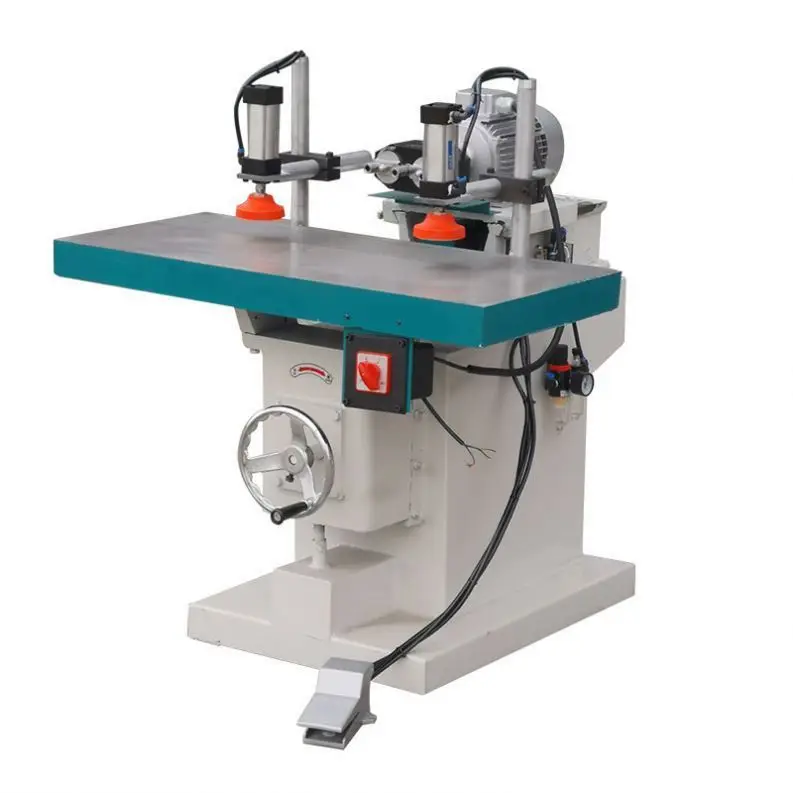
Source-controlled product identity
The Hoting queue identifies Product ID 1601252964546 as the TEBAK XJ-17 wood woodworking tool and adjustable horizontal multi-spindle wood drilling machine. The source description also uses the designation MZ6413.
The supplied record provides the following values: working table size 1000*460mm, maximum drilling diameter 13mm, spindle number 3*1, total power 1.1kw, maximum drilling depth 100mm, spindle speed 2830r/min, weight 200kg and overall dimensions 1200*1000*850mm. The source lists maximum drilling diameter twice; this guide preserves the duplicate source field without treating it as two different capabilities.
Voltage, frequency, motor arrangement, spindle spacing, adjustment range, feed method, chuck or collet type, drilling-position accuracy, clamping system, material limits, guarding, dust extraction and certification are not supplied. These items remain supplier-confirmation and acceptance-test requirements.
This guide is for B2B buyers evaluating a horizontal multi-spindle wood drilling machine for furniture, cabinetry, panels and repeatable workshop drilling. It focuses on hole layout, spindle configuration, workholding, depth control, tool selection, dust management, acceptance testing and serviceability without converting a product title into unsupported performance claims.
Recorded specifications
| Field | Source value | Procurement meaning |
|---|---|---|
| Product ID | 1601252964546 | Keep this identifier on the quotation, sample order, inspection report and shipping documents. |
| Brand / model wording | TEBAK XJ-17; MZ6413 appears in the description | Confirm the exact nameplate, model, revision and whether both designations refer to one configuration. |
| Working table size | 1000*460mm | Confirm usable table area, reference edges, fences, fixture space and maximum supported panel. |
| Maximum drilling diameter | 13mm | Confirm whether this applies to every spindle, material and tool type, and whether it is a chuck limit or tested hole capability. |
| Spindle number | 3*1 | Clarify whether this means three horizontal spindles in one group, three groups with one spindle, or another arrangement. |
| Total power | 1.1kw | Request motor count, individual ratings, input power, duty cycle, voltage, frequency and current. |
| Maximum drilling depth | 100mm | Confirm depth reference, tool projection, material condition, stop repeatability and whether it is through or blind drilling. |
| Spindle speed | 2830r/min | Confirm whether this is fixed or variable speed and identify the spindle on which it applies. |
| Weight | 200kg | Plan lifting, floor loading, pallet handling, installation and relocation. |
| Overall dimensions | 1200*1000*850mm | Check doorway access, service clearance, operator position and dust-extraction routing. |
| Electrical / compliance | Not supplied | Request destination-site electrical data, guarding documents, manual and applicable compliance files. |
Define the drilling job before comparing offers
A multi-spindle drilling machine should be purchased against a defined hole pattern, material range and production method. Prepare drawings showing hole diameter, depth, center distance, edge distance, face direction, panel thickness and allowable positional deviation.
Identify whether the work involves cabinet sides, shelves, hinges, dowel holes, connector holes, furniture frames, solid wood parts, plywood, MDF, particleboard or laminated panels. Material density, coating, veneer, glue line and internal structure can affect tool life, breakout and hole quality.
Record the smallest and largest workpiece, the required reference face, the number of holes per part, the desired repeatability and whether the machine must handle left- and right-hand components.
Send representative panels and a dimensioned drilling chart with the RFQ. A machine that produces a clean hole in a flat test board does not automatically prove a complete furniture drilling pattern.
Define the desired output: hole only, hole plus repeatable depth, a matched group of holes, or a pattern that must align with a downstream fitting, dowel, connector or hinge. These outcomes require different fixtures and inspection methods.
Clarify the XJ-17 and MZ6413 designations
The title identifies XJ-17 and the source description includes MZ6413. Treat this as a configuration-control question rather than assuming the names are interchangeable.
Ask the supplier to provide a nameplate photograph, product drawing, manual cover, motor plate, packing list and quotation showing the exact model. Confirm whether one is a factory model and the other is a market or listing designation.
Record the model, revision, serial number, spindle arrangement and supplied accessories in the purchase order. Do not accept a substitute based only on similar photographs or similar title words.
Request a layout drawing of the spindles, table, fences, stops, controls and adjustment points. The phrase “3*1” needs a drawing because the purchasing implications differ if it describes three spindles, three groups or a compound configuration.
Confirm the included items: motor, spindle heads, chucks, collets, drill bits, depth stops, side fences, rear stops, clamps, control panel, guards, dust ports, tools and manuals.
Spindle configuration and drilling layout
The source lists spindle number 3*1 but does not state spindle spacing, orientation, adjustment range or independent control. Request a dimensioned spindle layout and a description of which axes or heads can be adjusted.
Confirm whether the machine drills horizontally from one side, from multiple directions or through a fixture. Identify the reference plane and how the machine maintains perpendicularity to the panel.
Ask whether all spindles operate together, whether they can be selected independently and whether one motor drives all positions. Request the sequence for setup and any restrictions on mixed hole diameters.
Test the buyer's actual hole pattern. Measure center-to-center distance, edge distance, parallelism, perpendicularity and depth across every active spindle.
Clarify how adjustment is made: handwheel, sliding head, replaceable template, mechanical stop, digital scale or another method. Record scale resolution and locking method.
Confirm whether the spindle speed of 2830r/min is fixed and whether it applies to every spindle. Ask for the allowable tool diameter, length, balance and cutting direction at that speed.
Working table, support and clamping
The recorded working table size is 1000*460mm. Request a drawing that separates total table size from usable clamping area and identifies fences, slots, stops and spindle clearance.
Check whether the table supports the buyer's largest panel without overhang that changes drilling position. Confirm the maximum workpiece thickness, mass and support points.
Ask how the part is held: pneumatic clamp, manual clamp, toggle, fixture, fence, vacuum or another method. The source does not specify a clamping system.
Test thin panels, narrow rails, veneered faces, glossy laminates and small parts. Inspect clamp marks, sliding, vibration, edge breakout and surface damage.
Define the reference face and loading direction. A repeatable machine still produces inconsistent holes if operators place panels against different faces or stops.
Request a safe method for loading 200kg-class equipment and for supporting long panels around the 1000*460mm table. Confirm whether extensions or auxiliary stands are required.
Hole diameter, depth and tool selection
The source lists maximum drilling diameter 13mm and maximum drilling depth 100mm. Ask the supplier to define the test conditions and whether these values refer to the tool, the hole or the machine's adjustment range.
Request the supported drill-bit shank, chuck or collet, maximum tool length, minimum tool diameter, bit projection, sharpening requirement and compatible materials.
Confirm whether 13mm is achievable in solid wood, MDF, particleboard, plywood and laminated panels, or whether the value applies only to a specific material and bit.
Define how the 100mm depth is measured. It may be measured from the tool tip, table face, workpiece surface or a stop reference. Record the actual usable depth in the acceptance drawing.
Test blind and through holes where relevant. Inspect breakout on the exit face, chip evacuation, hole wall, bottom condition and consistency after repeated cycles.
Check whether the machine includes depth stops for each spindle or one common stop. Measure stop repeatability after adjustment and after a production run.
Do not infer hole tolerance from the 13mm maximum diameter. Request a measured positional and dimensional capability using buyer-specified tools and material.
Power, speed and electrical planning
The source lists total power 1.1kw and spindle speed 2830r/min, but does not provide voltage, frequency, phase, current, motor count or duty cycle.
Ask whether 1.1kw is total installed motor power, one motor rating, input power or another label. Request individual motor nameplates and the complete electrical diagram appropriate for the destination site.
Confirm voltage, frequency, phase, plug, breaker, grounding, overload protection, emergency stop and restart behavior. A 200kg machine may still require site-specific electrical installation.
Measure current and power during startup, idle, drilling and simultaneous spindle operation. Compare measured values with the quotation and nameplate.
Confirm whether spindle speed is fixed at 2830r/min or changes under load. Record speed stability and any permitted variation.
Test power interruption, overload, stalled tool, broken bit, emergency stop and guard opening. Document whether the machine stops safely and prevents automatic restart.
Drilling quality and furniture assembly fit
For furniture parts, hole quality is only useful when the resulting assembly fits. Define the connector, dowel, hinge, screw or fitting that the hole must accept.
Measure diameter, depth, position, perpendicularity, edge breakout, ovality and surface finish. Use calibrated gauges, pins, depth gauges or a documented optical method.
Build a sample matrix across material batch, thickness, tool condition, spindle position and operator. Record whether quality changes after the machine warms up or after chips accumulate.
Check the relationship between the reference edge and the fitting centerline. A consistent offset may be a setup issue; random movement may indicate clamping, vibration, tool runout or spindle alignment.
Assemble sample parts using the intended hardware. Record loose fittings, interference, misalignment, cracking, veneer damage and the need for manual correction.
Define a first-piece approval process. The buyer should approve a measured drilling chart before regular production begins.
Dust, chips and operator safety
Wood drilling produces chips and dust. The source does not state dust-port size, extraction flow, enclosure or chip collection. Request a complete dust-management drawing.
Confirm the number and location of dust ports, recommended airflow, hose diameter, extraction connection, chip accumulation points and cleaning procedure.
Test extraction while drilling the buyer's materials. Inspect the table, spindle, guides, motor area and finished part for chips that could change positioning or damage surfaces.
Request guards around rotating spindles, drill bits, belts, couplings, moving heads and pinch points. Confirm interlocks, emergency stop, lockout points and restart prevention.
Identify risks from flying chips, broken bits, noise, dust, moving fixtures, manual lifting and unexpected panel movement. Provide PPE, hearing protection, eye protection and dust controls suitable for the site.
Keep the 200kg machine stable and level. Confirm floor loading, anchor or leveling requirements, safe pallet removal and lifting points.
Setup, changeover and operator control
Ask for the complete setup sequence: identify reference face, set fences, adjust spindles, install tools, set depth, connect extraction, load a sample and approve the first part.
Measure changeover time between hole patterns and workpiece sizes. Record tools, gauges, wrenches, adjustment scales and the number of operators needed.
Confirm whether settings can be locked or marked. A mechanical adjustment without a clear scale can produce repeatability problems across shifts.
Request an operator manual with diagrams and a maintenance schedule. Confirm language, troubleshooting codes, lubrication points and safe tool-change instructions.
Train operators to verify tool rotation, clamp engagement, stop contact, spindle selection, depth and extraction before every run.
Define a restart procedure after a jam, broken drill, power interruption or emergency stop. Do not resume production until the part reference and tool condition have been checked.
Maintenance and serviceability
Request inspection and replacement intervals for drill bits, chucks, collets, bearings, belts, guides, clamps, stops, switches, guards and extraction seals.
Confirm lubrication points, grease type, spindle bearing limits and procedures for cleaning chips from moving parts. Wood dust can affect adjustment and cooling when it accumulates.
Ask for spare-part numbers, lead times, warranty coverage, service response and training. Include at least one agreed procedure for aligning or checking each spindle.
Define verification after maintenance. Measure spindle runout, tool projection, table squareness, stop position, depth and hole location before returning to production.
Confirm whether the supplier provides a calibration or inspection record. If no formal calibration is supplied, create a buyer-side verification sheet with reference blocks or panels.
Record motor, electrical and mechanical component suppliers where needed for future service. Do not rely on an unlabelled replacement part for a position-critical spindle.
Factory acceptance test
- Verify Product ID 1601252964546, TEBAK brand, XJ-17 nameplate and the MZ6413 designation relationship.
- Verify working table size 1000*460mm and usable clamping area using a dimensioned drawing.
- Clarify spindle number 3*1 and demonstrate the actual spindle arrangement, selection and adjustment.
- Verify maximum drilling diameter 13mm under agreed tool, material and speed conditions.
- Verify maximum drilling depth 100mm with a defined reference point and repeatability measurement.
- Verify total power 1.1kw, motor count, voltage, frequency, phase, current and duty cycle.
- Verify spindle speed 2830r/min, speed stability, tool limits and spindle runout.
- Measure overall dimensions 1200*1000*850mm and weight 200kg, including handling and floor requirements.
- Run buyer-provided solid wood, MDF, particleboard, plywood or laminated samples as applicable.
- Measure hole diameter, depth, position, center distance, perpendicularity, breakout and assembly fit.
- Test fences, stops, clamps, reference faces, depth stops and changeover repeatability.
- Test all guards, interlocks, emergency stop, overload, stalled tool, broken bit and restart behavior.
- Verify dust ports, extraction flow, chip removal, cleaning access and operator exposure controls.
- Verify maintenance schedule, alignment procedure, spare parts, warranty, training and manuals.
- Attach drawings, tool list, measurements, sample photographs, assembly results and deviations to the order.
RFQ checklist
- Product ID 1601252964546, XJ-17 model, MZ6413 designation and nameplate photograph.
- Working table drawing, usable area, reference edges, fences, stops, slots and clamping range.
- Meaning of spindle number 3*1, spindle arrangement, independent selection and adjustment range.
- Maximum drill diameter 13mm by material, tool, spindle and test condition.
- Maximum depth 100mm definition, depth stop, tool projection and repeatability.
- Total power 1.1kw meaning, individual motor ratings, voltage, frequency, phase and current.
- Spindle speed 2830r/min, fixed or variable speed, speed tolerance and tool limits.
- Chuck, collet, shank, bit diameter, bit length, sharpening and replacement requirements.
- Workpiece material, thickness, dimensions, mass, coating, veneer, glue line and edge limits.
- Hole diameter, position, depth, perpendicularity, breakout and assembly-fit acceptance criteria.
- Dimensions 1200*1000*850mm, 200kg weight definition, lifting, leveling and floor loading.
- Dust ports, extraction flow, hose size, chip collection, cleaning and dust safety requirements.
- Guards, interlocks, emergency stop, overload, broken-tool response and restart protection.
- Setup, changeover, scales, locks, operator training, manuals and troubleshooting.
- Maintenance, alignment, spare parts, warranty, service response and destination-market compliance documents.
Buyer decision framework
This source identifies a TEBAK XJ-17 / MZ6413 horizontal multi-spindle wood drilling machine with a 1000*460mm working table, 13mm listed maximum drilling diameter, 3*1 spindle-number field, 1.1kw total-power field, 100mm listed maximum depth, 2830r/min spindle speed, 200kg weight and 1200*1000*850mm overall dimensions.
Approve the machine only after the supplier demonstrates the buyer's real hole patterns, materials, tools, reference faces and assembly hardware. The acceptance test should prove not just that a hole can be drilled, but that its position, depth, fit, repeatability, dust control and safe operation meet the purchase specification.
Compare suppliers using measured hole quality, spindle layout, workholding, changeover, tool support, extraction, serviceability, documentation and safety controls rather than the title wording alone.
Frequently asked questions
What is the working table size?
The source lists 1000*460mm. Confirm the usable area after fences, stops, clamps and spindle clearance are installed.
What is the maximum drilling diameter?
The source lists 13mm twice. This guide treats it as one source-listed value and recommends confirming material, tool and spindle conditions with a sample test.
How many spindles does the machine have?
The source lists “3*1,” but does not define the notation. Request a spindle layout and confirm independent selection and adjustment.
What does the 1.1kw total power mean?
The source calls it total power. Confirm whether it is total installed motor power, input power or another rating, and request motor nameplates.
Can it drill 100mm deep at 2830r/min?
These are source-listed values, not a complete performance guarantee. Confirm the depth reference, tool projection, material, bit and speed conditions through an acceptance test.
What certifications are included?
No machine-specific certifications are provided in the source record. Request electrical, guarding, dust-safety and destination-market documents as applicable.
Source and contact
This guide is based on the Hoting queue record for Product ID 1601252964546. The source confirms TEBAK XJ-17 / MZ6413 wording and nine listed specification fields, including the duplicated maximum-drilling-diameter entry, but not the complete electrical, spindle, fixture, dust or compliance profile. Before purchase, request representative drilling trials, dimensioned drawings, acceptance tests, manuals, spare-parts terms and warranty through the TEBAK sales inquiry channel.
Key specifications
- working table size
- 1000*460mm
- max drilling diameter
- 13mm
- spindle number
- 3*1
- total power
- 1.1kw
- max drilling depth
- 100mm
- max drilling diameter
- 13mm
- spindle speed
- 2830r/min
- weight
- 200kg
- overall dimensions
- 1200*1000*850mm