
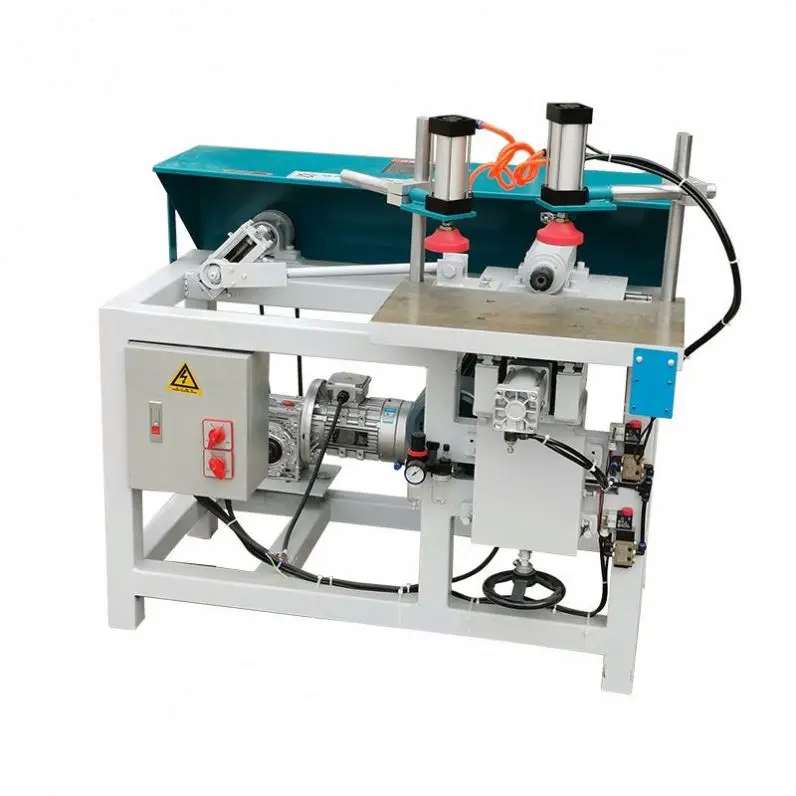
Source-controlled product identity
The Hoting queue identifies Product ID 1601251198094 as a TEBAK XJ-39 single-axis horizontal slot mortiser, also described in the source title with the reference MS3111. The source provides a product title, model references and product images, but no structured technical parameter table.
Because no verified parameter values are supplied, this guide does not claim motor power, spindle speed, slot length, cutting depth, cutter diameter, table travel, workpiece height, material capacity, dimensions, weight, voltage, air requirement, production rate, accuracy or certification. Each of these fields must be confirmed for the exact quoted configuration before purchase.
This guide is for cabinet factories, furniture manufacturers, joinery workshops, architectural millwork producers, door and window makers, educational workshops and distributors evaluating a horizontal mortising machine. The correct purchase decision depends on the joint geometry, timber or board material, workpiece size, required repeatability, operator method, tooling and electrical installation.
What the source confirms and what it does not
| Field | Source status | Buyer action |
|---|---|---|
| Product ID | 1601251198094 | Require this ID on the quotation, nameplate, inspection report and shipping documents. |
| Brand | TEBAK in the product title | Confirm the legal seller, manufacturing party, model marking and after-sales contact. |
| Model reference | XJ-39; title also includes MS3111 | Confirm whether these are one model, a series reference or a marketplace title combination. |
| Machine type | Single-axis horizontal slot mortiser | Request a motion diagram showing the axis, feed direction and workpiece clamping method. |
| Application | Mortising/slotting implied by the title | Define the required joint, slot profile, material and acceptance sample. |
| Motor power | Not provided | Request motor rating, spindle power, current, duty cycle and protection requirements. |
| Cutting range | Not provided | Request maximum slot length, width, depth, cutter diameter and table travel. |
| Electrical data | Not provided | Confirm voltage, frequency, phase, plug, current and protective earth. |
| Dimensions and weight | Not provided | Request machine, packed and operating dimensions plus net and gross weight. |
| Capacity and accuracy | Not provided | Request material limits, repeatability data and a witnessed test using buyer samples. |
Clarify the XJ-39 and MS3111 references
The title contains both XJ-39 and MS3111. Do not assume that the two references describe the same model or that one is an internal code. Ask the supplier to state the exact model code on the quotation, machine nameplate, manual, spare-parts list and export documents.
Request a model drawing and a configuration sheet showing the machine body, axis arrangement, table, clamp, motor, spindle, guard, control and tooling. If the supplier offers more than one configuration under the same title, record the differences in a comparison table.
Confirm whether XJ-39 identifies a body size, series, spindle group, table size or seller listing. Confirm whether MS3111 is a manufacturer model, a regional reference or a separate machine. This clarification prevents a buyer from approving a quotation that cannot be matched to the delivered machine.
Use photographs only as visual references. A product image can show general layout but cannot prove dimensions, materials, electrical rating, accuracy or included accessories.
Define the joint before choosing the machine
A horizontal slot mortiser should be selected against the joint and the workpiece, not only against a generic machine name. Prepare drawings for the required mortises: slot length, width, depth, end shape, corner radius, distance from the workpiece edge, spacing and orientation.
State whether the job involves open mortises, blind mortises, rectangular slots, round-ended slots, hinge recesses, tenon preparation or another joint. The source does not specify which operation the quoted configuration supports.
Provide sample workpieces or approved drawings to the supplier. Include timber species, moisture range, board or solid-wood construction, grain direction, coatings, laminates and any pre-existing holes. Ask the supplier to run the exact sample and return the measured result.
Define the allowable variation in slot length, width, depth, location and squareness. Do not accept a general accuracy statement without a measurement method, reference surface, sample size and test result.
Cutting range and axis travel are missing fields
The source does not provide the horizontal axis travel or cutting envelope. Request maximum and minimum slot length, width and depth, cutter diameter, spindle clearance, table travel, workpiece height and distance from the fence or reference edge.
Confirm whether the stated travel is usable cutting travel or total mechanical travel. Ask how the machine limits the axis at both ends and how the operator sets a repeatable start and stop position.
For batch production, request a repeatability test across multiple positions on the table. Record the first-piece setting, subsequent position variation, end-stop behavior and the effect of changing workpiece thickness.
If the buyer needs several slot sizes, request a tooling and setup matrix. Identify which sizes require a cutter change, a table adjustment, a fence change, a new clamp or a separate configuration.
Tooling and spindle confirmation
No cutter, spindle or tooling specification is present in the source. Ask for spindle interface, cutter diameter range, maximum cutter length, collet or arbor type, rotation direction, speed range and approved tooling materials.
Confirm whether the quoted machine includes a cutter, chuck, arbor, collets, wrenches, guards and setup gauges. List every accessory by part number and quantity. Do not assume that product images show included tooling.
Match the cutter to the buyer's material and joint geometry. Ask for recommended cutting parameters and a test result rather than applying an unverified speed or feed value.
Inspect runout at the tool interface and confirm how the supplier measures it. If accuracy is important, include spindle runout, cutter runout, table flatness and fence alignment in the factory acceptance test.
Workholding, table and reference system
Request a drawing of the table, fence, stops and clamps. Confirm table length, width, usable support area, reference surfaces, adjustment range and the maximum workpiece size.
Define how the workpiece is positioned: edge fence, end stop, template, manual marking, mechanical stop or another method. A single-axis machine can still produce inconsistent joints if the reference system is not repeatable.
Ask whether the machine includes a pneumatic, hydraulic or manual clamp. The source does not provide a clamping method or pressure requirement. For pneumatic equipment, request air pressure, consumption, connection size and filtration requirements.
Test thin boards, narrow pieces, long pieces and the largest required workpiece. Check that the workpiece remains stable during the cut and that the clamp does not damage finished surfaces.
Motor, electrical and installation review
The source provides no motor power or electrical data. Request the motor nameplate, rated power, voltage, frequency, phase, rated current, starting current, duty classification and recommended protective device.
Confirm whether the machine uses a single motor or separate spindle, feed and clamp systems. Ask for a wiring diagram, grounding method, isolator location, emergency stop circuit and control voltage.
Plan the installation from the machine footprint, access side, workpiece infeed and outfeed, service space, dust extraction route and operator position. The source does not provide dimensions, so do not plan a workshop layout from the product image.
At commissioning, have a qualified electrician verify wiring, earth continuity, direction of rotation, protective devices and voltage compatibility. Record the measured current under no-load and cutting conditions.
Dust, chips and workplace safety
Mortising wood and boards produces chips and dust. The source does not state whether a dust port or enclosure is included. Ask for extraction port size, airflow requirement, hood design and the areas that remain exposed during cutting.
Evaluate the material risk before use. MDF, coated boards, hardwoods and treated materials may require different dust-control and respiratory controls. Use the buyer's workplace risk assessment and local requirements.
Keep hands away from the cutter and the horizontal cutting zone. Use the supplied guard, clamp and push or positioning tools where applicable. Do not defeat interlocks, emergency stops or guards to reach a workpiece.
Define lockout and isolation steps for cutter changes, jam clearing, adjustment, cleaning and maintenance. Wait for all movement to stop before entering the work area.
Production workflow and repeatability
Map the complete cycle: load the workpiece, locate it against the reference, clamp, set the axis, start the spindle, perform the cut, retract, release and inspect. Record every manual step because a claimed machine cycle does not necessarily include handling time.
For a small workshop, prioritize setup clarity and safe repeatability. For batch production, measure changeover time between workpiece sizes, cutter replacement time, first-piece approval time and the number of adjustments per batch.
Run a production simulation using the buyer's normal operator and samples. Measure accepted joints per hour, setup time, rework, chip evacuation, tool wear and operator interventions. Do not publish a production rate when the source supplies none.
Inspect both the first and last pieces of a run. Compare slot location, depth, width, surface finish and fit. Record whether heat, dust buildup, tool wear or clamp movement changes the result.
Material and finish checks
The source does not specify the supported material range. Ask the supplier to test the buyer's solid wood, plywood, MDF, laminated board or other material. Record thickness, density, coating and grain orientation for each test.
Inspect slot walls, bottom surface, entry edge, breakout and burn marks. For visible furniture joints, define an approved surface-finish sample and an acceptable amount of tear-out.
Test near edges and on narrow components because workholding and breakout risk may differ from a large central cut. If the buyer uses finished panels, include masking, support and protective-surface requirements in the method.
Do not assume that a machine suitable for one timber species is suitable for all boards. The cutting result depends on the tool, material, grain, support and settings.
Factory acceptance test proposal
- Verify Product ID 1601251198094, brand, exact XJ-39/MS3111 model relationship and nameplate.
- Approve the machine drawing, axis diagram, table, fence, clamp and guard configuration.
- Confirm motor power, spindle specification, voltage, frequency, phase and current.
- Confirm maximum and minimum slot length, width, depth, cutter range and usable travel.
- Verify spindle interface, included cutter, arbor, collets, guards and setup tools.
- Test the buyer's approved workpiece materials and joint drawings.
- Measure slot location, length, width, depth, squareness and repeatability.
- Test the reference system, end stops, clamps and narrow or large workpieces.
- Run a timed workflow test including loading, clamping, cutting, release and inspection.
- Inspect surface finish, breakout, tear-out, burn marks, chips and dust evacuation.
- Check no-load and cutting current, rotation direction, vibration and abnormal noise.
- Verify emergency stop, guards, interlocks, grounding and lockout procedure.
- Confirm dust port, extraction requirement, operating clearance and maintenance access.
- Verify packing, net/gross weight, accessories, manuals and spare-parts list.
- Record the approved first article and attach measured results to the purchase order.
RFQ checklist
- Product ID 1601251198094 and exact model code; explain XJ-39 versus MS3111.
- Machine drawing, axis diagram, table, fence, stops, clamps and guards.
- Motor power, spindle power, speed, interface, runout and approved tooling.
- Voltage, frequency, phase, current, plug, earth, breaker and control voltage.
- Maximum and minimum slot length, width, depth, cutter range and axis travel.
- Workpiece size, thickness, material and allowable joint-position tolerance.
- Included cutters, arbor, collets, wrenches, gauges, clamps and spare parts.
- Dust port, extraction airflow, chip handling and workplace safety requirements.
- Measured sample results for the buyer's drawings and material.
- Repeatability method, accuracy definition, inspection tools and acceptance limits.
- Machine, packed and operating dimensions; net/gross weight and lifting points.
- Installation, commissioning, lubrication, cleaning, cutter change and maintenance instructions.
- Warranty, service response, training, manuals, parts prices and delivery documents.
Safety and compliance
A horizontal mortiser combines a rotating cutter, powered motion, workholding and wood dust. Keep the cutter guarded, clamp the workpiece and isolate power before adjustment, cutter changes, jam clearing or maintenance.
Use suitable eye and hearing protection and the site's dust-control measures. Keep hands and loose clothing away from the cutting path. Do not operate with a missing guard, unstable table, damaged cable, failed clamp or non-functioning emergency stop.
Request destination-market machinery and electrical documents for the exact configuration. The source description mentions a company certification claim, but it does not provide a model-specific certificate; therefore no certification is claimed in this guide.
Train operators on the reference system, cutter selection, workholding, safe feed method, isolation and inspection. Keep the approved workpiece drawing and acceptance limits at the machine.
Buyer decision framework
This candidate has a recorded Product ID, TEBAK title, XJ-39 reference, MS3111 reference and horizontal single-axis mortiser description. It has no verified numeric technical parameters in the source record.
Approve the order only after the supplier resolves the model references, supplies the complete technical sheet, demonstrates the buyer's joint on the buyer's material and documents the electrical, tooling, guarding, dust and service configuration.
Frequently asked questions
What are the XJ-39 and MS3111 specifications?
The source title names both references but provides no numeric specification table. Ask the supplier to identify the exact model, drawing, configuration and nameplate.
What slot sizes can the machine cut?
The source does not provide cutting range. Request maximum and minimum length, width, depth, cutter diameter and usable axis travel.
What motor power and voltage does it use?
Neither motor power nor electrical data is provided. Request the nameplate, wiring diagram, rated current, voltage, frequency, phase and protection requirements.
Can it machine MDF and hardwood?
The source does not establish a material range. Run an acceptance test with the buyer's actual timber, board, thickness, grain and finish requirements.
Is a cutter included?
The source does not list accessories. Require a written packing list with cutter, arbor, collets, clamps, guards, tools and spare parts.
Source and contact
This guide is based on the Hoting queue record for Product ID 1601251198094. The record identifies a TEBAK XJ-39 single-axis horizontal slot mortiser and includes the title reference MS3111, but no structured numeric specifications. Before purchase, request the exact model, drawings, cutting range, spindle and tooling data, workholding, electrical specification, dust controls, tested sample results, safety documents, spare parts and warranty through the TEBAK sales inquiry channel.