
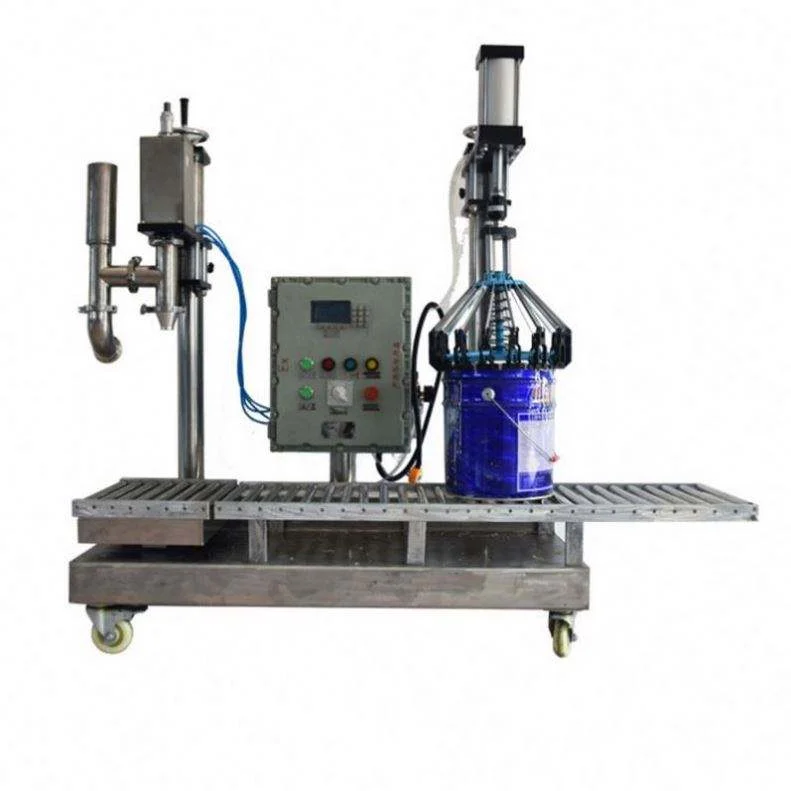
What the XSH-2 source record confirms
The TEBAK XSH-2 listing describes a semi-automatic weighing filler for resin and paint filling. The title also uses 20 L, big-volume bottle and bucket filler wording. These are the source-confirmed product and application signals used in this procurement guide.
The queue provides no numeric filling range, weighing accuracy, filling speed, electrical rating, pump type, nozzle size, machine dimensions, material grade, seal material, certification or output data. Those values must be confirmed for the exact XSH-2 configuration before a purchase order is issued.
“20 L” appears in the source title, but the source does not define whether it is a target container volume, a maximum package reference, a hopper volume or a marketing descriptor. Treat it as a source title field and ask the supplier to define the applicable container range and filling method.
“Semi-automatic” also requires a process definition. Confirm which steps are operator-controlled, such as container placement, tare, start, nozzle positioning, filling completion, container removal and lid handling.
1. Product identity and procurement boundary
Keep the RFQ tied to product ID 1601605417943 and model XSH-2. The source title identifies TEBAK, a semi-automatic weighing filler, resin and paint filling, and big-volume bottle or bucket use. Request a model-specific quotation, nameplate, drawings, manual and test record together.
The source company information names Hengshui Mengshang Trading Co., Ltd. and the TEBAK brand. This identifies the seller and brand wording supplied in the record; it does not prove model-specific certification, factory inspection, warranty scope or destination-market compliance.
Do not merge the XSH-2 with another TEBAK filling model. Ask the supplier to place the model number on the quotation, machine nameplate, electrical drawing, test video and packing list.
Request a configuration code for any pump, weighing controller, nozzle, platform, hopper, conveyor or explosion-protection option. A semi-automatic filler can be supplied in materially different configurations even when the headline model remains XSH-2.
2. Confirmed source fields
| Field | Source value | RFQ treatment |
|---|---|---|
| Source product ID | 1601605417943 | Match the quotation, nameplate, test record and shipment documents. |
| Model wording | XSH-2 | Confirm the exact configuration code and options. |
| Operation | Semi automatic | Define every operator-controlled step and the automatic weighing/filling steps. |
| Product category | Weighing filler | Confirm weighing controller, load cell arrangement and control logic. |
| Source title volume field | 20 L | Define whether this is container volume, maximum capacity or another reference. |
| Application | Resin paint filling | Provide viscosity, density, solids, temperature and chemical-compatibility data. |
| Container wording | Big volume bottle / bucket filler | Confirm container material, shape, opening, dimensions and supported weight. |
| Brand | TEBAK | Confirm nameplate and branding on the delivered unit. |
No parameter array is supplied for this queue item. The table above is therefore a source-bound starting specification, not a complete machine data sheet.
3. Define the resin and paint process
Resin and paint are not one universal material class. Request the buyer's material data before selecting the pump, valve, hose, nozzle and seals. At minimum, provide viscosity, density, solids content, solvent or water base, temperature, particle size and any corrosive or reactive ingredients.
Confirm whether the machine is intended for low-viscosity paint, high-viscosity resin, filled resin or a material that changes viscosity over time. The source does not identify a material range, so it cannot be used to infer pump suitability.
Ask whether the product contains abrasive pigments, fibers, fillers or suspended solids. Confirm the allowable particle size and whether the filling path can be cleaned without dead zones.
Request chemical-compatibility confirmation for every wetted component, including pump body, valve, hose, nozzle, gasket, load platform and any coating. Do not assume stainless steel, PTFE, silicone, NBR or another material without a written model-specific statement.
Define the required batch and changeover procedure. A resin or paint filler may need flushing, solvent cleaning, scraping, purge collection or a controlled waste process. Ask which procedure is approved by the supplier and whether it affects the warranty.
4. Container and 20 L interpretation
The source title uses “20 L” and “big volume bottle bucket filler.” Confirm the exact meaning in the RFQ. Ask for the minimum and maximum container volume, maximum filled weight, container height, diameter, opening diameter and allowable shape variation.
Confirm whether the machine weighs the container on a platform, fills by a preset target weight, or uses another method. A volume label does not establish a weighing range or accuracy.
Request a drawing showing the load platform, nozzle height, container clearance, guard positions and operator access. The source provides no dimensions, so do not plan a production layout from the title.
Test the buyer's real bottle or bucket. Rigid and flexible containers can behave differently on a weighing platform. Confirm that the container remains stable and that the nozzle can reach the fill opening without splashing or contact.
Ask whether the tare is automatic, manual or recipe-based. Define how the controller handles container replacement, incomplete fill, overfill, drips, interruption and restart.
5. Weighing function and accuracy validation
Because the product is called a weighing filler, request the load-cell model, rated range, resolution, display increment, repeatability and calibration method. None of these numeric values is provided in the source queue.
Define accuracy using the buyer's material and target fill. A tolerance claim should state target weight, material, temperature, container, sample count, speed setting and whether the result is gross or net weight.
Run repeated fills at the low, middle and high points of the requested range. Record each result, mean, range and outlier. Do not claim a general accuracy from a single demonstration at one target.
Check whether product drips after the valve closes and whether the controller compensates for cutoff delay. Ask for the supplier's filling algorithm and allowable correction settings.
Confirm calibration weights, calibration frequency and access control. Ask whether calibration data is stored, exported or protected from accidental changes by operators.
6. Semi-automatic operating sequence
Ask the supplier to document the actual sequence. A typical sequence may include placing an empty container, tare or container recognition, positioning the nozzle, starting fill, automatic cutoff, removing the filled container and confirming the next cycle. The source does not confirm which of these steps are included.
Clarify whether one operator can load and unload the machine safely and whether the operator must hold a button, press a foot switch or use a panel control. Request a process video using the exact XSH-2 configuration.
Define what happens when the target is reached, the container is removed early, the material supply is empty, the load cell is overloaded or the emergency stop is pressed.
Confirm recipe storage, password protection, display units and language options only if required by the buyer. Do not assume a touchscreen, PLC, HMI, foot pedal or automatic recipe function.
Separate standard features from optional equipment in the quotation. If a hopper, conveyor, pump, mixer, drip tray, nozzle set or second filling head is optional, give each item a separate part number and price.
7. Pump, nozzle and flow-path questions
The source does not identify the pump or filling principle. Ask whether the machine uses a gear pump, piston pump, diaphragm pump, screw pump, progressive cavity pump or another design, and explain why it suits the material.
Confirm maximum viscosity, allowable solids, suction lift, hose length, nozzle size, flow adjustment and cleaning method. These values must be matched to the resin or paint data rather than estimated.
Ask whether the product is recirculated, agitated or held in a hopper. If the material settles or cures, clarify mixing, residence time and purge procedures.
Request a wetted-parts diagram and a list of replacement seals, hoses, valves and nozzles. Confirm whether each replacement is standard stock and whether material compatibility documents are available.
Test for dripping, stringing, splashing and air entrainment with the buyer's product. Record the nozzle height, target weight, cutoff setting and container opening used in the test.
8. Electrical, controls and site requirements
No power, voltage, frequency, phase, plug or current value is supplied. Request the complete electrical nameplate and wiring diagram for the destination market.
Confirm whether the machine requires compressed air, vacuum, cooling water, exhaust, inert gas or another utility. The source title does not establish any utility requirement.
Ask for the controller type, sensor list, alarm list, emergency-stop arrangement and fault recovery sequence. Confirm whether the load cell and control cabinet are protected against the buyer's environment.
Resin and paint can create chemical, vapor or spill hazards depending on formulation. Provide the supplier with the safety data sheet and request a written installation and ventilation assessment for the exact material.
Electrical installation, grounding, spill control and ventilation should follow local regulations and be completed by qualified personnel. Do not claim hazardous-area suitability unless the supplier provides model-specific evidence.
9. Cleaning, changeover and maintenance
Request a cleaning map that identifies every wetted component, drain point and dead zone. Confirm which parts can be removed by the operator and which require service personnel.
Define the approved cleaning agent for the resin or paint. Solvents can attack seals, tubing, coatings or plastics. The source does not supply a cleaning chemical or material compatibility statement.
Ask how to prevent cured or dried material from blocking the nozzle and valve. Confirm maximum idle time, overnight shutdown procedure, purge volume and waste collection.
Request maintenance intervals for the pump, load cell, seals, valve, hose, controller and weighing platform. Record recommended spare parts and the expected replacement criteria.
Confirm whether calibration, cleaning and maintenance logs are available. If the buyer needs traceability, specify the required records before ordering.
10. Throughput and production planning
Do not infer output from the 20 L title field. Throughput depends on target weight, material viscosity, pump, nozzle, cutoff behavior, container handling and operator speed.
Define output as acceptable filled containers per hour, with target weight, material, container, sample count, operator count, cycle time and rejected units stated. Request a time-stamped test video or signed test sheet.
Run tests at the smallest, typical and largest requested fill targets. High-viscosity materials can require materially longer fill and recovery time than thin liquids.
Include loading, positioning, tare, filling, drip control, removal and cleaning time in the cycle. A pump-only flow test is not a production-throughput test.
Plan space for empty containers, filled containers, material supply, spill control, operator movement and maintenance access. Request machine and platform dimensions before finalizing the layout.
11. Pre-shipment acceptance test
Confirm the model XSH-2, product ID 1601605417943, nameplate and exact configuration code. Photograph the unit, controller, load cell, pump, nozzle, platform and wetted parts.
Test the buyer's resin or paint, or an agreed material with matching viscosity, density and solids. Record the material data and container data on the test sheet.
Verify tare, target setting, cutoff, repeated-fill results and displayed weight. Test at multiple target points and repeat each point enough to evaluate repeatability.
Check the semi-automatic sequence, operator controls, alarms, emergency stop, restart behavior, nozzle drip, container stability and cleanability.
Inspect electrical values, grounding, guards, labels, accessories, spare parts and packaging. Confirm that all optional items listed in the quotation are present.
Do not approve a headline accuracy or capacity claim without the test conditions, sample results and exact configuration being documented.
12. RFQ checklist
- Confirm model XSH-2 and product ID 1601605417943 on the quotation and nameplate.
- Define the meaning of “20 L” and provide minimum/maximum container volume and filled weight.
- Provide filling range, weighing range, resolution, repeatability and numeric accuracy tolerance.
- Identify pump type, nozzle size, flow path, wetted materials and compatible seal materials.
- Provide voltage, frequency, phase, power, current, plug, grounding and wiring diagram.
- List all operator steps and all functions that are automatic.
- Confirm container dimensions, platform dimensions, nozzle height and access clearance.
- Provide resin/paint viscosity, density, solids and chemical-compatibility limits.
- Confirm drip control, cutoff delay, calibration, overload handling and fault recovery.
- Provide cleaning, purge, changeover, maintenance and spare-parts instructions.
- Provide a production test with target weights, material, container, operator count and rejection count.
- Confirm hopper, pump, nozzle, conveyor, mixer, tray and other accessories included in the price.
- Provide machine dimensions, net weight, carton dimensions and gross shipping weight.
- Provide destination-market compliance documents and installation requirements.
13. Questions for the supplier
What does “20 L” mean in the XSH-2 title? Please provide the actual filling and weighing range, supported container dimensions and maximum filled weight.
Which steps are automatic and which are manual? Please send a video of one complete cycle showing container placement, tare, fill start, cutoff, drip control and removal.
What pump, valve, nozzle and seals are used? Please confirm maximum viscosity, solids compatibility, wetted materials and cleaning agents.
What are the rated voltage, frequency, phase, power, current and plug? Does the machine require compressed air, exhaust, cooling or another utility?
What are load-cell range, display resolution, calibration method, repeatability and accuracy tolerance? Please provide repeated test results using the buyer's material.
What are the machine, platform and nozzle dimensions? Please provide a drawing with operator clearance and container access.
Which safety functions are standard, and which are optional? Please specify emergency stop, overload protection, alarms, guarding and chemical-environment limitations.
What are the cycle time and finished acceptable containers per hour for the buyer's resin or paint? Please state every test condition and rejection count.
14. What not to assume
Do not assume that 20 L is a verified maximum filling capacity or accuracy range. The source title does not define the field.
Do not assume that semi-automatic means automatic tare, automatic nozzle positioning, automatic container handling or automatic recipe control. Require a functional sequence.
Do not assume that the machine can handle any resin or paint. Compatibility depends on viscosity, density, solids, chemistry, temperature and cleaning method.
Do not assume a pump, nozzle, seal or wetted material from the product title. Request a component list and compatibility statement.
Do not assume capacity, speed, power, voltage, dimensions, certification or hazardous-area suitability. None is confirmed in the queue fields.
Do not assume the general company description proves model-specific ISO, CE, warranty or inspection status. Request evidence for the exact XSH-2 configuration.
15. Final procurement decision
The TEBAK XSH-2 is source-listed as a semi-automatic weighing filler for resin and paint, with 20 L and big-volume bottle/bucket wording in the title. Its confirmed procurement baseline is the model identity and application context; numeric technical parameters remain open.
Proceed only after the supplier defines the 20 L field, confirms material compatibility, supplies the weighing and filling data, and passes a buyer-specific test. The acceptance test should cover repeatability, cutoff behavior, container stability, cleaning, safety and the full semi-automatic workflow.
Editor's note: This guide uses the supplied Hoting queue fields only. It does not add filling range, weighing accuracy, speed, power, voltage, dimensions, materials, certification, warranty or performance claims. Missing information remains supplier-confirmation content.
Key specifications
- Source product ID
- 1601605417943
- Model
- XSH-2
- Operation
- Semi automatic
- Product category
- Weighing filler
- Source title volume field
- 20 L (meaning to be confirmed)
- Application
- Resin paint filling
- Container wording
- Big volume bottle / bucket filler
Frequently asked questions
- What model is covered?
- This guide covers the source-listed XSH-2 TEBAK semi-automatic weighing filler, product ID 1601605417943.
- What does the 20 L field confirm?
- The source title contains 20 L, but it does not define whether this is a container volume, maximum reference or another field. Ask the supplier to define it.
- Which materials are listed?
- The source lists resin and paint filling. Viscosity, density, solids, chemical compatibility and temperature limits must be confirmed for the buyer's material.
- Is the machine fully automatic?
- The source describes it as semi-automatic. Confirm which steps are automatic and which require operator action.
- What must be tested before purchase?
- Test the exact XSH-2 configuration with the buyer's material and container, checking tare, repeatability, cutoff, drip control, cleaning and safety.