
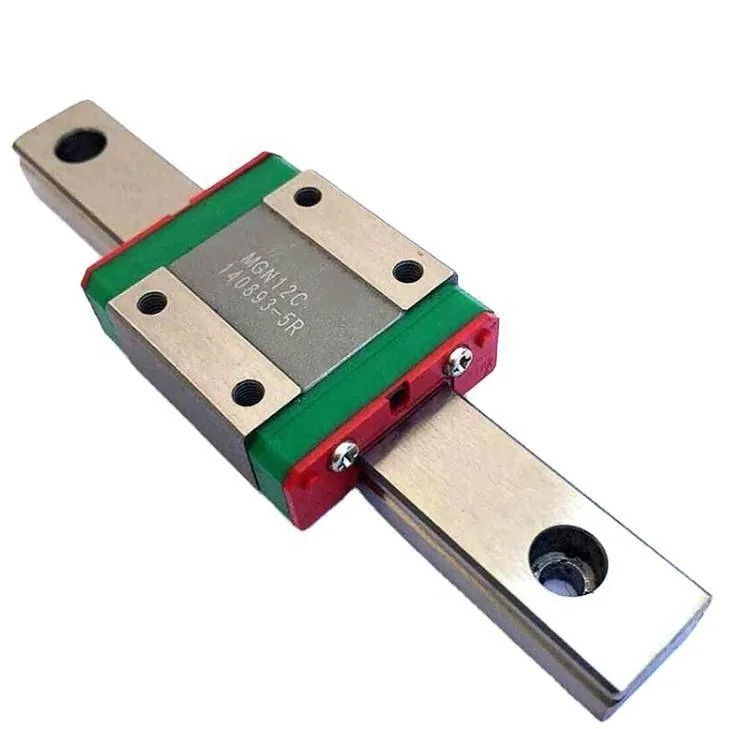
MGN12 Linear Guide Rail, for industrial use
Request pricing, MOQ and lead time for this product — we reply within 24 hours.
Dimensions and configuration
| Model number | MGN12 |
|---|
Material and surface treatment
| Material | Stainless steel/Bearing steel |
|---|
Values above are the manufacturer's published figures for this series. Anything not listed — dynamic load rating, straightness, preload class — is confirmed against the drawing at RFQ.
Description
Overview
The linear guide rail in this listing belongs to the group of parts that make a linear axis repeatable: it carries the load, holds the geometry, and sets the accuracy that the rest of the machine can achieve. A linear guide carries a load on rolling elements that run between a rail and one or more bearing blocks, so the load moves along the rail with very little friction and without the stick slip of a sliding way. The rail is bolted to the machine bed and the block to the moving part, and the pair sets the straightness of the axis as well as its load capacity.
Key Features
· Model number: MGN12
· Material: Stainless steel/Bearing steel
· Supplied as a replacement part or as a production item for machine builders
· Material, tolerance and surface treatment confirmed against the drawing
Specifications
The parameter table above lists the values published for this item. Where a value depends on the machine it is going into, the drawing or the RFQ fixes it, and we confirm before production rather than after.
Application
Model designation: MGN12. Rail material: Stainless steel/Bearing steel.
Selection starts from the load on each block, the distance between blocks, and the overhang of the moving mass, because those three decide the moment load that the block has to carry. Accuracy grade, preload class and the parallelism of the two rails then set how the axis behaves under a changing load.
The three things that shorten the life of a part like this are contamination, misalignment and overload. Keep the working surfaces covered during assembly, align to the datum that the machine was built from, and keep the load inside the rating with a margin for the peaks that occur when an axis starts, stops or jams.
Where it is used: machine tool axes, gantry structures, automation and pick and place units, measuring stages, printing and packaging machines, woodworking equipment.
Installation & Maintenance
Comparing quoted parts on price alone hides the differences that show up later: the tolerance on the mounting face, the grade of the working surfaces, the flatness of a rail or the straightness of a shaft. Two parts that look the same in a photograph can differ by a factor in life depending on those details, and the difference appears as a machine that holds accuracy after a year rather than one that has to be re-aligned.
The number in the catalogue is a single value, but the load in a real axis is a combination: a vertical component from gravity, a horizontal one from acceleration, and a moment from the offset between the load and the support. All three reach the part at once, so a size chosen only on the vertical load can be marginal once the carriage accelerates with the load at the outer end of its travel.
Where the machine works in a clean room, the part has to run with the lubricant it was supplied with and must not shed particles; where it works in a foundry or a wood shop, it needs protection that can be cleaned. Specifying the environment at the quotation stage is what allows the material, the coating and the sealing to be chosen together instead of being patched afterwards.
Keep the part clean and dry, check the fasteners after the first hours of running, and re-check them at the interval the machine builder sets. A part that has started to move on its mounting shows as a mark around the bolt holes, and that is the point to correct the joint rather than to tighten it again.
Ordering information that shortens delivery: the size designation from the table, any non standard length or bore, the material or coating if the environment requires it, and the quantity for the first order. Where the part is part of a set, order the set so the fit is matched rather than assembling a mixed batch.
Package & Lead Time
Standard export packing: each part is sleeved and cartoned, screws and rails are protected along their length, and larger assemblies travel crated. Lead time is confirmed with the quotation: standard sizes normally ship within 5 to 15 days of a confirmed drawing, custom parts against the agreed schedule. Minimum order is one piece, and sample orders are accepted before a production run.
Request a Quote
Send the model number or the drawing, with the shaft or rail size and the quantity you need, and we will reply with a quotation. For non-standard lengths, bore pairs, keyways and material changes we work from your drawing; bulk orders are quoted per quantity band and a sample can be supplied for approval.
Related components
Detail images
Related products
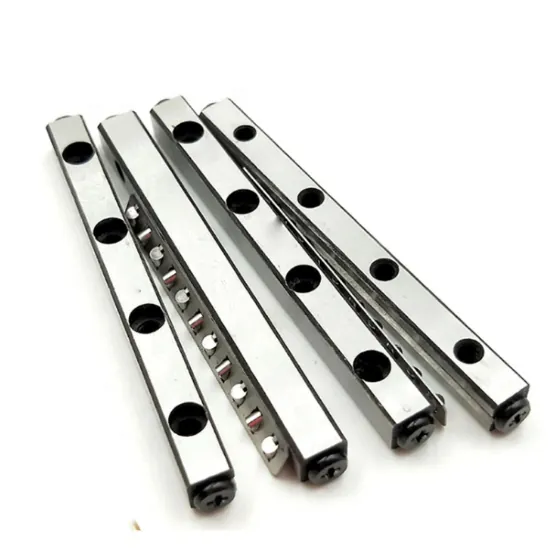
TEBAK Precision VR18 Linear Guide, grade C,H,P,SP,UP
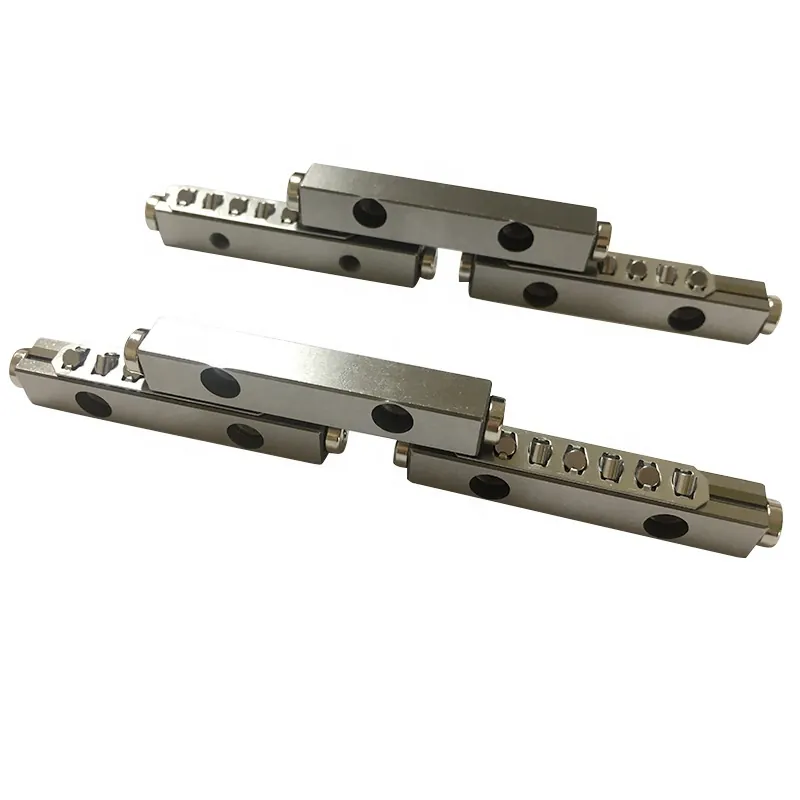
TEBAK Precision VR15 Linear Guide Bearing
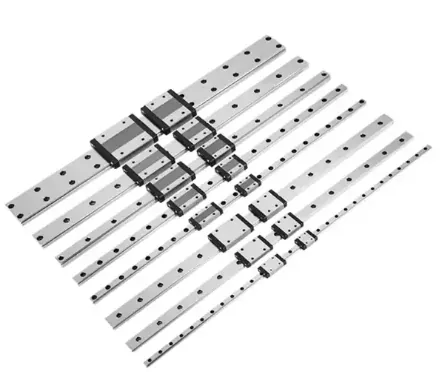
TEBAK Miniature MGN7–MGN9 Linear Guide Bearing
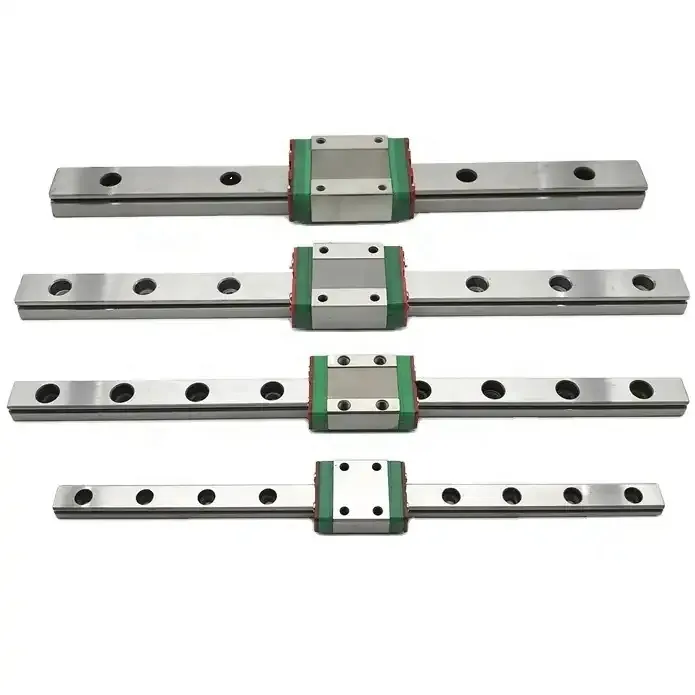
TEBAK Miniature MGN5–MGN15 Linear Guide 5 mm
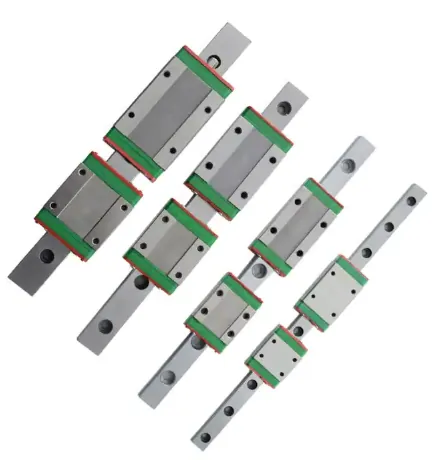
TEBAK Miniature MGN12–MGW12 Linear Guide 12 mm
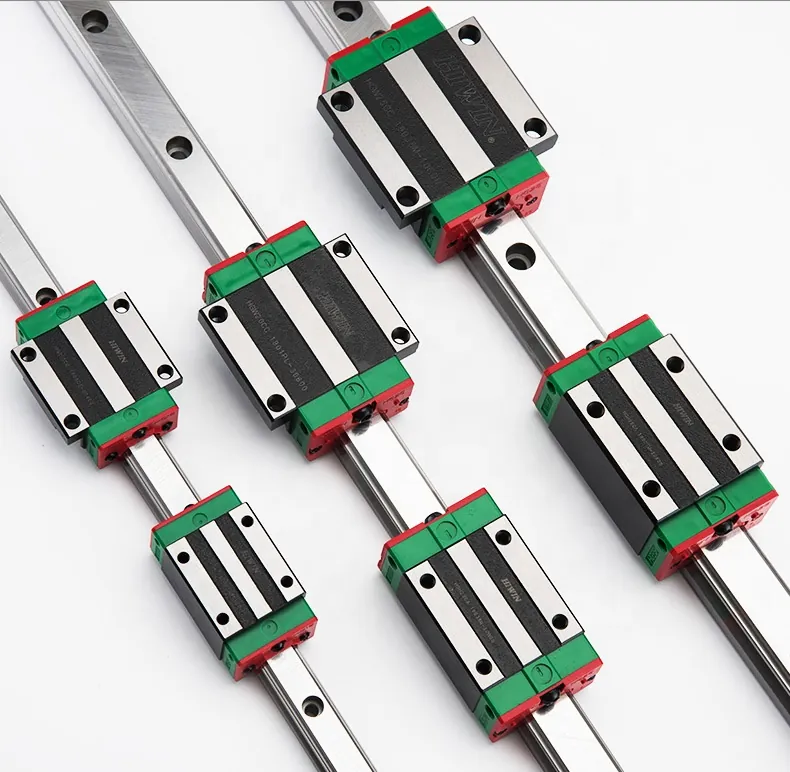
TEBAK Heavy Load HGR20–HGW20CA Linear Guide 20 mm
Interested in this product?
Send your details and we will respond within 24 hours.